Slicing Thinly

Dried VeggiesIf people ask me what I did this weekend it was this:  I sat and sliced vegetables, very thinly.  I am convinced that micro-slicing vegetables gives them entirely different characteristics.  I love to then put them into salads or dehydrate them, like I did this time, to sprinkle on salads and other dishes.  These feather-light bits melt on your tongue and give dishes the slightest crispy texture and rooty flavor.  Shown here are carrots, beets, and a few turnips.

I also listened to the audiobook All the Light We Cannot See by Anthony Doerr, mesmerizing and beautiful.  The paperthin slicing and the deep listening were a restorative meditation after the holidays spent in very close quarters with loved ones, making all decisions in a block.  It was wonderful, but this was nice, too.

With some super-thin eggplant slices, I made up an eggplant lasagna.  This has meat, but no pasta.  You could easily add or subtract either one.

Eggplant Lasagna

Adapted from Utterly Delicious Simple Food, by Belinda Jeffery

Meat Sauce

  • 1 1/2 tablespoons extra virgin olive oil
  • 2 onions, finely chopped
  • 3 large cloves garlic, finely chopped
  • 1 heaped tablespoon sun-dried tomato pesto (or 3 large sun dried tomatoes, chopped)
  • 1 lb. ground beef
  • 2 cups tomato passata or crushed tomatoes
  • 1/2 cup red wine
  • 1/4 teaspoon freshly grated nutmeg
  • 2 heaped tablespoons thinly sliced oregano or 1 teaspoon dried

Warm the oil in a large frying pan over medium heat.  Add the onion and garlic and cook, stirring regularly, for 10 minutes or until they are translucent and pale golden.  Stir in the tomato pesto and let it cook for a minute or so to release its flavor.  Increase the heat a little and add the ground beef.  Cook it for a couple of minutes until it changes color, breaking it up with a spoon.  Mix in the tomato passata, red wine, and nutmeg.  Season with salt and freshly ground black pepper.  Adjust the heat so the sauce bubbles gently, and let it cook for about 10 minutes until it is thick but moist.  Stir in the oregano, then leave the sauce to cool a little.

For the Lasagne

  • 1 lb. fresh ricotta*
  • 2 eggs, lightly beaten
  • 1/4 teaspoon freshly grated nutmeg
  • 6-8 small to medium Japanese eggplants or zucchini, cut lengthwise on a mandoline
  • 1/2 lb. mozzarella, thinly sliced
  • 1/4 lb. freshly grated parmesan
  • Olive oil, for brushing

Preheat the oven to 350 degrees and lightly butter a medium-large, deep ovenproof dish.  Set aside.  In a medium-size bowl, mix the ricotta, eggs, salt and pepper, and nutmeg.  Set aside. Cover the base of the baking dish with a thin layer of the meat sauce, then lay down a layer of eggplant (about 1/3 of it) with the slices slightly overlapping.   Spoon half of the ricotta mixture over the eggplant and spread it as well as you can.  Top this with half the mozzarella slices and sprinkle with half of the parmesan.  Spread half of the meat sauce over the cheeses and spread evenly.  Repeat the layering with half the remaining eggplant (save your most uniform slices for last), the rest of the ricotta mixture, the remaining mozzarella, and most of the parmesan, reserving about 2 tablespoons.  Spoon the remaining meat sauce evenly over the top.  Finish with an arrangement of the reserved eggplant slices, brushed lightly with olive oil. Sprinkle with the reserved parmesan.

Bake for approximately 45-50 minutes or until the contents are bubbling and the top is browned.  Allow to rest for at least 10 minutes, once removed from the oven, to settle and cool.

Serves 6

*Beer brewers:  A recycled grain bag left over from brewing makes an excellent strainer for making homemade ricotta, saving the cost of expensive cheese cloth.
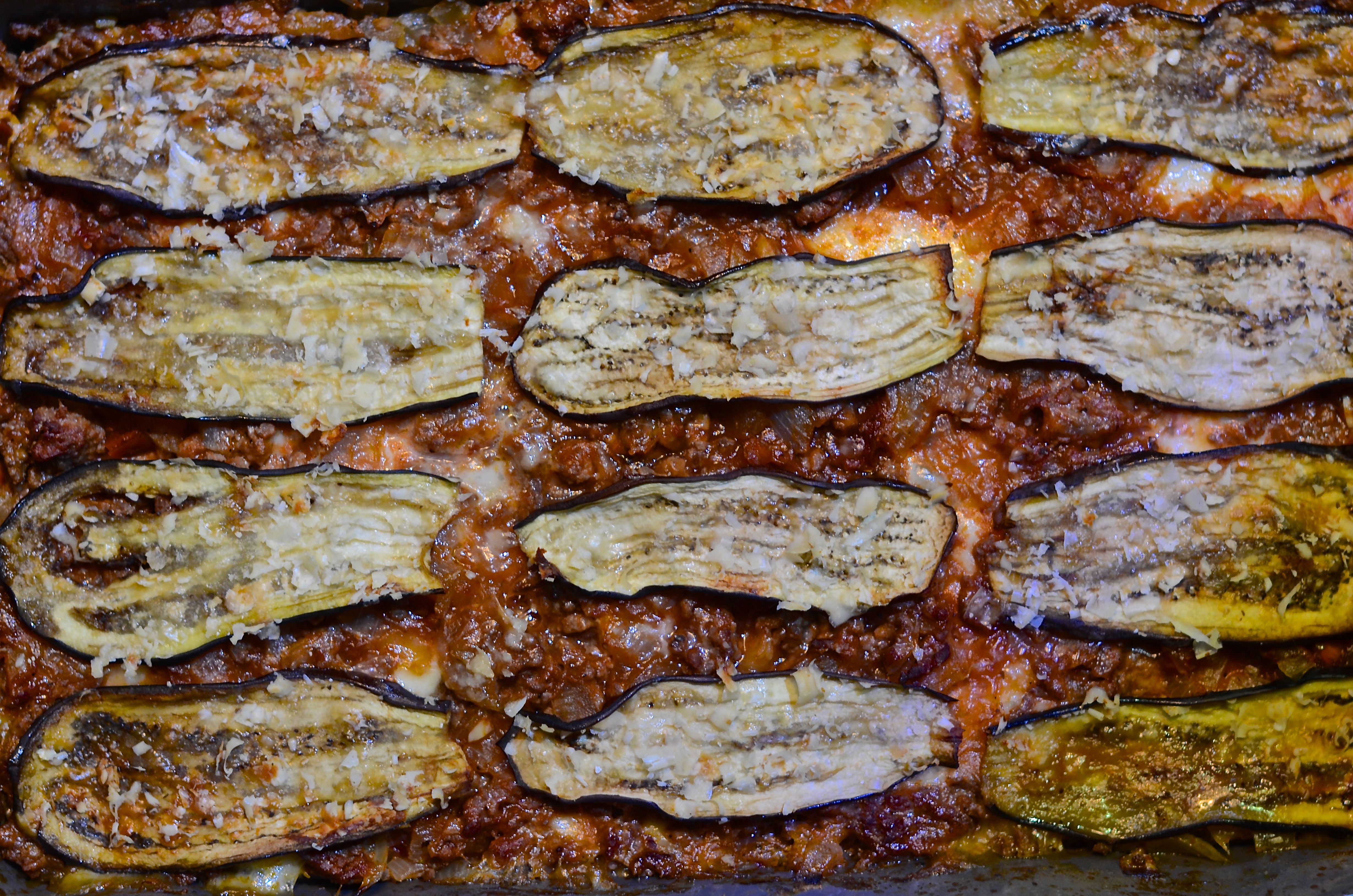
Eggplant Lasagna

A Polish Country Dinner

RoosterGoogle Images

I was listening to The Splendid Table about a month ago when Lynn was interviewing Anne Applebaum who has authored a new cookbook: From a Polish Country House Kitchen:  90 Recipes for the Ultimate Comfort Food.  Visit this link to hear the podcast for yourself.    This was late January and we were up to our necks in root vegetables here in Tunis so I knew I would be able to identify with the book.

In 1988, Anne and her Polish husband, along with her inlaws, bought a broken down manor-house in Northwest Poland.  Over a decade, they renovated the house, along with the grounds and gardens, part of which was a large greenhouse.  Deer, wild boar, and geese can be hunted on the property and many types of fish are caught or farmed locally.  They preserve what they grow in the harvest season, in the traditional ways, and use what they have in the lean months in masterful ways.

I have been inspired and a little haunted by this Polish way of eating.  I was in Poland last winter and I still carry an unshakable sadness for one of the most tragic places I’ve ever been right next to a curiosity to more deeply know one of the quaintest and most beautiful places.

I was cooking this afternoon.  I needed four onions, but I only had two.  Rifling through the refrigerator, I found a bundle of leeks that had been stored for a couple of weeks.  They hadn’t yet been cleaned so they were still dirt caked and were also beginning to yellow on the outer layers.  A more finicky me would not have bothered with them and would have composted the entire bunch.  The compost can be a great rationalization sometimes when you just don’t want to bother with produce that will take a little work.  But, I needed the onions, now.  The produce shops were already closed for their afternoon siesta and I needed my dish to simmer in the meantime.  This is where the country cook comes through.  I washed and trimmed the leeks, finding plenty of good onion left to use and then slow-cooked them in a braise that was delicious.  I think that many of these old country recipes began from meats, vegetables, and fruit preserved using methods that were possible given the climate and technology of the time to provide foods of interest and variety in the bleak months, but since then, generations of cooks have refined the techniques until they have become exquisite dishes in their own rights.  They have evolved from necessity to art.

I became a little obsessed with the idea of cooking a Polish feast and I thought about it and planned it for weeks.  The atmosphere of the meal was simple with lots of candlelight, rough linens, and pottery,  and the menu was entirely Polish.  Here is what we had:

Blini with Smoked Salmon and Caviar
Barszcz or Borscht (the Russian name)
Pierogi:
     Potato and Ricotta, with Fresh Peas, and Bacon
     Sauerkraut and Wild Mushroom
Braised Pork Shoulder with Sour Cherries
Brown Sugar Pavlova with Fresh Strawberries and Creme Fraiche
Mint Tea
 

Here are a few photos.

DSC_2828
shutter speed: LO, F:16, ISO: 1600
shutter speed: LO, F: 16, ISO: 1600

Cooking a disciplined dinner like this is really a massive laboratory exercise, especially when you are cooking recipes that are all new to you.  I learned many things.

1.  Even when you have stuffed the borscht stockpot, the massive one made for industrial kitchens, with beef on the bone, many, many onions, leeks, celery, beets, carrots, porcini mushrooms, and garlic,  simmered and simmered, and then reduced the final consume, it can still be a bit thin on body.  It wasn’t all that I expected, in the end, and I will keep trying to find “my recipe” that makes the borscht I am tasting in my head.

2.  After two complete pre-party pierogi run-through batches, I still prefer the peirogi dough recipe I referenced last summer when we were making crab peirogis.  The addition of sour cream or creme fraiche to the dough not only gives it a tender bite, but also makes the dough taste like more than flour.  Following is the abbreviated version.

Dough: 3 eggs, 8 ounces sour cream or creme fraiche, 3 cups all-purpose flour, 3/4 tsp. salt, 1 tablespoon baking powder

Blend all ingredients and 1 cup flour in mixer with a dough hook.  Gradually add remaining flour, 1/4 cup at a time, until dough pulls away from the bowl and is not too sticky to work with.  Beat dough a few minutes more, then let rest for 5 minutes before beginning to roll.

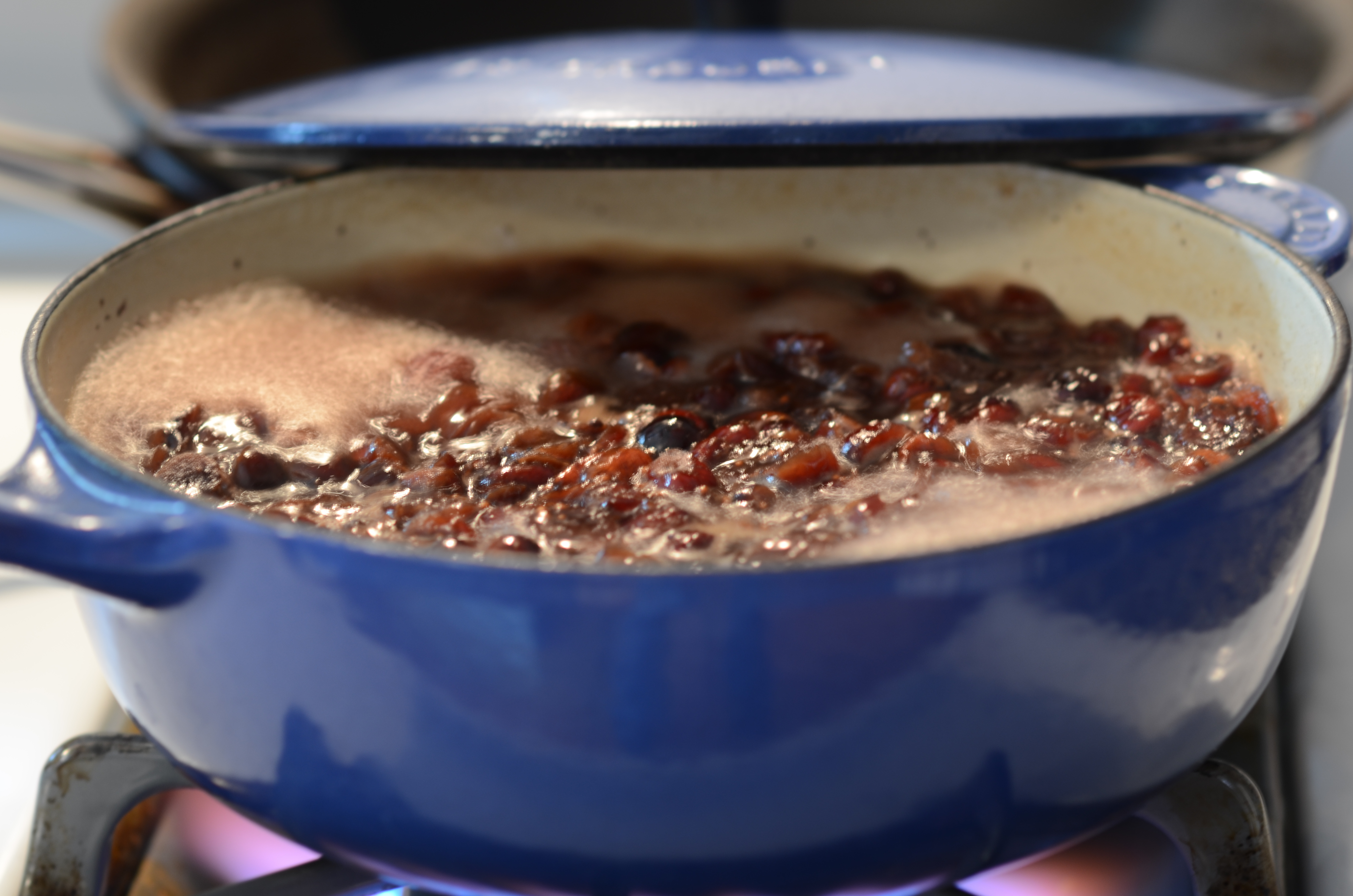
3.  If you find, like some Polish country cooks do, that moths have hatched an entire colony in your precious stash of dried sour cherries, cranberries work just as well.

4.  Not many people could tell you what Polish food is, but when they taste it, they love it.

Birthday Braise

          It’s Allan’s birthday.  We have a long succession of November birthday parties together.  It turns out to be a nice time for a party.  The weather is cool, but not yet frigid and some warm and filling foods taste very good.

We had 12 great friends over and lucked out with a warmer than recent evening, a lovely night sky,  and no wind.  We pulled the garden tables close to the barbecue and kept a fire going all evening.
The main dish was Cranberry Short-Rib Stew.  This was, again, from the stew/beer pairings section of the October 2011 edition of Sunset Magazine.  The recommended beer was Deschutes Brewery Black Butte Porter.  There were a lot of smokey and bright flavors in this stew that might not have been immediately recognizable, like chocolate, cranberries. ginger, and orange zest.  After cooking a couple of hours, the meat was tender enough, but the stock was still a little watery.  I uncovered the dish and continued to bake it for about 2 more hours which served to caramelize all of the complexities.

I couldn’t buy meat on bones at our butcher so I bought meat and bones.
After browning, but before braising.  See recipe for finished dish photo.

Since we are officially off pumpkin.  I omitted the addition of pumpkin in the stew, but it still needed some color.  Instead, I roasted some of our vibrant, almost red carrots.  I drizzled them with olive oil and seasoned them with herbes de provence, Himalayan pink salt, and pepper.  They needed to roast for at least 2 hours to get completely tender and a little caramelized.  As a finishing touch, I drizzled them with some passion fruit vinegar, which set them off nicely.

Think you already have the perfect mashed potato sequence?  Bon Appetit has a process that might give you some new thoughts about it.  You start with large cubed potatoes that you cook in salted water.  When they are fork tender, you drain them and turn them out onto a baking sheet to cool and dry for about 15 minutes.

Then, you force the potatoes through a ricer or food mill, along with 1/2 cup of chilled butter.

Heat milk, cream, bay leaves, fresh thyme or rosemary, and pepper corns on the stove.  Allow to steep about 20 minutes and then strain.  Reheat milk mixture.  Pour over potatoes as you stir.  I used the dough hook on my Kitchen Aid mixer.

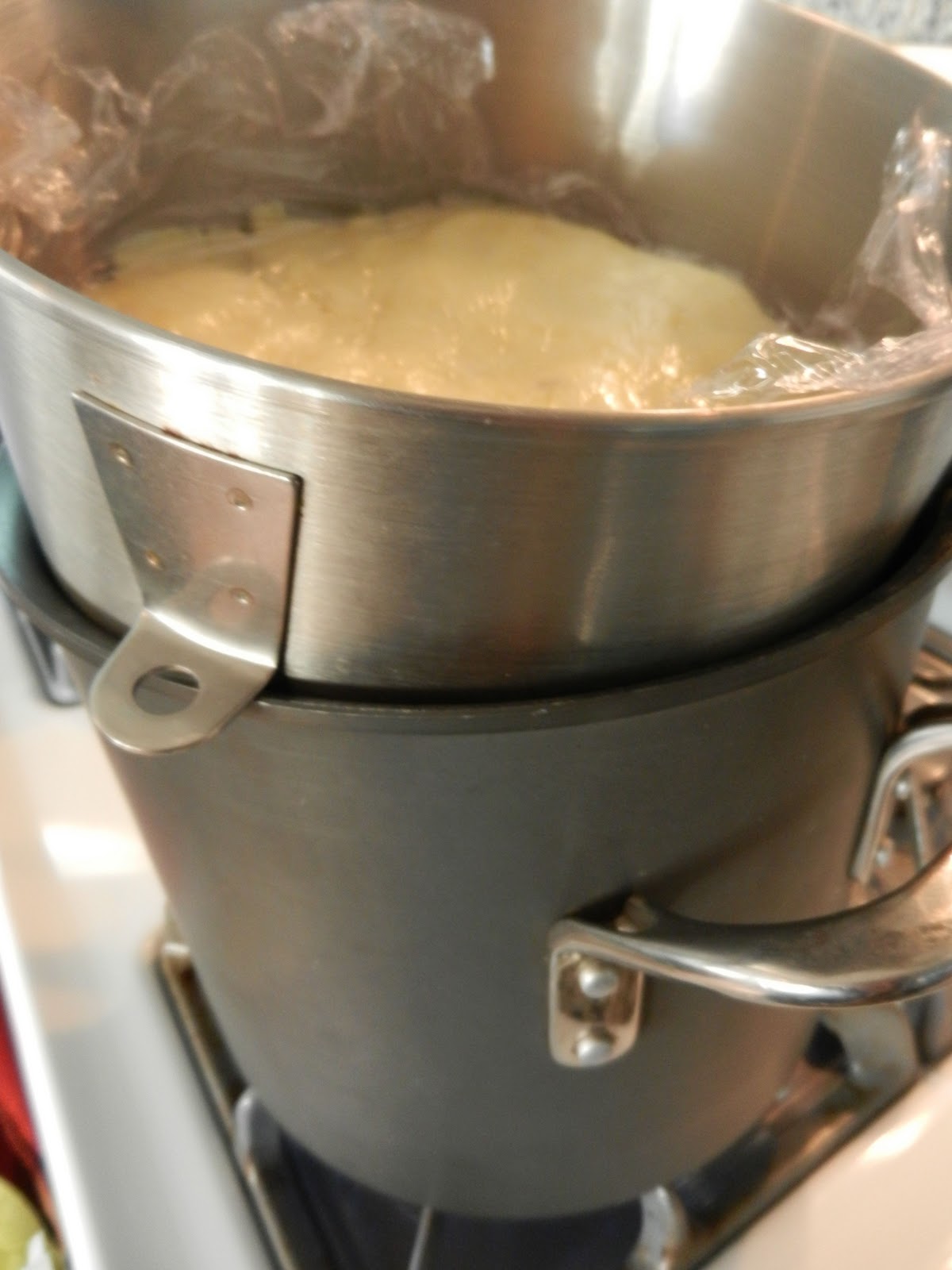
This may be the biggest tip of the recipe:  at this point you can hold the potatoes in fluffy condition if you do the following.  Number one, cover the potatoes with plastic wrap directly touching them.  Number two,  keep them in a bowl over, but not touching, simmering water.

I kept them for over an hour and they turned out great.

And because I said I would, here is the link to the chocolate peanut butter cake at Smitten Kitchen.  Yes, it is a great recipe.