 Google Images
I was listening to The Splendid Table about a month ago when Lynn was interviewing Anne Applebaum who has authored a new cookbook: From a Polish Country House Kitchen: 90 Recipes for the Ultimate Comfort Food. Visit this link to hear the podcast for yourself. This was late January and we were up to our necks in root vegetables here in Tunis so I knew I would be able to identify with the book.
In 1988, Anne and her Polish husband, along with her inlaws, bought a broken down manor-house in Northwest Poland. Over a decade, they renovated the house, along with the grounds and gardens, part of which was a large greenhouse. Deer, wild boar, and geese can be hunted on the property and many types of fish are caught or farmed locally. They preserve what they grow in the harvest season, in the traditional ways, and use what they have in the lean months in masterful ways.
I have been inspired and a little haunted by this Polish way of eating. I was in Poland last winter and I still carry an unshakable sadness for one of the most tragic places I’ve ever been right next to a curiosity to more deeply know one of the quaintest and most beautiful places.
I was cooking this afternoon. I needed four onions, but I only had two. Rifling through the refrigerator, I found a bundle of leeks that had been stored for a couple of weeks. They hadn’t yet been cleaned so they were still dirt caked and were also beginning to yellow on the outer layers. A more finicky me would not have bothered with them and would have composted the entire bunch. The compost can be a great rationalization sometimes when you just don’t want to bother with produce that will take a little work. But, I needed the onions, now. The produce shops were already closed for their afternoon siesta and I needed my dish to simmer in the meantime. This is where the country cook comes through. I washed and trimmed the leeks, finding plenty of good onion left to use and then slow-cooked them in a braise that was delicious. I think that many of these old country recipes began from meats, vegetables, and fruit preserved using methods that were possible given the climate and technology of the time to provide foods of interest and variety in the bleak months, but since then, generations of cooks have refined the techniques until they have become exquisite dishes in their own rights. They have evolved from necessity to art.
I became a little obsessed with the idea of cooking a Polish feast and I thought about it and planned it for weeks. The atmosphere of the meal was simple with lots of candlelight, rough linens, and pottery, and the menu was entirely Polish. Here is what we had:
Blini with Smoked Salmon and Caviar Barszcz or Borscht (the Russian name) Pierogi: Potato and Ricotta, with Fresh Peas, and Bacon Sauerkraut and Wild Mushroom Braised Pork Shoulder with Sour Cherries Brown Sugar Pavlova with Fresh Strawberries and Creme Fraiche Mint TeaHere are a few photos.


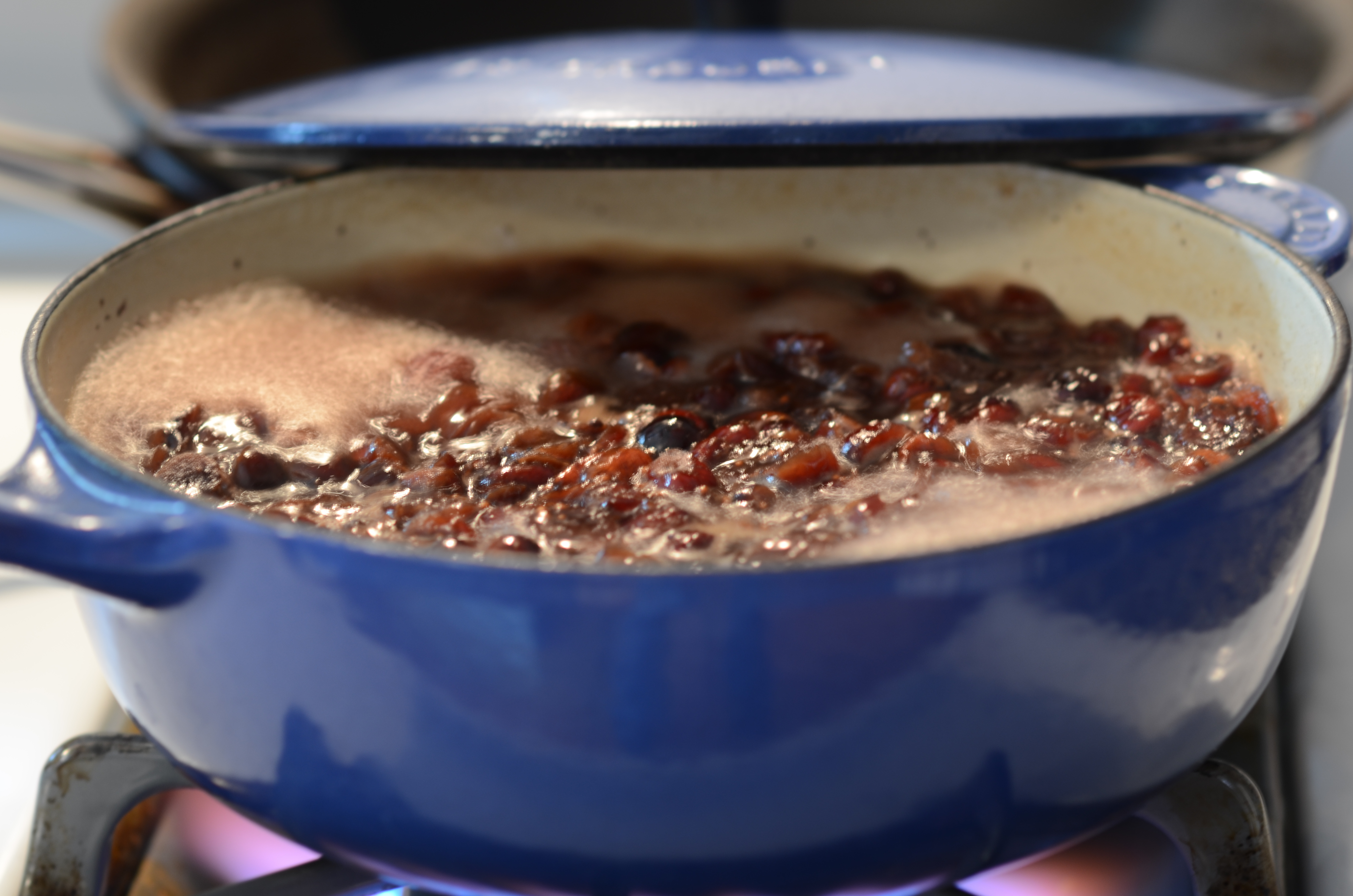
Cooking a disciplined dinner like this is really a massive laboratory exercise, especially when you are cooking recipes that are all new to you. I learned many things.
1. Even when you have stuffed the borscht stockpot, the massive one made for industrial kitchens, with beef on the bone, many, many onions, leeks, celery, beets, carrots, porcini mushrooms, and garlic, simmered and simmered, and then reduced the final consume, it can still be a bit thin on body. It wasn’t all that I expected, in the end, and I will keep trying to find “my recipe” that makes the borscht I am tasting in my head.
2. After two complete pre-party pierogi run-through batches, I still prefer the peirogi dough recipe I referenced last summer when we were making crab peirogis. The addition of sour cream or creme fraiche to the dough not only gives it a tender bite, but also makes the dough taste like more than flour. Following is the abbreviated version.
Dough: 3 eggs, 8 ounces sour cream or creme fraiche, 3 cups all-purpose flour, 3/4 tsp. salt, 1 tablespoon baking powder
Blend all ingredients and 1 cup flour in mixer with a dough hook. Gradually add remaining flour, 1/4 cup at a time, until dough pulls away from the bowl and is not too sticky to work with. Beat dough a few minutes more, then let rest for 5 minutes before beginning to roll.
3. If you find, like some Polish country cooks do, that moths have hatched an entire colony in your precious stash of dried sour cherries, cranberries work just as well.
4. Not many people could tell you what Polish food is, but when they taste it, they love it.

 bergamot orange