A Time to Weep

I have had, like all humans, a few shoulder-shuddering, tears won’t stop coming, days in my life, too.  When my fiance broke up with me when I was 21 (Don’t worry, I’ve never regretted it a day, since), when we lost a young friend to brain cancer, when I got on an airplane and left my oldest son in the US to attend college, and most recently, when my brother suddenly died at the age of 57, two years ago.

I was just packing out of Kathmandu at the time, moving to Tunisia.  We had two weeks remaining in the school year, two weeks filled with year-end reports, good-bye parties, and final sorting through our belongings.  Our son, Gabe, called us from the US late on a Tuesday night, extremely unusual.  Grandpa had called to tell him that Uncle Mark had died, but my dad didn’t know how to contact me so my oldest son told me the news.

I had to be on a flight the following night or I wouldn’t be able to get out for three more days, causing me to miss the funeral.  I had one day to wrap up five years of my life in Nepal.  I motored through on adrenalin, covering the bases, and got myself on an airplane headed to Hong Kong and then on to Vancouver.  Mercifully, I fell into an exhausted sleep on the plane and was awakened when the flight crew began serving breakfast, meaning we were just a couple of hours out of Vancouver.

I recognized the grief that insisted this was the moment of its arrival.  I started to cry.  I started to realize.  Oh God, my parents.  I started to understand the permanence.  Tears poured and took over my body in wracking heaves.  I asked one attendant for a napkin and he brought me one.  Then he brought me several and then a box as I shuddered and voluntarily wept for my brother.

Sunday was an absolutely perfection of a day in Tunis.  After Allan and I went to the gym, we stopped by our corner fruit and vegetable provisioner just around the corner from our house.  I assume the family relationship between the men who operate this stand, but there is one man who is always working on weeknights when we swing by and then on weekends there is another man about his age and then a quite older man, wearing an embroidered white prayer cap and those huge, magnified glasses like George Burns.  In my mind they are brothers and their father.

When we pulled up, because the day was so delightful, we walked the 100 steps up to the sea and breathed in a few grateful gulps of blue sea air.  Then we went in the shop where the dad single-handedly helped us with our purchases, which was unusual.  He helps the boys, but doesn’t usually take care of everything.  Then I noticed the weekend brother.  He was sitting on a fruit crate behind the terraced rack of lettuces.  He sat limp, drained, intermittently blotting his eyes with a tissue and sometimes covering his whole face while his shoulders shook.  I knew.  Maybe for the first time I saw someone from my host country in complete grief.  He was unaware of people in the shop.  He had that mark of loss and was in utter pain.

I haven’t been able to get him out of my mind and I’m thinking about the Biblical verses about everything having its season. Part of the humanity we all share the world around is that we will all have our day when the sun may be shining gloriously and the world looks like such a beautiful place, but that will be our day to sit and mourn and we won’t care who sees us.

Lamb Baked in a Clay Jar

Late May and June can hold some melancholy weeks for international teachers.  Our life overseas is very closely related to working/living at a summer camp.  We come in together with a particular group of teachers and maintain a social support net for one another as we learn the ropes of working at our new school and living in our new country.  Your cohort or class is a group of colleagues that remains significant to you no matter how many other friends you have on staff.  The first of our cohort is leaving in June and we had a Sunday afternoon garden dinner together with our group.

Even though my husband is the director of the school, we were as green as everyone else when we all flew in to start our new lives here.  Allan and I had actually been here a few days when the others arrived and we knew that they would be very challenged to even feed themselves for a few days so we started what I think will be a tradition for us which is having all of the new arrivees to our house to dinner the first night they’ve landed in the country.  They are usually booked to arrive over just a couple of days, but once they get dropped off at their new house and have a nap and a shower, it’s kind of nice to come over to a meal and a chance to start getting to know their new colleagues.  That first year, when we didn’t have our shipment yet, we had to host “bring your own plate” parties because we were each issued only replacement level numbers of plates in our houses.  Only one of the smart implementations Allan has made in the two years he has been director of this school is to issue new teachers a few extra plates.

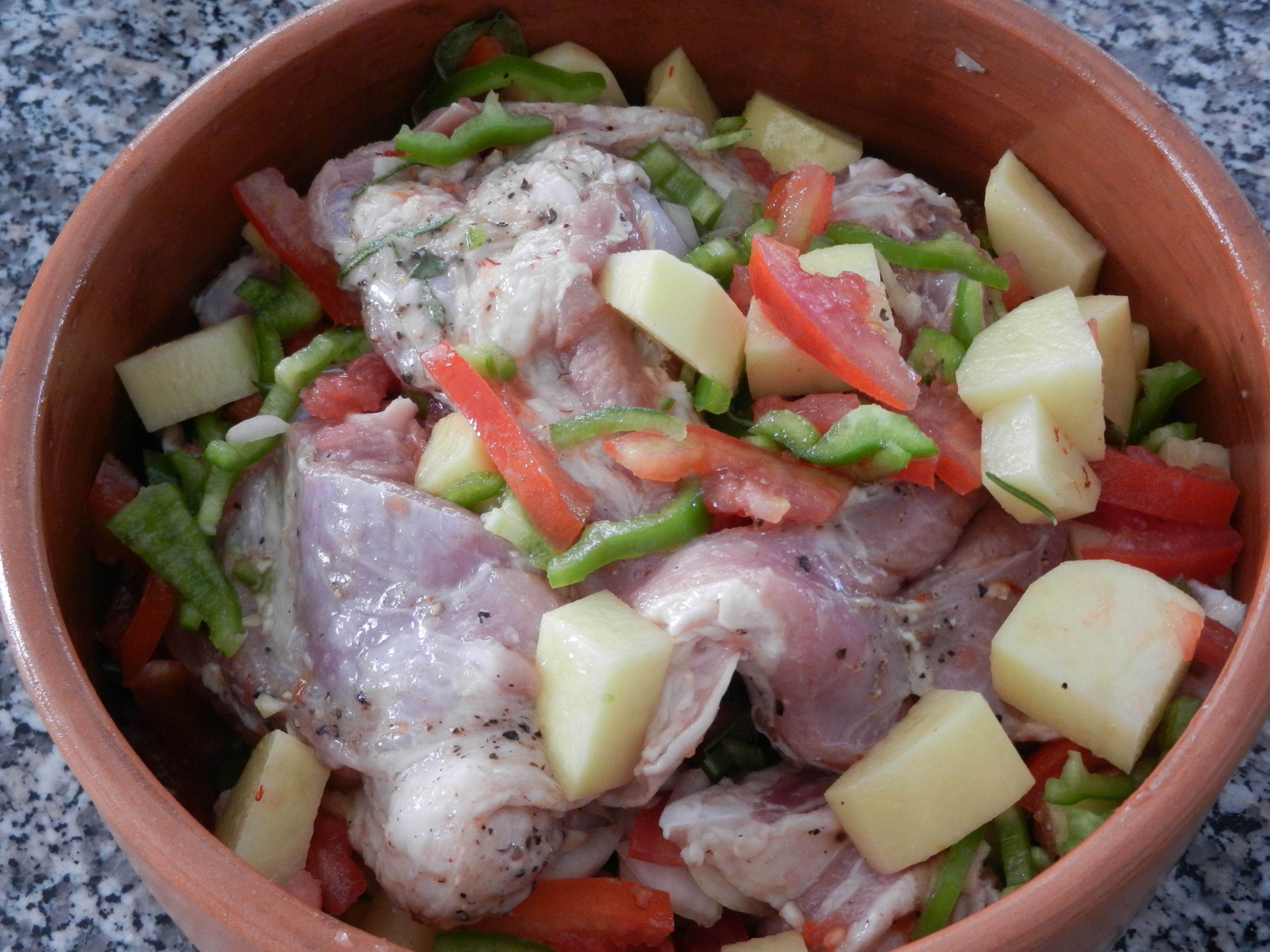
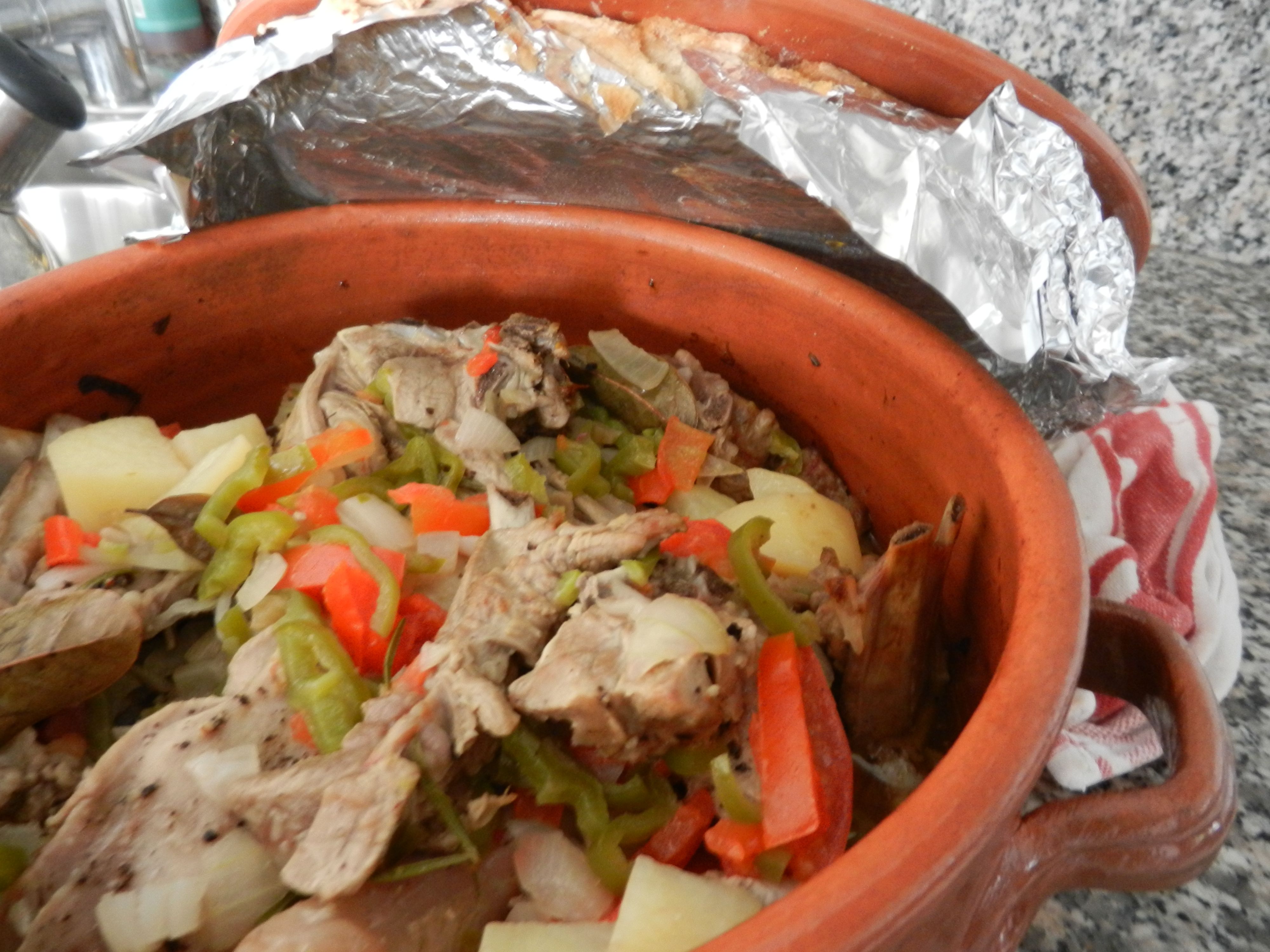
Our friend, Karen, who is leaving, has invested herself in Tunisia, travelling all over the country.  In her honor, I selected a main dish that reflects the ingredients and techniques of deep Tunisia.  This is a recipe from the island of Djerba.  The story goes that this dish is cooked in an amphora-shaped, unglazed, terracotta pot called a gargoulette which can be stuffed with fish or meat, saffron, herbs, olive oil, and vegetables and then left in the embers that warm the water at a traditional bathhouse to cook slowly while the women bathe.  Following this session, the cook brings the pot home where her husband breaks off the top and she pours the contents into a serving bowl.  It’s almost a Tunisian TV dinner.

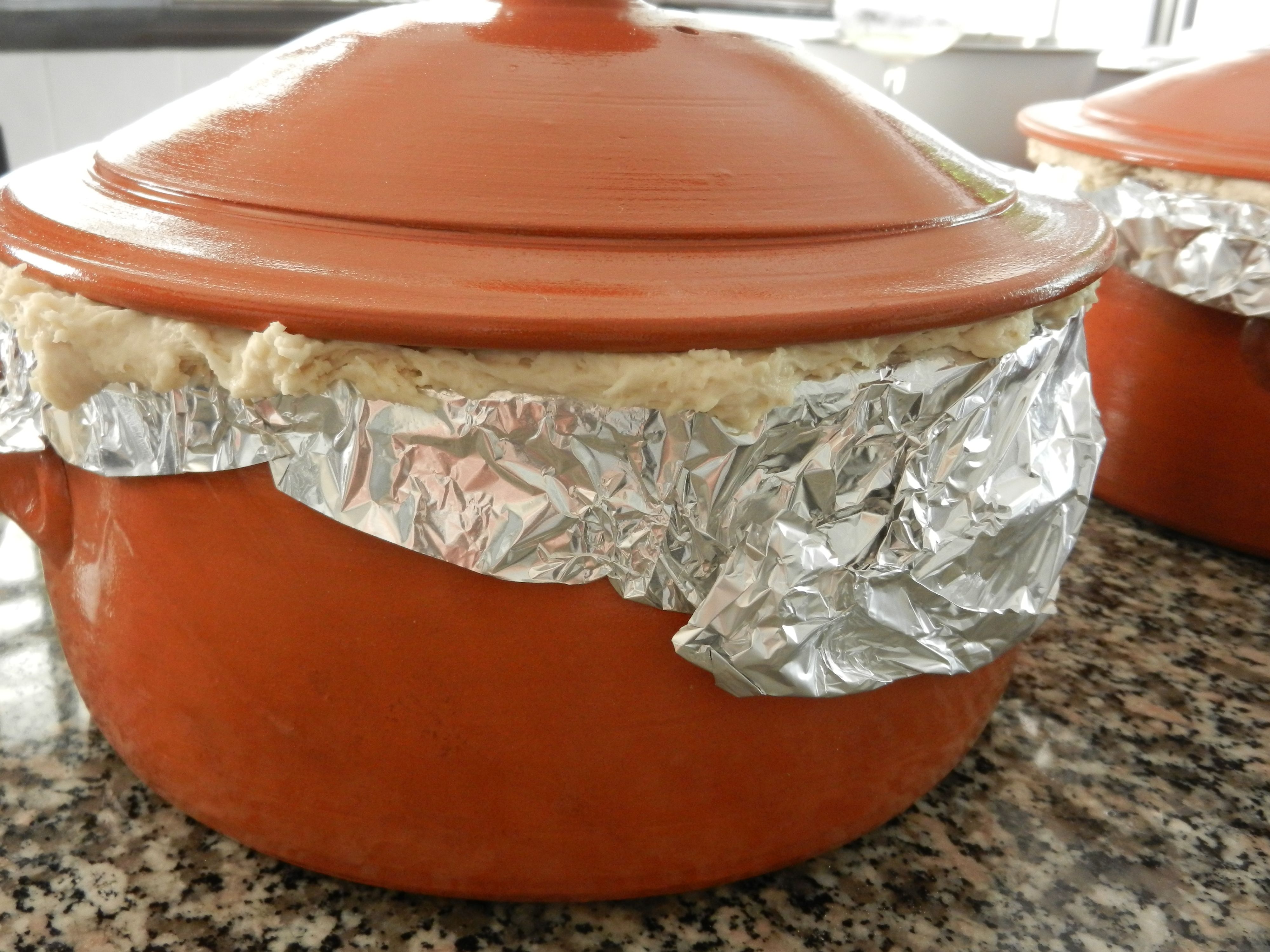
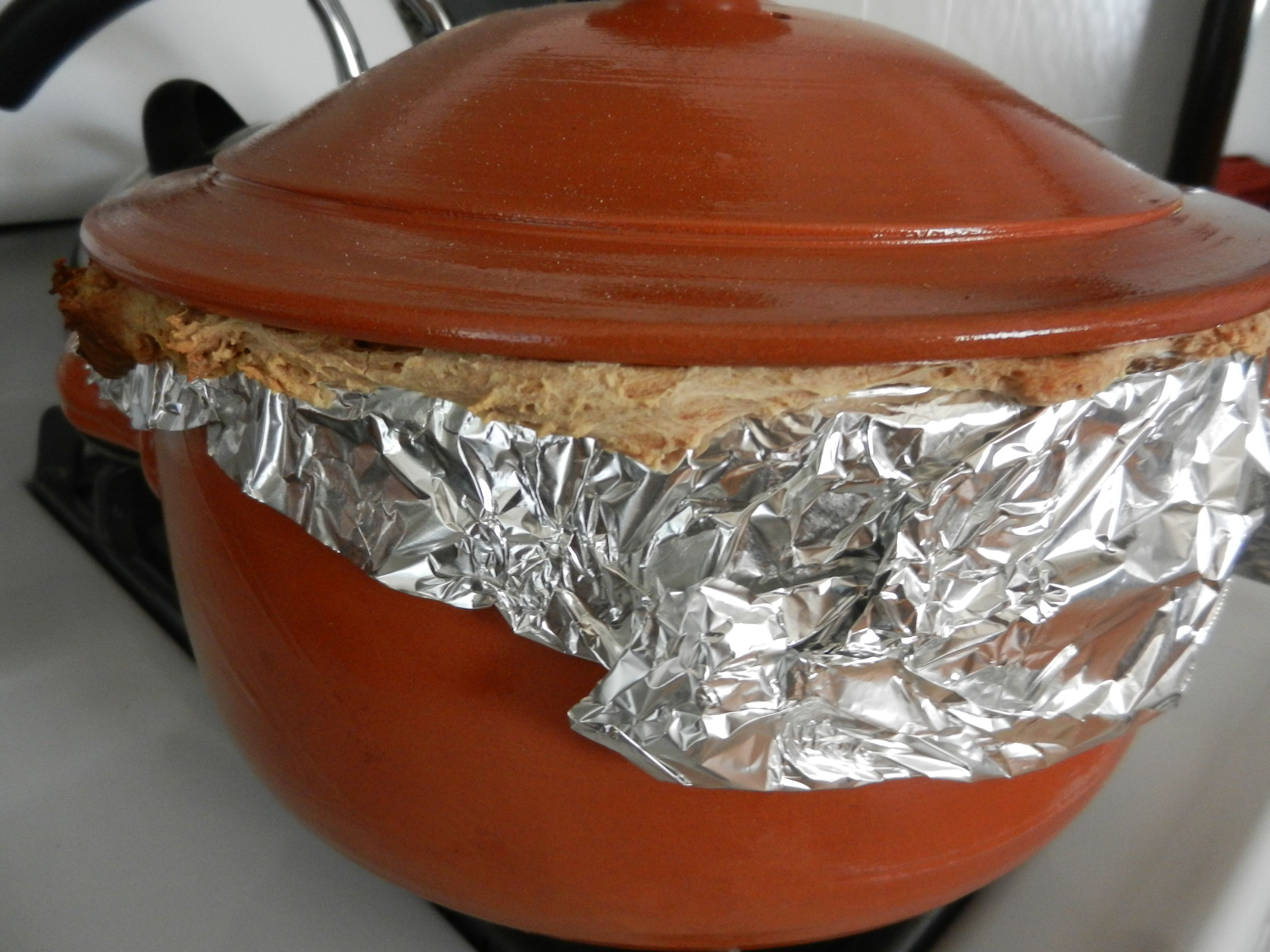
Cooking the food in a clay pot imparts a particular flavor and clayware being so cheap in Djerba, the pot is merely crushed and returned to the ground.  I used a method of sealing the pot with bread dough which was interesting, but frankly, I could have used super glue which would have been easier to remove.

Ingredients

  • 1 1/2  pounds bone-in shoulder of lamb, trimmed of excess fat and cut into 12 chunks
  • 1 small onion, finely chopped, plus 2 tablespoons chopped onion
  • 2 tablespoons finely chopped garlic
  • 1 large sprig of rosemary
  • 1 bay leaf
  • Salt and freshly ground pepper
  • Pinch of saffron threads
  • 1 medium tomato
  • 1 small green or red bell pepper
  • 4 medium Yukon Gold potatoes
  • 1/4 cup extra virgin olive oil
  • Flour, water, and oil ribbon for sealing the clay pot
  • Juice of 1 lemon
  • 1 tablespoon chopped flat-leaf parsley

Procedure

1.  Rinse the meat; drain and mix with the small onion, garlic, rosemary, bay leaf, salt, pepper, and a good pinch of saffron.  Marinate in the refrigerator for at least 5 or 6 hours.

2.  Core the tomato, cut in half crosswise, and gently squeeze out the seeds.  Slice the tomato.  Core, seed, and thinly slice the bell pepper.  Peel and halve the potatoes.  Mix the vegetables with the olive oil and the marinated meat.  Pack into a 3-quart clay pot and mix well.  Cover with foil.  Seal with a ribbon of dough made with flour mixed with water and a drop of oil and set the lid on top.  Place in a cold oven, turn the temperature to 450 degrees F.  Bake for 1 1/2 hours.  Turn off the oven and leave to continue baking for 30 minutes.

3.  Pour the ingredients into a deep serving plate and correct the seasoning.  Sprinkle the lemon juice, chopped onion, and parsley on top and serve.

Recipe from The Slow Mediterranean Kitchen by Paula Wolfert

Crisp-Skinned Vietnamese Chicken with Peaches

I was at the beach all weekend, literally sitting in a chaise lounge talking to girlfriends.  It was so much fun, but I got no shopping or prepping done for the week.  Once we got back into Tunis, we stopped at a roadside stand for some produce.  They had these pretty, little, doughnut peaches and I bought them not entirely knowing what I was going to do with them.  I really appreciate the stone fruit season, here.  It is in spring and it allows me to enjoy some of the fruits I miss every August in Washington State when I have to leave to come back to Africa.

I had some chicken thighs and creme fraiche so I thought I would make a poulet a la peche I remember making a couple of decades ago when my husband and I were cash tight.  I had gleaned peaches after a harvest and he had home butchered some chickens he got from the absolutely free ads in the newspaper and we had a gourmet dinner one hot August evening at the little table in the kitchen of our first house.  That is a good memory.

Searching for a recipe, however, I found this light, crisp, spicy dish that sounded so much better.  Because these peaches slipped nicely out of their skins after I parboiled them, I decided to leave them whole, but the recipe directs slicing them into the salad.  I can’t remember the last time we fried chicken, but it was so worth it to create the crunchy contrast to the minty salad and the sweet peaches.  The recipe is from the Australian magazine Gourmet Traveler and it is making me think a little fondly of our days in Southeast Asia, which are good memories, too.

Serves 6

Ingredients

For Deep Frying

  • Vegetable oil
  • 1 chicken, cut into 12 pieces

Salad

  • 3-5 peaches, peeled, halved, stones removed, thinly sliced
  • 1 Lebanese cucumber, halved lengthways and thinly sliced on a mandolin
  • 1/2 cup (loosely packed) each coriander and mint
  • 1/2 cup roasted peanuts, coarsely chopped (I substituted toasted macadamia nuts)

Nuoc Cham

  • 1 tablespoon each fish sauce and lemon juice
  • 1 tablespoon caster sugar
  • 1 long red chili, finely chopped
  • 1 garlic clove, finely chopped

Procedure

Heat oil in a deep saucepan or deep fryer to 180 degrees C.  Pat chicken to dry with paper towel then deep-fry in batches, turning occasionally until golden (10-12 minutes per side).  Drain on paper towel and season to taste with sea salt and freshly ground pepper.

Meanwhile, for nuoc cham, whisk fish sauce, lemon juice, sugar and 1 tablespoon water in a small bowl to combine, then stir in chili and garlic.  Set aside.

Combine peaches, cucumber slices, and herbs on a serving plate.  Top with crisp-skinned chicken.  Drizzle with nuoc cham.  Scatter with nuts  and serve.

Jamaican Jerk Chicken

Something I have noticed about other expats, as well as myself, if that when we move overseas, we tend to identify ourselves more strongly to the culture or region we are from.  I am from two places in the US:  southern Colorado and the Pacific Northwest.  There are times when I flaunt my cowboy boots, drape myself with turquoise jewelry, and cook up a big vat of pinto beans with tamales on the side.  Other times, I am a Northwest coastal hunter/gatherer, living the San Juan Islands life of subsistence, consisting of dungeness crab, grass-fed lamb, and locally cultivated vegetables and berries.  I love putting on those identities.  They tie me to my childhood, my family, and my memories.

My friend Geoffrey and I were umming together over plates of Tanzanian chicken and rice at the recent International Day celebration at our school in Tunis.  He is Canadian-Jamaican and started telling me about the specialties his mom had taught him to cook.  They sounded mouth-watering so we made a cooking date so he could teach me to make his (mama’s) jerk chicken.

He is such a teacher.  When I arrived, at 3:00 PM, he had a finished dish braising in the oven and everything set up to take me through the entire process.

Jamaican Jerk Chicken

Serves 8

Ingredients

  • 5 yellow potatoes, peeled, cut into ½” slices
  • 13 chicken pieces, boneless, skinless, legs and thighs, preferably cut into 3 sections each (This may require one to buy a new, expensive, Japanese cleaver)
  • ½ cup white vinegar
  • 1 lemon, juiced
  • 1 ½ heads garlic, chopped
  • Garlic powder
  • ½ large onion, chopped
  • 2 medium tomatoes, quartered
  • 2 small hot peppers, cut in ½
  • 3 tablespoons black pepper, ground
  • 2 tablespoons Jamaican spice blend (www.iriespices.com)
  • 1 tablespoon cayenne pepper
  • 1 teaspoon whole cloves
  • ½ teaspoon  black pepper corns
  • 1 tablespoon fresh ginger, grated
  • 1 ½ teaspoon dried thyme
  • 2 tablespoons dark soy sauce
  • ¼ teaspoon seasoning salt or salt

Procedure

 Preheat oven to 350 degree F.

 Brown the potatoes on both sides, leaving them to drain on paper towels while preparing the chicken.

Rinse the chicken and pat dry.  Place chicken in a large mixing bowl.  Sprinkle with approximately ½ cup of white vinegar and toss chicken to coat.  Rinse chicken with water and return to clean mixing bowl.  Cover chicken with the juice of 1 lemon, again tossing to coat.  Rinse the chicken with water and allow to  drip-dry in a strainer.

Return chicken to a clean mixing bowl.   To the bowl of chicken add the garlic, garlic powder, onion, tomatoes, and peppers.  Toss to distribute.  Add all spices and seasonings and toss with hands to coat.

Image

Heat 2 tablespoons olive oil in a skillet over medium-high heat.  Remove chicken pieces a few at a time and brown on both sides.  Layer chicken pieces into a 9” x 12” baking dish, topped with browned bits from the skillet.  Cover chicken with the entire marinade.  Rinse the marinade bowl with ½ cup hot water, swirl, and pour over contents of baking dish.

Cover baking dish tightly with aluminum foil, shaking a little to settle the ingredients.

Place dish into oven, immediately reducing heat to 300 degrees F.  Cook for at least 1 hour or until chicken is completely tender.

Serve over a loose-grained rice, like basmati.

Image

Mrs. Smith, you’ve got a good boy.

Whole-Milk Ricotta Cheese and Milk-Braised Pork

I am not a fearless dairy woman.  Last summer, I documented my lifelong squeemishness about cowy milk containing thick chunks of cream or downright butter.  I like a pasteurized layer of separation between me and the bovine source of my dairy.  But, in every place I have lived outside of the US, there are only extremes in dairy production and no middle ground.  One either buys raw milk, still steaming, delivered directly from farmers in metal cans or you buy ultra-pasteurized milk in UHT boxes, with all culture cooked out of it to allow it a shelf life of years.

I have been wanting to dabble in the queso-arts lately, but I’m not brave enough to flag down the local farmer who I see delivering milk from the back of his truck, using a giant dipper to pour it into the residents’ own jugs.  I think that is a beautiful thing and I should try it, but actually I don’t have the language skills to even approach it.

When I was in London two weekends ago, we went to the venerable royal provisioner temple of Fortnum and Mason.  Mostly, we bought English cheeses that we can’t get here:  cheddar and Stilton.  I will now admit, though, that I tucked in two quarts of very creamy whole milk with a cheese-making project in mind.

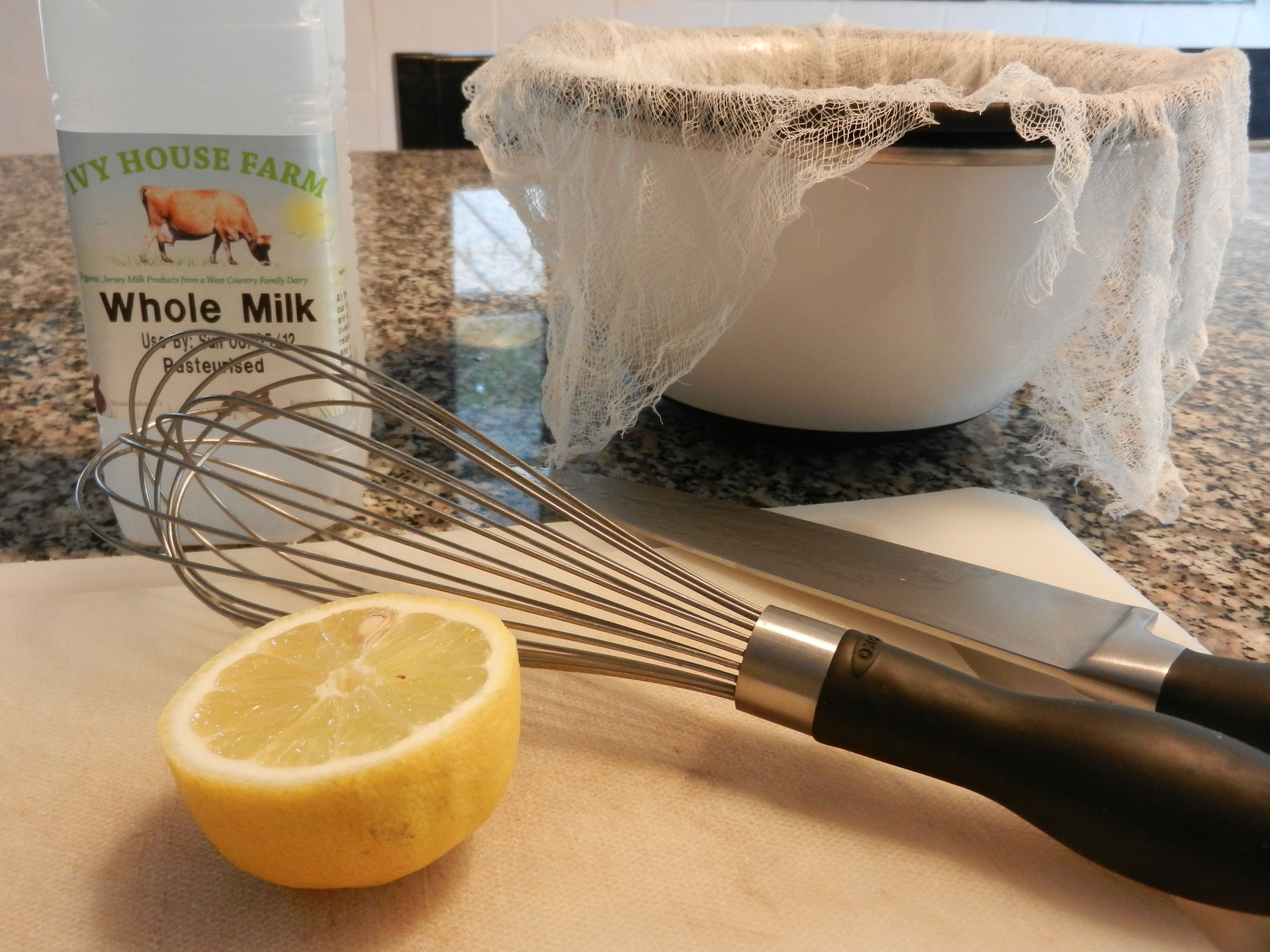
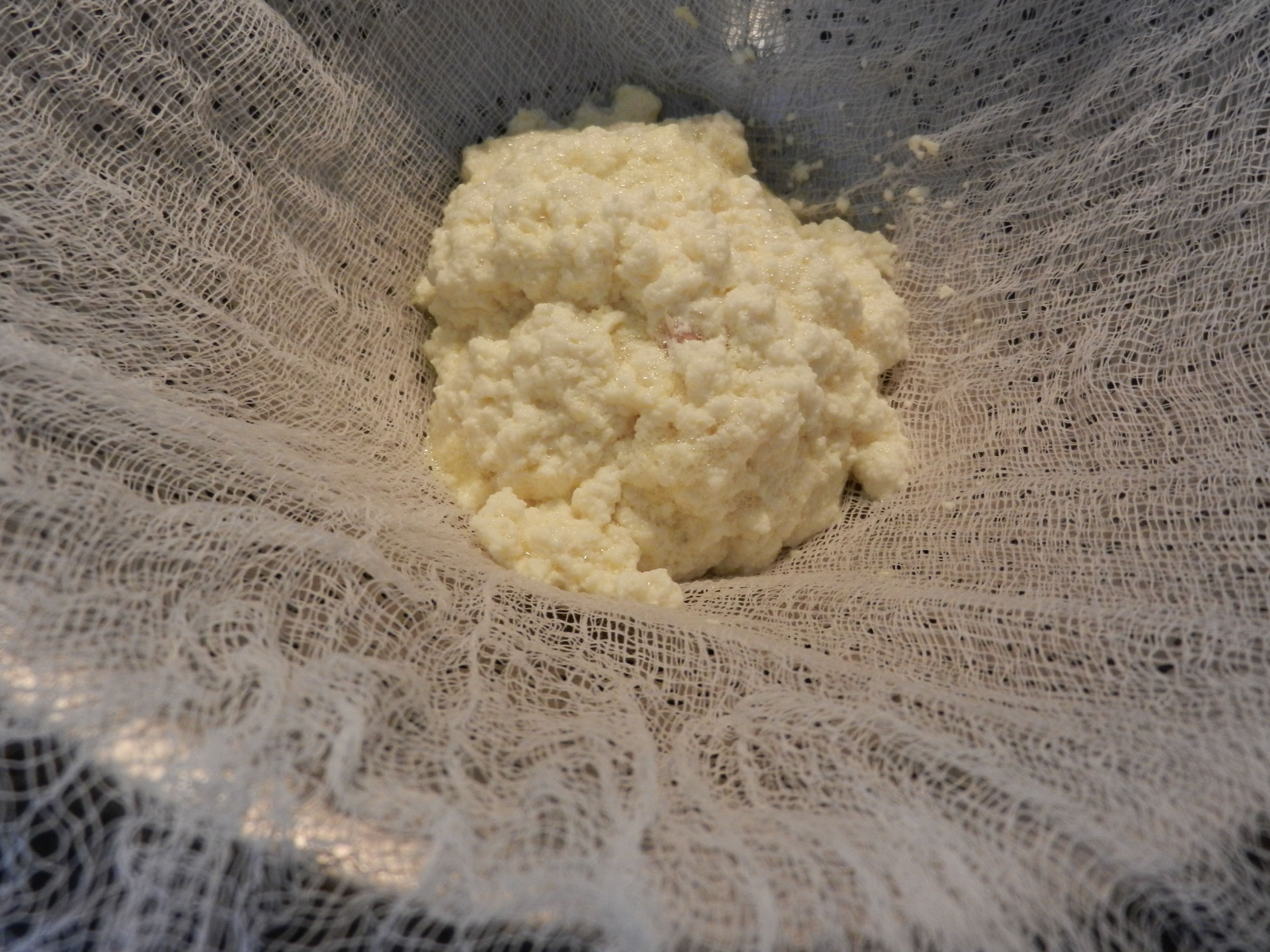
The process for making ricotta or cream cheese is actually as simple as claim says.  The difference between the two is the ratio of butter fat to milk:  more fat= cream cheese, less fat= ricotta.

Once the curds have been lifted from the whey, the whey can be used in a very nice meat braise, like milk-braised pork shoulder.  This was another of the recipes I piloted during my month-of-endless-cooking in April.  The leftover meat is fantastic shredded into tamales or on tostadas.

Whole Milk Ricotta and Cream Cheese

© 2010 Lynne Rossetto Kasper and Sally Swift

Makes 1 1/4 pounds

Ingredients

  • 1 gallon high quality whole milk
  • 2 teaspoons salt
  • 1/3 cup freshly squeezed lemon juice

Instructions

1. Line a large colander with a layer of cheesecloth and place in the sink or over a bowl if you want to save the whey. Wet the cheesecloth to hold it firmly in place.

2. Over medium-high heat, bring the milk and salt to a gentle simmer in a heavy large pot. Stir in the lemon juice and continue to simmer gently until curds begin to form and float to the top, 1 to 2 minutes. They will first look like spatters of white, then gather into soft, cloud-like clumps. When you see the liquid begin to clear of cloudiness and the curds are firming up but not hard, scoop them out with a slotted spoon or sieve.
3. Let the curds drain thoroughly in the lined colander. If very soft, press gently to extract a little moisture, but take care not to dry out the cheese. Turn into a bowl, cover and chill.

Refrigerated cheeses keep for a week, but the ricotta is at its best eaten fresh.


Milk-Braised Pork

From Wood-Fired Cooking, Mary Karlin

Ingredients

  • 1 (3-4 pound) boneless pork shoulder, some fat trimmed
  • Kosher salt and freshly ground black pepper
  • 3 tablespoons olive oil
  • 2 onions, coursely chopped
  • 3 juniper berries
  • 2 bay leaves
  • 2 sprigs rosemary or savory
  • 2 cloves garlic, thinly sliced
  • 3 1/2 cups whole milk (or whey)
  • 1/4 teaspoon freshly ground nutmeg
  • 1/2 cup walnuts, toasted and chopped

Directions

Season the pork with salt and pepper.  Heat the olive oil in a Dutch oven or heavy casserole over medium-high heat until it starts to shimmer.  Add the pork and sear all over until well browned.  Transfer the pork to a plate and set aside.  Remove all but 3 tablespoons of fat from the pot.  Return the pot to medium heat and add the onions, juniper berries, bay leaves, and rosemary and cook until the onions are tender, about 5 minutes.  Add the garlic and continue to cook until the garlic is lightly golden, about 3 minutes.  Return the pork to the pot and pour in the milk.  Cover and place in the oven (350 F) to braise for 2 hours, turning the pork 2 or 3 times during the course of cooking.

Uncover the pork after 2 hours and cook for 30 minutes, or until the meat is fork-tender.  Transfer the roast to a plate and tent with aluminum foil.

Remove the bay leaves, rosemary, and juniper berries from the milky sauce.  Skim any excess fat from the top.  The milk may have curdled in the cooking process.  Using an immersion blender, process the sauce until smooth.  Add the nutmeg and walnuts.  Return to the oven to heat through.  Taste and adjust the seasoning.

Slice the meat and serve with the sauce spooned over the top.

Mini-Strawberry Tarte Tatins

My friend Annie, at work today, whooshed past me as I was waiting to scan and send some recommendation letters.  She turned back and said, “Do you want to do some cooking with strawberries?”  My mind was far away from cooking at that moment and I wasn’t even sure I had heard her correctly, so I weakly smiled and dumbly nodded and she walked away.  But I do,  I do want to do some cooking with strawberries, still.  We have had strawberries for several months, now.  All winter I associated strawberries with the tonic flavors of winter:  fennel, leeks, spinach, and citrus.  By the way, I never get tired of that combination and we still have fat, ox-blood colored berries trying to catch our attention in the entryways of the produce stalls and I still cannot resist them.

Strawberries, however,  are verging on a danger zone for me.  It’s May now and a mythical place called Whatcom County, Washington is beginning to awaken from its dormancy in my brain.  I am pretty effective at cryogenically freezing that attachment when I have to be away all year, but I’m past the winter season here and the next encounter with strawberries will be in Washington and we will be right back into the shortcakes, jam, and I hope this summer, ice cream and then we will be with our sons, and our other side friends and family, worshipping the Strait of Juan de Fuca, and the violet, solstice sunsets.

This was a recipe I piloted during the cook-a-thon that was the month of April.  It is from Donna Hay who, God bless her, keeps everything as simple as can be.  Even working with pastry.  I also love her committed use of vanilla beans with strawberries and it is a combination I insist on now, too.  This comes together easily and don’t think twice about buying puff pastry from the store which means, do that.  I am an advocate of making a lot of things at home, but puff pastry is not one of those things.  I’ve tried.  Warning, these boil over so bake them on a lined baking sheet.

Mini-Strawberry Tarte Tatins

Donna Hay, Issue 60

  • 1/3 cup butter
  • 1/4 cup superfine sugar
  • 1 1/2 tbsp water
  • 1 vanilla bean, split and seeds scraped
  • 2 pints strawberries
  • 1 pkg. frozen puff pastry

Preheat oven to 400 degrees F.  Place the butter, sugar, water, and vanilla in a small nonstick or glazed pan over medium heat and stir until the sugar is dissolved.  Bring to the boil and cook for 2-3 minutes, remove from the heat and compost the vanilla bean.

Divide the strawberries between 4 x 3/4 cup capacity, lightly greased muffin tins or mini-cocotte pans and pour over the caramel.

Roll the pastry out on a lightly floured surface to 1/4 inch thick.  Cut circles 1/4 inch wider than the form you are using and place on top of the strawberries.  Bake for 20-25 minutes or until golden.  Invert onto plates and serve with whipped cream or creme fraiche.

Makes 4.

What Happened to Ottolenghi?

I went to London as planned and I might have said that visiting Ottolenghi, the famed Middle East, fusion, take-away shop, was my main interest in going there.  I don’t use the term “bucket list” very often.  I don’t think of my life in terms of a list of wished for experiences.  As I told a friend recently, I never really thought I would do anything unusual in my life and so I just take all of these unexpected opportunities that come along with a sense of surprise, but visiting Ottolenghi was something I did want to do.

Saturday morning, we looked up the address and wrote it on a slip of paper, including the adjacent Tube stop, and I put it in my back pocket.  The only question was whether we would eat there after wandering around Portobello Market or grab a bite after the matinee performance of War Horse.

But it started to rain, which I at first just responded to by pulling the hood of my fleece jacket over my head.   But as the day went on, the rain demanded an umbrella and then the wind began and we couldn’t even share an umbrella because it was constantly reflexing in the wind to where you had to use both hands,  one to hold the handle and the other to reform the nylon and metal skeleton into an umbullar shape.  It was constant.  And though we kept bringing it up, it just didn’t sound so good to go get a cold take-away salad and eat it standing on the sidewalk in the rain and wind.  I’ll tell you what sounded really good:  going into a cozy pub, ordering fried fish, chips, and beers, and drying out.  And that’s what we did and Ottolenghi went unrealized.

As though to mock me for my lost opportunity (would she do this?), Lynn Rossetto Kasper, of The Splendid Table, was featuring Yotam Ottolenghi on her show on that exact morning when I was not going to his shop.  I listened to the podcast one week late, as I always do, and learned there was a party going on that I didn’t show up for.

So I’m doing make-up cooking here.  There was a terrific little Middle Eastern convenience store right next to my hotel that I only discovered minutes before I left.  There, I greedily grabbed some feta and halloumi and stuffed them into my suitcase.  Can you believe there isn’t one recipe using halloumi in Plenty?  I find that surprising.  But I have farro from Tuscany, some roasted peppers put away by my own hands and now the key ingredient:  feta.  I have made this salad before and it is great with  everything, but especially any roasted or grilled meats.  This will make some great sides and lunches this week.

Farro and Roasted Pepper Salad

Adapted from Plenty by Yotam Ottolenghi

Serves 4 as a starter

Dressing

  • Juice of 1 medium lemon
  • 3 tbsp. olive oil
  • 1 tbsp.honey
  • 1/4 tsp. smoked paprika, plus extra to garnish
  • 1/2 garlic clove, crushed
  • 1/4 tsp fine sea salt

Salad

  • 3/4 cup farro
  • 2 red bell peppers
  • 3 tbsp large,  salt-packed capers, rinsed or 10 pitted black olives, sliced lengthways
  • 1 tbsp chopped fresh oregano or picked thyme leaves
  • 2 large leeks, well washed, or 3 green onions, thinly sliced
  • 4 oz feta, crumbled

To make the dressing:  Whisk together all the ingredients in a bowl and set aside.

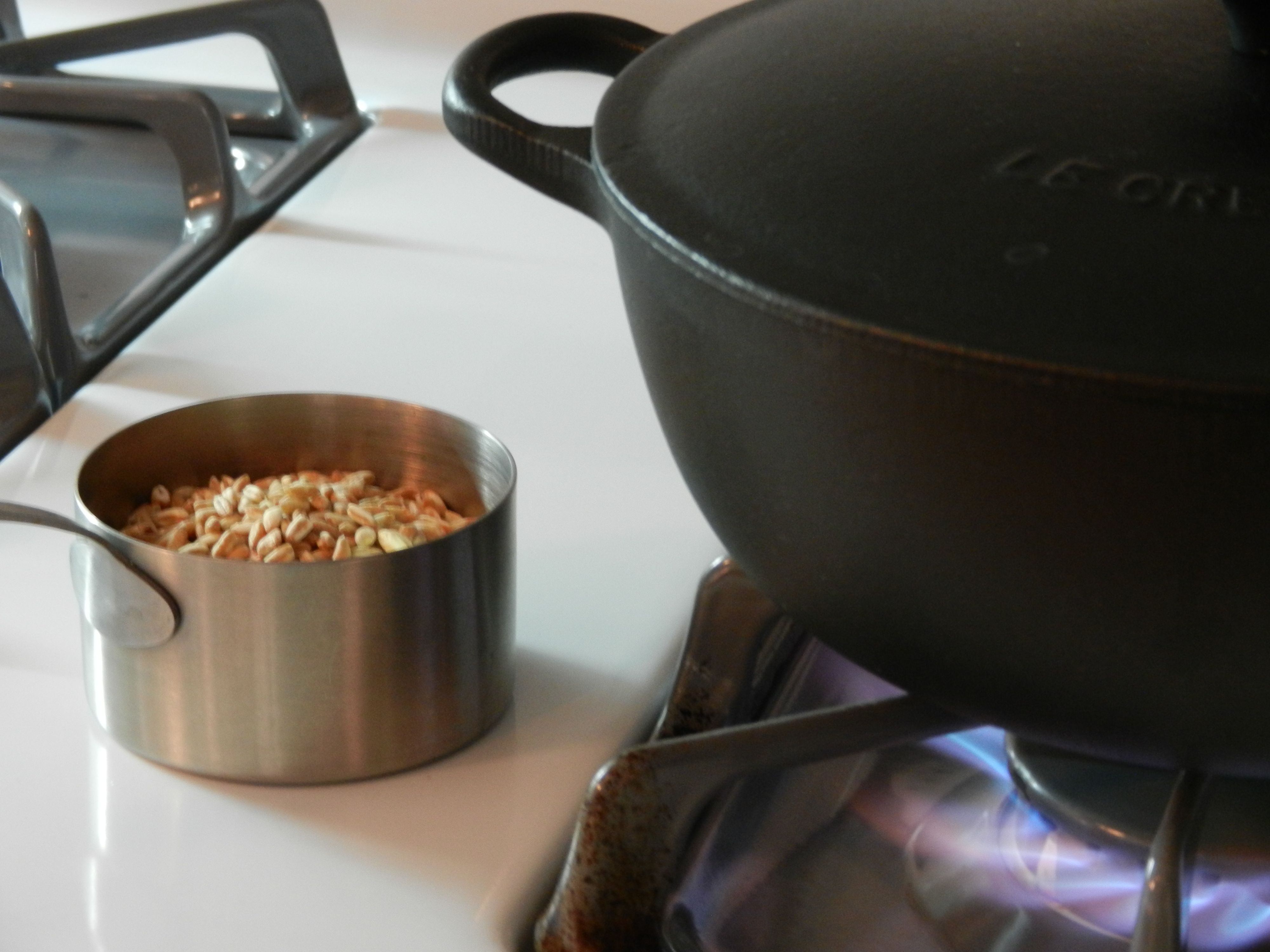
Bring a large pot of water to boil.  Add farro and simmer until just tender.  If using leeks, briefly steam them in a large strainer set over, but not in, the boiling water.  Top with a lid.  When slightly tender, set leeks aside.  When tender,  drain farro in a sieve, rinse under cold water, and set aside.

Preheat a grill pan to high.  Use a small, sharp knife to cut around the stem of each bell pepper and lift it out with the seeds attached.  Put the peppers on the grill pan and grill, turning them every now and then, until they are totally black on the outside; this will take 30 minutes or more.  When ready, remove the pan from the heat and cover it with foil.  Once the peppers are cool enough to handle, remove and discard the skin.  Tear them by hand into roughly 3/8 inch-wide slices.  Do this step ahead and put multiple peppers in the freezer for various uses.

Place the cooked farro in a large mixing bowl and add the peppers, capers or olives, oregano or thyme, green onions and most of the feta, reserving some to finish.  If making ahead, hold the feta until serving.  Pour over the dressing and gently mix everything together.  Taste and add more salt if you like.

To serve, pile up the salad on a plate or bowl and finish with the reserved feta and a sprinkle of paprika.

Wandering Around St. John’s Wood

My husband was in meetings all day today so I was left to explore on my own.  Oneof my goals for this trip to London was to get to know some of the neighborhoods so I radiated out from our hotel into St. John’s Wood.  The church, a medium-sized, Ionic-columned cathedral of the same name,  is the central feature of the area, .  The church is adjacent to a full city block of park space which includes an ancient cemetery that they now call a wildlife area and have let it become a bit jungly.  It reminded me so much of the sweet little Elizabeth Park that was just a block from our house when our boys were preschoolers.  They both have pointy wrought-iron fences, venerable trees, and perennial flower borders.

It is possible that I hadn’t seen lilacs in a decade.

I took this squirrel picture to remind my son, Anton (now 21) of the time when he was a wee tyke of 4 and was playing under a big poplar tree in our yard.  Without seeing it coming, a giant squirrel, like this one, plopped down on his head and then ran away.  I’m sure they were both equally surprised.

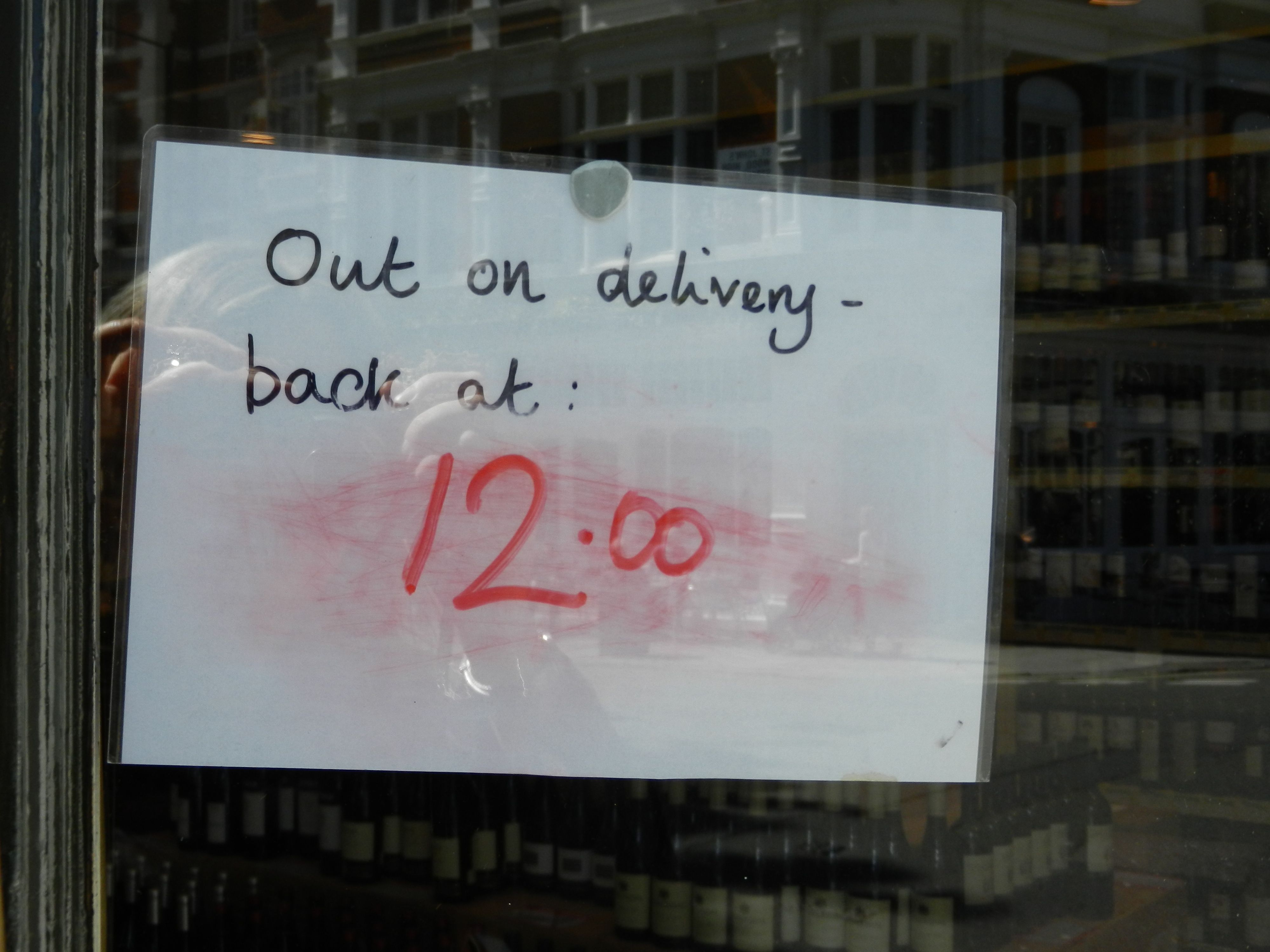
This well-stocked wine shop, Jeroboam’s, had a basketed bicycle out front as though it was for making home deliveries.  Cute prop, I thought.  About 20 minutes later, I passed by the store again.  The shop was locked up  and a sign was in the window.

All I really did all morning was notice stuff.  Surprisingly quaint and small town-like things were going on.  A woman was actually feeding bread crumbs she had brought from home in a plastic bread sack to the pigeons in the park.  Lots of elderly people were sitting on the benches facing the morning sun.  New mothers were pushing infants in actual prams,  not jogging strollers.  A gardener was working up the dark soil in the flower beds.  I smiled a lot and remembered living in a historic neighborhood, in a not-so-big city, pushing my babies around in a stroller, feeling like time was standing still.

A Saturday in London

Ask me if I’m having fun.  We’re in London for a long weekend.  It’s been about 10 years since I’ve been to London, but now, I’m realizing that I wasn’t really even here, before.  Previously, we stayed with our friend in the outer suburbs, hopped on the Tube, reemerged at specific tourist sites in the city center, then Tubed it back home again.  We didn’t get a feel for the neighborhoods of the inner city and I’m finding them pretty inviting.

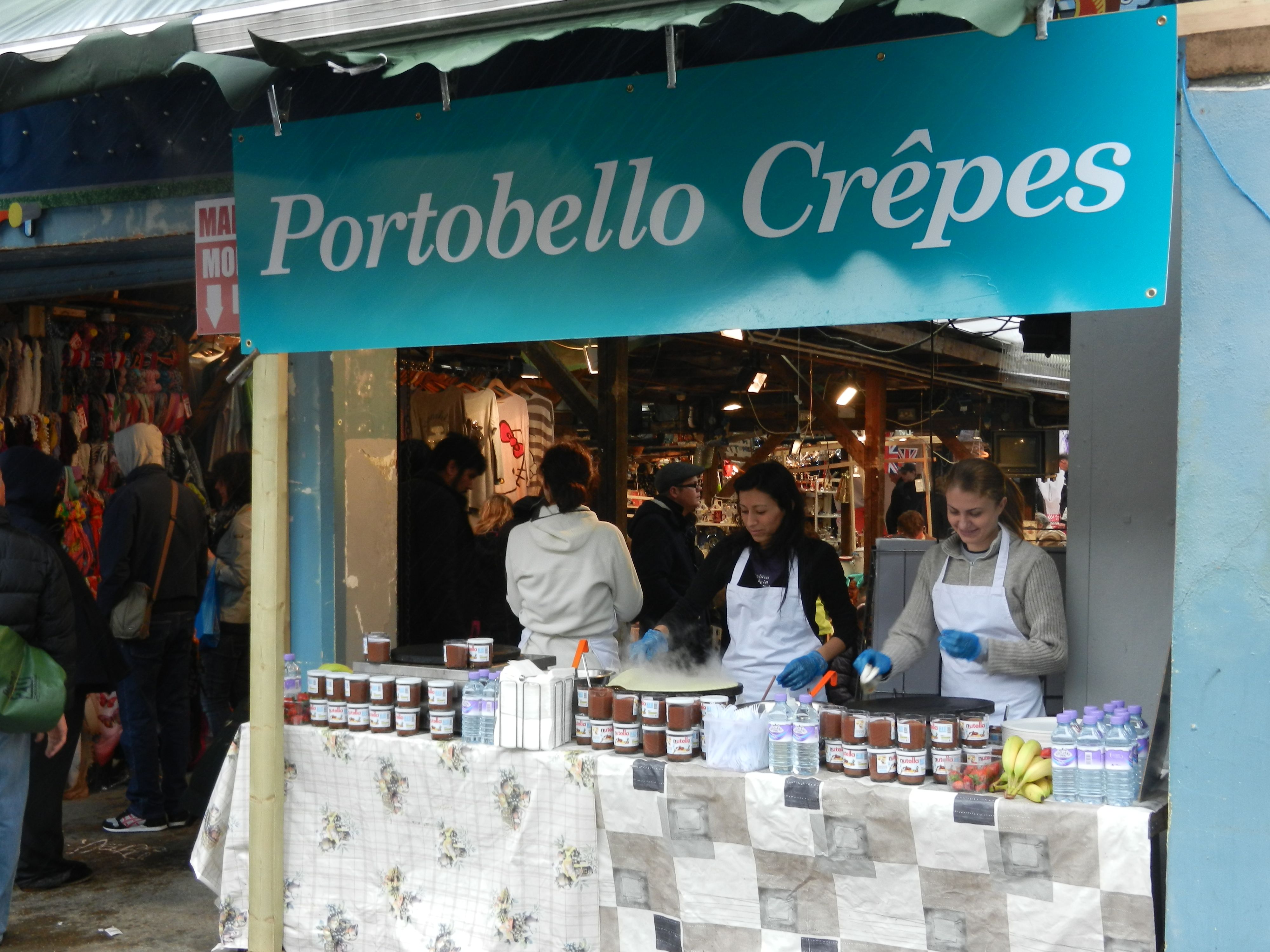
Saturday morning, we followed the meanderers down Portobello Road and through the sections of the street market:  antiques, produce and food, then second hand and artisan. Despite the drizzle, the vendors were all set up and committed to their products.

The Cloth Shop was my favorite find.  This store’s owner has an eye for all kinds of fabric, from around the world and Europe, that are authentic and beautiful for the characteristics of their fibers.  She was chatty and witty and we soon knew all about each others adult sons in addition to other interests.  She made me want to buy a sewing machine and start sewing again and maybe I will.  I bought a set of 12 antique French linen napkins, with monograms, that will remind how much fun it is to create something unique from beautiful fabric.

Then it was time to make our way toward the theater district for a matinee performance of War Horse.  War Horse is a feat of illusion, by the way.  I was completely willing to suspend my disbelief and several times, with tears streaming down my cheeks, wanted to cheer for that equine protagonist.

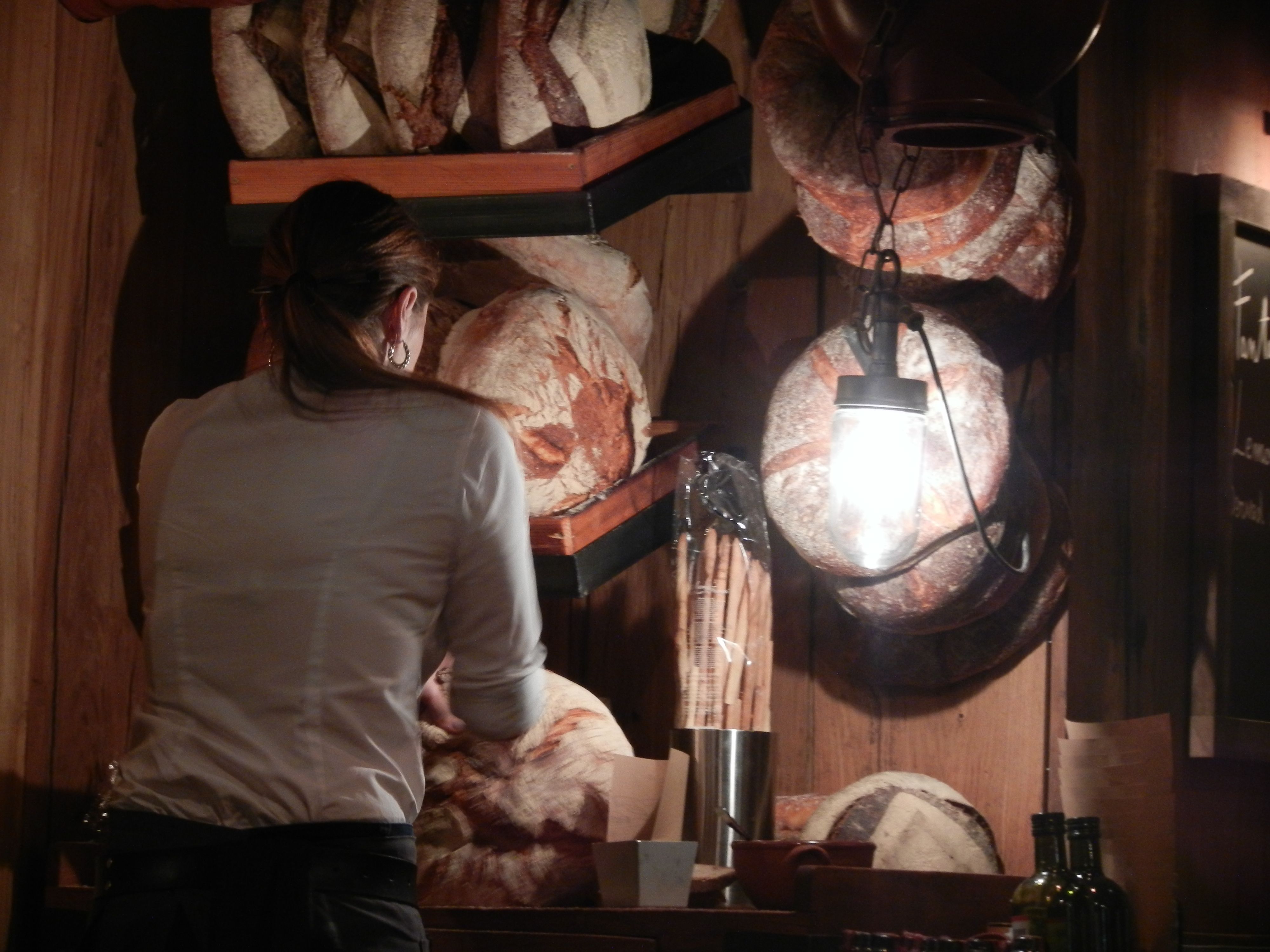
But first, there was lunch a Jamie Oliver’s Italian restaurant.  It was a comfortable and also hip place.  The comfortable and hip both felt a little contrived by a stylist, but it was still a great place to have lunch and the food was good, without being a bit pretentious.  I had the blackboard special:  Gorgonzola Bruschetta.  Since I’m in a hotel and can’t cook, it’s fitting that I post a no-cooking recipe, unless you consider toasting bread, cooking, which I at times do.

Gorgonzola Bruschetta

Serves

  • 4 slices of excellent quality artisan bread
  • 1 cup of ricotta cheese or make your own
  • 2 oz. gorgonzola cheese, crumbled
  • 1/2 pear, thinly sliced
  • 1 cup baby arugula, washed and dried
  • 1/2 cup whole walnuts
  • 2 tablespoons fragrant honey, such as thyme
  • Good quality olive oil and balsamic vinegar
  • Sea salt and pepper

Toast the bread slices on a grill or grill pan and set aside.

In a saute pan, toast the walnuts until beginning to brown, then drizzle with the honey.  When honey has melted and reduced slightly, set pan aside to cool.

Combine ricotta and gorgonzola cheeses in a bowl.  Season with sea salt and pepper.

Thinly slice the pear.

Assemble the bruschetta:  Spoon dollops of the cheese blend onto each toast.  Stud the cheese with the honeyed walnuts and pear slices.  Top with arugula leaves.  Arrange two toasts on each plate, then finish with drizzles of olive oil and balsamic vinegar, salt and pepper.

Beetroot Pesto

We just finished three weeks of high entertaining.  There has been a succession of new staff for next year coming to visit us in Tunis, along with some side friends we wanted to spend time with.  We knew it was coming, saw it all booked out on the calendar, and then we geared up for day, after day, after day of eating events.  And it was wonderful.  It about killed us; I won’t deny it, but as a whole, I am happy for all of the faces that have been around our table and happy for the cooking experiences that were involved.

And I didn’t blog about any of it.  I didn’t even take pictures.  You just have to take my word that any of these events happened because there is almost no evidence.  This even surprised me.  There were a number of interesting dishes I prepared.  Several were new to me and would have been perfect to write about, but  I was just simply too busy cooking and entertaining to write about cooking and entertaining and I didn’t feel the need to.  It was what we call in education a performance-based assessment.

That made me think about the place of this blog in my life.  What purpose does it serve?  Why do I want to return to it so often and continue trying to express an experience I’ve had with food?  A friend of mine mentioned my blog last week and said, “Cooking grounds you, doesn’t it?”  That sounds like a really simple comment, but it resonated with me all week.  If cooking grounds me, then that explains why I sometimes can’t get on with other pressing responsibilities, like posting an assignment for my online course, until I’ve written a blog post about something I’ve cooked.  That comment actually made me feel less obsessed about blogging, which I didn’t feel was the source of my motivation anyway, and gave me permission to have a need to take time to place some creative thinking  in a certain place and then go on with other life activities.  That seems more normal to me.

All of this actual entertaining took the place of  writing about it so I was satisfied and didn’t miss the blog documentation.  But I miss it, now.  Passing through a particular season always opens the opportunity to enter a new one.  I am still so thrilled to squeeze the life out of this season’s produce.  This is a classic expat sort of recipe as I had to gather up the ingredients from more than one country.  We have beetroot and are starting to get some nice basil harvests, but I didn’t have fresh mozzarella until I went to Italy three weeks ago.  I also don’t know where I can buy macadamia nuts in Tunis, but my teaching partner went on a safari to Kenya over Spring Break and brought me back a package of them so I had the exact amount needed for this recipe.  I thought that this was an almost cosmic alignment of ingredients and so this recipe was meant to be.

It feels good to be back in this space with some fresh motivation to tell and show my cooking experiences.  Thanks for being my guest.

Beetroot Pesto

Adapted from Bennetts Café in Mangawhai, NZ

  • ½ lb. beetroot
  • 1 clove garlic, chopped
  • ¼ cup olive oil
  • ¼ cup walnuts or macadamia nuts, toasted
  • ¼ cup grated Parmesan cheese
  • 2 tablespoons lemon juice
  • ¼ cup chopped basil, mint or both

Preheat the oven to 350 degrees F.  Place the beetroot in a roasting dish then cook for 1 hour until tender.  Set aside to cool completely.  Using your fingertips, rub off the skins.  Cut the beetroot into chunks.

Place the beetroot, garlic, oil, nuts, Parmesan, lemon juice, and herbs in a food processor.  Process until smooth.

Serve the pesto with blanched green beans and pasta.  Serve alongside smoked fish, or serve on bruschetta with mozzarella, arugula, basil, and tomatoes.