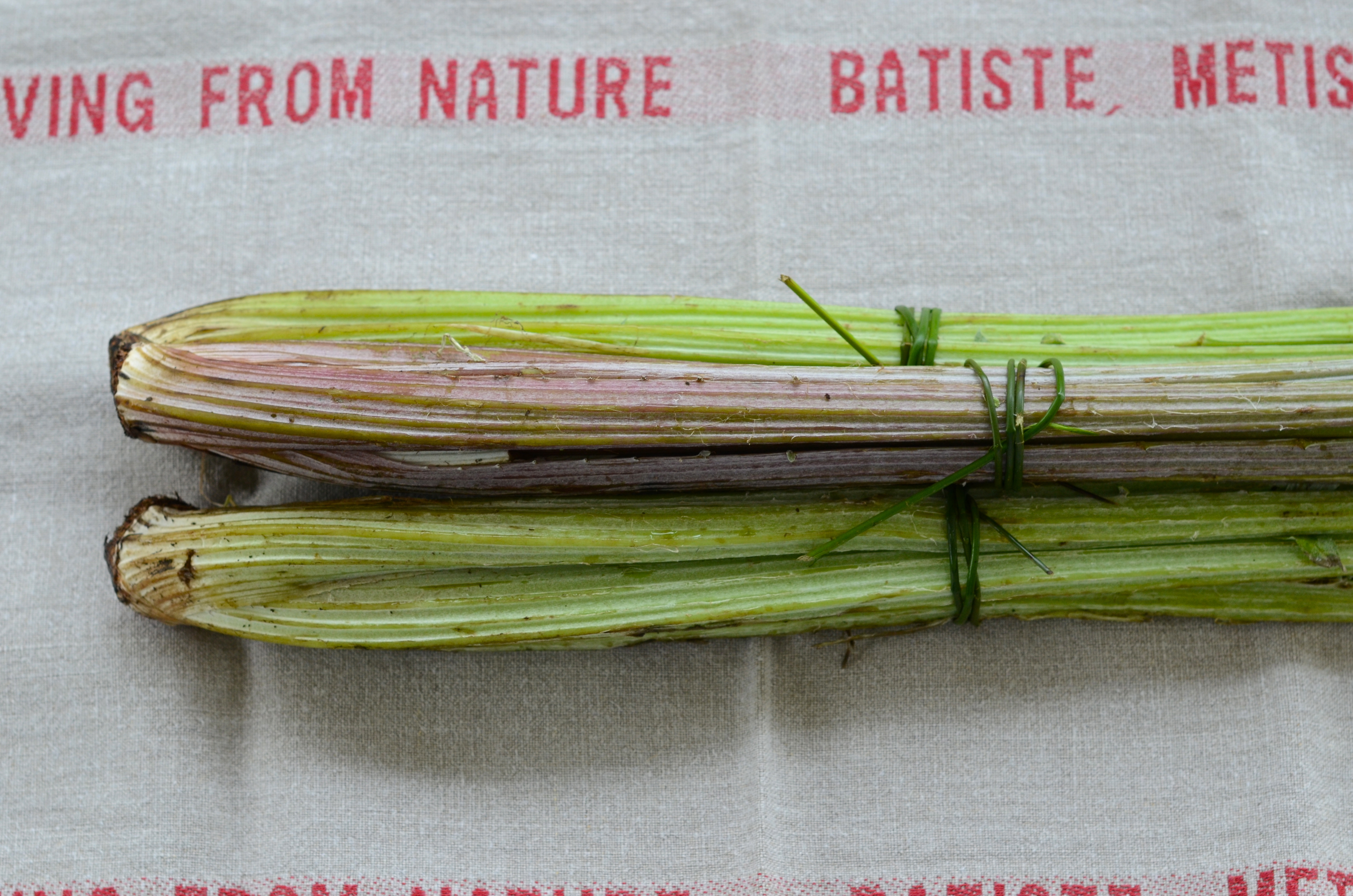
 Wild, pokey plants are having a season right now. Artichokes are heaped in tri-stalked bundles, looking like one of the building materials the Three Little Pigs might have attempted to use for a home. Purple-flowered Rosemary and wild thyme are also being sold in bunches, cut from their stiff, old-growth stems. Another vegetable lying around in heaps, one I have turned a wary eye toward all these years I have lived here, is the cardoon. It is always described as looking like a relative of both celery and rhubarb when in fact, it is a first cousin to the artichoke. It is a thistle, with a flavor between an artichoke and celery. Cardoons are generally a little homely and off-putting in appearance, in my view, but this weekend, my corner green-grocer had long, elegant stalks, and I decided this was my moment to figure them out.
Cardoons are stringier than either celery or rhubarb and therefore, must be peeled. The truth is, cardoons require quite a lot of preparation. I found that my wide 2″ vegetable peeler worked best, yet it clogged with fibers every couple of passes, requiring me to clean it out before beginning again. I recommend you put on a good audio book or podcast before beginning this task.
Though they are a humble food, practically a weed, the amount of preparation they require motivated me to invest some serious cooking technique to elevate them as much as I could. I used Alice Waters’ recipe for Cardoon Gratin with Bechamel . She offers an excellent strategy for lightening the traditional bechamel sauce: “…save the poaching liquid from the vegetables, then use it in place of 1/2 of the required milk in the recipe,” (Waters, 2013). This method will simultaneously boost the vitamins and decrease the fat.
Before beginning to peel the cardoons, prepare a large bowl of water into which you have reamed 1 large lemon. As you process approximately 4 large cardoons, cut them into 4″ lengths, then place them into the water to keep them from turning brown.
Bring a large pot of salted water to a boil and cook the cardoons for approximately 12 minutes or until they are tender, but still have a little firmness. Lift the cardoons from the water and set aside to cool. Reserve the cooking liquid. Cut the cooled cardoons into 3/4″ diagonal slices and set aside.
Now, make a light bechamel. In a small heavy-bottomed pot, over medium heat, melt 2 tablespoons butter.
Stir in 3 tablespoons unbleached all-purpose flour.
Cook the roux for a few minutes without browning. Slowly, whisk in 1/2 cup milk and 1/2 cup cardoon cooking liquid, prewarmed.
To avoid lumps, whisk in each addition of liquid completely before adding the next. Bring slowly to a boil, stirring all the time. Turn down to a bare simmer and cook for 10 minutes, stirring occasionally to keep the sauce from sticking. Add additional cardoon cooking liquid if the sauce becomes too thick. Finish with a pinch of cayenne and some freshly grated nutmeg. Thoroughly mix the cardoons into the sauce.
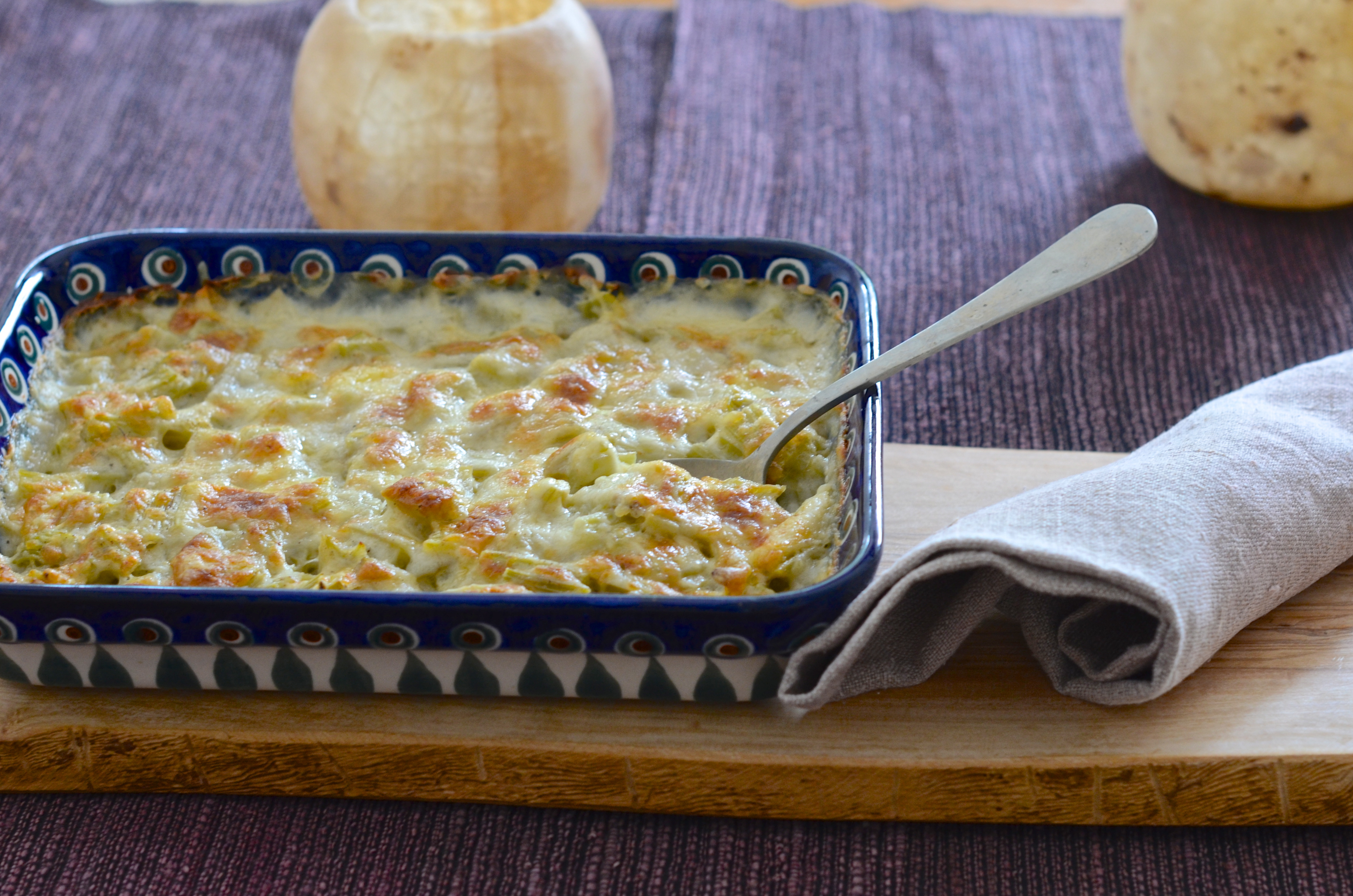
Butter a gratin dish and pour in cardoon mixture. Top with grated cheese. You could use parmesan, but if you have French cheese, this will take the gratin to the next level. I used a combination of Emmental, Beaumont, and Abondonce. Bake in a 375 degree oven until bubbling hot and cheese is lightly browned.
Waters, Alice. “Cardoon Gratin with Bechamel and Parmesan Cheese.” The Art of Simple Food II. New York: Clarkson Potter, 2013. 108. Print.
 bergamot orange