Olive Oil Poached Fish with Fragrant Salt

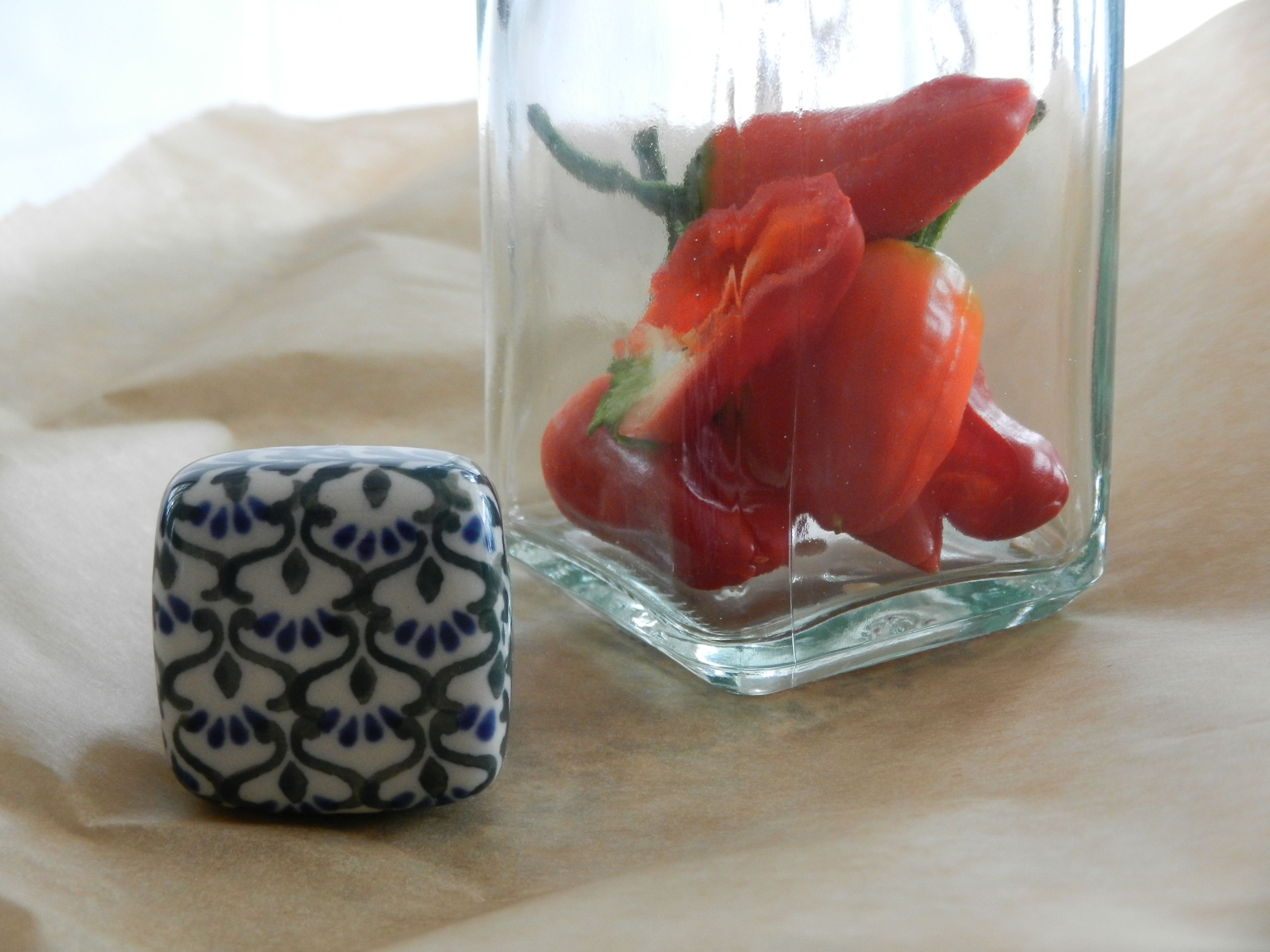
I just got back from Spring Break in Italy where I was inspired to restock my kitchen in Tunis with some specialty supplies.  First of all, the table at the agritourismo we stayed at had a bottle of chili oil every night and we got addicted to it,  wanting to pour a little on everything.   I bought the hottest chilies I could find at my market when I got home and got my own bottle started steeping.  This is such a simple thing that I had completely forgotten about making.  My friend, Lauren, just gave me this pretty Polish pottery stopper for my birthday so I made up a lovely bottle in minutes.  I wanted to keep most of those cute chilies whole so I just made slits in the ends so the oil could come into contact with the chili flesh and seeds. I filled the bottle to the top with our grassy, green olive oil.

Then, the PAM grocery store, outside Siena, had a tremendous selection of specialty salts.  I have about every salt I need now to cook through Mark Bitterman’s book, Salted, cover to cover.

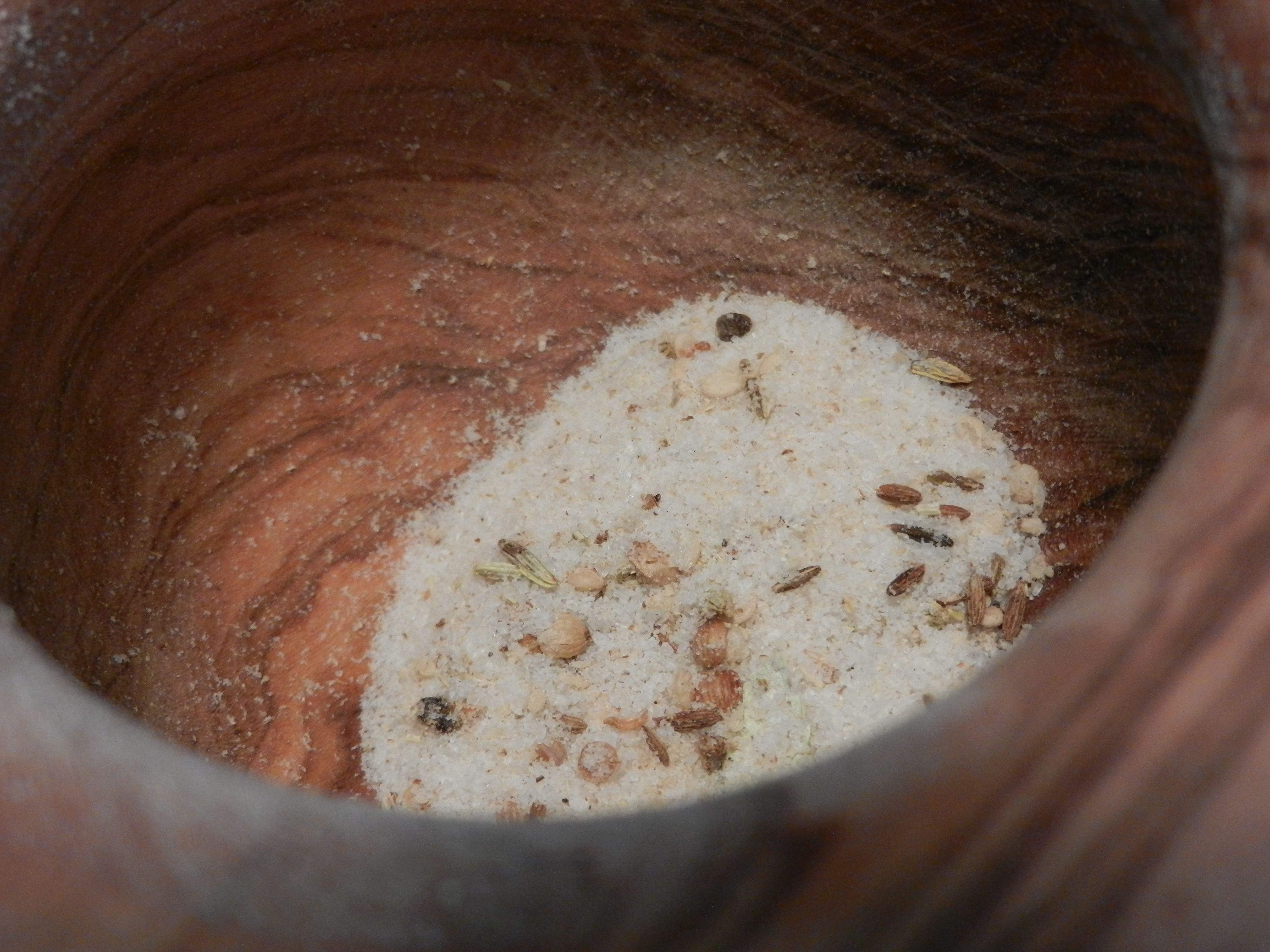
I made up another salt mixture, based on a recipe from Saha, A Chef’s Journey Through Lebanon and Syria, by Greg and Lucy Malouf.  This is easy to put together and keeps for 6 months.  It is a nice quick cure for a piece of fish.

Fragrant Salt

  • 1/2 teaspoon cumin seeds, ground
  • 1/2 teaspoon coriander seeds, ground
  • 1/2 teaspoon cardamom seeds, ground
  • 1/2 teaspoon fennel seeds, ground
  • 1/2 teaspoon nigella seeds, ground
  • 1/2 teaspoon sesame seeds, ground
  • 2 tablespoons sea salt

Put the ground spices, toasted sesame seeds and salt in a skillet and gently warm through so they merge into one fragrant powder.  Store in an airtight jar.

Olive Oil Poached Fish

adapted from Saha, by Greg and Lucy Malouf

Dust the fish all over with the Fragrant Salt and refrigerate for an hour to lightly “cure”.  Before cooking, rinse the fish and dry it thoroughly.

In a deep cast iron skillet or fish poacher, put a layer of sliced onions.  Place the fish on top, skin side up.  Pour in enough olive oil to barely cover onions and fish.  Put the pan on the stove and heat gently to 140 degree F.  Cook for 8 minutes then remove from the heat and let the fish sit in the oil for another 2 minutes.  You can easily skin the fish at this point, if desired.  Carefully lift the fish out of the oil and place it on paper towels to drain.

Make the Tarator.

Tarator

  • 1/2 cup walnuts or pistachios, toasted and finely chopped
  • 1 cup cilantro leaves, finely shredded
  • 1 small purple onion, very finely diced
  • 1 red finger-length chili, seeded and finely diced
  • 1/2 teaspoon ground sumac
  • Juice of 1 lemon
  • 1/4 cup extra-virgin olive oil
  • Salt and pepper to taste

Mix all ingredients and pack onto the top of the poached fish before serving.

Coconut Biscuits

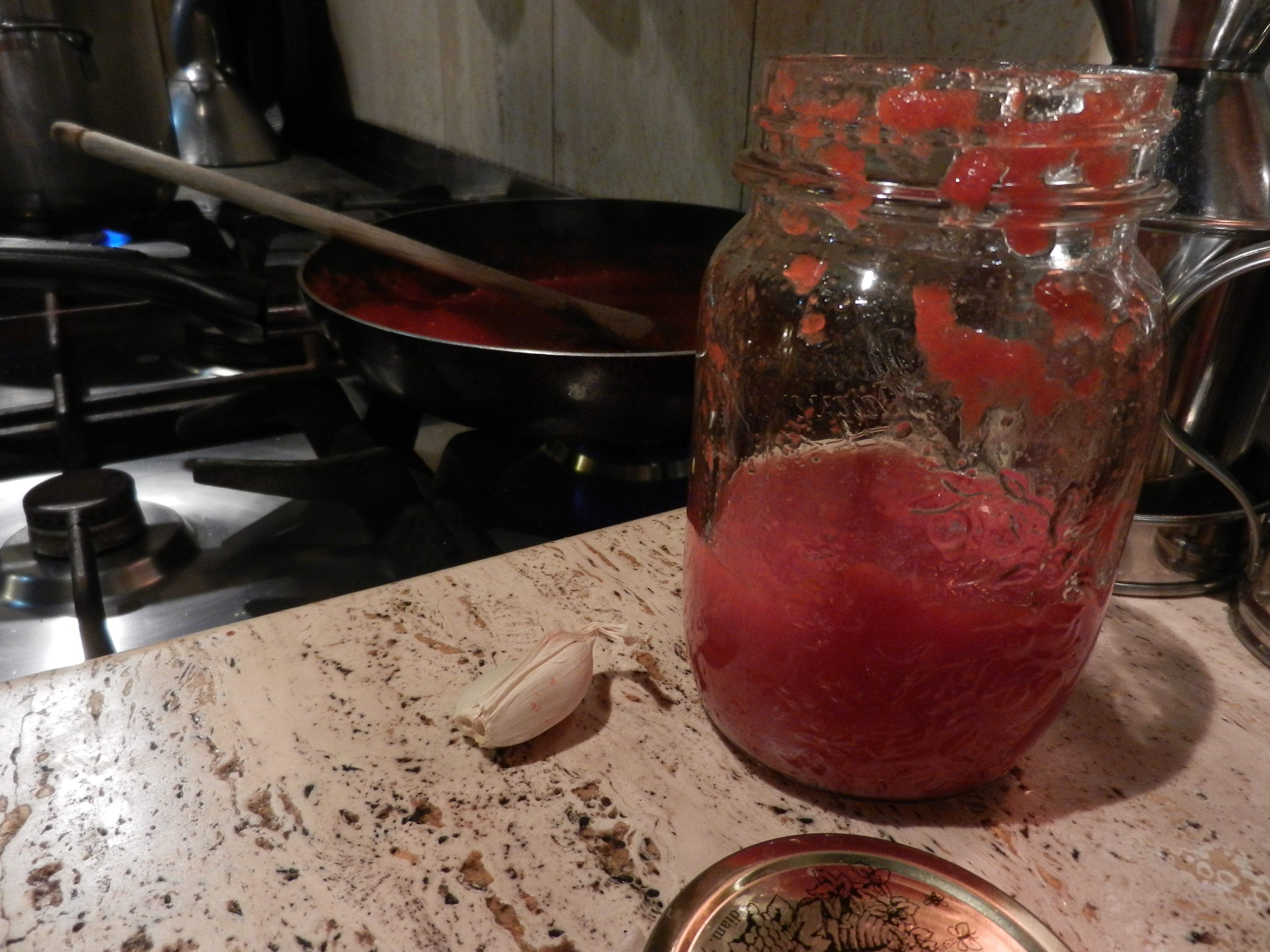
Before I leave my  Tuscan state of mind, I want to capture a recipe.  This is simple and that’s partly why I love it.  Last night, Nadia, the owner of the farm, finally let me join her in the kitchen.  She offers dinner to the guests about every other night and this was to be an off night, but she was planning to make a little dinner for the wine-bottling crew and offered to feed us as well.   We made a basic tomato sauce from two of the 500 jars of tomatoes they put away each summer.  Tomato puree, a clove or two of whole garlic, and a sprinkling of salt were all we used.

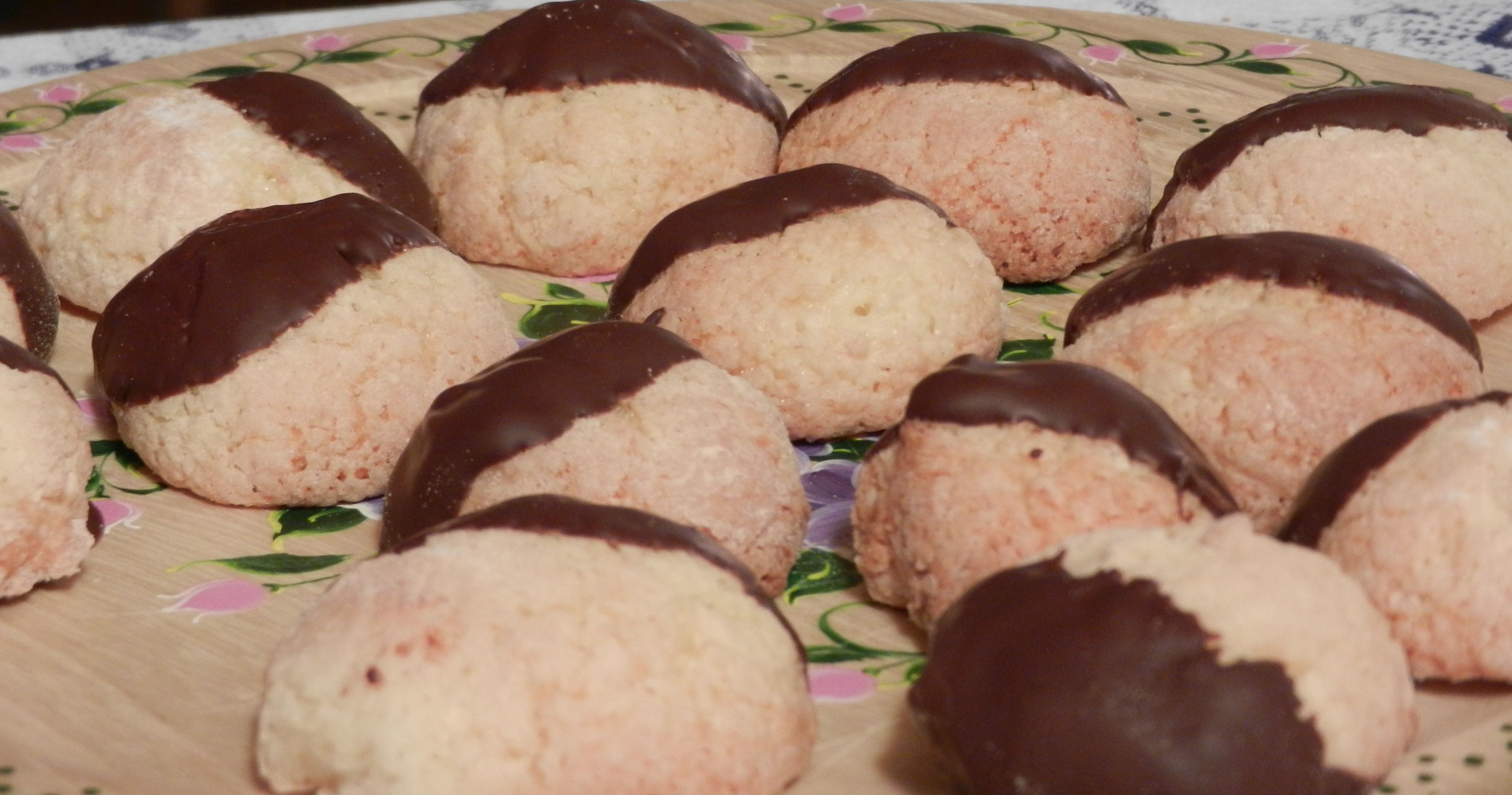
While that sauce was simmering and the penne was boiling, Nadia whipped up some coconut biscuits.  This is a recipe she knows by heart.  She began by propping a hand mixer in a bowl in the sink to whip one egg.  The rest of the recipe she measured, using her metric scale.  To the egg, she added 85 g. (6 Tbsp.) of sugar and beat until light yellow.  Then, she mixed in 85 grams (6 Tbsp.) of unsweetened, shredded coconut and finally, 20 grams (1 1/2 Tbsp.) of flour.  She simply scooped this out of the bowl in 1 tablespoon scoops, rolled them in her hand and placed them on a baking sheet.  This recipe makes 12-14 biscuits.  She put them in a 140 degree C. (300 F) oven and while they were baking, melted 100 g. (3.5 oz) of dark chocolate in a double boiler.  When the cookies were slightly brown (check after 10 minutes) she removed them from the oven and cooled them by putting them on the terrace.  Finally, she half-dipped each cookie in the chocolate and cooled again.

This is a recipe I want to pull out for one of those meals when we have company or family with us.  Maybe we’ve had a busy day and we are tired, but I still want to prepare a great dinner with a sweet treat at the end.  This was the way last night was.  It was a big day for Nadia and Renato, getting the bottling in-process.  Renato was poetic at dinner about the roller coaster ride a wine maker’s emotions go through in the production of a vintage.  We called this bottle ‘the baby’ and shared the first bottled glasses with the vintner.  It was an honor to be in that moment.

This is a PS for me.  I want to remember to make a cracker-thin crusted pizza with blue cheese and radicchio when I can and I want to keep that idea, somewhere.

Bottling Time

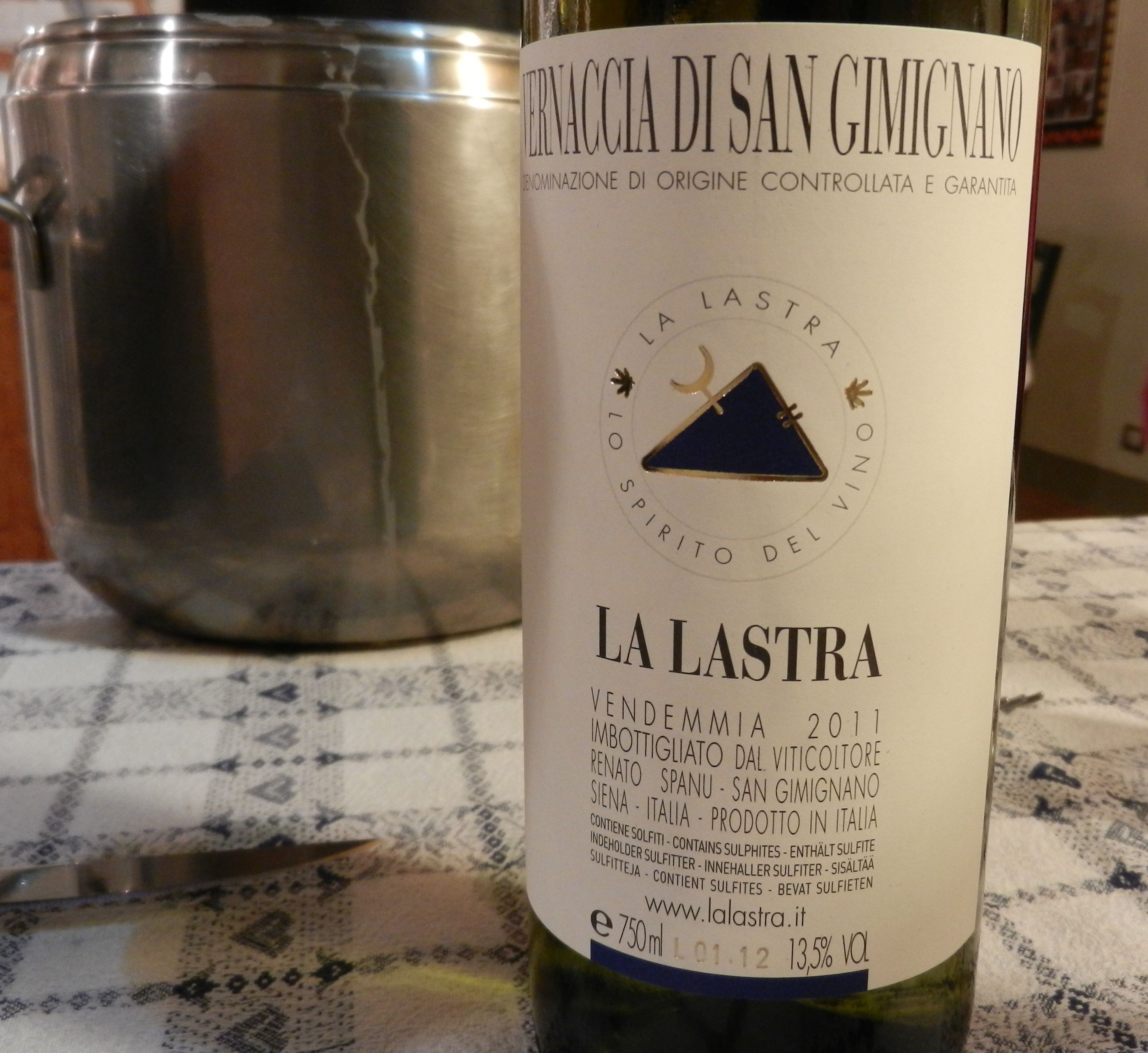
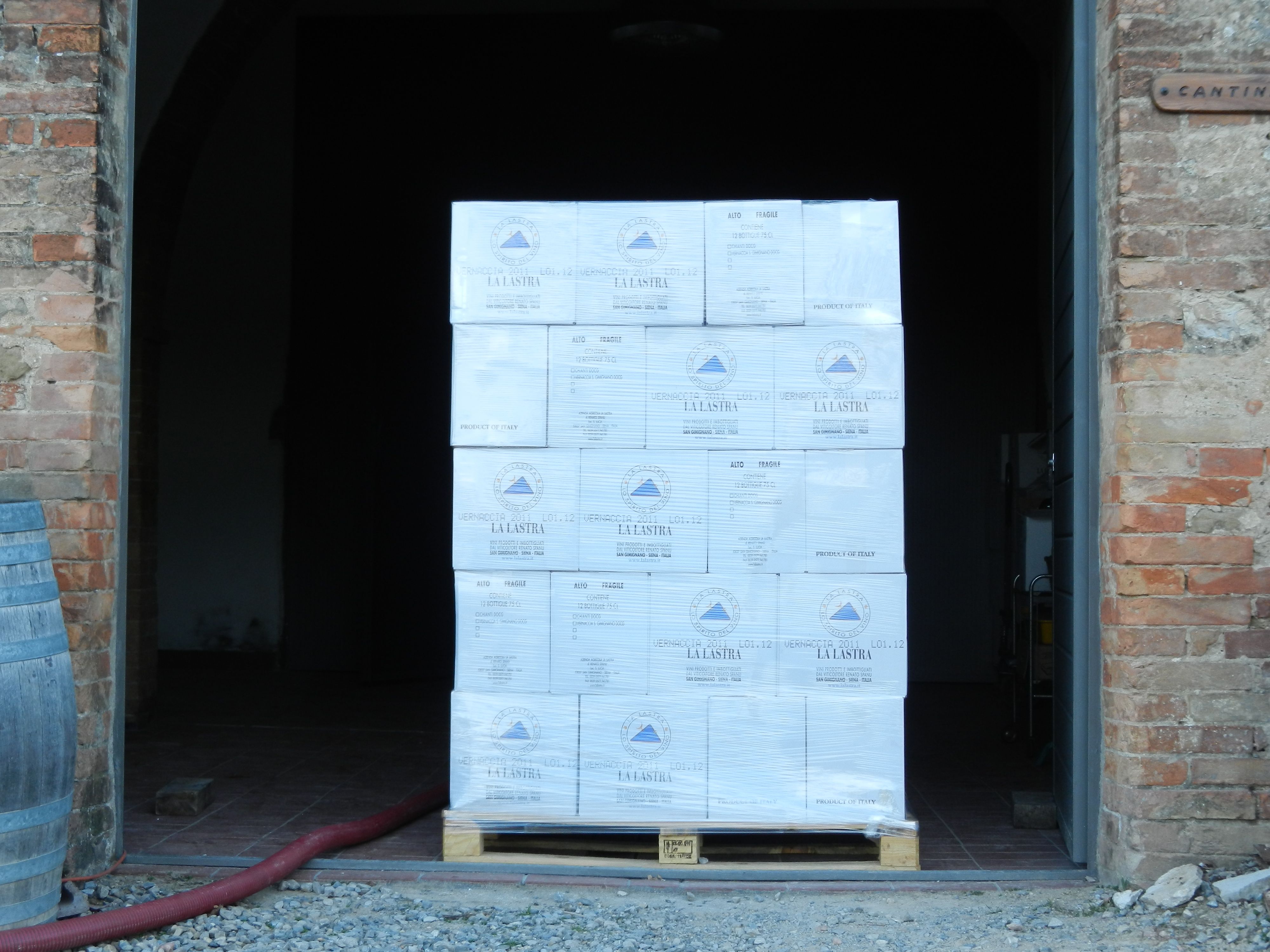
Have you ever considered how the picturesque, little vineyards you notice along country roads get their small harvest wines into bottles?  As with many elements of the wine-maker’s process, I hadn’t.  I guess I thought they hand-bottled it in a garden shed,  using a funnel and a manual corking machine.  Maybe that’s how it used to happen, but these days, when the wine is sold globally and the liability for selling a product with any kind of contamination is so great, the wine must be preserved perfectly.  For vineyards that produce less that 1,000,000 bottles per year, at least in Italy, a custom bottling company comes to the farm and sets up a mobile factory on-site.

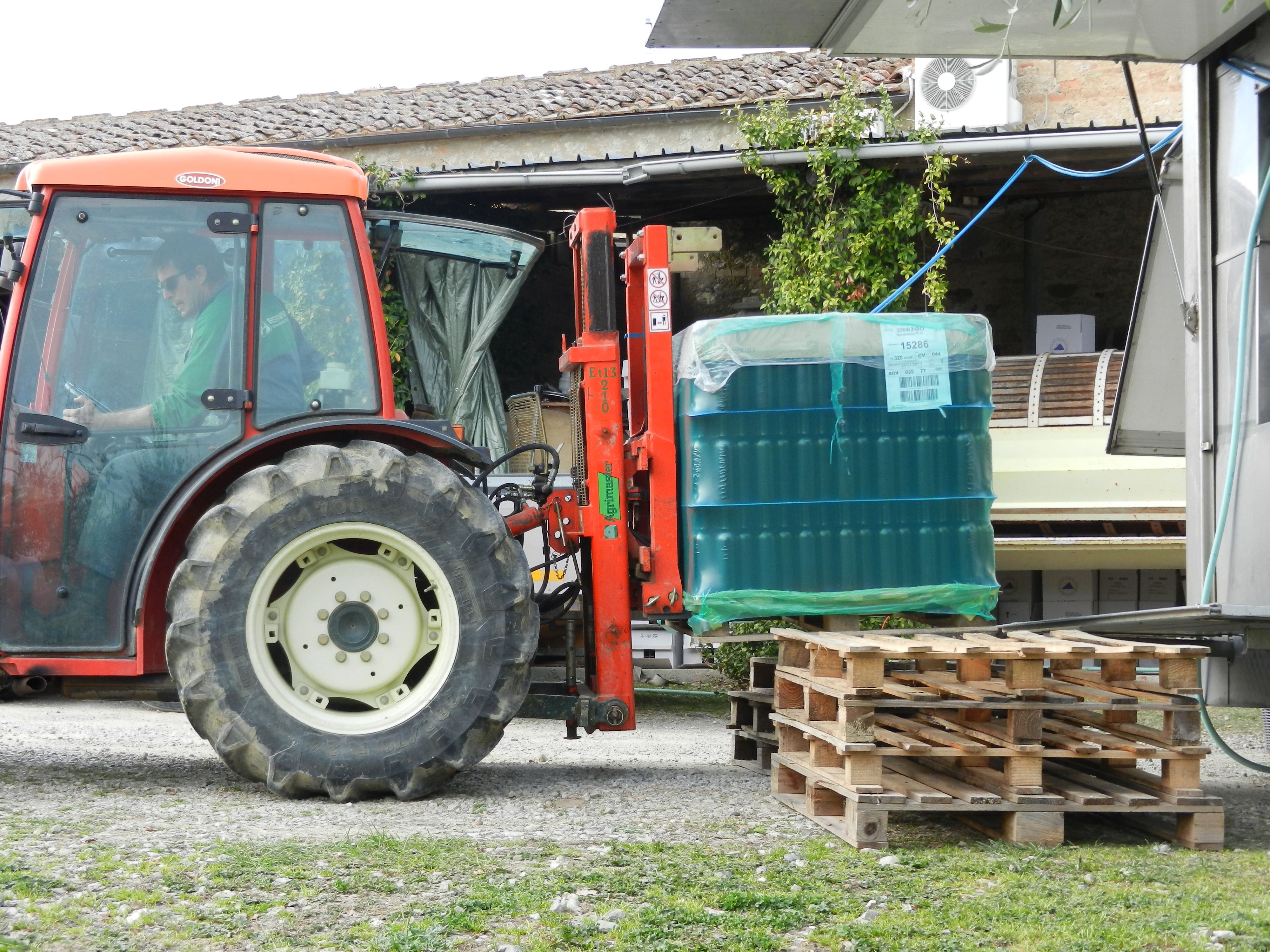
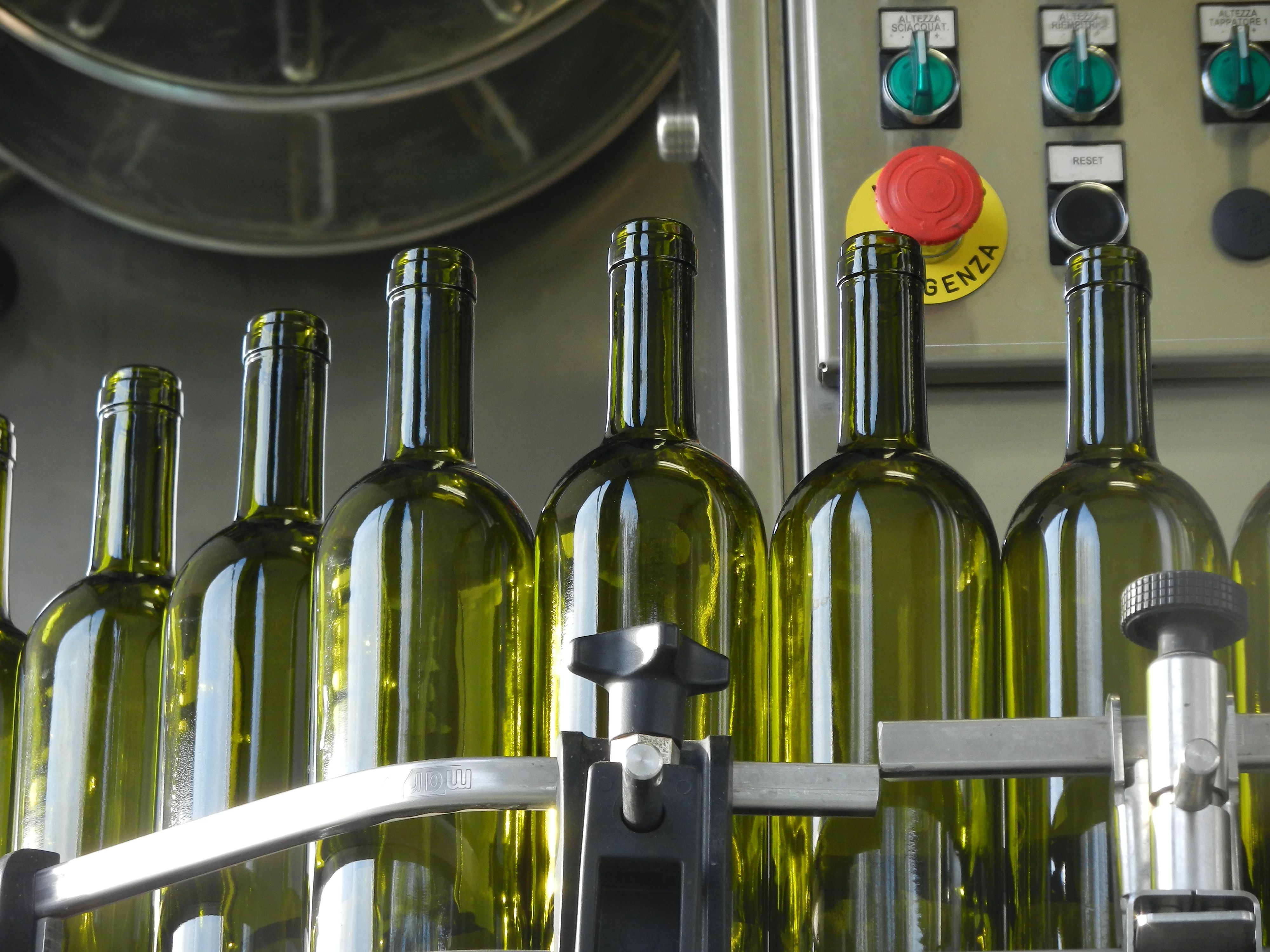
Today, it is bottling time at the Marcciano estate for the 2011 vintage.  We waited and waited for ‘the truck’ to show up and when it did, it looked like the carnival was coming to town.  A massive 18-wheeled rig somehow squeezed down the twisting, dirt road to the farm and began to set up what looked like the Tom Thumb Doughnut stand.  Tacky county fair comparisons ended there, though, as the team of experienced engineers set up their mobile factory and began the routine of calibrating the machines to bottle this production.  They provide their own energy, through generators, as the voltage requirements would overwhelm what is available at most ancient estates.

The farmer must have everything on hand which means pallets of bottles, boxes, labels, and corks printed with their logo.

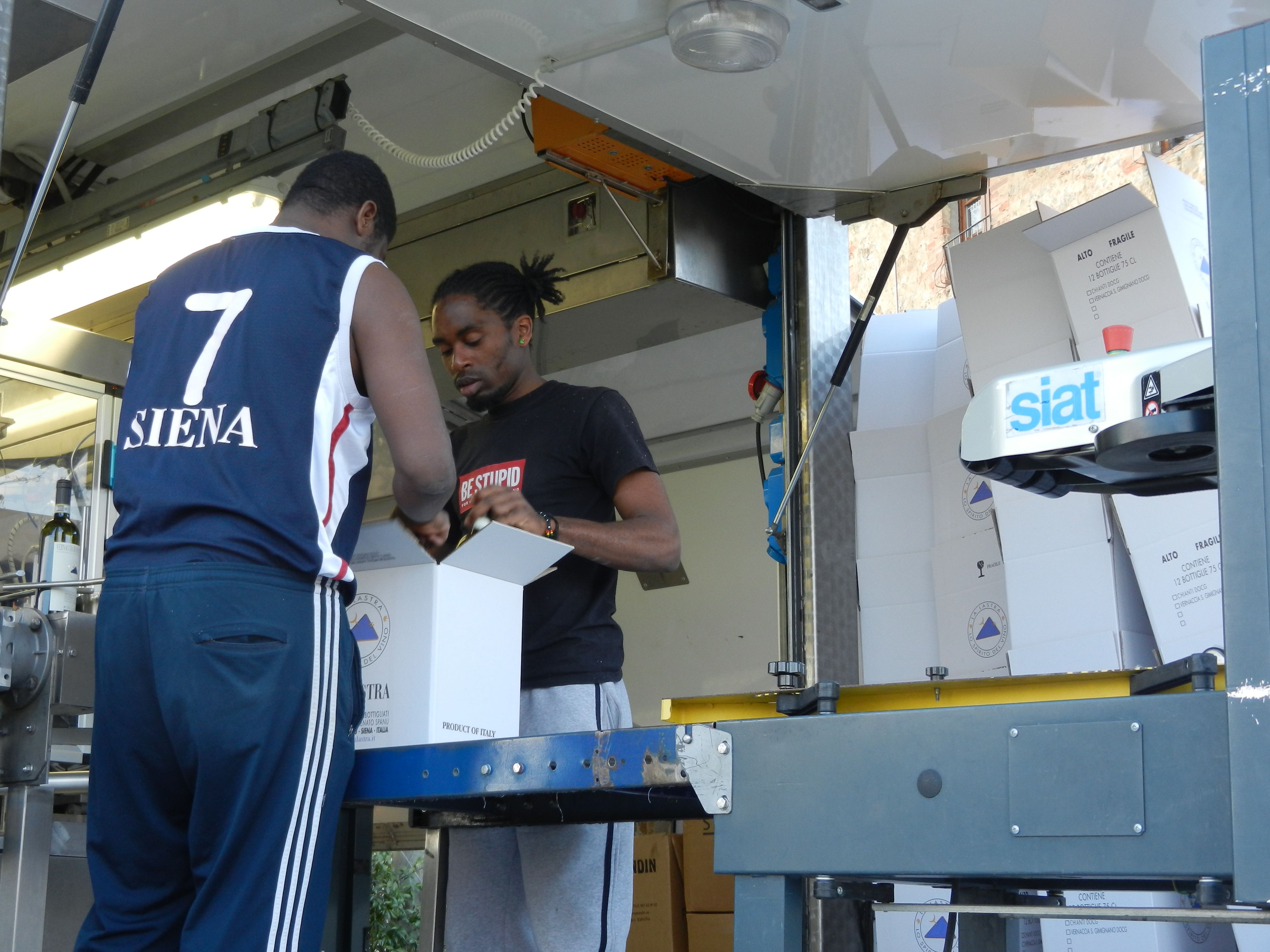
It all has to be set up and ready to go because once the system gets into full operation, it bottles something like 20-30 per minute and they have to be ready to box and store them on the other end.

It wasn’t long before bottles turned into cases which were stacked on pallets to be shipped.  The first 2,000 bottles are already sold to an American importer and Renato, the owner, has so much riding on this.  This bottling represents the end of an idea he said.  Once he successfully captures it, he then has to sell it, distribute it, and then wait for the public’s response to his creation.  All of this while those vines are bursting with the potential for next year’s growth.

Italian Breakfast

The Italian style of eating sweets for breakfast is a little challenging for me.  I need to have protein for breakfast:  eggs, cheese, nuts,  something of that nature.  If I start my day with a lot of fluffy carbs, I’m starving and possibly in tears in about an hour.

Every morning we join the other guests in the cozy kitchen at our farm.  Nadia, the owner, and Maggie, an assistant, are often folding the line-dried laundry from the day before.  It creates such a homey atmosphere.

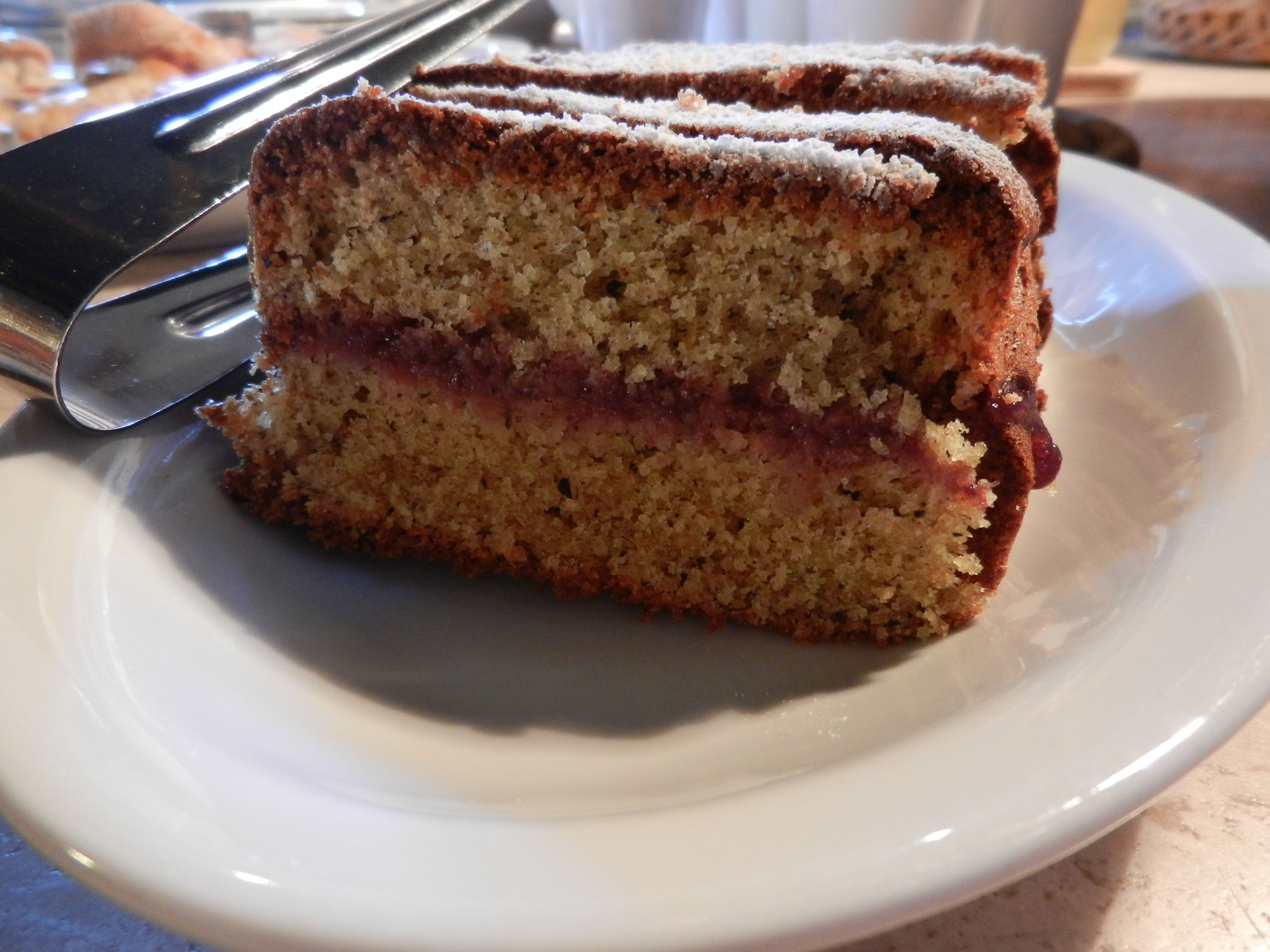
In the kitchen is an assortment of freshly baked goods. There will be a warm cake and one or two varieties of croissants along with yogurt, fresh fruit and cereal.  I zero in on yogurt and fresh fruit and sample just a little of the baked goods.  The morning we had Buckwheat Cake, however, I felt like I was eating something supportive.  This is a typical Northern Italian recipe called Torta Di Grano Saraceno.  Even though it contains a heavier flour and ground almonds, the cake has a light crumb.  Maggie cut her cake in half and filled it with raspberry preserves.

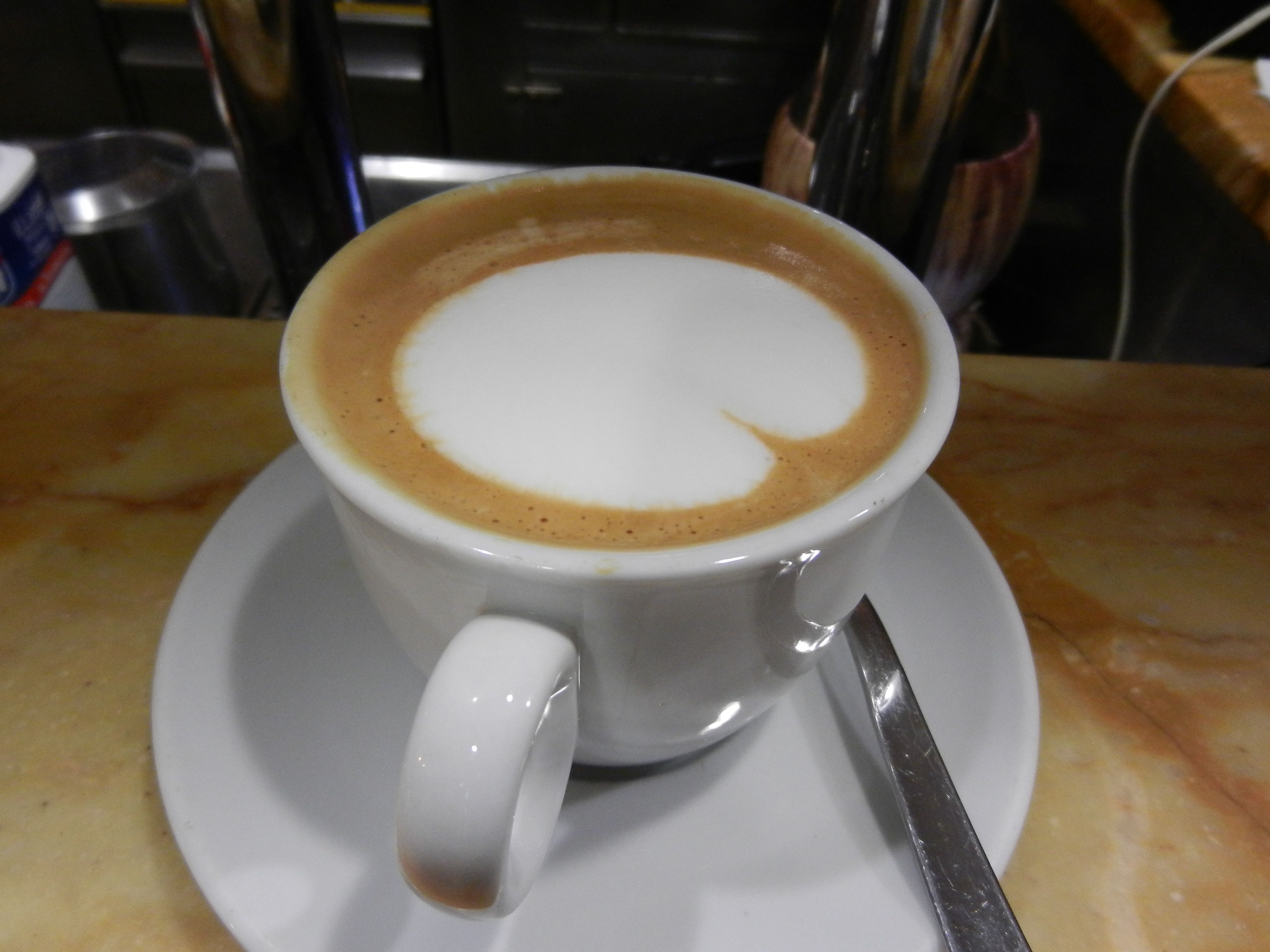
It is perfect with a cappuccino, but in case you don’t know this, it is considered gross to have milk in your coffee past noon in Italy so cappuccinos and lattes are only for morning.

Buckwheat Cake

Serves 16

Ingredients

1 cup whole almonds, blanched or natural ( 6oz/175g)
1 ½ cups buckwheat flour ( 200g)
½ teaspoon salt
½ teaspoon cinnamon
1 large lemon, zested
2 teaspoons baking powder
¾ cup unsalted butter, at room temperature ( 6oz/175g)
1 ½ cups sugar, divided ( 300g)
¾ cup milk ( 180ml)
4 eggs, at room temperature, separated

Directions

  1. Preheat the oven to 350F/175°C Spread the almonds on a baking sheet and toast until golden and fragrant, about 10-12 minutes. Cool completely.
  2. Grease a 9-inch/23cm springform pan and set aside. In a food processor or clean coffee grinder, grind the almonds as finely as possible with 1/4 cup (50g) of the sugar. In a medium bowl, stir together the ground almonds, buckwheat flour, salt, cinnamon, lemon zest and baking powder.
  3. In another bowl, beat the butter and 1 cup (200g) of the sugar until fluffy. Add the egg yolks one at a time, beating well after each addition. Beat in the dry mixture alternately with the milk until everything is well combined.
  4. In a mixing bowl, whip the egg whites with the remaining 1/4 cup (50g) sugar until they form stiff, glossy peaks. Stir one-quarter of the whites into the cake batter to lighten it, then gently fold in the rest. Scrape the batter into the greased pan, smoothing the top.
  5. Bake the cake in the preheated oven for 45-55 minutes, or until a toothpick inserted in the center comes out clean, covering the top loosely with foil if it begins to darken too quickly. Cool the cake for ten minutes on a rack, then carefully remove the outer ring and cool completely. Cut the cake in half, horizontally, and spread with preferred jam.  Dust with powdered sugar before serving..

Spring Green

Many, many years ago, I used to live in a climate of four distinct seasons.  In that world, March was a month of lush restraint.  The bare-rooted essence of trees and shrubs was still evident, their knotted branches straining with the thrust of growth waiting just below their stems and bark.  The first bulbs pushed through the cold, snow-melt damp soil beginning the pageant that would last until the following October.

I have been away from so many of these plants for so many years that I can’t always remember how vibrantly they appear in the pre-equinox landscape.  For a couple of springs, I got to go home to my house on Lummi Island.  I have only seen it twice in spring in the 10 years I have owned it.  Would you believe it if I told you that about an acre of the pasture is covered with naturalized, yellow daffodils in late March and early April?  My neighbor also raises sheep and the newly birthed lambs are strong enough on their legs, by this time,  that they can spring straight up in the air when they frolic in the ocean-side air.  Today reminded me of those country images.

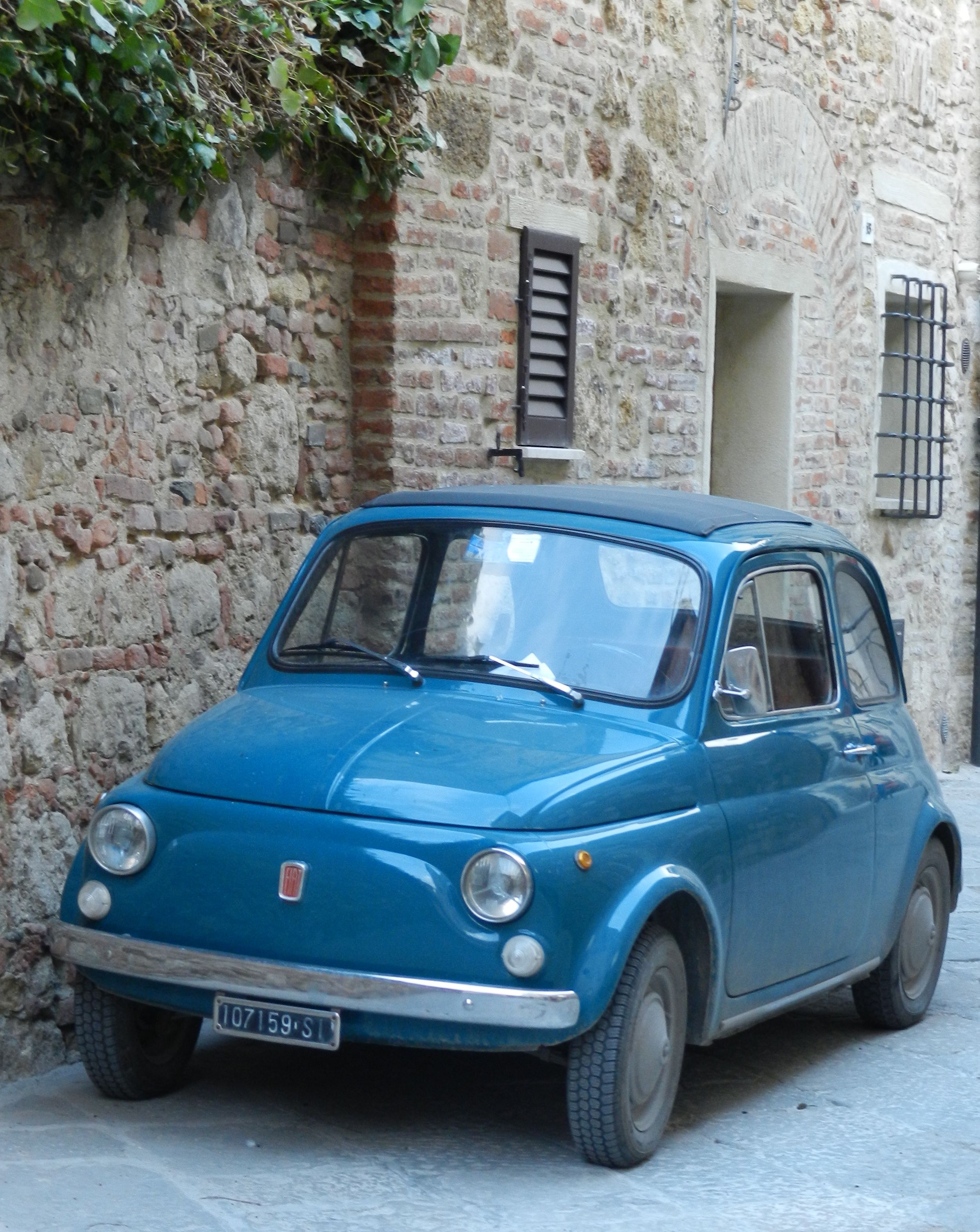
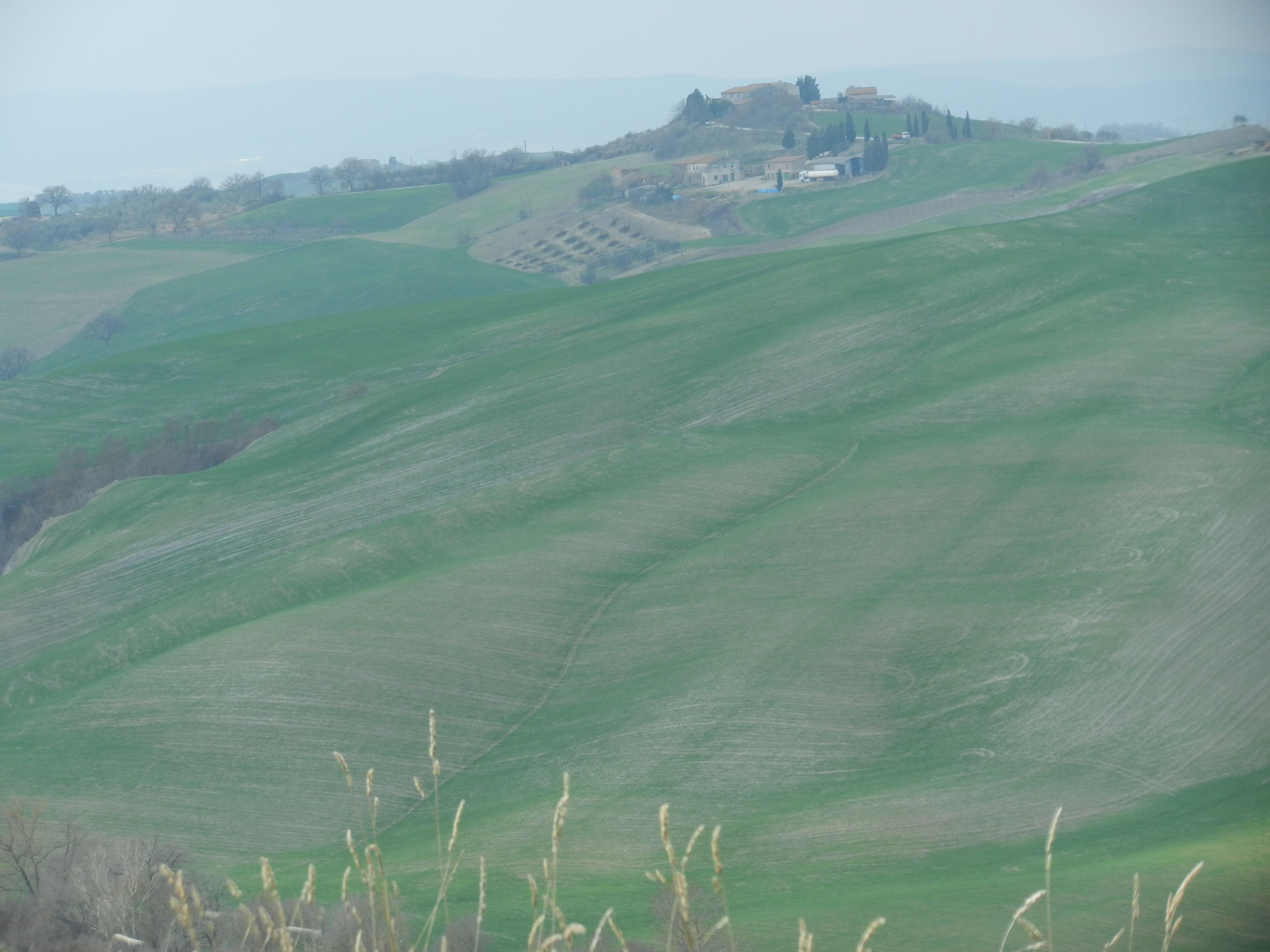
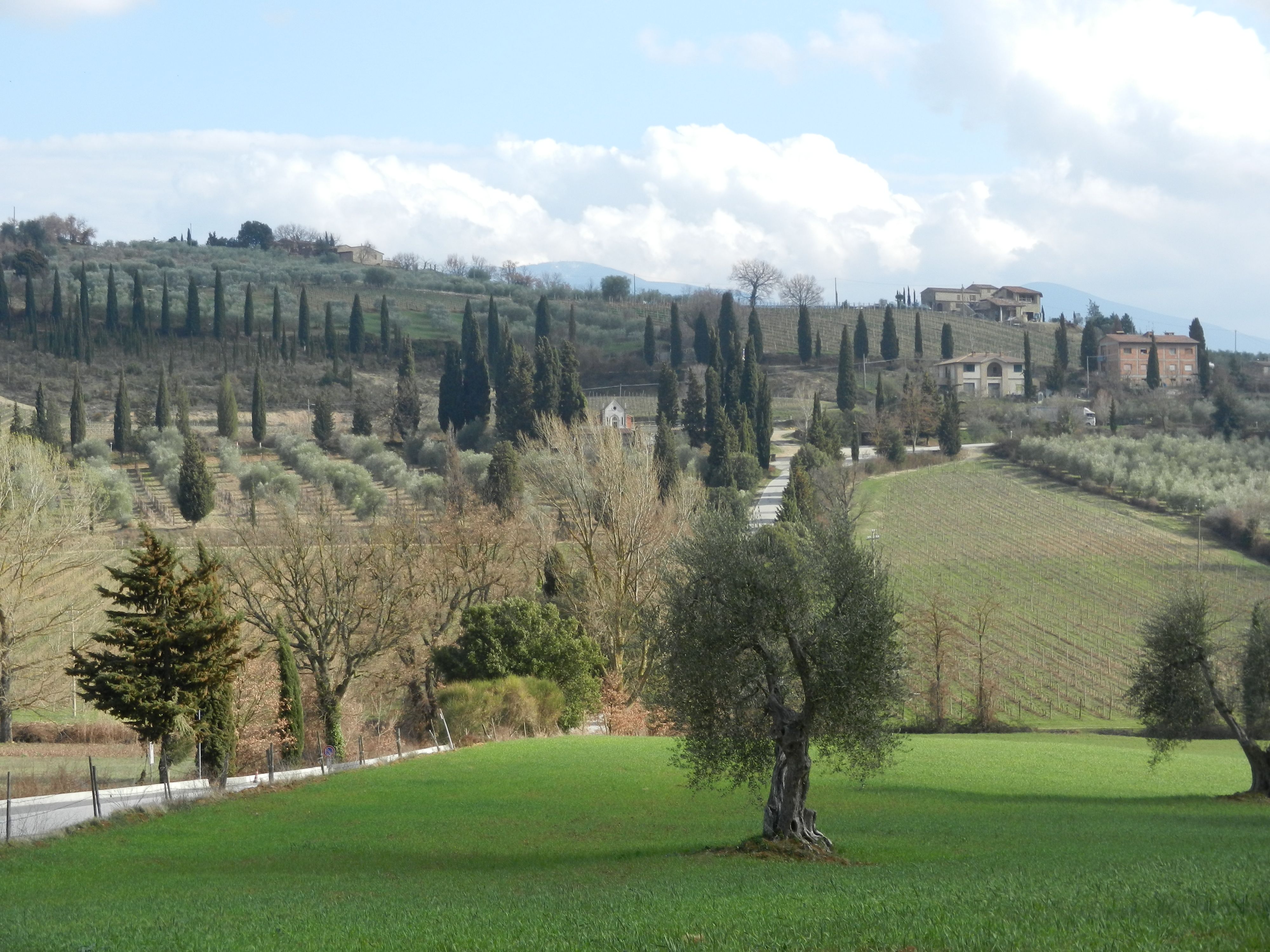
We had a GPS scavenger hunt.  Our hosts gave us some town names, intentionally sequenced to keep us off the interstate highway.  In our tiny car, not the Fiat pictured,  we motored up and over knoll after knoll.  The land is used is such a different way to the farmland I am familiar with.  The estate is built on the top of the hill and the surrounding hillside and valleys are completely planned and planted.  Some properties look completely denuded, still.  Some are beginning to show a shadow of green and some are already vibrantly green.

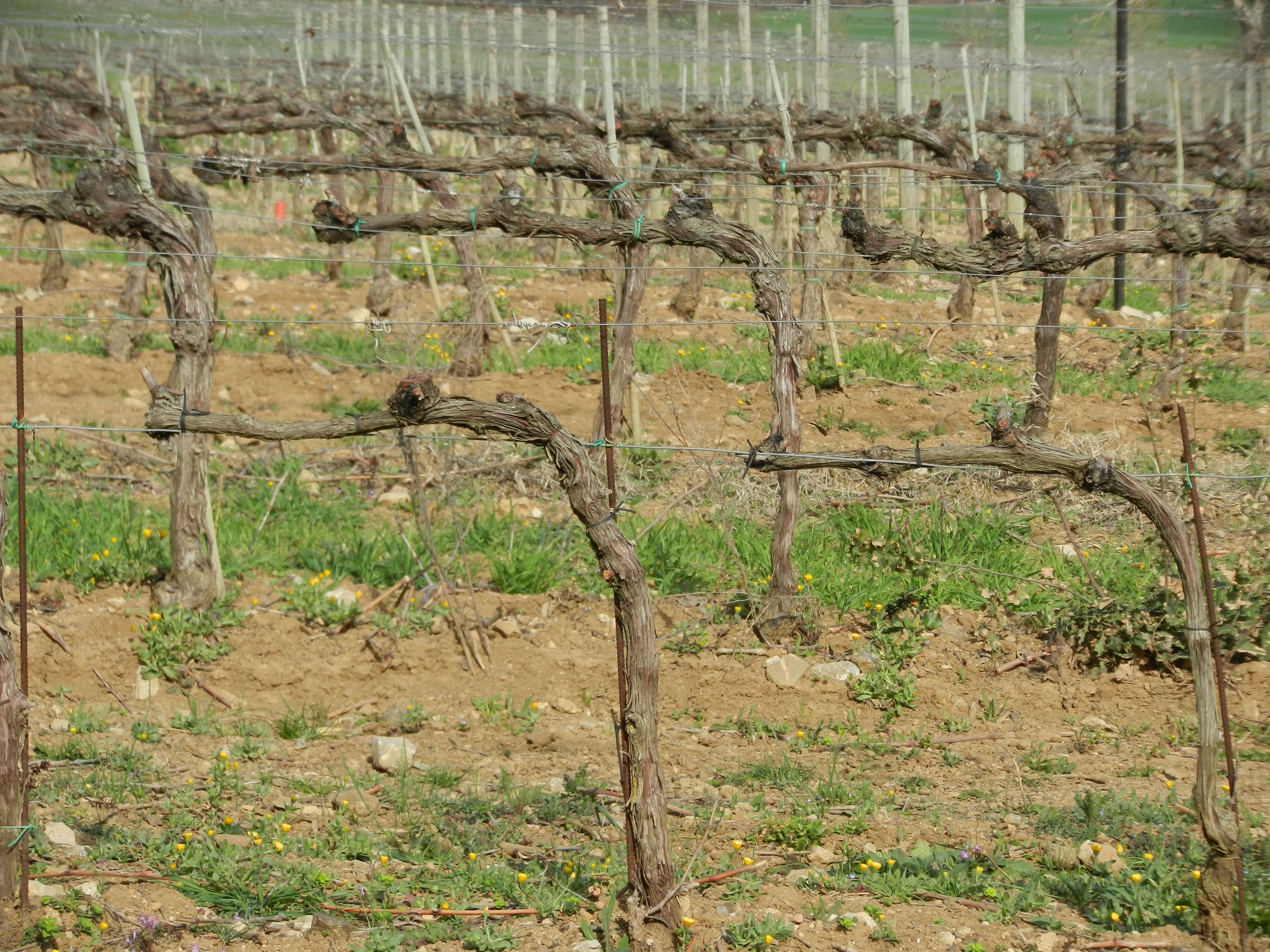
Nothing grows without permission on these intensively controlled farms.  Grape vines, olives trees, fruit trees are all pruned, and clipped, and trained to expend their energy only on the productive side of their natures and not a whip on self-indulgent growth.

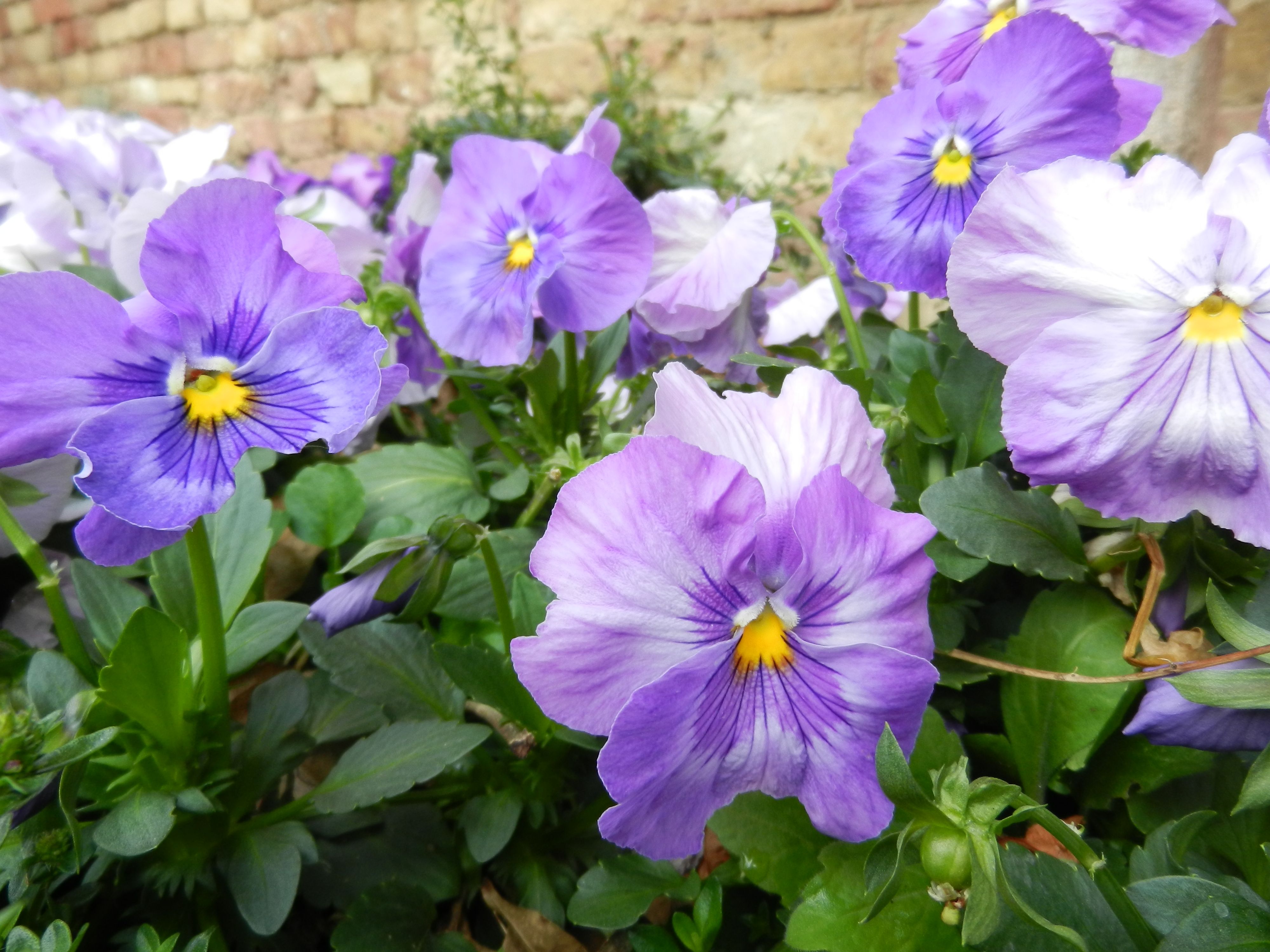
These photos are all selected to evoke the essence of green, and almost growth, and sheep in the form of pecorino: sheep cheese.

Sunday in Siena

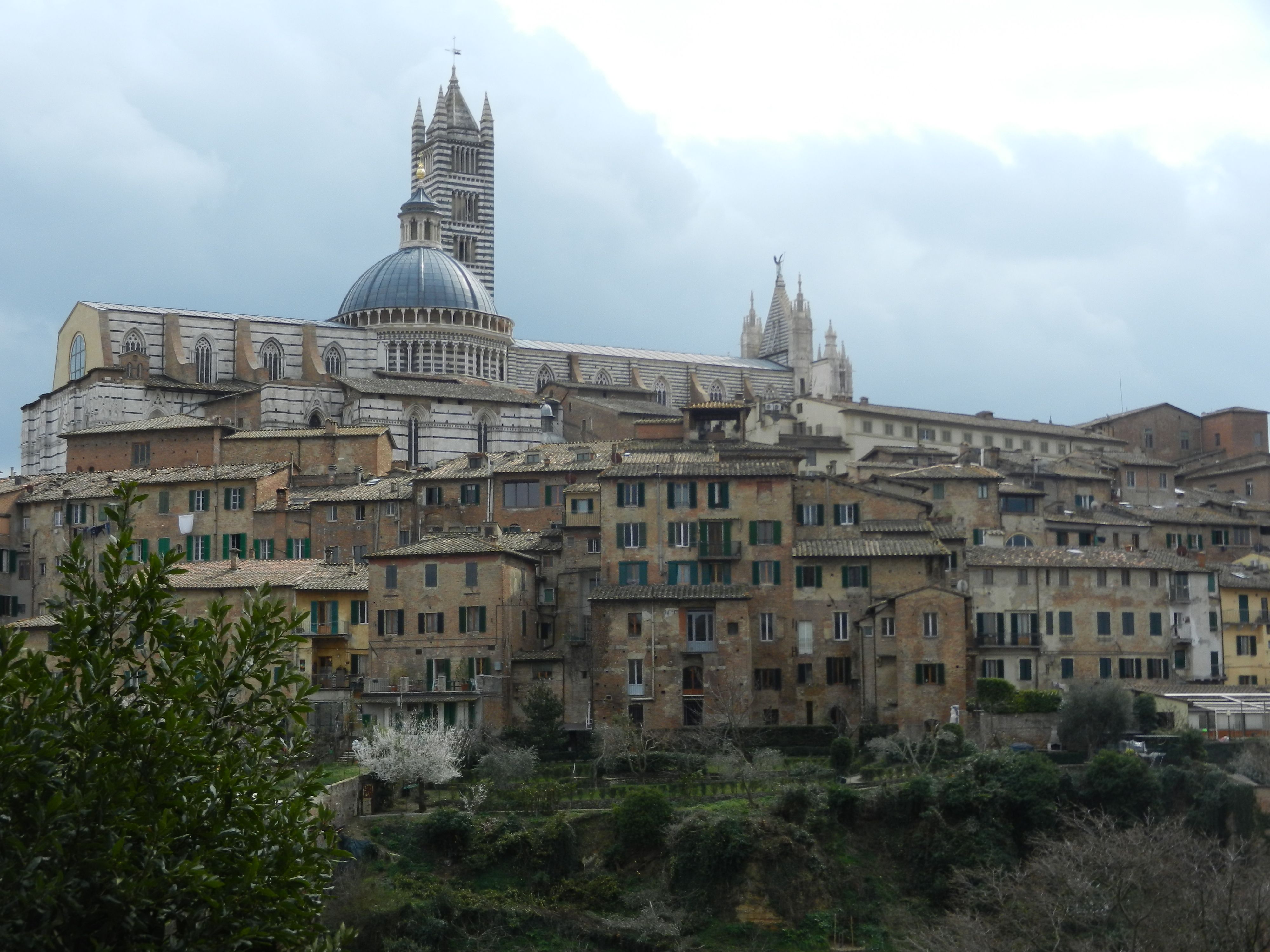
It’s Spring Vacation.  Yesterday morning, Allan and I caught the 6:00 AM flight from Tunis to Rome, which takes exactly one hour, rented a car and drove to Tuscany.  We are staying for a week at the Agritourismo Marciano, a farm stay just outside the city walls of Siena.  So far, it is exactly what we wanted:  a real farm, rustic but tasteful, organic, clean.  It’s all of that.

They have a particular thing about the laundry here which is all fresh and bright from air drying.  Well-done laundry is important to me and gives me a clear message about the deep levels of intentionality this establishment has.    The cat particularly liked it, too. I felt like him last night tucked into my clean, crisp sheets.

This was the kitchen this morning when we came in to share breakfast at the long farm table with the other guests.  It’s cozy, here.

Due to limited internet access, my husband wasn’t able to check his email this morning so he read a guidebook instead.  When we got into the car to go into Siena for the day, he had everything planned, including a great little surprise place for lunch.  I find that incredibly romantic.

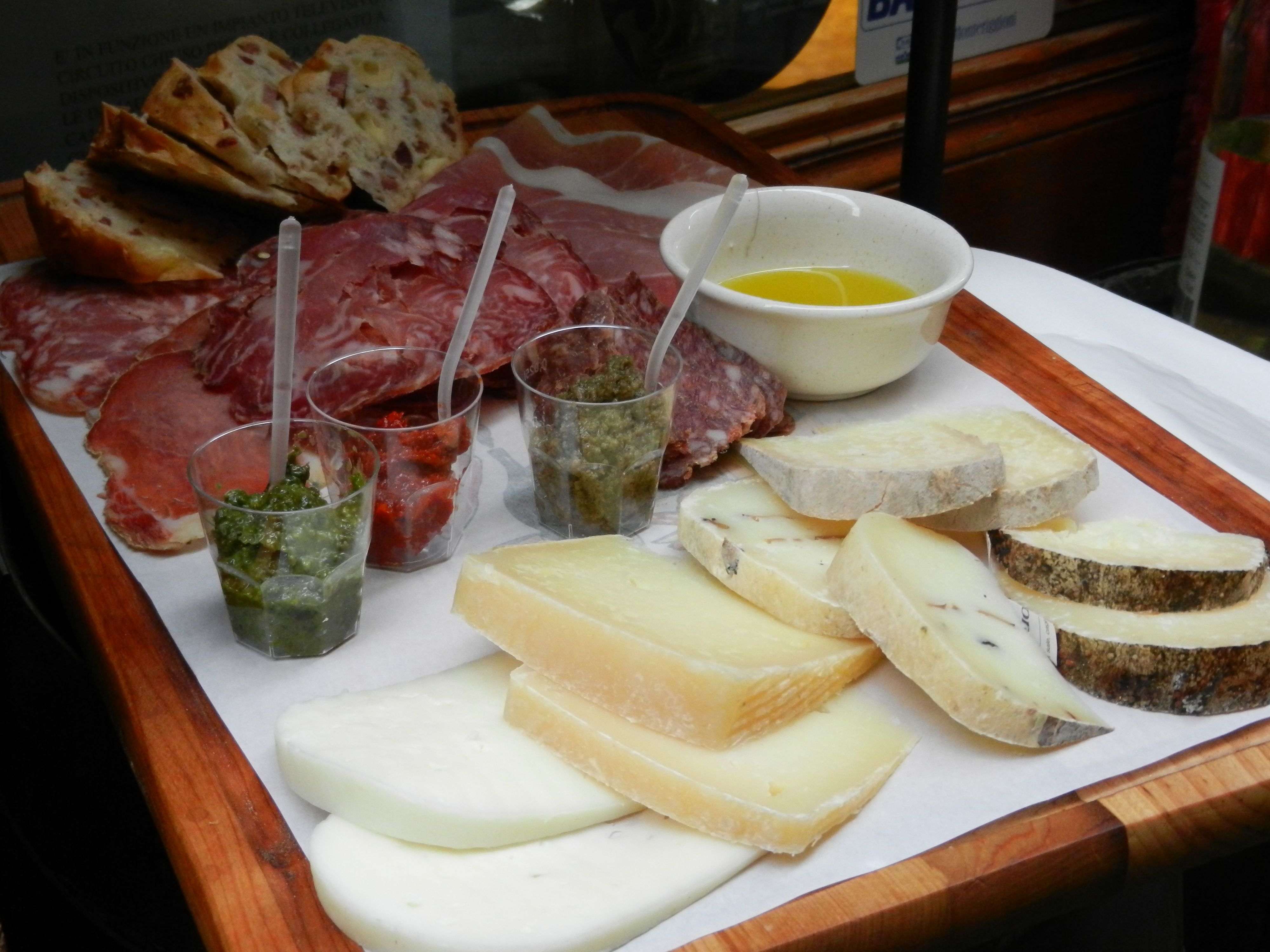
We so passionately want to find the great little places to have a bite to eat and do not want to be herded along tourist trails from one oversized meal to another.  He read about Antica Pizzicheria al Palazzo della Chigiana which is probably locally known as Antonio’s.  It is a tiny meat and cheese shop that is legendary with the locals.  A line starts to form near noon and is soon out the door.  Allan read that you could ask them to assemble a platter to eat on the spot and if you bought a bottle of wine, they would lend you glasses.

They aren’t actually a restaurant, but they can prop you up with your delicatessan treasures on a wine cask in a corner and there you can spend an indulgent 1/2 hour groaning with each bite and licking your fingers. Antonio was really touchy about taking pictures.  He had several posted signs forbidding it and tragically,  you never saw a more atmospheric place in your life; it’s begging to have its picture taken.  I sort of begged him a little and he grudgingly allowed me to inconspicuously take a few so I kept it really brief.  Here are just some house-canned sauces and artichokes.  I love the hand-drawn labels.

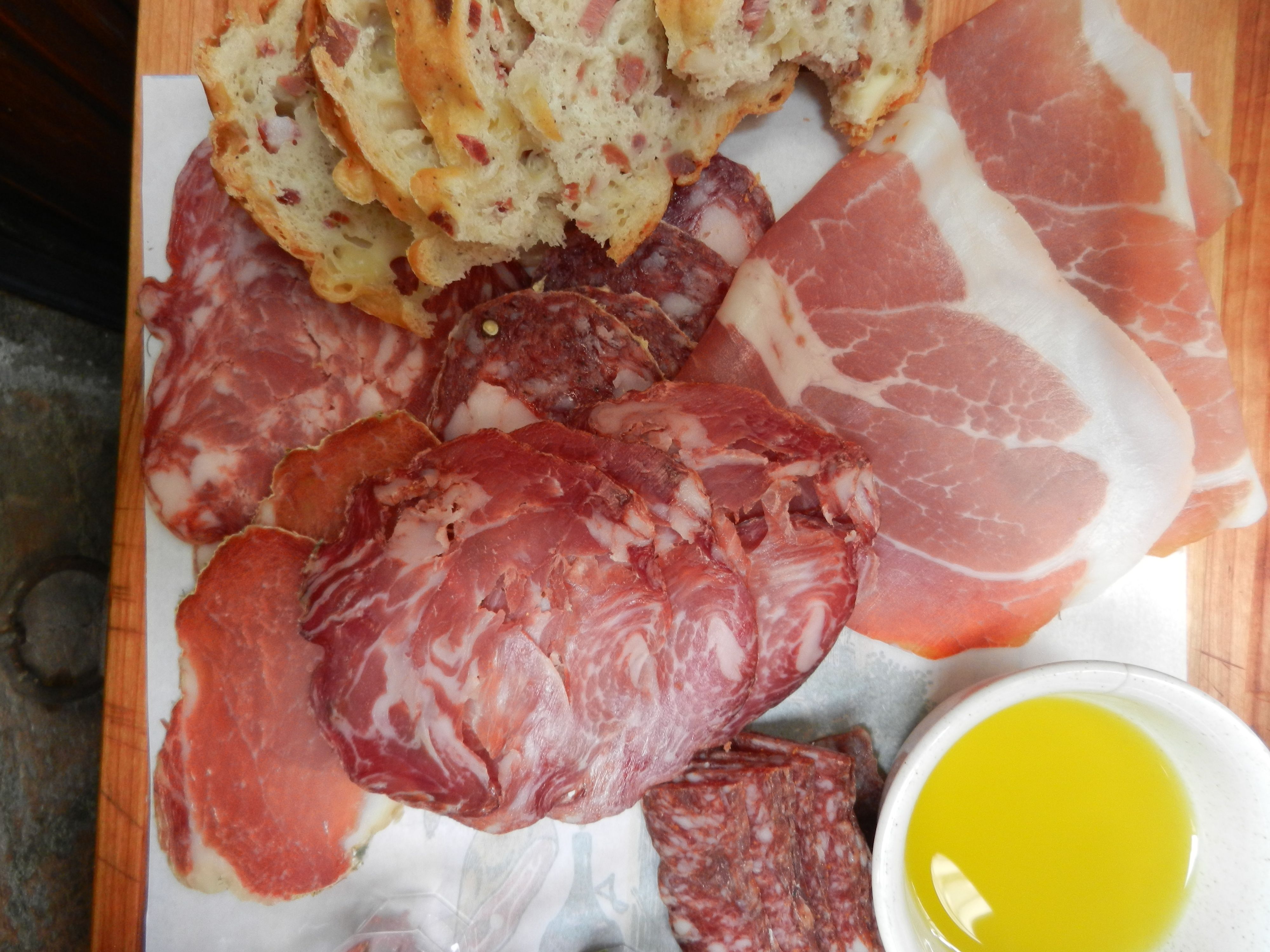
Here is what was on that plate:  five varieties of pecorino, which is the Italian name for cheese made from sheep’s milk and then cured meats that ranged from wild boar to farm-raised, air-dried pork.  Notice the condiments that brought it together and that bread had chunks of salty meat and chunks of cheese.

This meal was a great find and it set a tone for the kind of food we want to source out the rest of the week.  Take out your Siena Brown color-crayon and color along with us.

Citrus Preserves

The making of citrus preserves is a rite amongst the Tunisian ladies.  At work, various names pop up as the ‘divas of marmalade’ and when I get gifted a sample, from time to time, I am intrigued that they do vary in style and reflect the taste of the cook or likely several generations of cooks in that family.

There are two basic formulas for marmalade:

  1. Cook equal parts citrus to sugar until it thickens.
  2. Cook equal parts water and sugar with ½ as much fruit until thickened.

Method number one will produce a fruitier jam-like marmalade and number two will give you more jelly, which is beautiful.

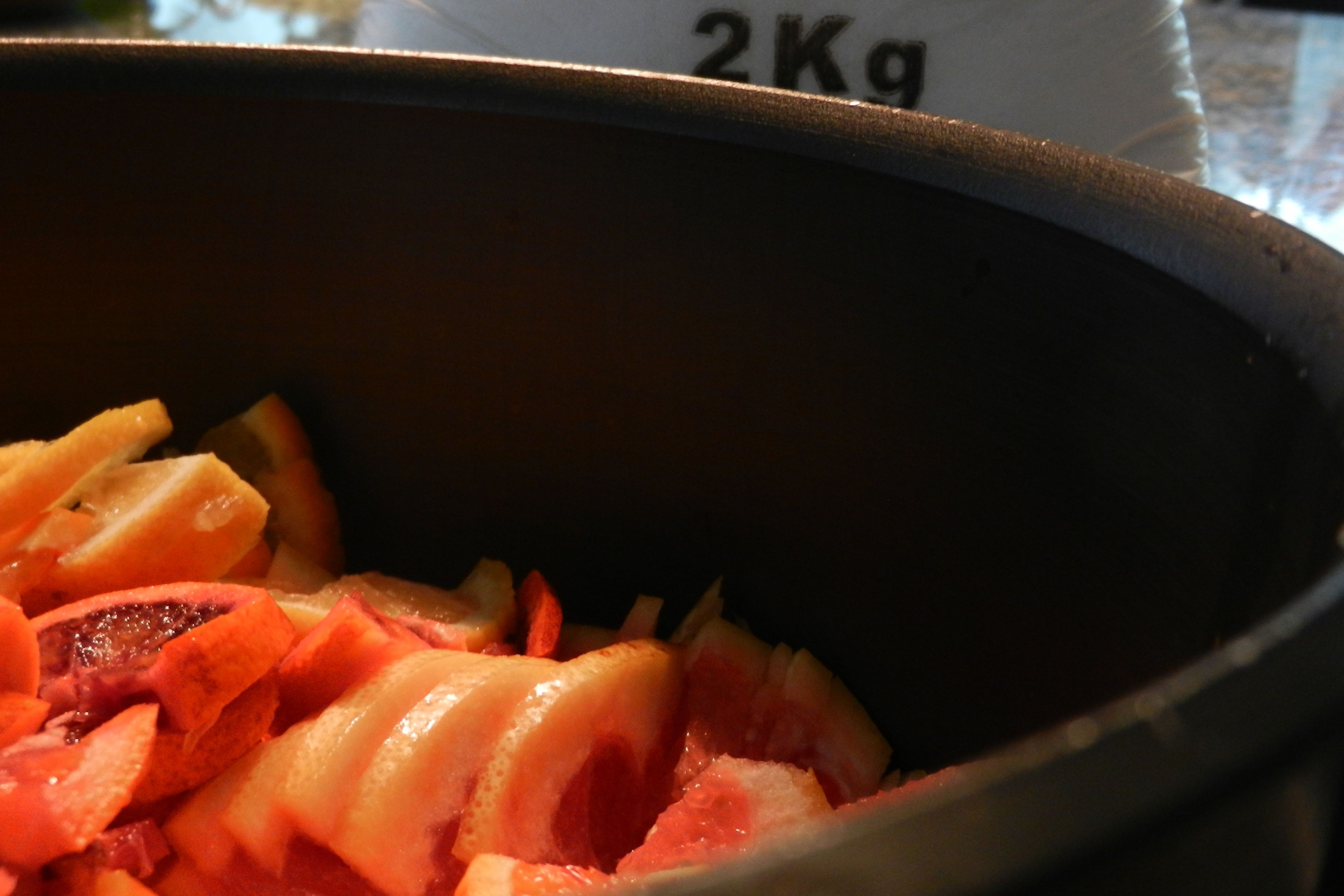
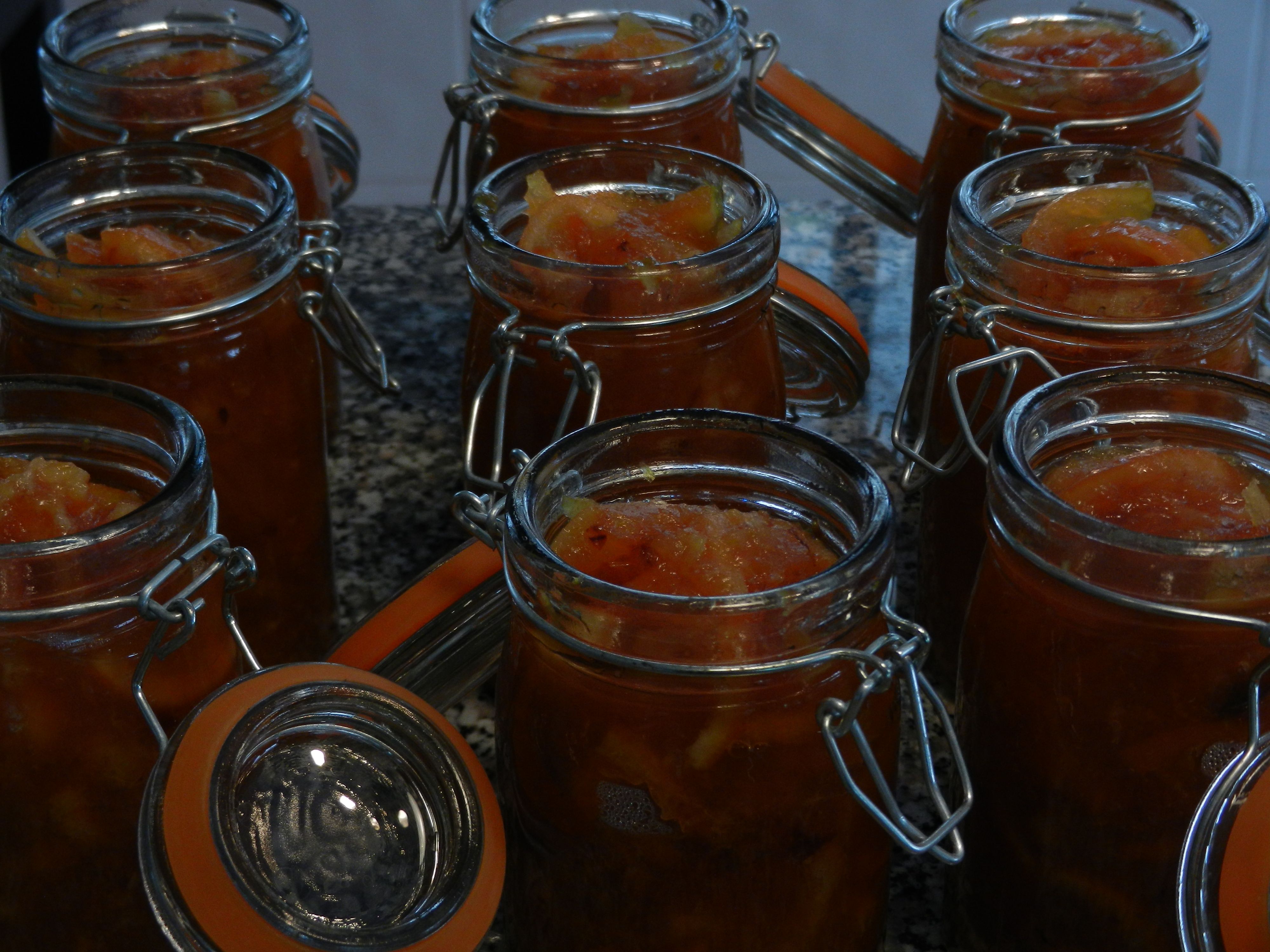
We only eat a piece of toast with jam on occasion so I wanted to basically jar citrus puree that I can use for a lot of preparations in the months to come.  I used about 4kgs of sliced citrus to 2 kgs of sugar and cooked it down until thick.

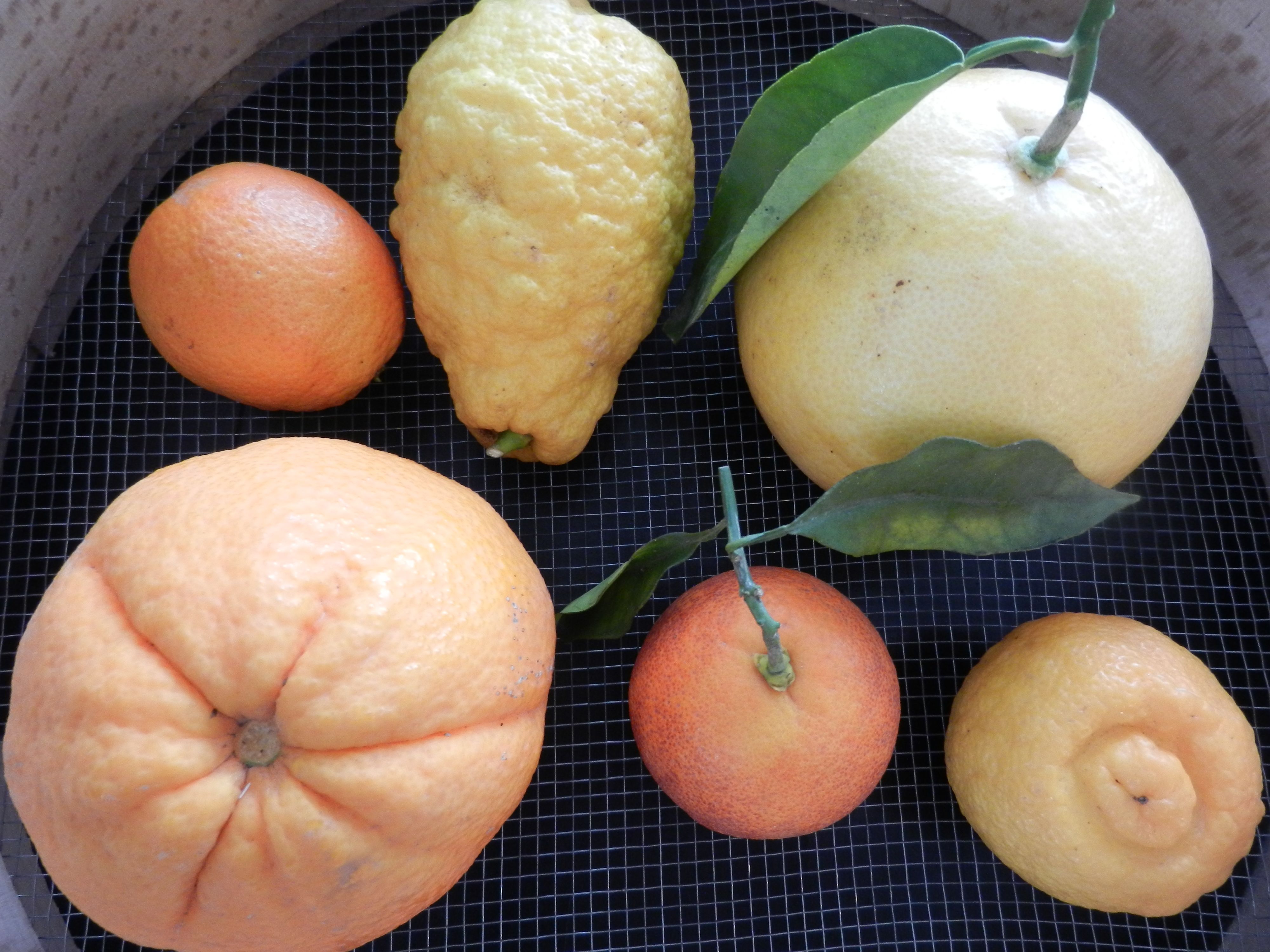
Where the art comes in here, is in the selection of the citrus.  I do apologize to my friends who can’t get anything but basic grapefruit, oranges, and lemons at your local grocery store, but try to appreciate the diversity of some of these varieties that exist.  My friend, Fatima, gave me the insider combination for getting a range and depth of flavor.  Through some comical inquiry, I was able to round up all six of these at my market yesterday.

Beginning at the top, right, there is pink grapefruit, bergamot orange, blood orange, navel orange, bitter orange and finally, there is a strange-looking lemon that she only knew the Arabic name for: trong.  You can combine these in any proportion you want.  I wanted to emphasize the bitters in these preserves so I went easy on the navel and blood oranges and pumped up all of the others.  Bergamot is going to add a bit of mystery, contributing an Earl Gray tea essence, which is also a bitter.

Here are the final gems.  You can see that they contain a lot of fruit which will work well for a number of uses such as the following:

  • Puree one jar of preserves with 3-4 roasted green chilies for a salsa or marinade for braised or grilled meats, thinning as desired with chicken or vegetable stock.
  • Puree one jar to use in citrus cakes, muffins, or pies.
  • Use as a topping for panna cotta or shortbread cookies
  • Add to a chickpea soup or chile
  • Thin and then use to glaze a garlic-roasted chicken
  • Serve as a chutney alongside a roasted tomato/ricotta/roasted onion tart


The Great Salt Mountain

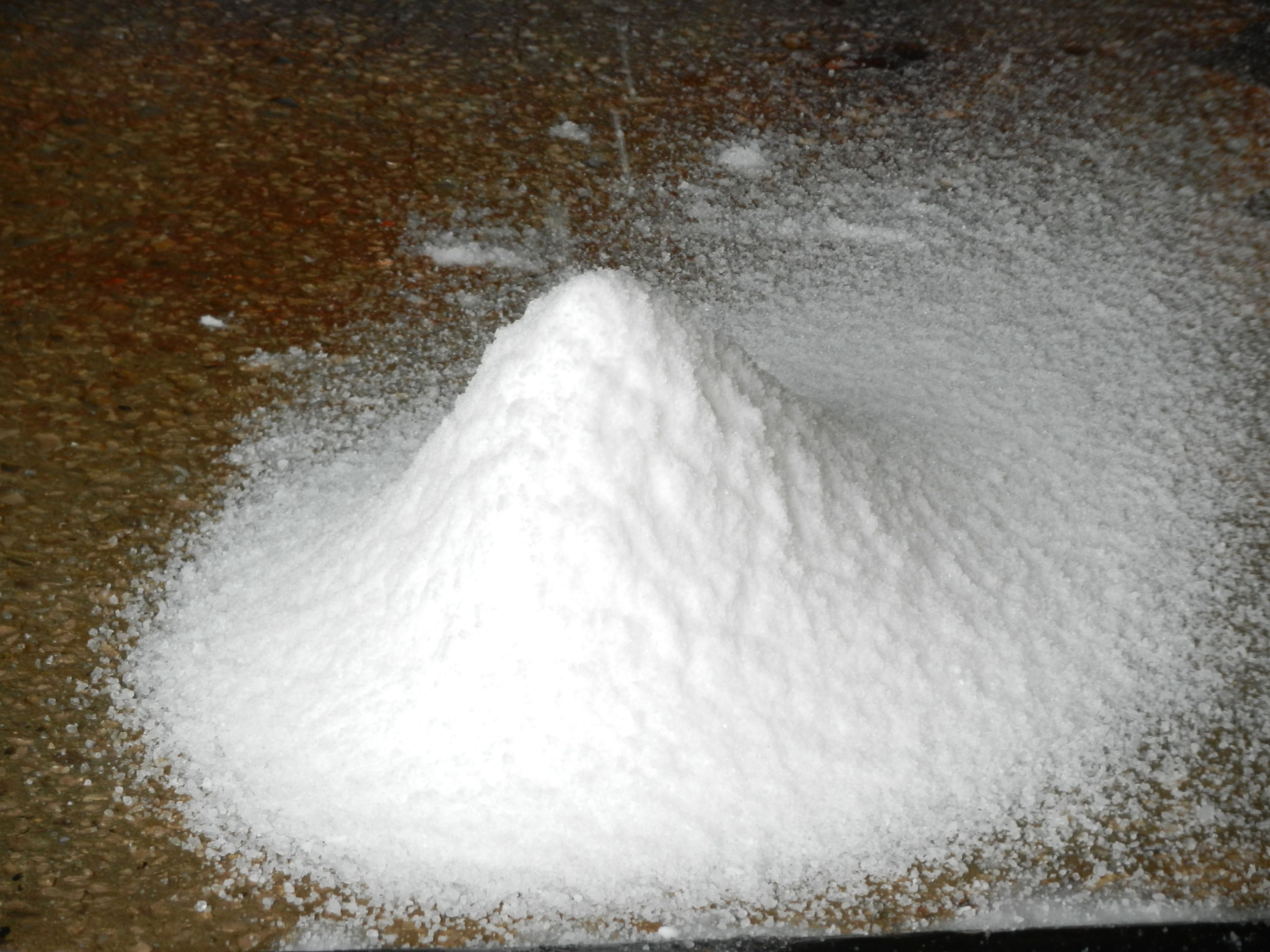
I discovered a new geographical feature today in Tunisia.  Utah has its Great Salt Lake and Salt Flats, but Monastir, Tunisia has a great salt mountain.

I have long wanted to answer my curious mind about how sea salt is produced.  I guess I pictured something like rivulets, hand-dug with wooden tools,  on a pristine beach, evaporating at the rate dictated by the sun and the wind.  The magical layer of fleur de sel occurring only when the sun and wind create the elusive but necessary conditions.  Well, the basic premise of that is correct, but the scale of production is exponentially magnified.

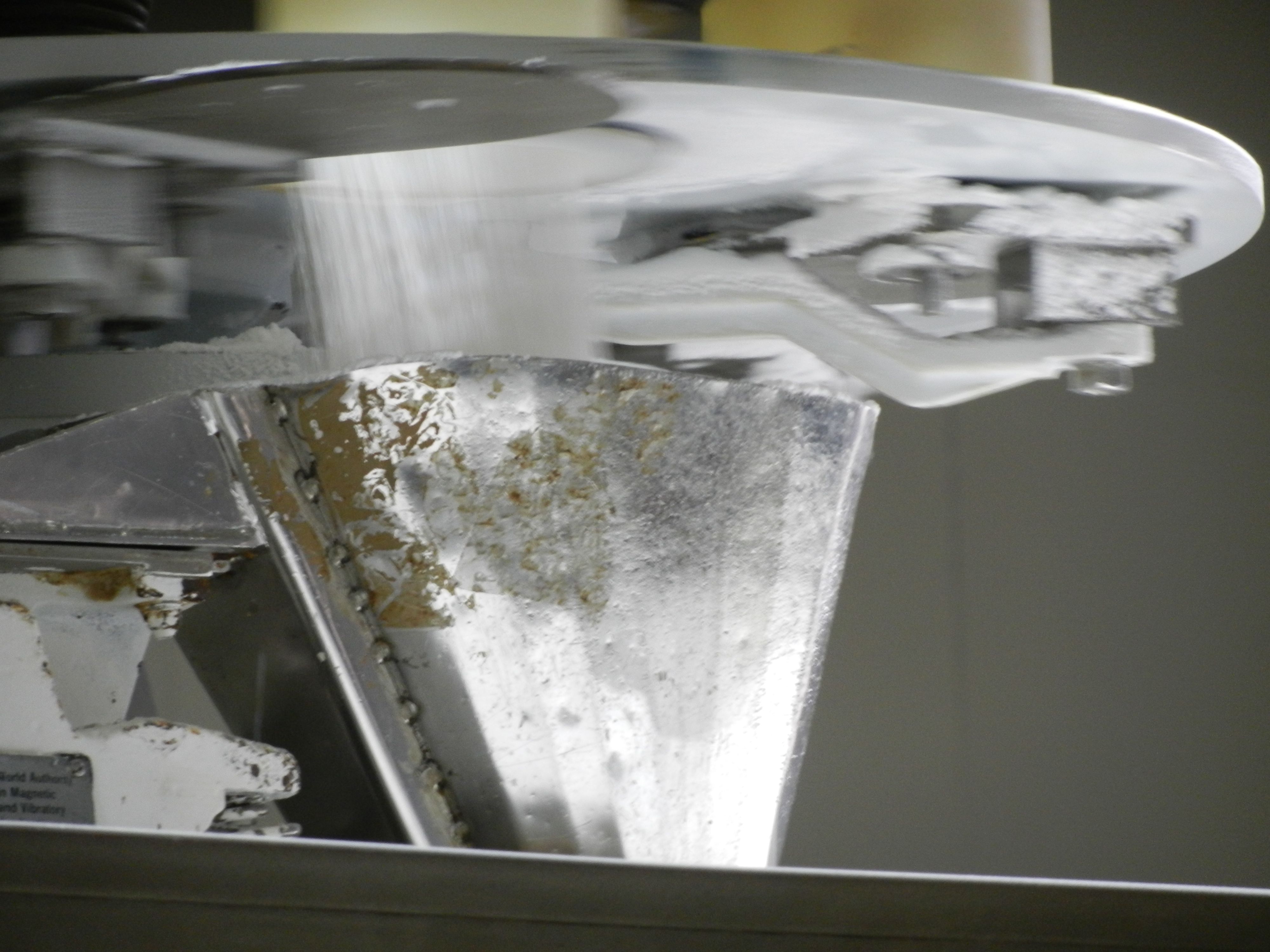
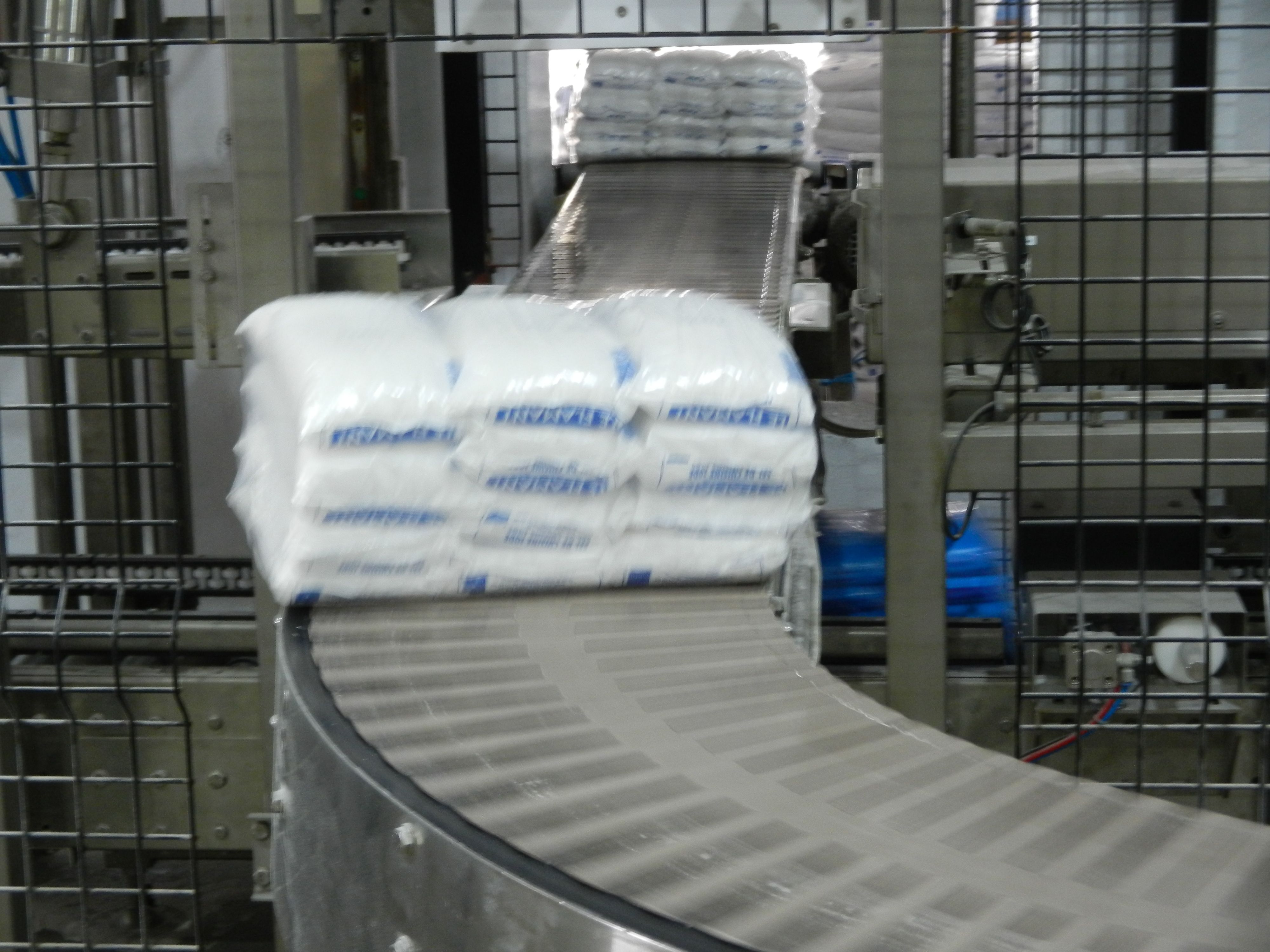
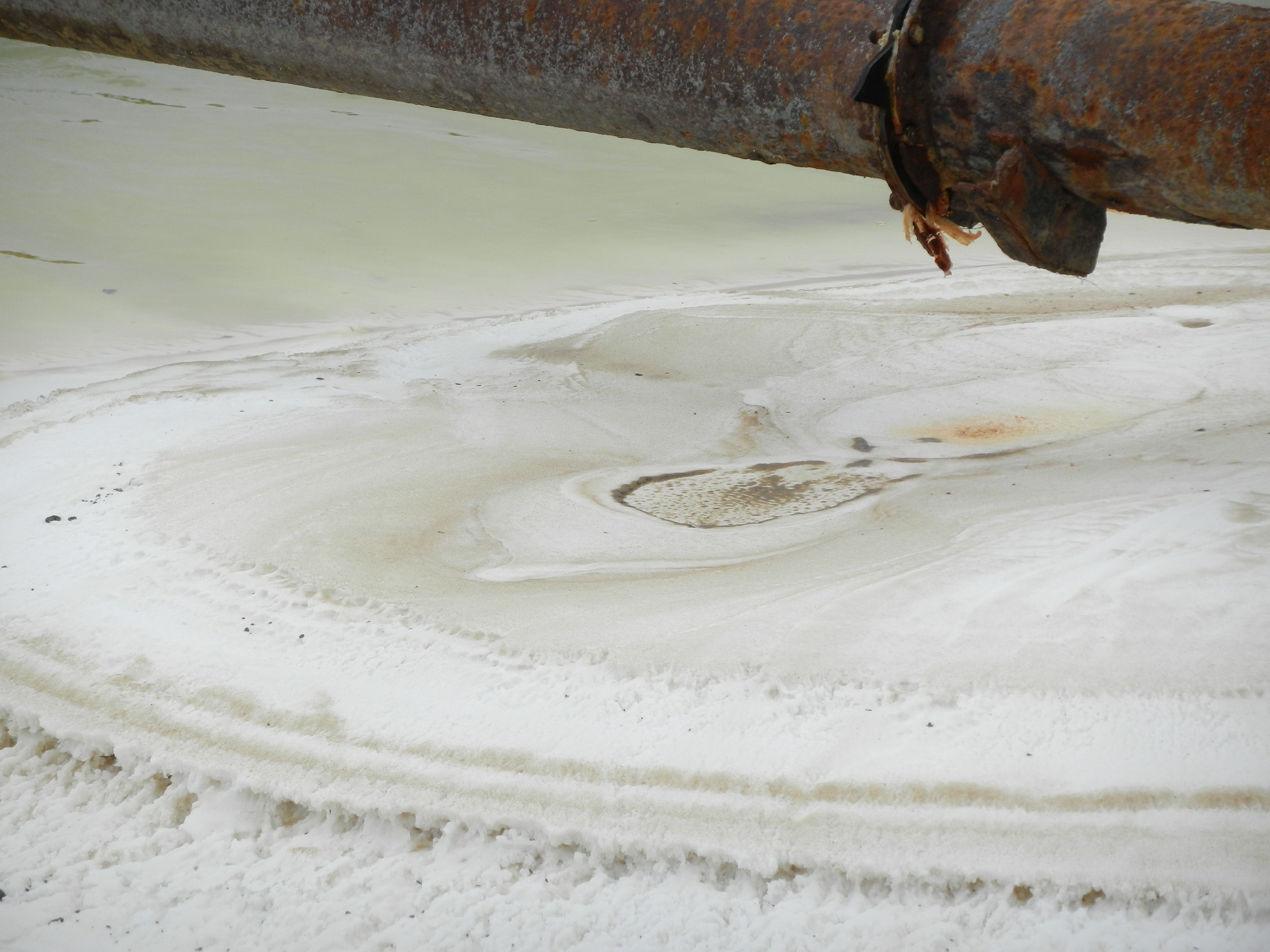
Here in Tunisia, the conditions are perfect for the production and harvest of sea salt only from May to September, with a peak window of about 5 weeks.  All of the salt gleaned from that harvet is augered into one enormous mountain that sits uncovered, outdoors and for the rest of the year, the business is all about processing, packaging, and distributing the product for sales.

I saw the evaporation ponds where Mediterranean sea water is piped in and the evaporation takes place, but I was off season and didn’t get to observe the actual formation of the salt crystals.  Another visit will be in order in the summer.  Salt, however, clearly wanted to happen everywhere.  Anywhere drips of seawater were left unattended, salt wanted to emerge.  It also wanted to sift through the processing in fine salt hills that caught the next wind and made a salt blizzard in the air.

Our hosts at La Rose de Sel were so hospitable and we left them to continue digging away in their salty wonderland.  The references to snow are inescapable in the ways salt crystallizes, powders, and drifts.  It gets into every crack and crevice, filling the air, itself.  My hair wasn’t white when I left, but there was a fine dusting all over me, detected for hours every time  I licked my lips.

Tunisian Fast Food

Tunisia helps you break some habits.  There are things you can’t get, things that are inconvenient to access, and then things you just realize you don’t want or need any more once you move here and gradually those things fade from your life.  Eating out is one of those things for us.  The restaurants aren’t all horrible, quite the opposite.  There are some good restaurants.  Most of them serve a version of a fish dinner where you choose your specimen from a tray of freshly caught, whole fish and then you choose a preparation method.  In the meantime you are served bread and probably several other dishes of pickled vegetables and dips.  Then your fish comes and it is delicious and you’re probably wondering why were not enjoying this every weekend.  It’s because these restaurants come with a few other little annoyances.

1.  Restaurants  don’t open until 8:00 (minimum) and sometimes 8:30 or 9:00.  If I am going to have dinner at 9:00 PM, I have to have a nap and a snack first and then I really don’t feel like going out anyway.

2.  The restaurants are often filled with smoke as though smoking is compulsory in the establishment.

It ends up not being a treat to go out to eat; it’s a chore.  My friend Karen and I went out to a completely Tunisian establishment a couple of weeks ago.  Karen speaks perfect French, but the staff only spoke Arabic.  There was an ongoing live Sufi musician playing distorted Arabic music and the room couldn’t have had a greater smoke to oxygen ratio or we would have all been dead.  It was an interesting cultural experience and I don’t regret that we went there, but it was, frankly, psychedelic  and in the end, I felt much more nauseous than satisfied.  It is a  much better idea here, usually,  to go home and cook and/or eat with friends who all cook quite well, too.

On nights when we have more energy than eating a baguette and red wine for dinner, but want to keep it simple, we just swing by our neighborhood market and get a couple of whole fish.  The man who works the fish counter will gut it and even filet and skin it if you ask.  Then, we go a couple more block toward home and get some fresh veggies and fruit from our corner produce stall.  Tonight, we bought two loup (those are the fish) , then onions, bergamot oranges, dill, mild green peppers, and fresh spinach.  At home, we washed and prepped everything, stuffed the fish with the onions, oranges, and dill and then grilled it off in batches.  Lovely fresh fish dinner at 6:00 PM and in a smoke-free environment.  That’s a nice end to the work week.

You Make the Life You Want to Live?

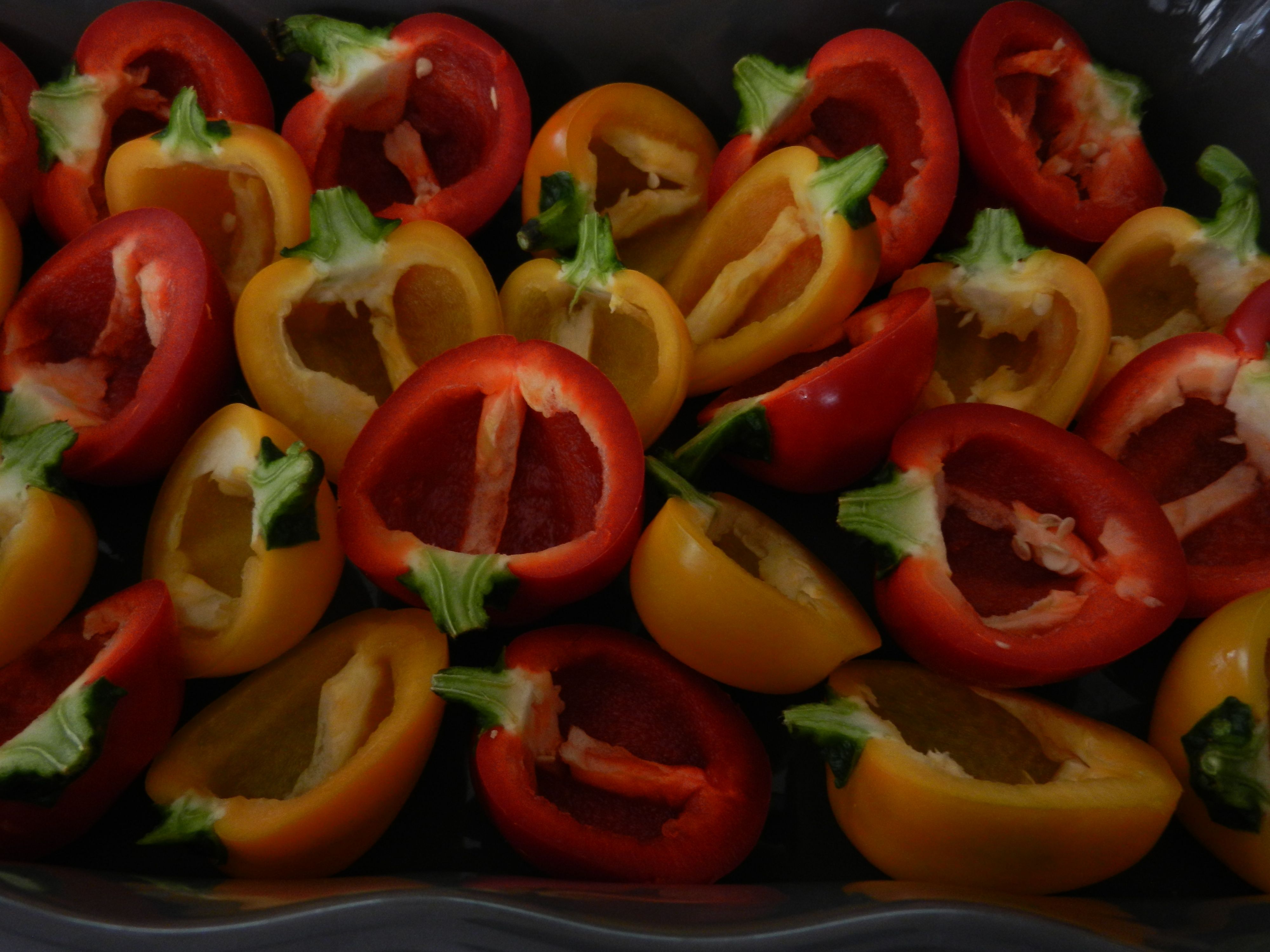
I walked into this kitchen to cook some Lebanese food.  I’m really interested in practicing Middle Eastern cooking and I have great supplies available here in Tunis to do it.  The pot of chickpeas is bubbling on the stove, but everything else I touch wants to go Tuscan instead, as if by enchantment.  I bought a nice, small beef loin at the market today and my mental taste buds chanted: rosemary, lavender, sage in response.  I bought baby bell peppers and again my mind wanted a cracked wheat stuffing or pilaf with the roasted vegetables.  Oh, and now I just got the message that we also want roasted balsamic onions on the side so I’d better get those going, too.
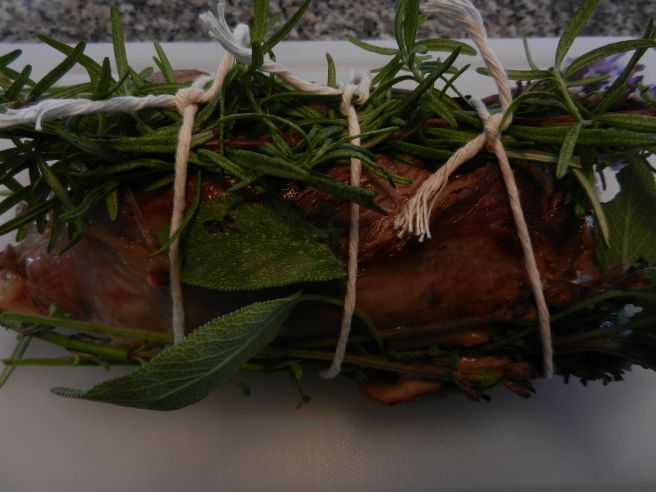
I don’t consider myself to be experienced at Tuscan cuisine.  I did go to Florence in September for a weekend conference, which sounds like code for I went to Florence and didn’t really go to a conference, but indeed, I went to the conference for long hours each day, escaping for only a few hours one night to see ‘David’, eat a pizza, and buy some staples at a grocery store before flying home the next day.  So what do I know of Tuscan cooking?  It’s from the buffet table at our conference hotel (cringe), but I did notice this:  There were multiple dishes and they were each based on a central piece of meat, vegetable, or grain.  You could look at the platter and say, this is the roasted beef platter and the next one you could say, this is the roasted tomatoes platter.  That might sound really simplistic and a little boring except that when I sat down and started tasting each of those preparations, I realized each one was of a perfect specimen of ingredient and then treated in the most whole manner possible, yet with nuanced seasoning or finishing.  Each bit tasted unique and incited audible “ummms” as I ate.  So that’s what I think I’m up to with my Tuscan cooking:  whole foods wrapped or braised in other whole herbs and seasonings with, hopefully, something unique and finessed coming through each one.

I’m in a Tuscan state of mind to begin with because Allan and I finally got our heads into planning a Spring Break escape in three weeks.  We haven’t done it sooner because we have been conflicted.  Here is the conflict:  Our sons are music majors in the US and they will both be in a production of Don Giovanni the weekend before our Spring Break.  This is Gabe’s third production in the opera department and he is the co-lead, Leporello.  Anton will be playing his double bass in the orchestra pit.  Gabe, in particular, has been working on this part for nine months, translating and learning the words, learning the music, then the blocking, and now the finishing touches to the performance.  He carries a score that is about 1 ¼ inches thick and a recording of his entire part with him wherever he goes and he rehearses, and rehearses, and rehearses.  Will we be there?  These are words that have been very hard for me to acknowledge, but we won’t and because of copyright and profit-making issues, there will be no live-streaming and if past performances hold true, no recording that we will ever see.

Why is getting there such a big deal?  For one, it is expensive.  The two of us can’t go to the US for even a short visit without dropping thousands of dollars.  With two sons in college, loan free, and investments not having performed at peak levels the past 10 years, we need to save some money during this 10 years.  I know, this is an exceptional situation.  It sounds like being just the weekend before our Spring Break would be a good thing, that it’s so close that we can just roll it into the break, but that is the other part of the problem, and maybe the greater issue.  Many employees at our school would love to extend the Spring Break for a variety of valid reasons and Allan is the director of the school.  He cannot set the example of leaving a week early and he can’t give me permission to do it.  I’ve thought of taking days without pay, but that approach exacerbates problem number one and is still bad for problem number 2.

My friend, Richard, says simply, “We make the life we want to live.”  That cuts me to the heart, although he means it all in kindness and I know he has had his own sacrifices to make over his years.  I paraphrase that as, “Make your decision, deal with the consequences, and don’t blame anyone, but yourself.”  It’s just that it seems that almost none of my decisions anymore affect just me.  I have children who I pine for and who need me.  I have aging parents, and siblings, and friends who I cannot get enough time with and who are all affected by choices I make.  I can deal my own consequences, but I can’t be fully in charge of the decision.  I pressed this with Allan, everyday. Bolstering myself with Richard’s haunting words,  I said, “I know we will regret this if we don’t go.”  He agreed and believe me, this is in no way easy for him, either, but his answer couldn’t waver.  I could just say I’m going, but we don’t live like that.  We haven’t ever done that to each other in the almost 29 years we’ve been married and I feel I would be breaking a trust agreement we have which is we don’t do things we can’t both support.

So this is what is horrible about this expat life.  It was so wonderful to sail off with our boys when they were young and so were the other people in our lives, but the sacrifice doubled when they separated from us and it grows exponentially each year.  Now this is the work and life Allan and I know and are invested in and it takes us away from so many people and places we love.

What a weird economy of choice that we are planning a walking trip in Tuscany as an economical alternative to going home to see our sons.  I can’t expect you to understand.  I know I will regret it, but that appears to be what we are doing.