Czech Beer-Cheese Bread

Our friends from Prague have been visiting this week.  At our final potluck gathering last night they treated us to a typical Czech pub snack called beer-cheese.
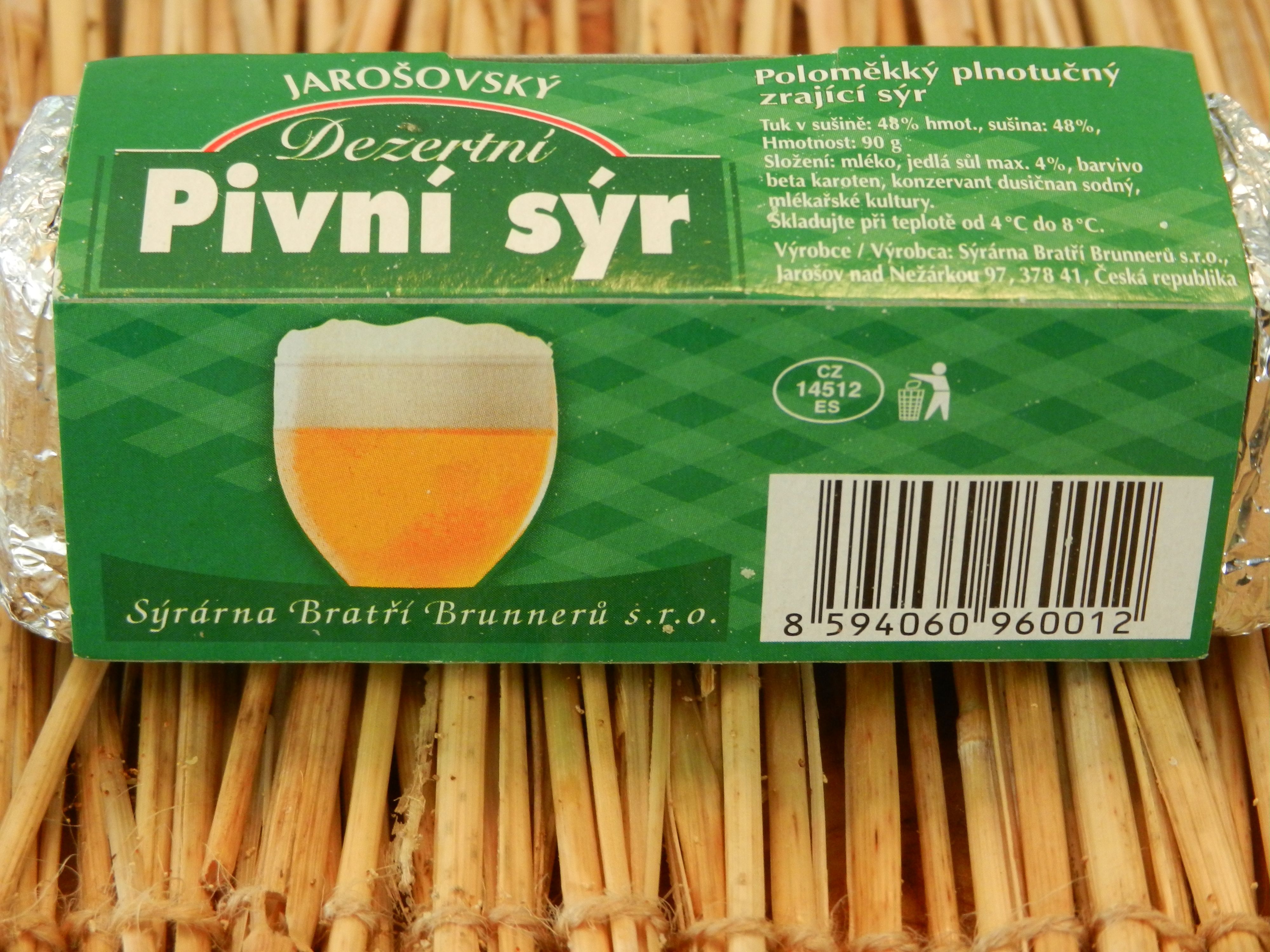
Beer-cheese is a variety of extremely pungent cheese and it is also the name of a dish that is the result of mixing and smashing the cheese with chopped onions, paprika, mustard, and a little actual beer to create a dish that is called beer-cheese.  Here is a short video showing the technique.

Actually, it’s NOT as bad as it looks, or smells.  I tried it spread on a Tunisian baguette and it was tasty.  It was so tasty that the flavor lingered in my mouth through the next five marinated olives I ate.  It really has staying power.

As we were saying goodnight and goodbye, they gave us our own packet of beer-cheese (Pivni syr) to enjoy at home.  It was already factory sealed in plastic, but because its odorous qualities were escaping the seal,  I immediately double-wrapped it when I got home and put it in the fridge.

The next morning…

When I opened the fridge this morning to get milk for my coffee, my first thought was, good Lord, a mouse has died and decomposed behind (or in) the fridge.   Then I remembered my friend talking about packing this cheese (smaller than a stick of butter) in baking soda and multiple bags to transport it to Tunis and I truly understood what she had been working with.

Using this cheese, today(!) came to the immediate top of my priority list.  Leaving it in our fridge to bring out as a novelty at our next social gathering was not an option.  I felt I needed to use it in combination with tempering ingredients that could hopefully soften and diffuse the pungency.  A cheese bread came to mind.  Dispersing the cheese throughout the mellow flavors of whole wheat flour, browned leeks, and toasted walnuts with a bite of paprika on top seemed like a good way to bring out its best qualities.

Cheese, Leek and Walnut Bread

Makes 2 loaves

Ingredients

  • 3 tablespoons yeast
  • 2 cups warm water
  • 1 teaspoon plus 1 tablespoon olive oil
  • ¼ cup molasses
  • 4 ½ cups flour
  • 1 cup whole wheat flour
  • 1 teaspoon sea salt
  • 1 medium leek
  • 6 ounces walnuts
  • Paprika, 1 tablespoon
  • 12 ounces cheese (Stilton, Gorgonzola…) or ½ that much Pivni syr

Directions

In the bowl of an electric mixer fitted with a wire whip, combine the yeast, water, 1 tablespoon of the oil and molasses. Mix on medium speed for 2 minutes.

Combine the flours and salt together.

Change the mixer attachment to a dough hook. Add the flours and mix on low speed until the dough starts to come together. Increase the speed to medium and beat until the dough cleans the sides of the bowl and climbs up the dough hook.

While dough is rising, toss walnut halves in 2 tsp. olive oil, 1 tablespoon paprika, and 1 teaspoon sea salt.  Turn out onto a baking sheet and toast in a 350 degree F.  oven for approximately 10 minutes.  When slightly brown, remove from the oven, turn out onto a cutting board and roughly chop.  Reserve.

Chop leek.  Saute in 2 teaspoons olive oil until lightly brown.  Reserve.

Grease a larger mixing bowl with the remaining teaspoon of oil. Place the dough in the bowl, turning once. Cover with plastic wrap and place in a warm, draft-free area. Allow the dough to rest until double in size, about 2 hours.

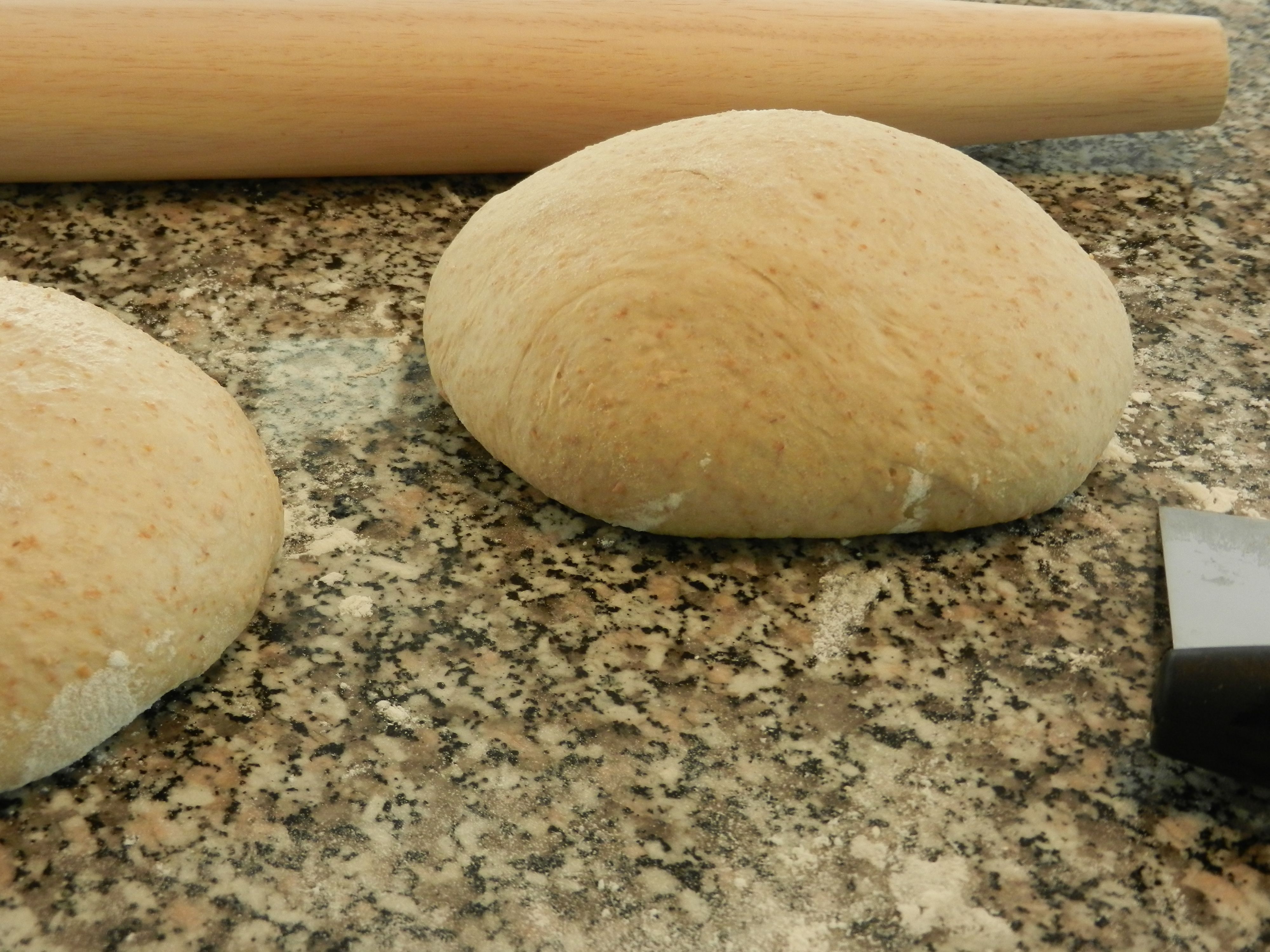
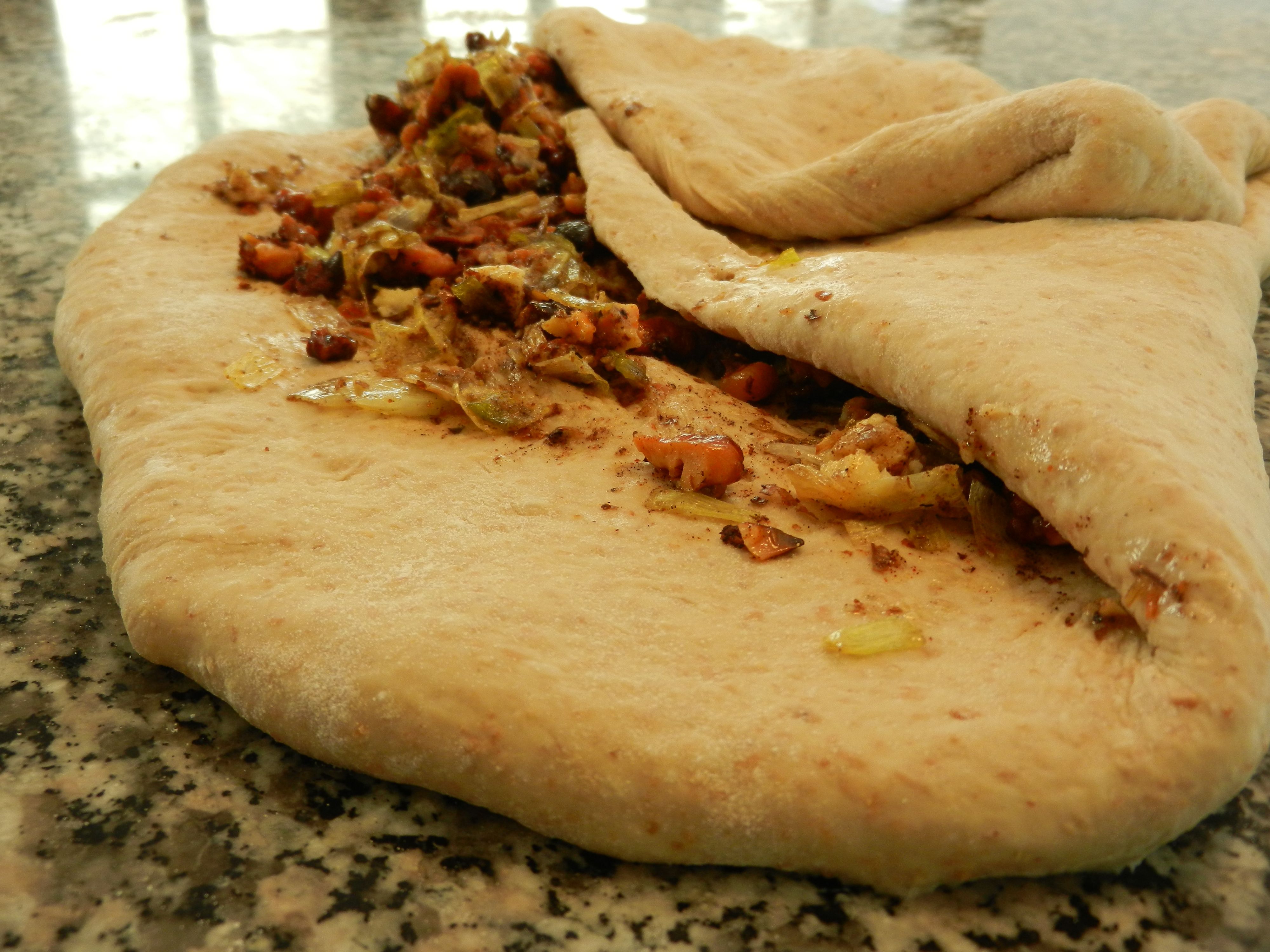
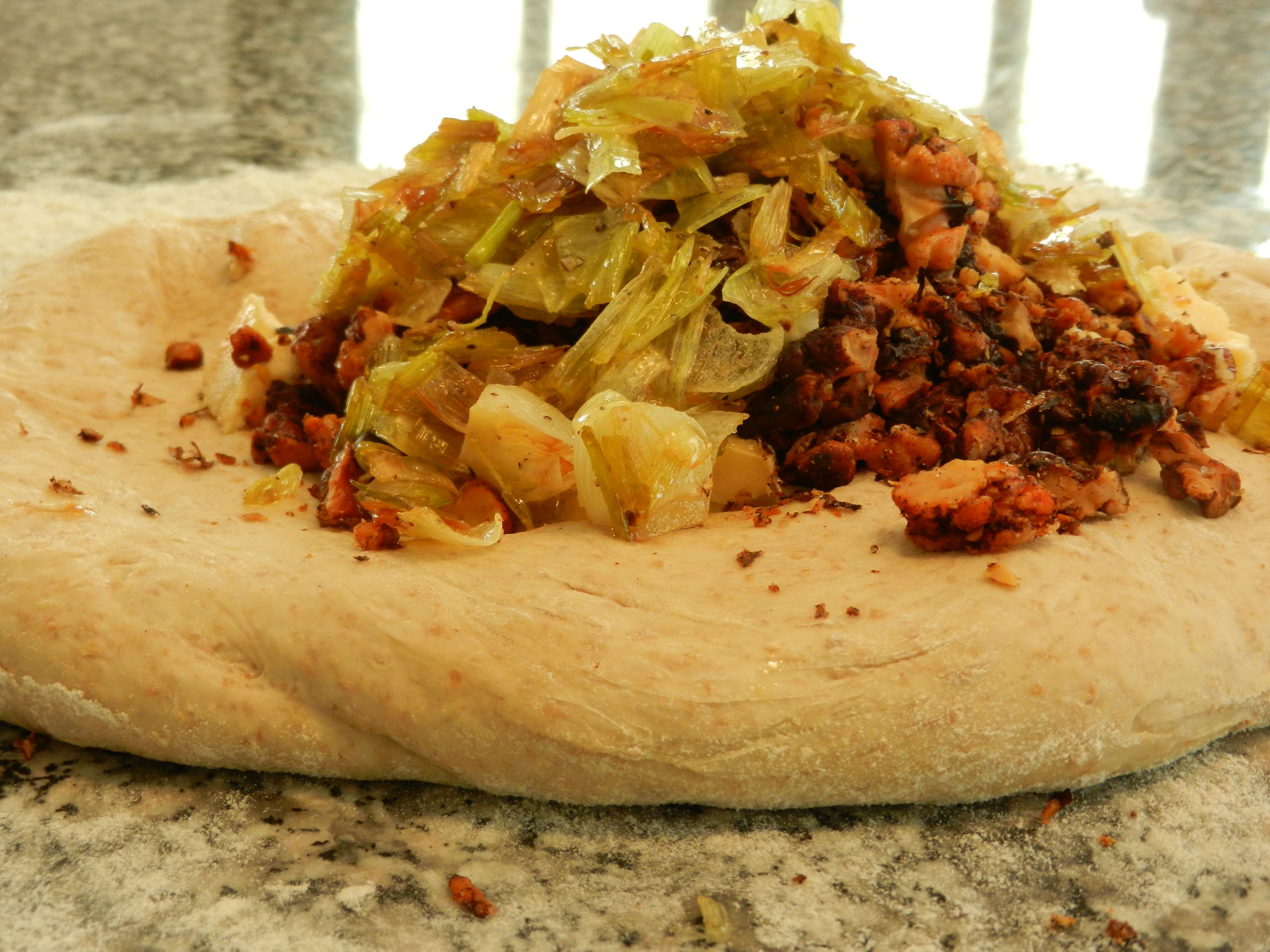
Divide the dough in half. Set one half aside. Roll or pat the dough out into a rough rectangle or circle. Sprinkle half of the nuts and 4 ounces of the cheese over the dough.  Work filling with fingers to thoroughly mix cheese into the leeks and walnuts.   Fold the sides in toward the center and knead the dough several times, working in all ingredients. Repeat with the remaining dough, walnuts, leeks and cheese. Form the balls of  dough into two small rectangles.
Grease 2 rectangular bread pans with the remaining oil. Place the dough in the prepared pans; press the dough to form to the pan. Sprinkle the top with more cheese, if desired.   Cover lightly with plastic wrap. Let the dough rise again until double in size, about 1 hour.

Preheat oven to 425 degrees F.  Place the pans in the oven and bake for 15 minutes. Reduce the heat to 350 degrees F. and continue to bake for 20-30 minutes more or until brown. Remove from the heat and cool on a wire rack.

Allow the bread to cool before slicing.

Not Our Usual Med

I’m home from work today for the fourth day.  What started as a firey sore throat turned into racking body aches and then morphed into bronchitis.  There was even a weekend in there so I’ve been sick for six days.  Our family doctor in Tunis makes house calls and she came round to my house yesterday afternoon and gave me a little check-up assuring me that I don’t have an infection, but just need to rest it out and take decongestants.  That’s good to know even if it doesn’t make me feel immediately better.

Overnight, a huge storm blew in.  It rained, hard, all night long, which I love for sleeping, but we’ve recently developed a hole in the roof and the bathroom ceiling is drip, drip, dripping.  I shudder to think how much water might be storing up above that ceiling and how heavy it might be getting.

The Mediterranean has huge, rolling, gray waves, churning the sand and rocks at the shore.  Palm and citrus branches are blowing sideways.    It’s atmosphere all over the place and I am glad to be tucked away at home with a couple of podcasts to listen to and a big bag of fava beans to shell.

I’ll share a recipe tomorrow or the next day, but today, I’m laying low.

Extravagance with Artichokes

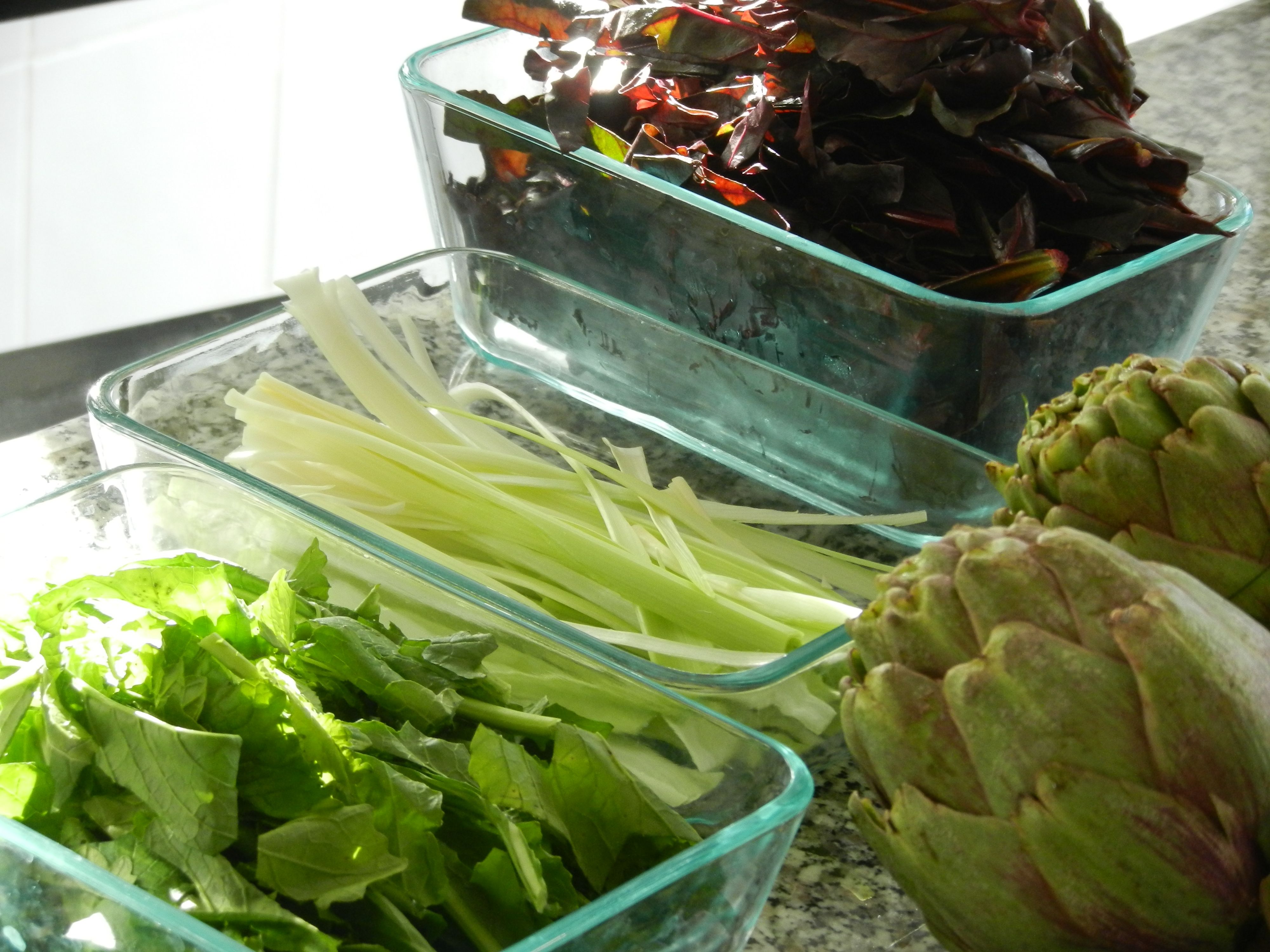
I want to do wildly extravagant things with artichokes.  They are so cheap and plentiful that this is my time, if ever, to try all of those artichoke recipes I’ve always dismissed as being for people who live in California.  One little hurdle in my mind can be getting past the separation of leaves and stem.  First, it is physically challenging to peel and de-choke an artichoke.  It’s not impossible, but I wish I had a better technique.  Second, if I don’t use the whole artichoke, I feel like I’m wasting the meat on those leaves.  I am currently steaming them off separately and Allan and I will either just sit and have a big artichoke leaf fest or I will try scraping the meat off of each individual leaf to add a layer of artichoke paste to a lasagna.  That’s my current plan.

Concurrently, I have been saving nutrient rich greens from the cutting room floor all week.  The vegetable sellers here are very quick to cut the greens from the bulbs of carrots and fennel, and on to beets and turnips, which we know are delicious.  I bought a bunch of beets a few days ago and had my back turned when the owner chopped off the greens and tossed them in a bundle on the shop floor.  When I asked for the greens, he put the decapitated heads of two other customers’ bunches in my bag, too, so now I have plenty of beet greens.  Plenty.

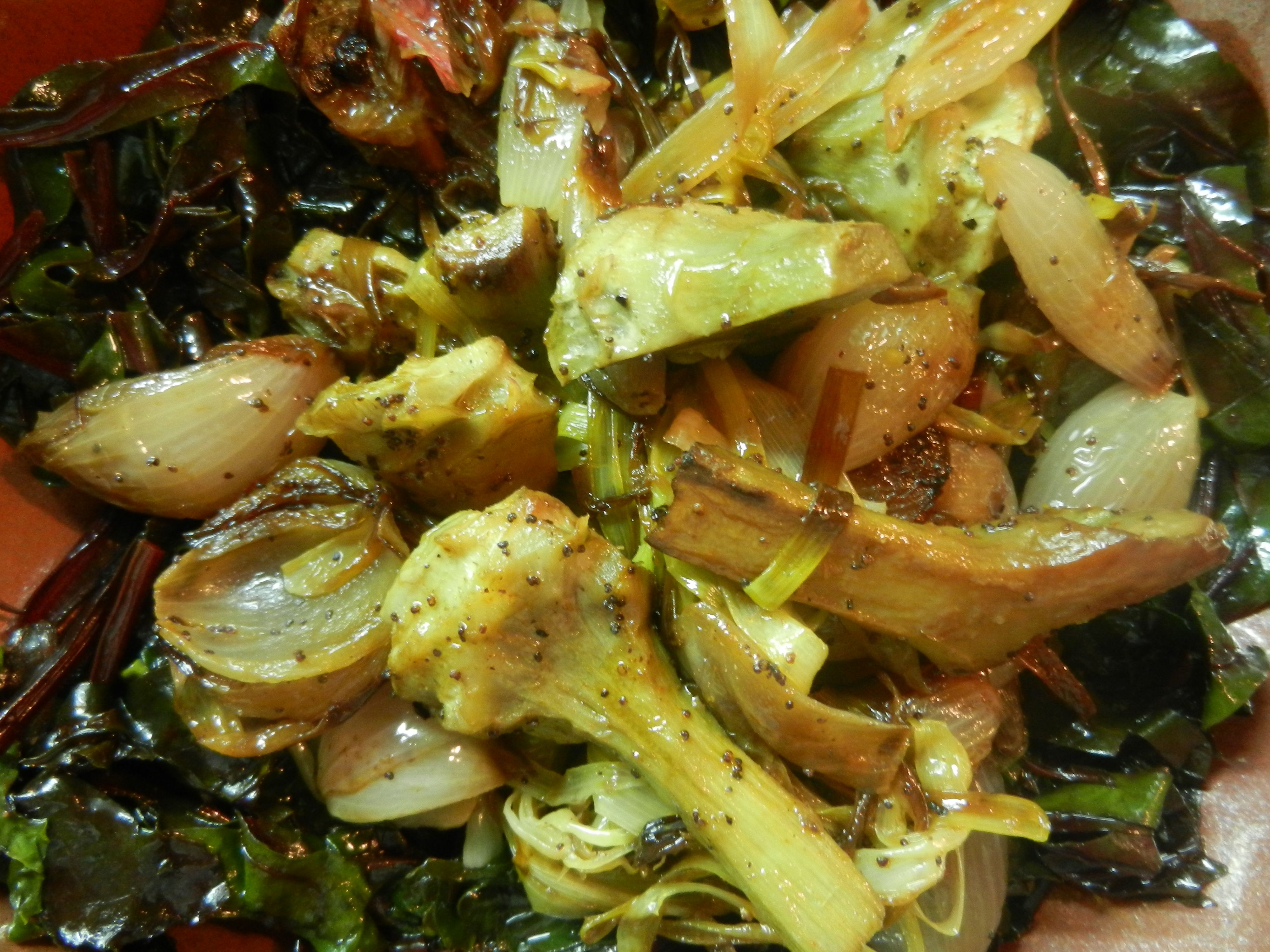
I bought a beautiful cookbook last summer, Turquoise, by Greg and Lucy Malouf that I am long overdue to start learning from.  The subtitle is A chef’s travels in Turkey.  Greg is an experienced Australian chef, Lucy is an evocative writer and they also had a fantastic photographer along because every page makes you want to crawl right inside.  They try everything they can, but then Greg puts a little Australian spin on the dish so it’s just a tiny bit fusionized for Western cooks.  This is my first recipe to actually cook from the book and it’s perfect for what’s available to me at the moment.  Rather than chicory and chard, I used beet and turnip greens.

Bitter greens, artichokes, and shallots with poppy seeds

Adapted from Turquoise, by Greg and Lucy Malouf

Ingredients

  • ¼ cup extra-virgin olive oil
  • 6 fresh artichoke hearts, cut into quarter and kept in acidulated water
  • 12 small shallots, peeled and halved
  • 1 leek, white part only, cut lengthwise into thin strips and washed
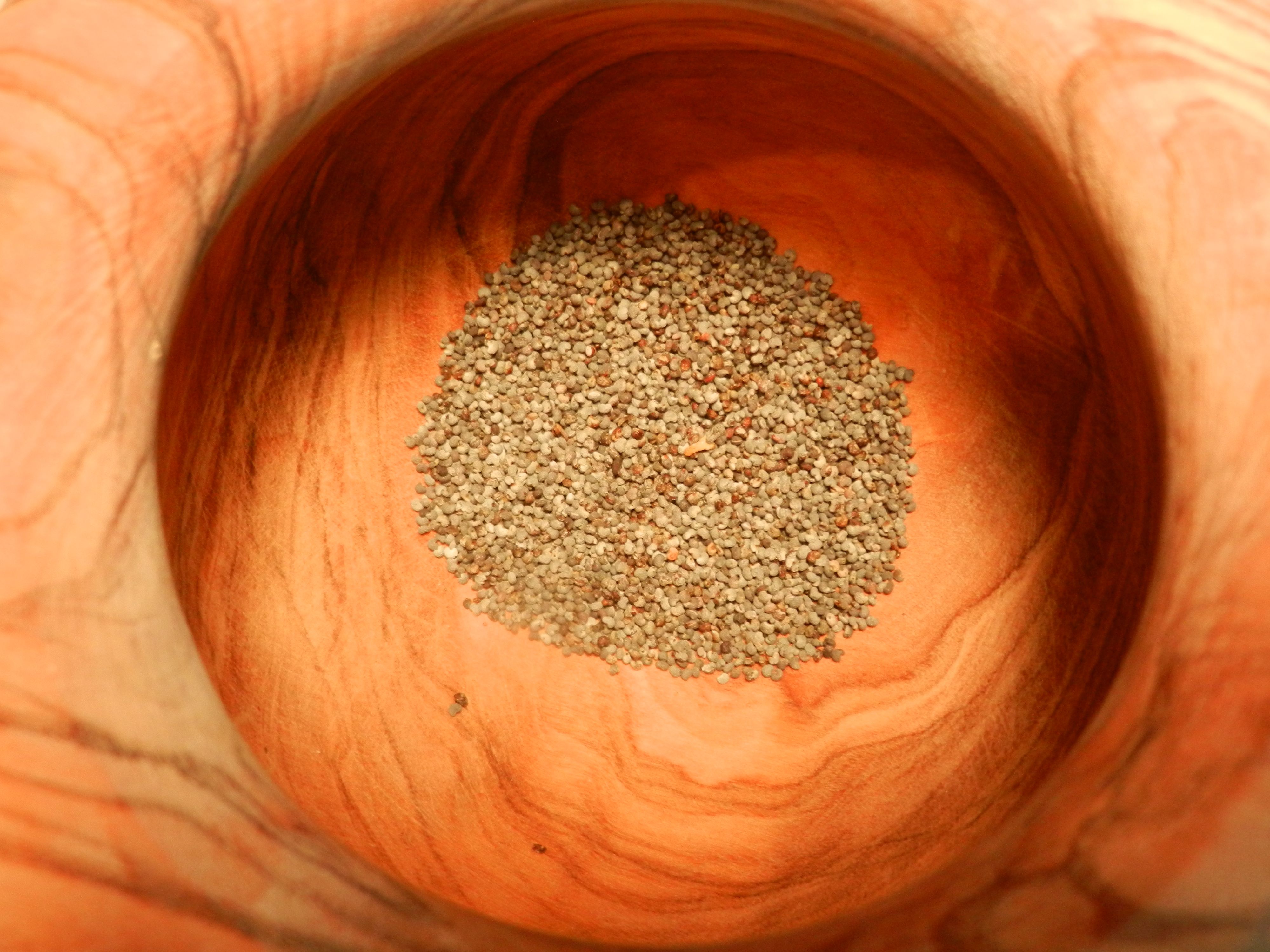
  • 1 teaspoon poppy seeds, lightly crushed
  • ¼ teaspoon hot paprika
  • ¼ teaspoon freshly ground black pepper
  • Ground sumac
  • 1 1/3 pounds chicory, roots trimmed
  • 5 ounces Swiss chard, shredded lengthwise
  • 5 ounces chicken stock
  • Squeeze of lemon juice
  • 2 ounces unsalted butter

Directions

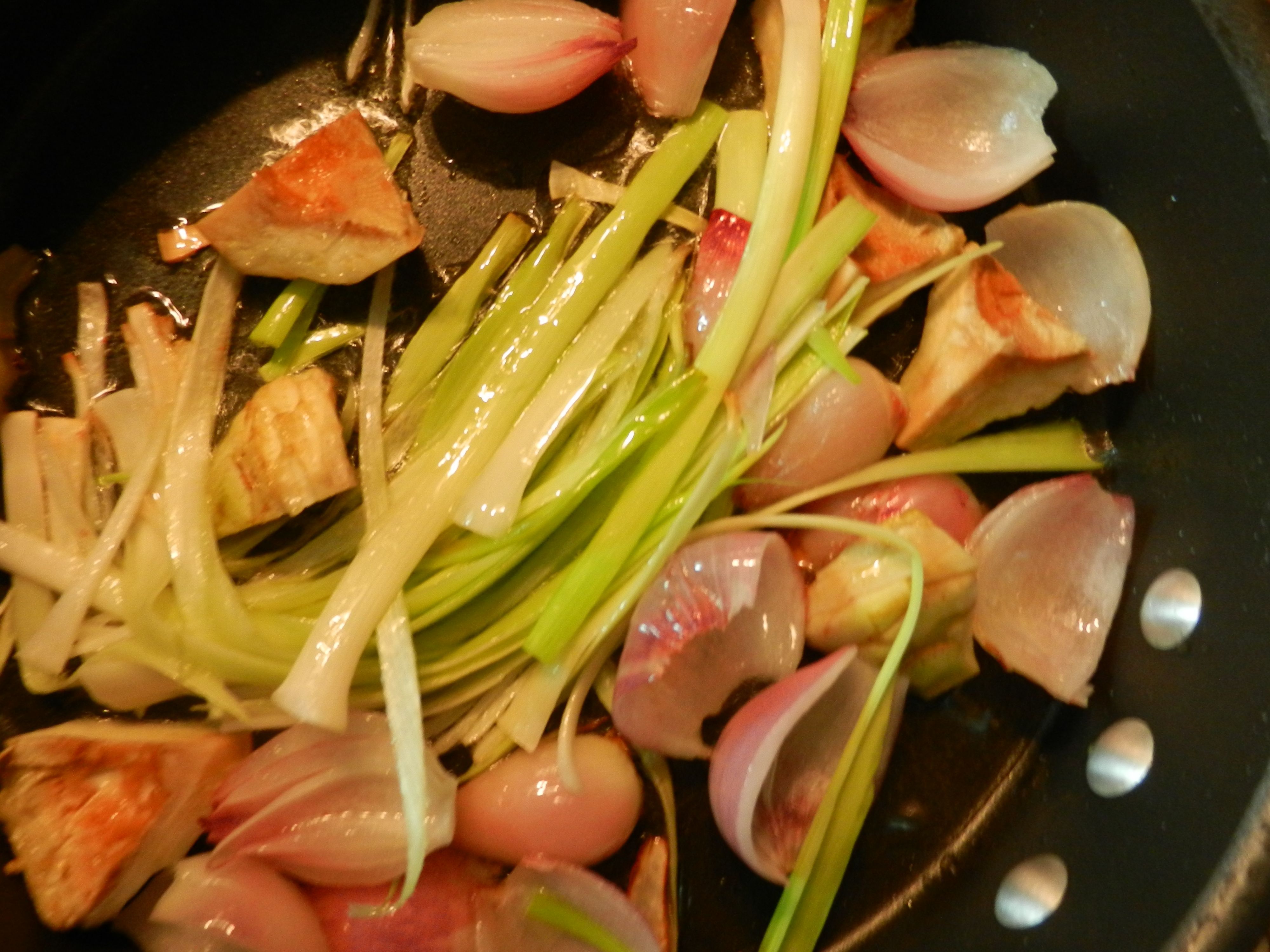
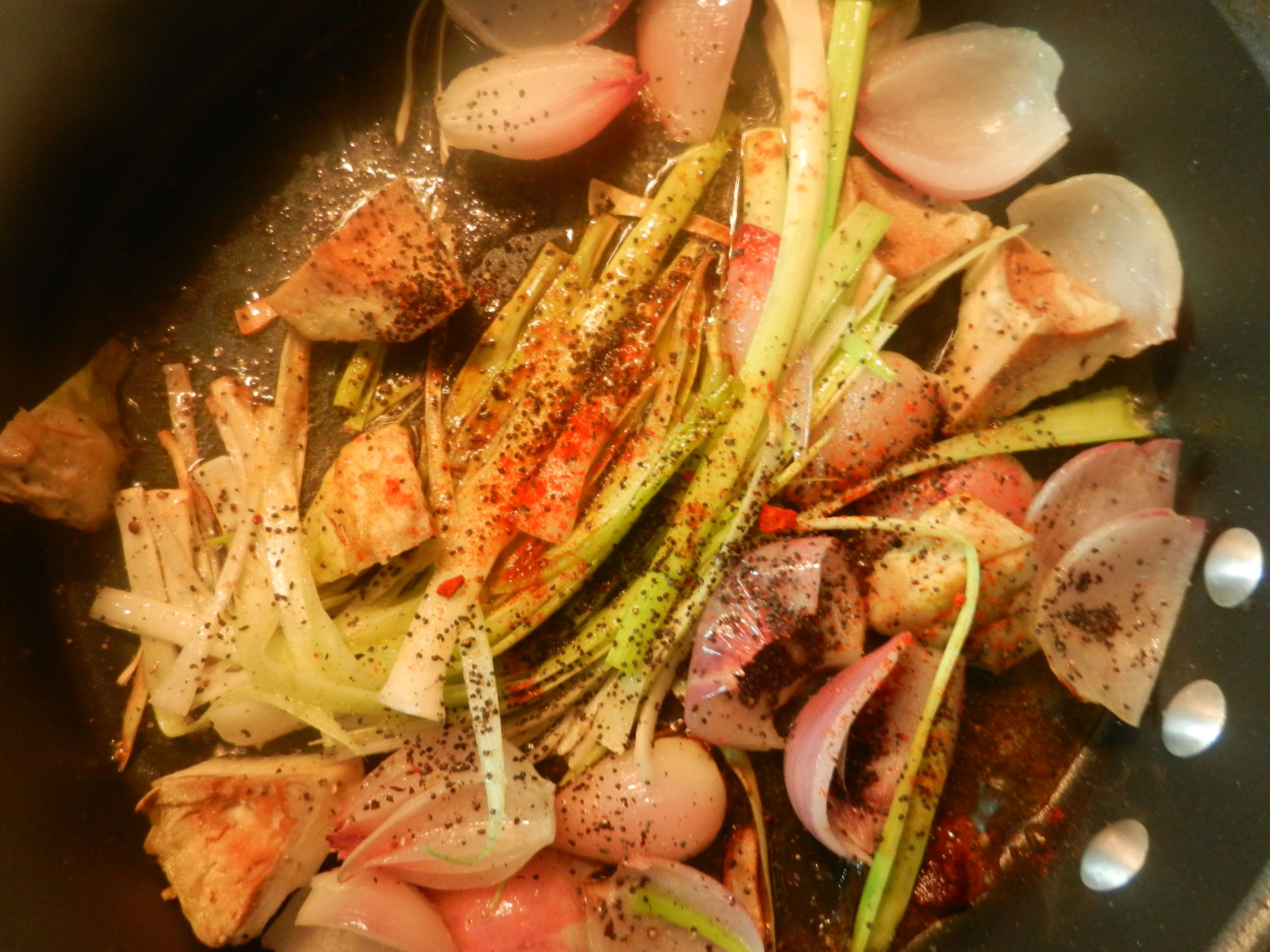
 Heat the oil in a heavy-based saucepan and add the drained artichokes, shallots and leek.  Saute over a low heat for a few minutes, then add the poppy seeds, paprika, pepper and 1 teaspoon sumac and cook for a further couple of minutes.  Add the chicory, Swiss chard and stock.  Bring to the boil, then lower the heat and simmer, uncovered, for 8-10 minutes until the artichokes and onions are tender.

Remove the pan from the heat, then stir in the lemon juice and butter well and put into a warmed serving bowl.  Sprinkle with a little more sumac and serve.

Serves 6

I prepared this using two separate pans to keep the beets from turning everything pink.  If you use chicory, kale, or endive, you can just use one pan.  I had never sauteed raw artichokes before and I love this method.  I will do this more often this winter.

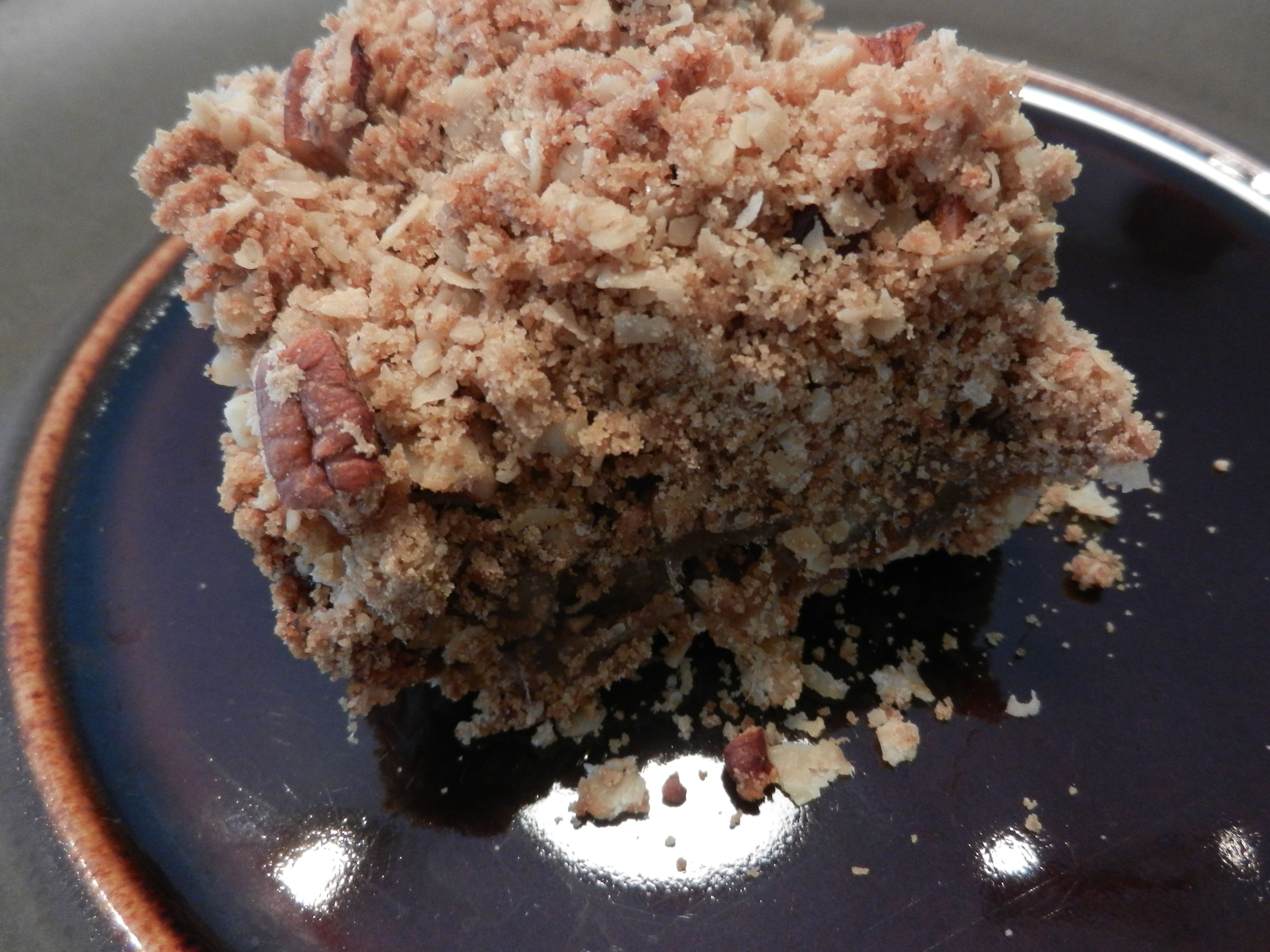
Oatmeal, Pecan, Date Bars

There are going to be some date recipes on this blog.  Dates have become, in my kitchen, a little like bananas used to be when I lived in the US.  I always bought a few bananas, usually had some around, and then needed to use them in something when they got past fresh eating stage.

Dates don’t go quite so fast as bananas, but they are a staple we love to keep in our kitchen and then find creative uses for when the time comes to move them through.  It’s the date circle of life.

I am again crediting cooks.com with a recipe, with some of my adaptations.  I’ll tell you why I’m OK with recent cooks.com attributions.  I don’t mind because I’ve gone searching for good recipes from an entirely ingredient point of view and it turned out that cooks.com had some useful recipes that allowed for the modifications I wanted to make.  Too defensive?  Maybe so, but this is a great date bar.

DATE–NUT FILLING:

1/2 c. granulated sugar
1/4 c. lemon juice
16 oz. pitted dates, chopped
1 c. water

OATMEAL CRUST:

2 1/4 c. flour
3/4 tsp. baking soda
3/4 tsp. salt
1 1/4 c. butter
1 1/2 c. light brown sugar
2 1/4 c. raw quick oats

1/2 c. chopped, toasted pecans

In a pie plate, toast pecans until slightly browned.  Cool and chop.

Make filling in a small saucepan; combine dates and sugar with water. Over medium heat, cook stirring constantly until thickens. Remove from heat. Stir in lemon. Cool.

Preheat oven to 375 degrees; grease 13 x 9 x 2 inch pan.

Sift flour with soda and salt.

Beat butter and brown sugar in medium bowl with mixer until light and fluffy. Add flour, oats, and nuts. Mix with hands, leaving dough in some clumps.

Press 1/2 oat mixture evenly on bottom of pan. Spread with filling, cover with remaining mixture. Bake 25 to 30 minutes. Cool slightly, cut in squares while still warm.

Back on the Juice

My husband has been gone to the US for a week.  He got back last night, on Valentine’s Day.  It was alright having some time all to myself.  I’m working on some big projects and it was fun to have some endless days, especially on the weekend, to work and think and only stop to put a few bites of leftovers in my mouth.  But I very much missed Allan’s juicing routine.  I think I made it clear in Two Ways with Turnips that produce, all produce, is really inexpensive and organic in Tunisia.

We had a handy citrus juicing attachment for our food processor last winter and started the habit of making citrus juice everyday.  This year, we made the investment in an extraction juicer so we could take advantage of the beets, carrots, ginger, pears, and apples we have available all winter, in addition to citrus.

Allan has taken this practice on almost like a form of meditation.  We have a great produce shop just a block from our house and every few days we stop by, often after school.  When we get home, Allan heads to the kitchen and while I work on dinner and we listen to news, he washes produce and then starts juicing.  He used to make it every morning, but it involved quite a bit of clean up so he has taken to filling two or three Nalgene bottles and putting them in the fridge and then we have enough for two or three days.  This juice is so electric and vitamin packed I almost worry sometimes what it can do to a body to consume the equivalence of an entire bunch of beets in one glass, but I’m taking my chances and so far, we are both super healthy.

I think Allan is almost as proud of the bucket for the compost as he is of the juice.

My blood orange aperatif.  Notice the frothy crema on the top.

Spring Onion Pesto

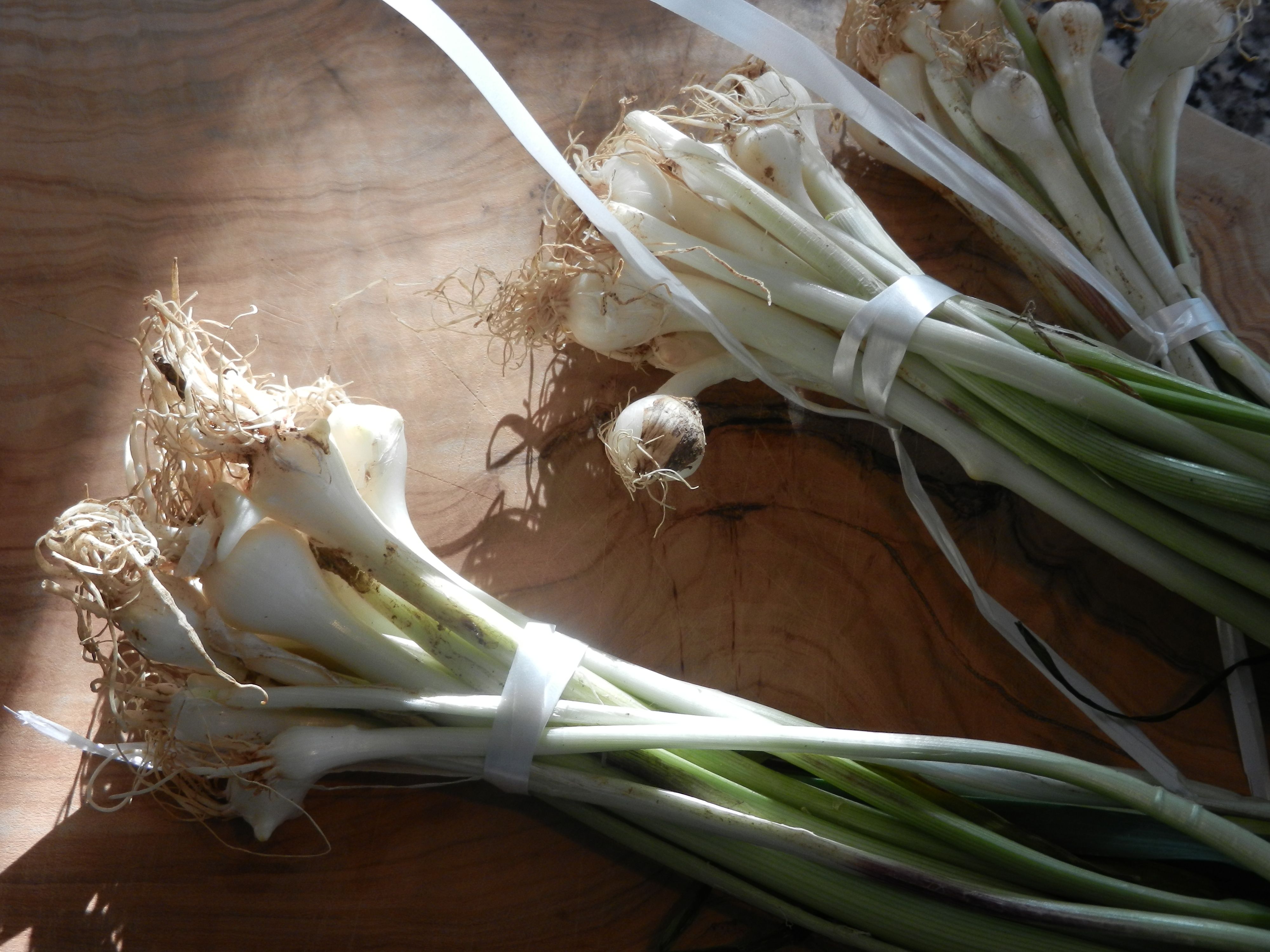
Are these scallions? scapes? ramps?  I didn’t clearly recognize the bulby bundle in the market, but I remember buying them last year and chopping them into salads, raw, and they were delicious.  Some internet search later and I now know that these are true spring onions.  I think I have interchanged the terms scallion, green onion, and spring onion in the past, but there is a distinction.  Scallions have a white head that is no wider than the green stem.  Green onions have a narrow, straight head and spring onions are developing into bulb shapes, though are still not very mature.  They will have the most pungent flavor of the three and will be the most suitable to take the place of garlic in a pesto.

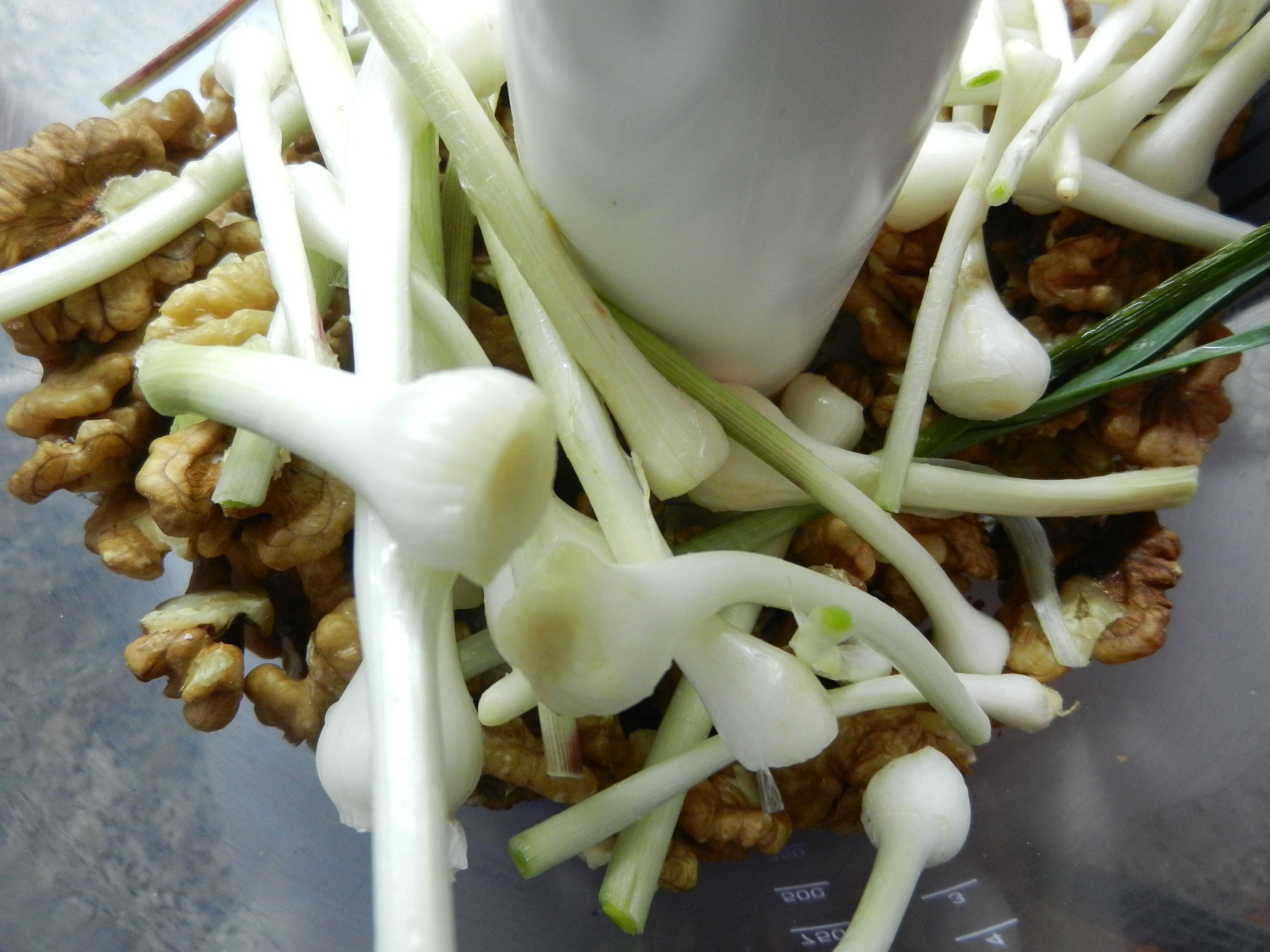
I never wavered in my decision that the nut must be walnuts.  I could taste that flavor combination in my mind’s taste buds and it was good.  After grinding 1 cup of nuts and about two cups of washed and trimmed onions in the food processor, I added enough of our local cold-pressed olive oil to make a desirable paste and finished it with fleur de sel so it would have flaky bits of salt mixed throughout.  Just to bring up the brightness and color a little, I added about 1/2 cup of basil pesto I had prepared in the freezer.  I tossed the pesto with hot penne pasta and topped it with a tomato salad, dressed in lemon juice, olive oil, fleur de sel, and pepper.

The flavor is not so biting as pesto made with garlic.  It is warmer and more buttery, but still very potent.  Puree this pesto with white beans for a fantastic dip or a spread for bruschetta.

PS:  I’m going to have to tell you that my friend, Claire Bear, did not like this pesto.  She found it unpleasantly pungent and I value her outspokediness.  Out of loyalty to my readership, which might just be Claire, I need to disclose this.  I recommend the following:  If you aren’t going to puree this pesto with white beans or even if you are, blend in some grated Parmesan cheese until you find the right mellowing balance.  Under no circumstances add lemon juice to make it less pungent.

Two Ways with Turnips

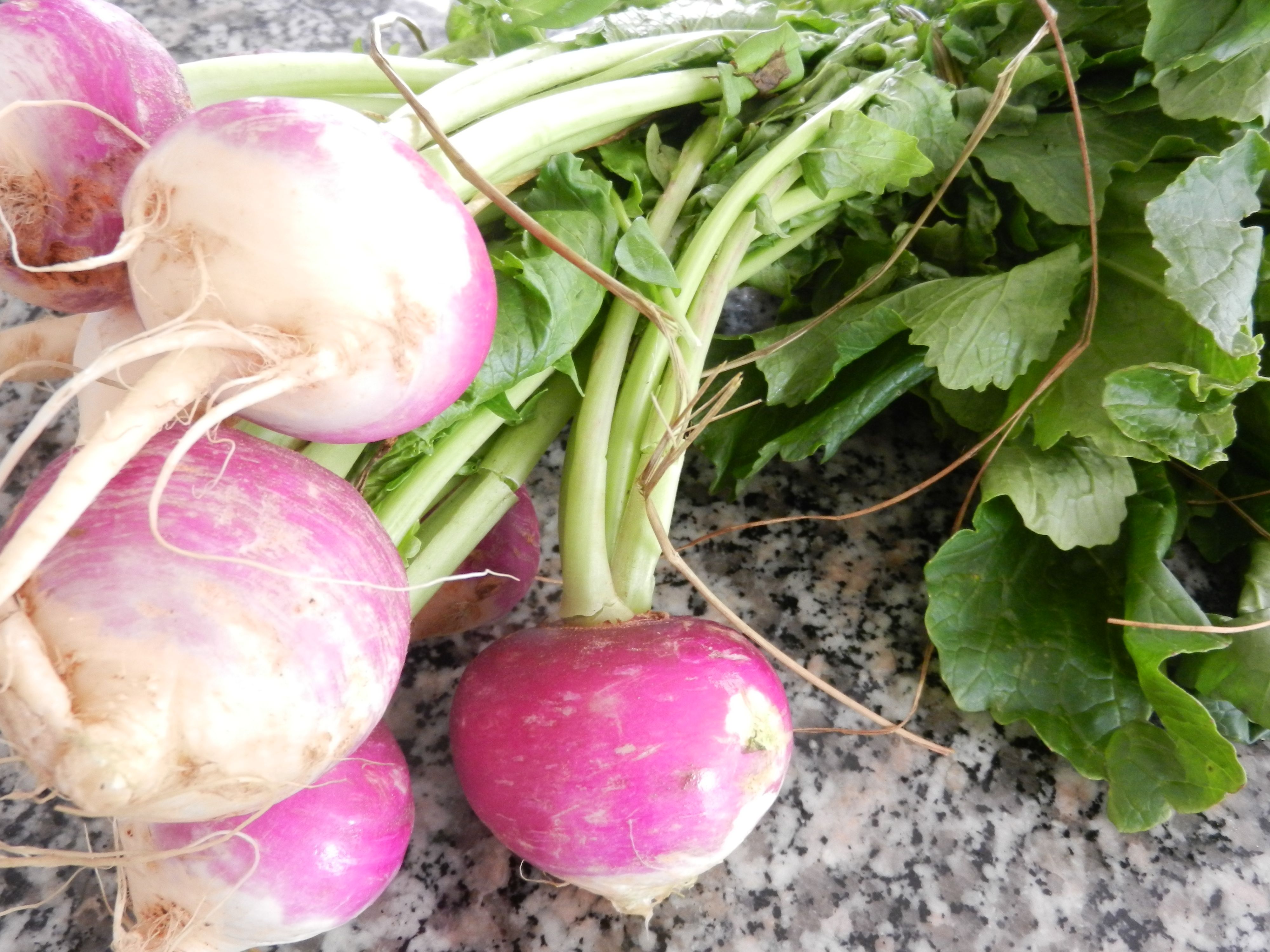
So here it is, my debut post at my new site.  I’ve considered this carefully and I know just what I want to lead with:  turnips.  You know, I’ve talked a turnip game before, but about all I’ve really done is boil a few to whip with some mashed potatoes.  I see them in the market.  They’re so pretty.  You get all the greens and the bulbs and they’re cheap as dirt itself, but I often walk by and get something safe and green that I know how to easily cook.

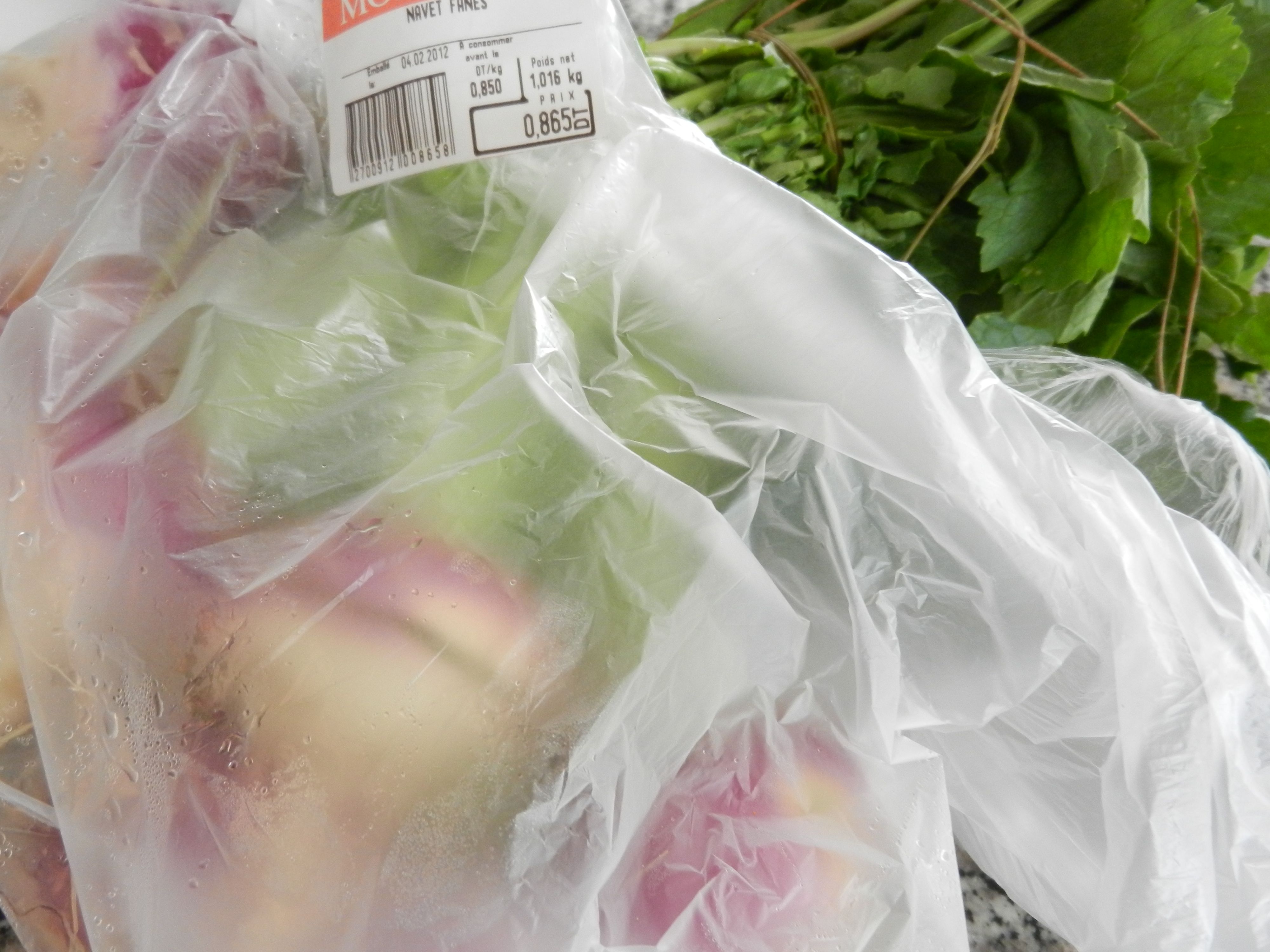
I bought this bundle of turnips last weekend and I took a picture of the price tag.  Here is a good opportunity to show you that our currency goes to the thousandths place.  When we go shopping here, we feel like we’re carrying around ‘pieces of eight’.  Even men have to have a change purse to hold all of the coinage.   The currency converter wouldn’t let me convert less than one Tunisian Dinar, but one dinar is worth about 66 cents.  This is one fifth less than that so it’s a little more than 50 cents.  Sorry to be so about the money, but look at the food you get for 50 cents!

I had to break this bundle into two dishes because I could.  Following, we have two distinct ways to go with a bunch of turnips:  all leaves and all bulbs and I really recommend them both.  Now, I’ve got three strategies in my game.

SAUTEED FRESH TURNIP GREENS

Adapted from COOKS.COM


1 lb. fresh turnip greens
1 tsp. salt
1 hard cooked egg
1/3 c. minced green pepper
2 tsp. fresh lemon juice
1/3 c. chopped onion
1/2 tsp. sugar
2 strips bacon
1/4 tsp. black pepper

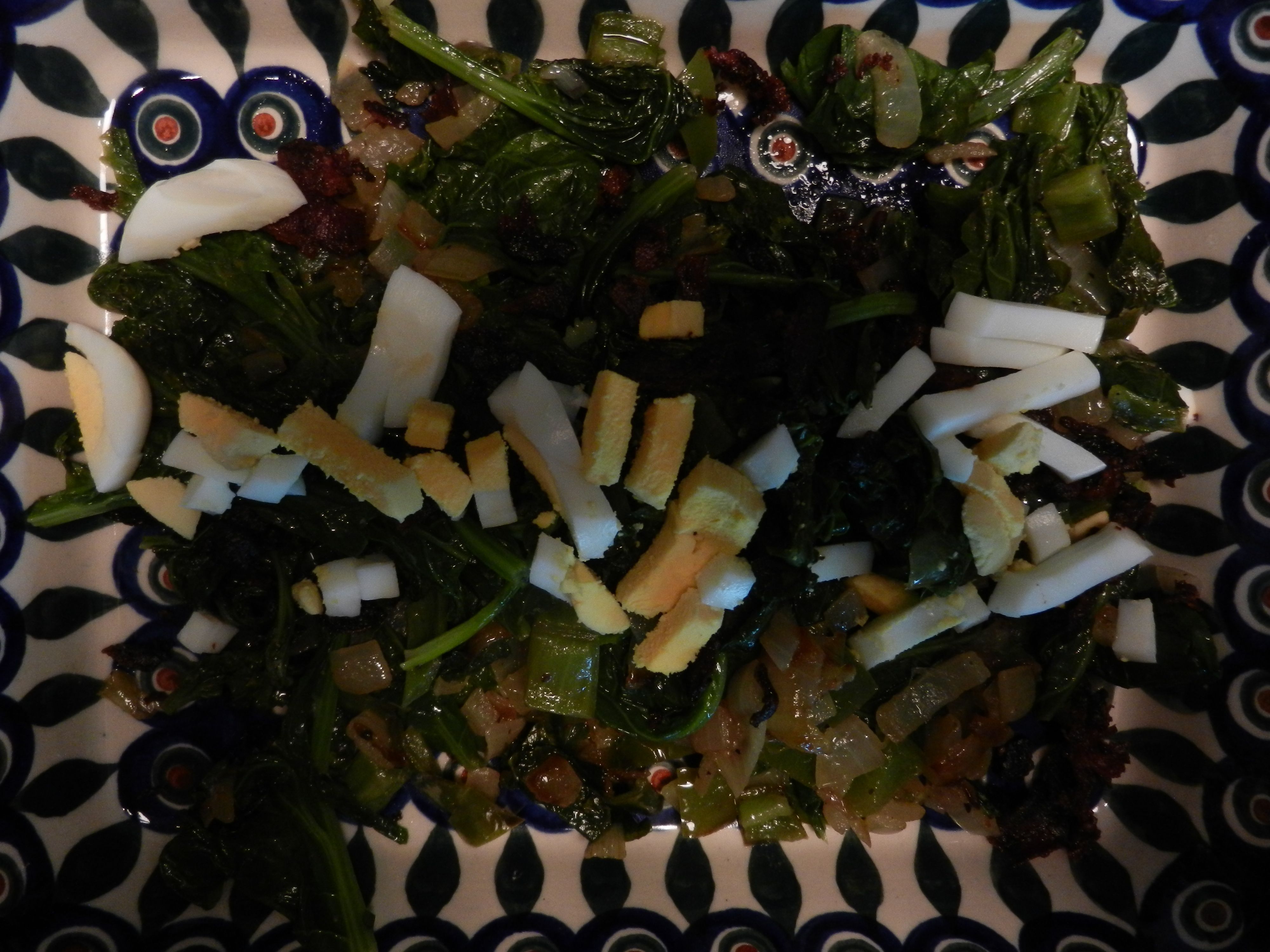
Wash turnip greens thoroughly. Trim off coarse stems. Fry bacon until crisp and remove it from the fat. Save bacon for later use and discard fat. Heat 5 Tbsp. olive oil in a saute pan.  Add onion and green pepper and saute until limp. Coarsely chop turnip greens and add to onions and green pepper. Stir to mix well. Cover tightly and cook 10 – 15 minutes, or until tender. Add salt, black pepper, sugar and lemon juice. Toss lightly. Turn into serving dish and garnish with crisp, crumbled bacon and slices of hard cooked egg. Yield: 4 servings.

CRISPY TURNIP FRIES

Adapted from COOKS.COM


8 med. turnips
1/4 c. grated Parmesan cheese
1 tsp.garlic powder
1 tsp. ground paprika

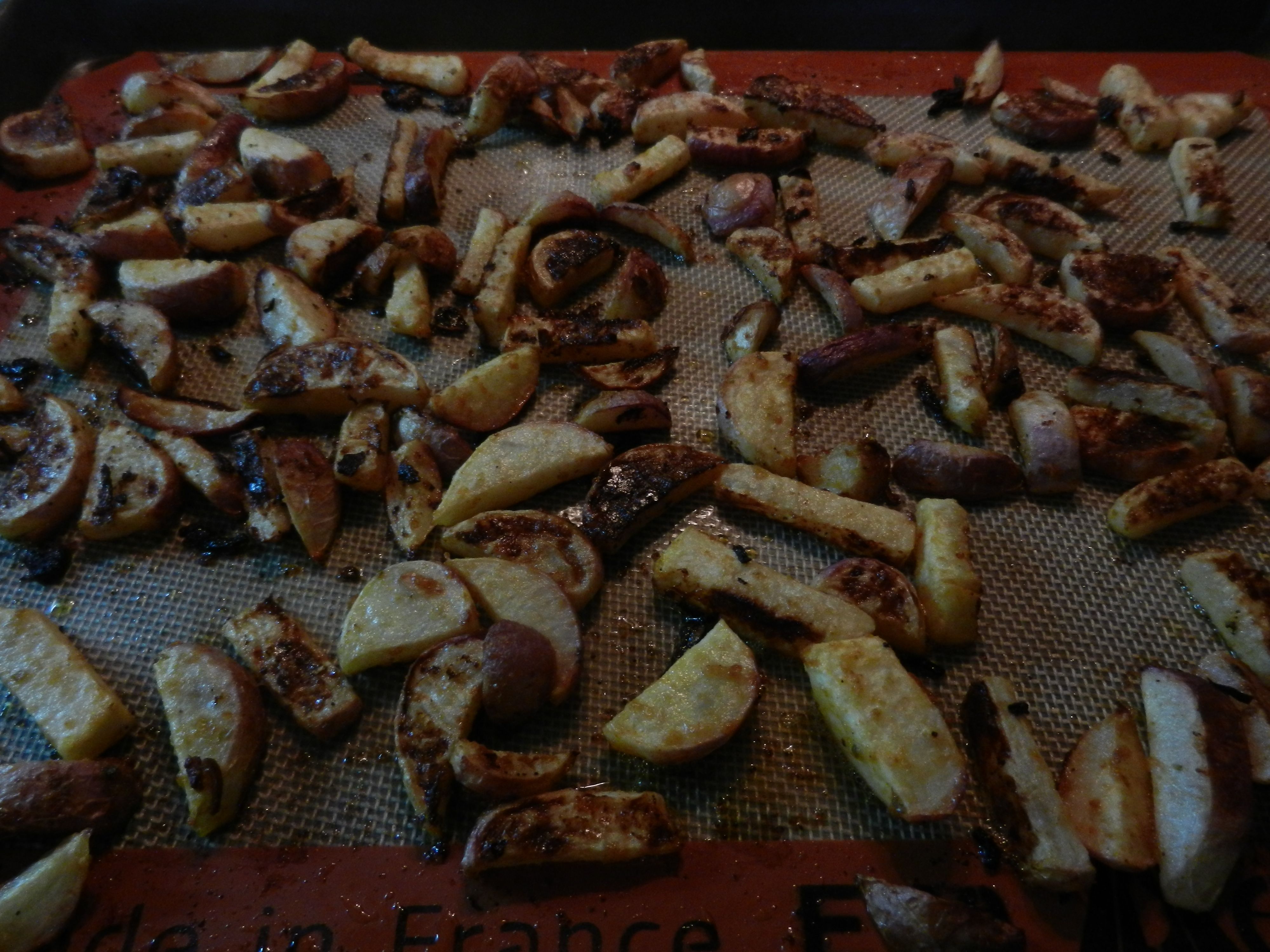
Preheat oven to 425 degrees F. Pare and cut turnips into 2 1/2 x 1/2 inch sticks.

Put 1/8 cup olive oil in a gallon-size sealable plastic bag.  Toss cut turnips in oil.   Combine cheese, garlic powder and paprika. Add combination to turnips and toss to coat.  Place turnips on baking sheet. Bake 15-20 minutes or until turnips are tender and golden. Makes 8 servings.

Year Two for Bergamot Orange

From the time I moved overseas, 12 years ago, I have been trying to communicate with family and friends about our experiences.  I’ve plastered them with long, rambling, descriptive emails.  I’ve attached a dozen photos.  I’ve even tried telling the stories in face-to-face chats, though anyone who lives as an expat will tell you that you get about a minute to blurt out whatever memorable facts you want to relay before the conversation turns to your friend’s bathroom remodel or his daughter’s soccer success.  Who can blame him?  Stuff is just not interesting if you don’t have a context for it.

Yet friends have also encouraged me to write about this life and I have wanted to, but what do I write?  This is different… that is different.  There has to be a cohesive story and for me, the daily life is the story.

I started writing Bergamot Orange because what I want to tell isn’t the big news of revolutions and crises.  I want to bring readers into my house, on my street, and help them begin to understand how we create a beautiful, comfortable home in a foreign city.  How neighbors reach out to us, even when we don’t speak the same language.  How we learn to trust, and then eventually indulge, in the local food system and cooking methods.  How we expats share, and do without, and improvise which is all part of the fun.

I’ve made a start at this.  At least I have captured a year of daily adventures that generally end up back in the kitchen because that tends to be where I explore and synthesize what I’m learning.   I know that I need to focus even more, tell the story in smaller, concise vignettes and that’s what I’m hoping to have the discipline to do this next year.

If you are interested in this ongoing tale, please become an official Follower and actually join in a conversation with me through the comments.  I don’t want this space to be just me showcasing my thoughts, but I would genuinely love to know how topics and themes I write about connect with your own experiences and learning, whether in a foreign city or back at home.  And so there are my two blogging goals for 2012:  more focus in my storytelling and more interaction with my readers.

Thank you so much for taking the time to read my posts in 2011 and for even trying out a recipe or two.   2012 will be just as interesting, one moment at a time.

Preserved Lemons

           Every little Mom and Pop provisions shop around Tunis carries a few staples that a mother could send her 11 year old to fetch as she’s making dinner and realizes she’s missing a key ingredient.  There will always be canned tomatoes, tuna, a big variety of pasta and couscous for a little store, eggs, butter, and a few cheeses, olive oil, a variety of cured olives, and preserved lemons.  When I moved here, I intended to be all about using preserved lemon, but, as with the olives, while the store-bought ones are nicely flavored, I wonder how they have been prepared and handled.  How many times has the brine been reused?  Thinking about that puts me off a little.  Preserving my own olives turned out to not be so hard.  Preserving lemons takes just a few minutes to get started and about a month till you’re in the gold.
           My teaching partner and I have a shared hobby around the study and discovery of salt.  It began when we developed a unit to teach our students about the impact of salt on the entire history of the world, an ambitious unit.  In the process of our study, we both became energized on the subject. Richard gave me one of the most beautiful gifts I think I’ve ever received:  a copy of Mark Bitterman’s impassioned “manifesto” (his subtitle) on the subject of salt, titled Salted, along with a small collection of about 16 of the earth’s rarest salts.  Becoming educated about salt is going to be an ongoing pursuit and Richard and I are going to meet up in Portland this summer to visit Mark’s specialty shop, rather his temple to salt, to continue that process.
           Following is the recipe for preserved lemons from Salted which yields about 1 quart.
Ingredients
  • 8 large lemons, scrubbed clean
  • About 3 cups rock sea salt (This is my modification.  Mark calls for sel gris and maybe after I visit his store next summer I will be able to indulge in such a quantity of  specialty salt, but for today, it will be nice-enough Tunisian sea salt.)
  • 8 juniper berries (optional)
  • Fresh lemon juice, as needed
Process
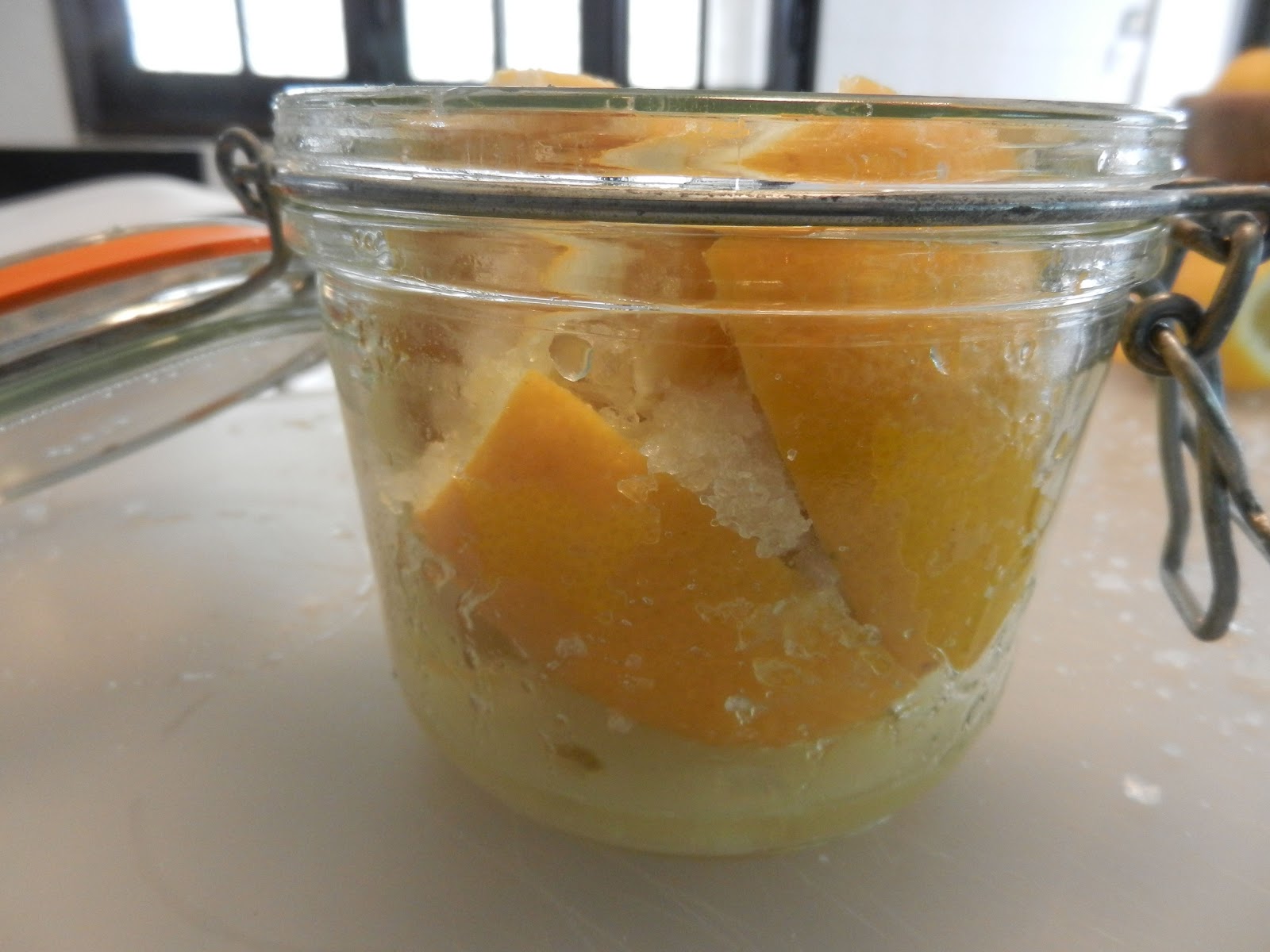
Cut the tips off the ends of the lemons.  Cut each lemon into quarters lengthwise leaving them attached at one end.  Pack the lemons with a much salt as they will hold.  Insert one juniper berry into each lemon.
Put the lemons in a sterilized wide-mouth quart-size jar, packing them in as tightly as possible.  As you push the lemons into the jar, some juice will be squeezed from them.  When the jar is full, the juice should cover the lemons; if it doesn’t, add fresh lemon juice.
Seal the jar and set aside for 3-4 weeks, until the lemon rinds become soft, shaking the jar every day to keep the salt well distributed.  The lemons should be covered with juice at all times;  add more as needed.  Rinse the lemons before using.
 What the heck do you use preserved lemons for?  
            Fair question.  I have to say that this is a condiment you have to just try and discover the quality it gives to dishes.  It is not brightly lemony.  It does taste deeply of lemon, but without the tart edge.  It bears a saltiness, but you rinse it before use so the salt is in good balance.  Once you try it in a few dishes, I wager you will start to crave the flavor depth it can provide.  I put preserved lemons in a category with anchovies.  While they both contribute depth of flavor and a little mystery to a dish, they don’t make it taste straight-up fishy or lemony.   Here are some suggestions from my favorite food magazine, Cuisine, which is published in New Zealand.

In small quantities, preserved lemons add a little zing to tapenades as well as a refreshing flavor to couscous, lentil or quinoa salads. The liquid from the jar can also be used in dressings. 

Preserved lemons transform yoghurt or mayonnaise to be used as a dressing and, finely chopped, add flavor to a tomato and cilantro salsa to accompany fish. 

Add a dressing of extra virgin olive oil and finely chopped preserved lemon peel to cooked, warmed lentils or beans along with plenty of watercress or arugula.   Serve with crumbled feta or as an accompaniment for grilled lamb. 

Make a flavored butter by adding finely chopped preserved lemon, garlic and chives to softened butter. Spread under a chicken skin before roasting or serve atop a piece of fried fish. 

Finish a seafood risotto with finely chopped preserved lemon or add to a gremolata, along with finely chopped parsley and garlic, to finish a braise of beef or lamb. 

Add slivers of preserved lemons to vegetables before roasting. Or blanch and sauté broccoli or cauliflower in olive oil with garlic then add slivers of preserved lemon and some pitted olives. 

Make a tagine of lamb or chicken by browning the meat then adding chopped onions, garlic, slivers of preserved lemons, cumin seeds, a few chopped tomatoes, fresh cilantro and a little stock or water. Preserved lemons will also enliven all kinds of other casseroles.


Brown Sugar Pavlova with Strawberries

We have had a dribble of strawberries already, but being a seasoned Tunisian resident, I’ve lived here over a whole year now, I didn’t bite on the first buzz-bomb strawberry that caught my eye.  No, I know we will still have some strawberries in May and I remember making strawberry jam in March last year, so I was waiting.  I come from a strawberry-fulfilled county in Washington State.  I know, however, that the first strawberries you see in June are from California and taste like sheetrock.  You have to wait until the local berries are almost spoiled before you can get the really good ones.  Don’t get me started on the year my county was practically dumping strawberries into dumpsters they had such a bumper crop and our local Trader Joe’s had a pyramid of California strawberries in their store.  I didn’t go in that store for about two years after that.
            We live by local harvests here.  Can you imagine something so pure and wonderful?  When you see strawberries in the market, you can buy them and they will be sweet and full of the tastes of earth and sunshine.  I still can’t believe it.
            I am a big-time strawberry shortcake devotee, but only if every ingredient is homemade and real.  For these gentle, hand-raised strawberries, I made a special, but wholesome, pavlova, bearing the warm flavor of brown sugar.  The pavlova layers were a little crisp and chewy on the outside and marshmallowy on the inside.  Piled with layers of whipped crème fraiche, and strawberries, it was a winter delight, especially as it was pouring rain outside.
 Brown Sugar Pavlova with Strawberries
adapted from Gourmet Grilling, 2011
For Meringue
Confectioners’ sugar for dusting
1 cup superfine granulated sugar
1/2 cup packed light brown sugar
1 1/2 Tbsp cornstarch
1 1/2 tsp pure vanilla extract
2 tsp. distilled white vinegar
3/4 cup egg whites (5-6 large eggs) at room temperature for 30 minutes

For Berries
2 1/2 lb strawberries, trimmed and quartered
2 Tbsp granulated sugar

For Cream
1 1/3 cup creme fraiche
Make Meringue
Preheat oven to 275 degrees F, rack in middle.  Lightly butter 3 (8-inch) round cake pans and line with rounds of parchment paper.  Dust sides of pans with confectioners’ sugar, knocking out excess.
Pulse superfine sugar, brown sugar, and cornstarch in a food processor until well combined.
Stir together vanilla and vinegar in a small bowl.
Beat egg whites with a pinch of salt , using an electric mixer at medium speed until they hold soft peaks.  Increase speed to medium-high and add sugar mixture 1 tablespoon at a time.  After all sugar has been added, beat 1 minute more.  Add vinegar mixture, then beat at high speed until meringue is glossy and holds stiff peaks, about 5 minutes.  Spoon meringue into pans (about 2 1/2 cups per pan) and smooth tops.
Bake until meringues have a crisp crust and feel dry to the touch, about 1 hour (insides will still be moist and marshmallow-like).
Turn oven off and prop door open slightly, using a wooden spoon if necessary.  Cool meringues in oven 1 hour.
Run knife along sides of cake pans and carefully turn meringues out of pans.  Carefully peel off parchment (meringues will be fragile and may crack further).  Carefully turn right side up.
Toss berries with sugar and let stand at room temperature until ready to use (up to 1 hour).
Assemble Dessert
Beat creme fraiche using an electric mixer until it just holds soft peaks.  Put 1 meringue on a serving plate and spread 1/3 of whipped cream over it.  Spoon 1/3 of fruit (with juice) over top.  Repeat layering with remaining meringues, cream, and fruit.