@font-face { font-family: “Courier New”;}@font-face { font-family: “Wingdings”;}@font-face { font-family: “Cambria”;}p.MsoNormal, li.MsoNormal, div.MsoNormal { margin: 0in 0in 0.0001pt; font-size: 12pt; font-family: “Times New Roman”; }p.MsoListParagraph, li.MsoListParagraph, div.MsoListParagraph { margin: 0in 0in 0.0001pt 0.5in; font-size: 12pt; font-family: “Times New Roman”; }p.MsoListParagraphCxSpFirst, li.MsoListParagraphCxSpFirst, div.MsoListParagraphCxSpFirst { margin: 0in 0in 0.0001pt 0.5in; font-size: 12pt; font-family: “Times New Roman”; }p.MsoListParagraphCxSpMiddle, li.MsoListParagraphCxSpMiddle, div.MsoListParagraphCxSpMiddle { margin: 0in 0in 0.0001pt 0.5in; font-size: 12pt; font-family: “Times New Roman”; }p.MsoListParagraphCxSpLast, li.MsoListParagraphCxSpLast, div.MsoListParagraphCxSpLast { margin: 0in 0in 0.0001pt 0.5in; font-size: 12pt; font-family: “Times New Roman”; }div.Section1 { page: Section1; }ol { margin-bottom: 0in; }ul { margin-bottom: 0in; }
The theme carried throughout the presenters at yesterday’s TED conference was “Do It Yourself”. Speaker after speaker got up and passionately talked about his personal need to do hands-on projects as an adult and how he believes the act of making things is vital to children’s learning.
This got me thinking about my own childhood. I still don’t know if I had a common or peculiar childhood. I grew up on a farm in southern Colorado. We lived a solid 45-minute’s drive from the nearest town and, not being flush with cash, we just didn’t have a habit of buying things. When we wanted something, we often made it ourselves, whether it was food, clothes, or repairs.
I already wrote about learning how to can and preserve food with my mother. Another activity my mom and I shared was sewing. There was an understanding in our house: If I wanted to buy clothes, forget it, but if I made them, I could have them. From an early age, maybe 8 years old, I remember having a sewing project constantly on-going. My mom was an excellent seamstress as she grew up making all of her own clothes. Just last Christmas, I was marveling at pictures of her and my dad and some of their friends as teenagers having an outing in the Arizona desert. The pictures are, of course, in black and white and every shot looks like it is from a Ralph Lauren or J Crew photo shoot. I know that my mom and all of her girlfriends sewed the detailed, fitted outfits they were wearing, themselves, and they were cool outfits, right out of the Vogue pattern book.
I don’t think I ever became the disciplined seamstress my mom was, making lined suits and such, but I did once make my own Gore-Tex parka. This was in 1980, the early years of technology infused outdoor gear, and there was a company that sold kits from which you could sew your own tents, backpacks, and outer wear. I bought the parka kit, which came as precut pieces and some barely complete directions. I was just moving to Washington State and I spent several days that first summer sewing it up. When school started, I wore the parka everyday. One of my enduring memories of attending Western Washington University is of walking to campus from my apartment wearing my parka, zipped to the neck, drawstring cinching the hood around my face. In the drenching rain, it was the equivalence of wearing an umbrella. When I met Allan a few months later in anthropology class, I had to ask for his help one day getting the zipper unstuck. He still claims it was a ploy, but the zipper really was stuck! I guess saying that wearing homemade clothes can help you find your life partner might be going a little too far, but it didn’t hurt me.
So why did I stop making clothes? I guess it was a matter of economics and time. Ready made clothing got cheaper and cheaper and fabric got more expensive, changing it from a self-sufficiency item to an expensive hobby. I also had my sons and no longer had the luxury of spreading a sewing project all over the kitchen and losing myself for hours in the process. I still create a lot, though. When I lived in Kathmandu, I had great fun designing items of clothing to have sewn up by a local tailor and of course I continually usher people through the custom-design process in my Tibetan carpet business. Lately, I am enjoying renovating houses, building furniture, working with photographs and writing, and always, making food.
I am going to try to offer my students more opportunities to make things of their own design. Besides making them feel satisfied, though, what do projects have to teach by way of academic or social skills? Here are some things I can see that I learned from my childhood sewing endeavors.
o Art and Design: color (complementary and contrasting), layout, texture (including nap), composition of fabric, proportion, vertical, horizontal, diagonal
o Math: measurement (linear, area, perimeter), fractions, ratios, percents, multiplication, division, symmetry, line of reflection, cost per unit
o Literacy: reading directions
o Personal development: persistence (you don’t get to wear it if you never finish it), patience, learning to make choices, learning what I like, pride about working hard and getting a good outcome, being comfortable with uniqueness
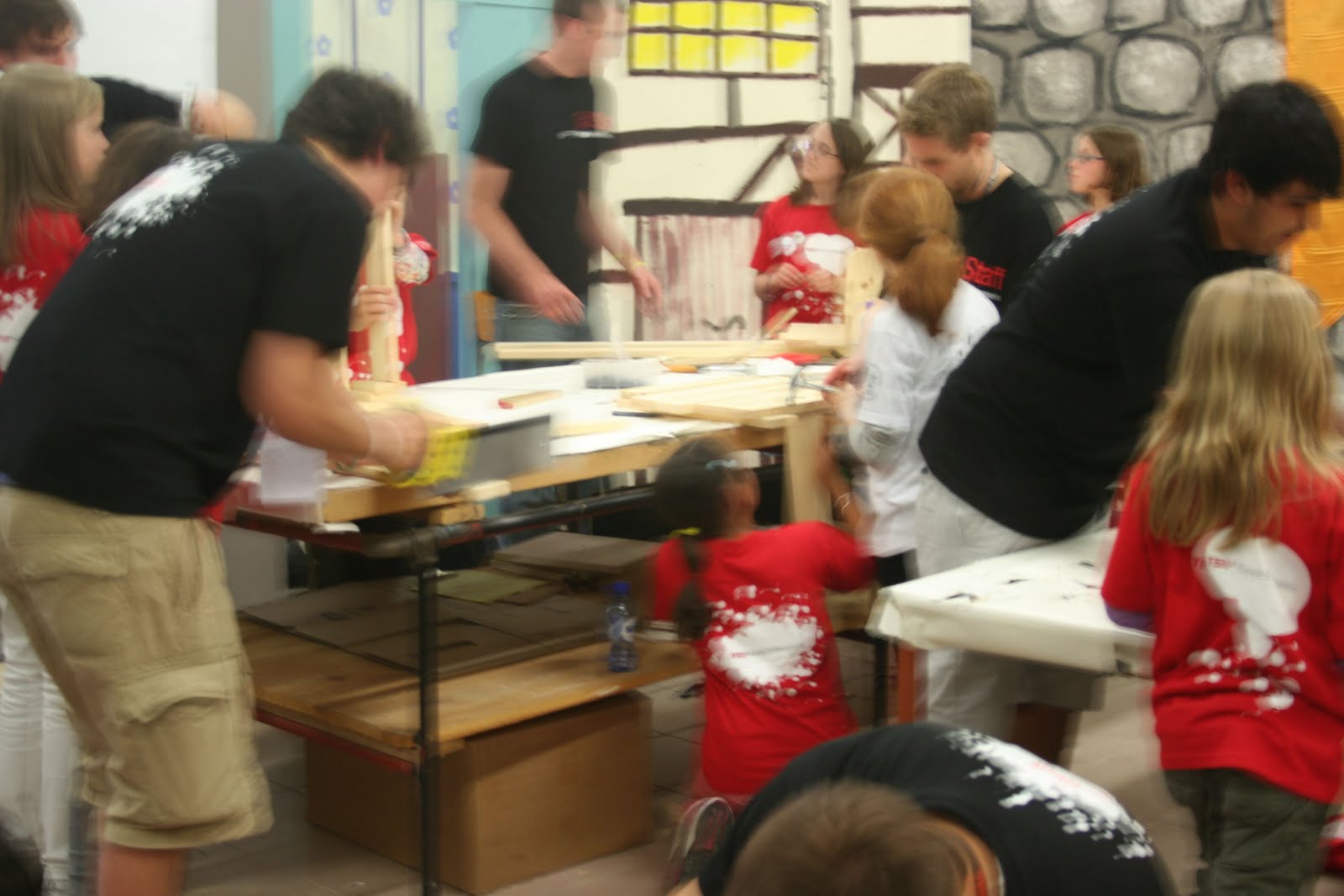
The photos show two of the “making” opportunities the kids at the conference had yesterday. One was making a chair out of some pine boards. Some held up better than others, but all claimed their chair was “really comfortable”.
The second was using a 3-D design program to create something that could actually be produced, using a 3-D printer.
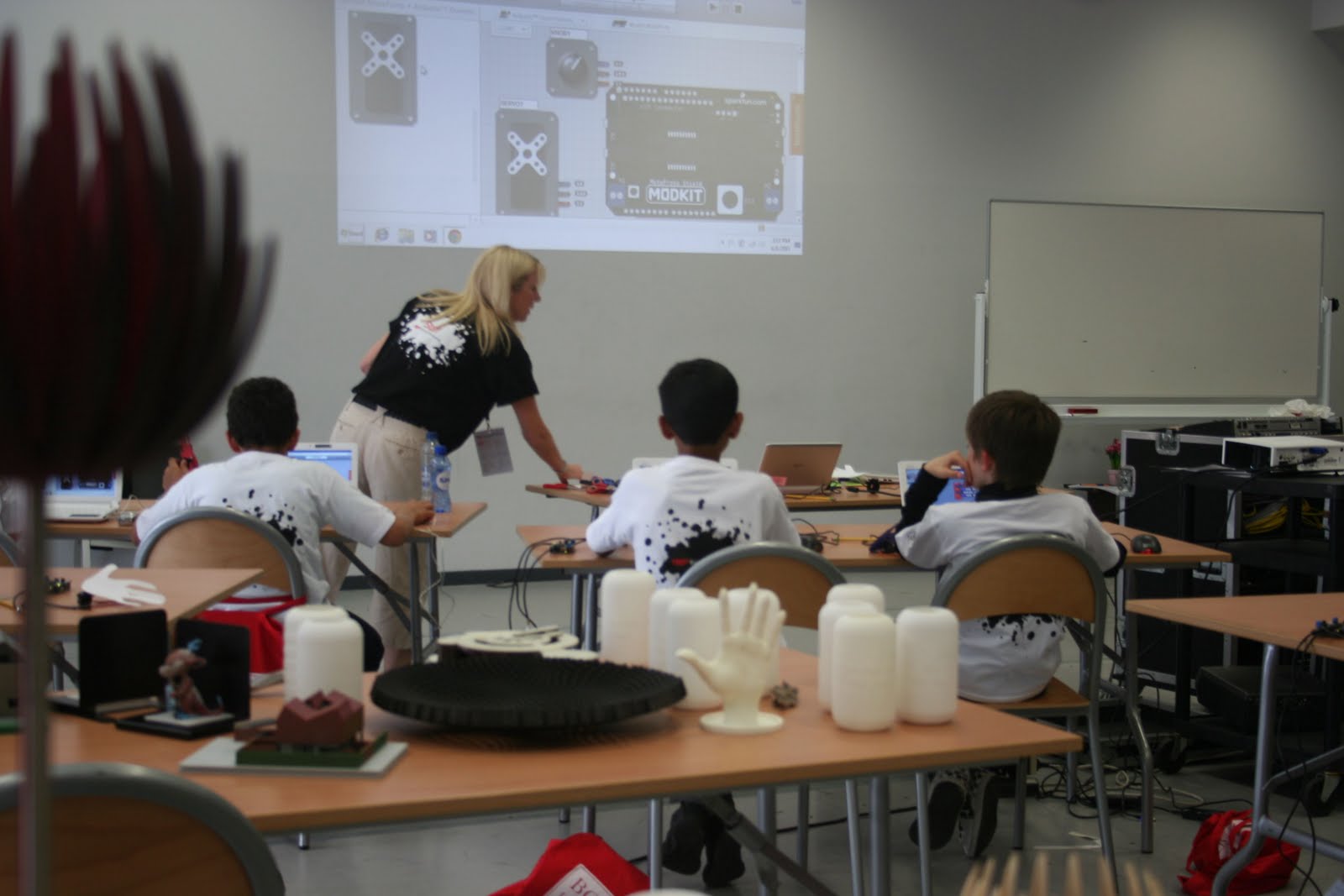
Hacking into computer software to personalize it was another highly encouraged form of self-expression and learning at yesterday’s conference. I am interested in subscribing to a quarterly journal I learned about called Make. It is directed toward individuals or families who want to engage in making something from an electronically wired gadget to a better birdhouse, at home. It will be fun to see how students might pick up any of these outlets to fulfill their DIY drives.
















 bergamot orange