Fresh Eyes

I’m here.  Here is Tunisia, Carthage, ACST,  the Mediterranean, my pretty house on Rue Kherredine.  I am at home.  I have been quiet for a few weeks, but I have been writing.  It was just that the writing was taking place in my head instead of on paper.  I actually had a writing-rich summer.  I had great talks with many different people who are writing, including my niece who just finished a MFA and is going to a writers’ retreat this fall to finish her second novel.  My brother is working on a “what if God was one of us” road trip story.   It will be strange, funny, and poignant just like him.  Another friend dedicated some of her summer to finishing Book 1 of her two part sci-fi fantasy.  I was impressed by each of them.

I also read books about writing.  I read Ensouling Language, On the Art of Nonfiction and the Writer’s Life, by Stephen Harrod Buhner,  and Katie Wood Ray’s book, What You Know by Heart on using your own experiences in writing to develop curriculum to teach the writing process to students.

Finally, I read like a writer.  To most people, this is simply reading, but I read, or rather mostly listened to audio books, mostly young adult and classics, noting ideas, and structure, and language.  I am excited to get back to my own writing, and I am grateful that I have a place to publish myself on a regular basis as opposed to just jotting entries in my writer’s notebook.  Thanks to those of you who actually read this.

One of the reasons I had to do so much writing rehearsal in my mind this summer was that I simply could not break that experience down to a manageable focus.  It was all so big and I was overwhelmed with choice, and sadness, and beauty, and responsibility.  I couldn’t choose just one thing in a day, and I couldn’t pin down my feelings on any regular basis.

On our way home from the airport last Saturday, we stopped at one of the many streetside produce vendors in our neighborhood.  Of course he didn’t have the vast array of produce I had been offered at my grocery store in Bellingham, but what he lacked in breadth he made up for in depth.  This little stand had three varieties of plums, all organic and tree ripened.  I tell you the truth that carrying my little bag of plums to the car, I felt about the first peace I had felt in weeks.  I knew I was back in my simple, but elegant life that would feed me in many ways, and I would be able to write about that.

Plums

We have had the pleasure of hosting our new staff this week.  You know how showing off your home to visitors always reinspires you about how great the place you live is and why you wanted to live there in the first place?  These are grateful souls who have worked hard the past few months to get themselves here.  It is fun to roll out the small delights of our life here, bit by bit.

Eggs

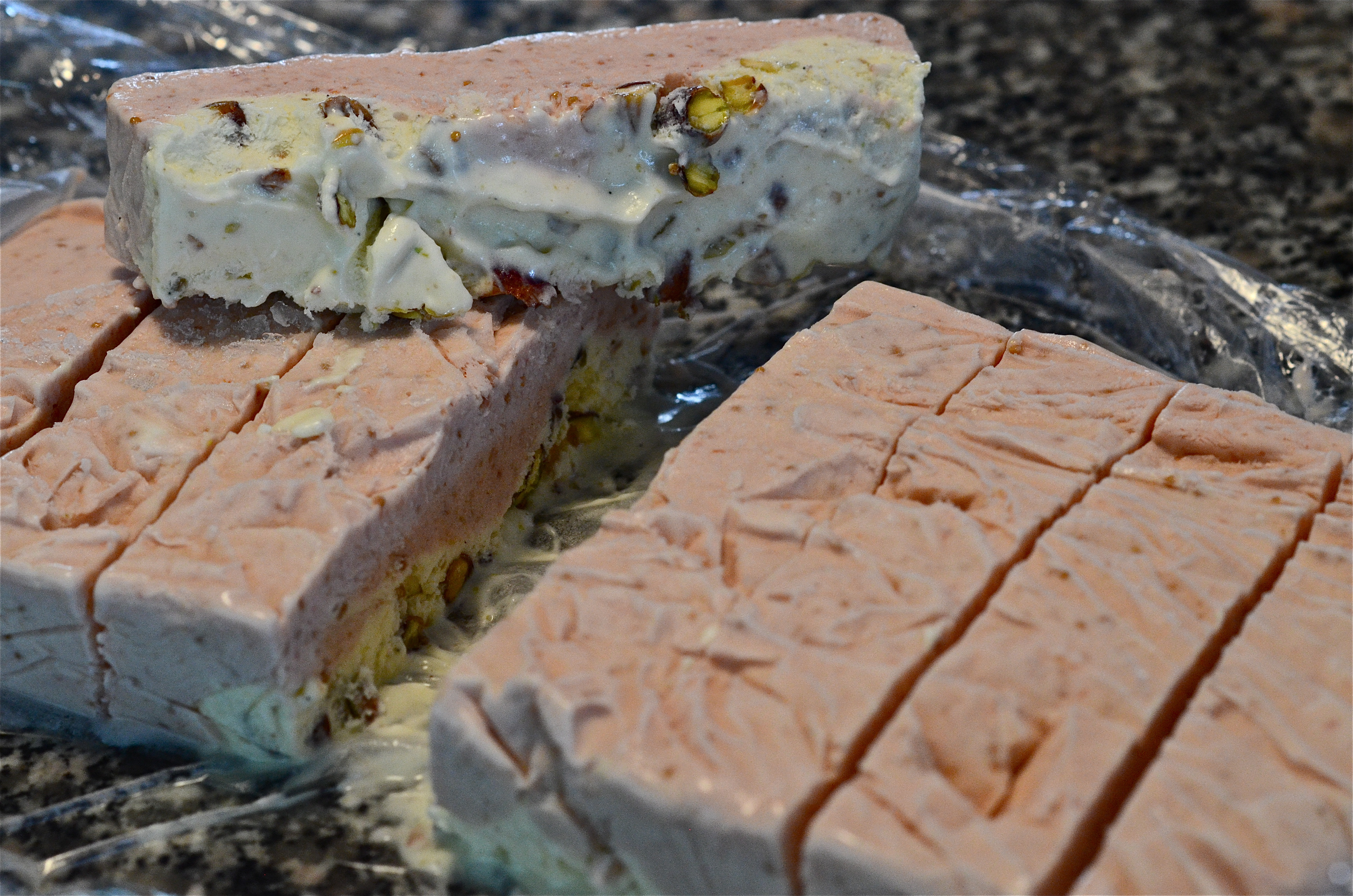
Featuring the  bounty of fruit at the moment, I have two recipes that utilize the yin and yang of the egg.  One uses the egg whites and features those tri-colored plums I mentioned, and I will get to that one in my next post.  This one is all about the yolks and uses the jammy figs that are trying to burst out of their skins in crates all over town.

Fig Pistachio Semifreddo

Serves 12

Martha Stewart Living, June 2013

Ingredients

  • 1/2 cup unsalted roasted shelled pistachios
  • 8 ounces figs, scooped out of skins (about 2 cups)
  • 1/2 cup plus 3 tablespoons sugar, divided
  • 3 large egg yolks, room temperature
  • 1 1/2 cups cold heavy cream
  • 1/2 teaspoon pure vanilla extract

Steps

1.  Line a standard 5-by-9-inch loaf pan with plastic wrap, leaving a 2-inch overhang on all sides.  Pulse pistachios in a food processor until coarsely chopped (some will break down to a course grind).  Transfer to a small bowl;  do not wipe processor clean.  Place figs and 3 tablespoons sugar in processor;  puree until smooth and transfer to a fine sieve set over a bowl.  Stir puree, pressing on solids to extract as much liquid as possible;  discard solids, or use a food mill to separate the solids.

Strawberries Food Mill

2.  Combine egg yolks and remaining 1/2 cup sugar in a bowl set over a pot of simmering water.  Beat on high speed, or vigorously by hand, until pale yellow and tripled in volume, about 3 minutes.  Transfer bowl to a large bowl of ice water;  stir until mixture is very thick and cool, about 3 minutes.

3.  Beat together cream and vanilla in a large bowl until soft peaks form.  Whisk 1/3 of whipped cream into egg mixture, whisking until smooth, then fold into remaining cream with a rubber spatula just until thoroughly incorporated.

4.  Pour 1/2 of cream mixture into fig puree.  Gently fold together until thoroughly incorporated, then pour into loaf pan and smooth top.  Fold pistachios into remaining cream mixture and pour evenly over fig cream;  smooth top.  Fold plastic wrap over surface and freeze at least 12 hours and up to 3 days.  To serve, peel plastic from surface.  invert pan onto a cutting board.  Unmold semifreddo, remove plastic, and cut crosswise into 3/4-inch-thick slices.
Semifreddo 2

Les Herbes Folles

Not long ago, I received a nice comment from someone I don’t personally know, but who reads, or had read, my blog.  She said (paraphrase), “You write about your international travels without being arrogant.”  That was a nice compliment and a good reminder in one, so I am treading on slightly thin ice with this post.  You see, when we are on our way home from Tunis, we usually have to spend the first night in Paris and then catch the direct flight to Seattle the next day.  It just turns out that the flight from Tunis to Paris doesn’t get us there in time to make the connection on the same day.  Rather than stamp my feet about this perceived inconvenience, I have tried to embrace it.  It is nice to be forced to spend a night in Paris now and then, and since we are in that position at this time in our lives, we have tried to find some favorites to enjoy for just one night.  We don’t yet have “that restaurant” with the roast chicken to die for, like Diane Keaton’s Le Grand Colbert in Something’s Gotta Give, but we did discover a nice way to get around just checking into one of the hotels at Charles de Gaulle Airport to wait out our layover.

A year and a half ago, when we were concluding our grand winter driving trip through Western Europe, Allan and I discovered a B & B in a village only about 10 minutes away from the airport.  The village is Mauregard, and it is a little agricultural community that is the living definition of a bedroom community.  There is not one store or restaurant of any kind in this tiny town.  There are just quaint, shuttered houses, the B & B, and a little family cemetery.  As I said, everyone here is resting in one way or another.  This area grows wheat, sugar beets, and rape seed, from which canola oil is milled.  From within just one kilometer of the Paris Ring Road, the soil is famously fertile.  In fact, Paris is situated where it is because of the soil, the river, and the ease of defense.

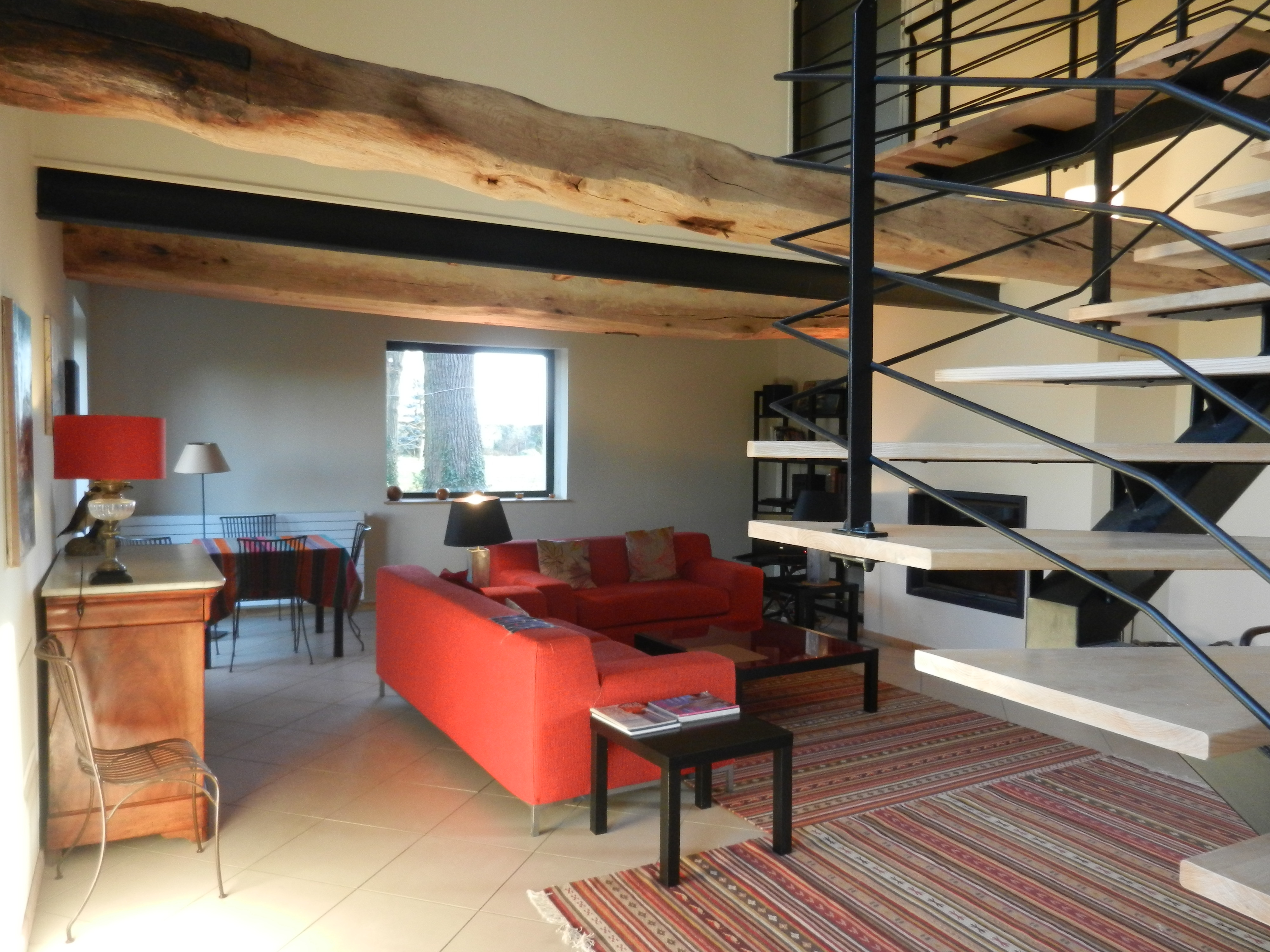
We like it here because Jerome, the proprietor, has renovated the former barn of this massive, 1,000-1,500 year old estate, which was a sugar beet mill,  in an industrial/historical way.  I think it is really comfortable and interesting, and we love being here.  In summer, we can take a nice walk around the village and the multi-acre grounds.  In the winter, we can sit by a cozy fire and meet some other interesting travelers.   In the mornings, we are awakened by the church bell next door rather than a wake up call from reception.  We feel like we’ve put our feet down in France, if only for an overnight. We do have to rent a cheap car to get here and to a neighboring village for dinner, but it ends up being equal in cost to staying at the airport hotel.

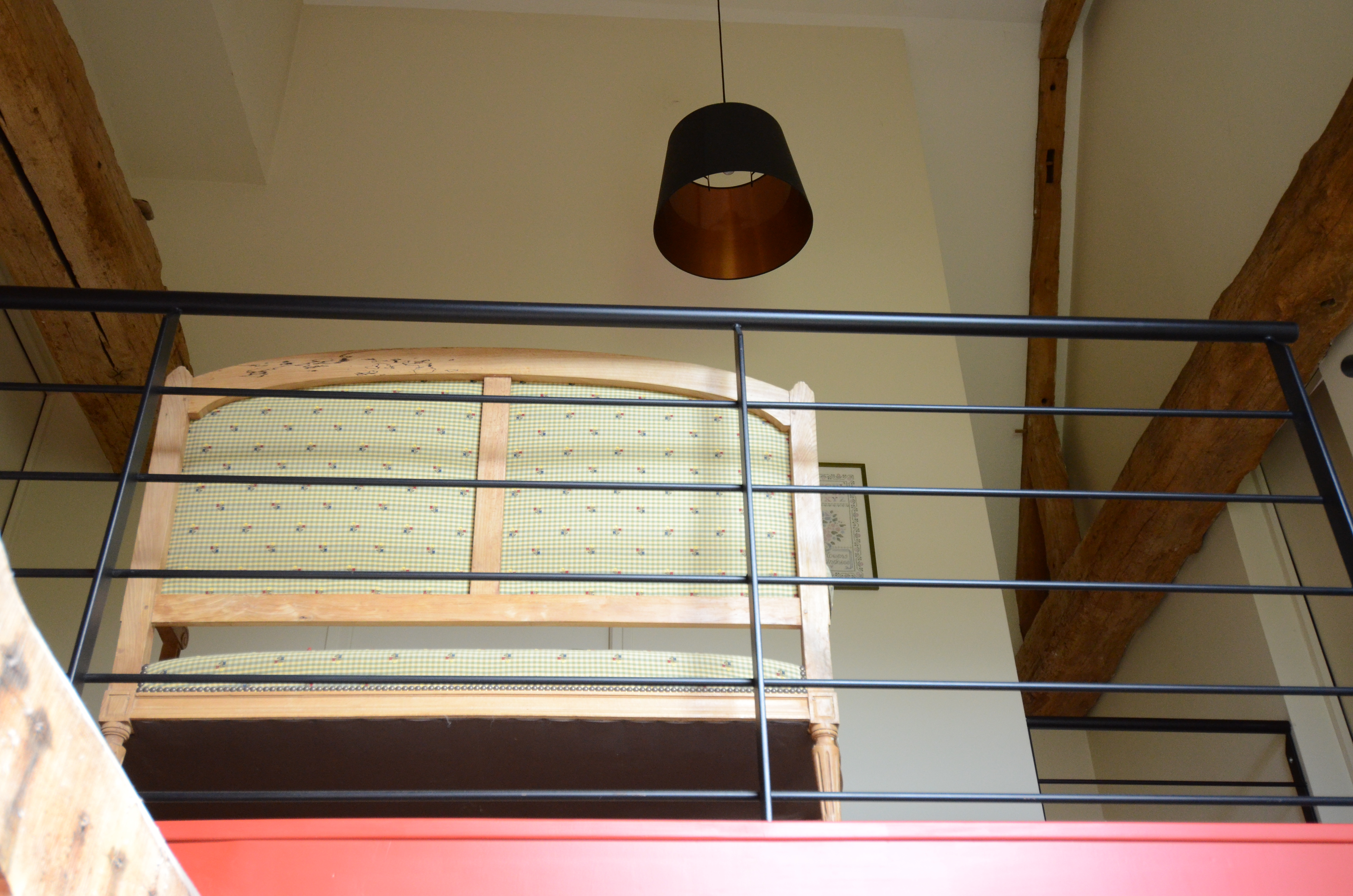
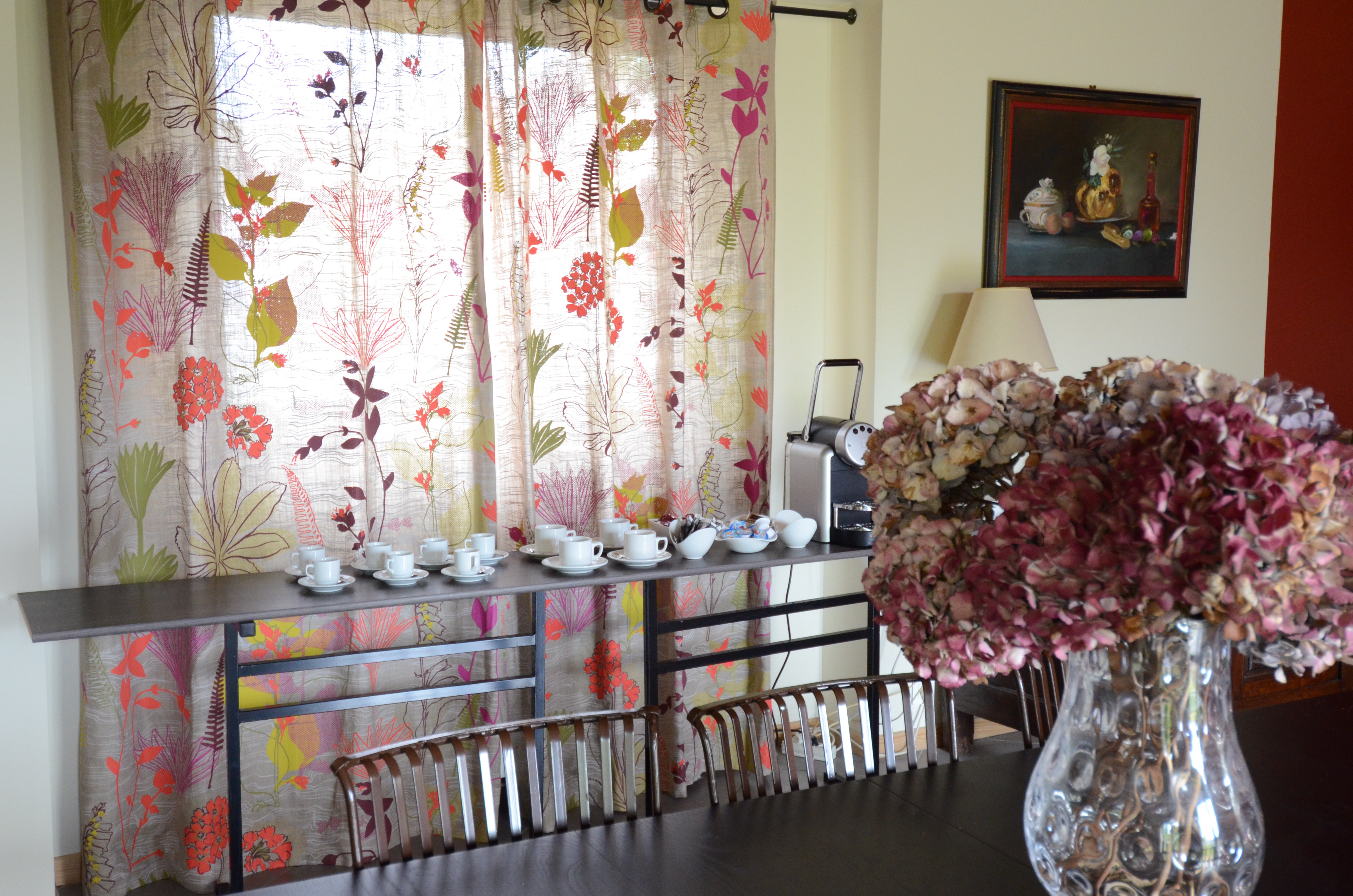
Here are a few photos.  Jerome is just beginning a huge renovation, joining the original mill to this renovated barn that is now the B & B.  It will ultimately have 31 rooms, a small wine bar, and some sort of shuttle to and from the airport, so keep this place in mind.  He only works through booking.com, but it’s easy.

Living Room

Settee

Buffet

Dining Room

Sign

Sans Plastique


Lamb with Sauce

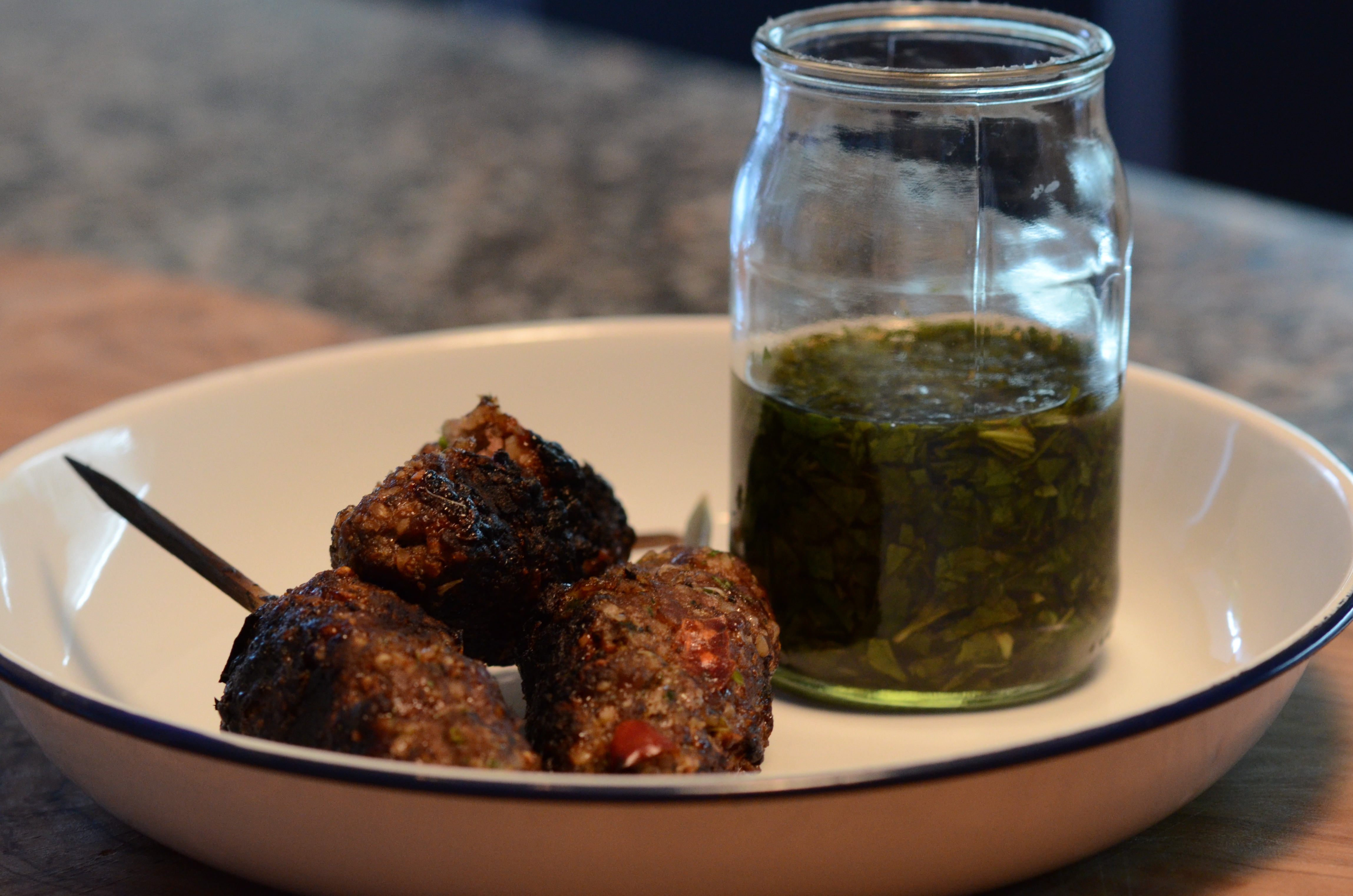
I have made my kebabs!  If the title of this post makes no sense, just go back one  post and read how I thoroughly mixed a finely ground chunk of plastic spatula into my first attempt at this recipe.  This time, I used my food processor instead of my blender, and I left the lid on.  This is highly advised.

Also, do make the mint sauce.  It makes the combination light, spicy, a tiny bit sweet.  Serve it over rice or over salad.  This can be a great summer recipe to keep in your repertoire.

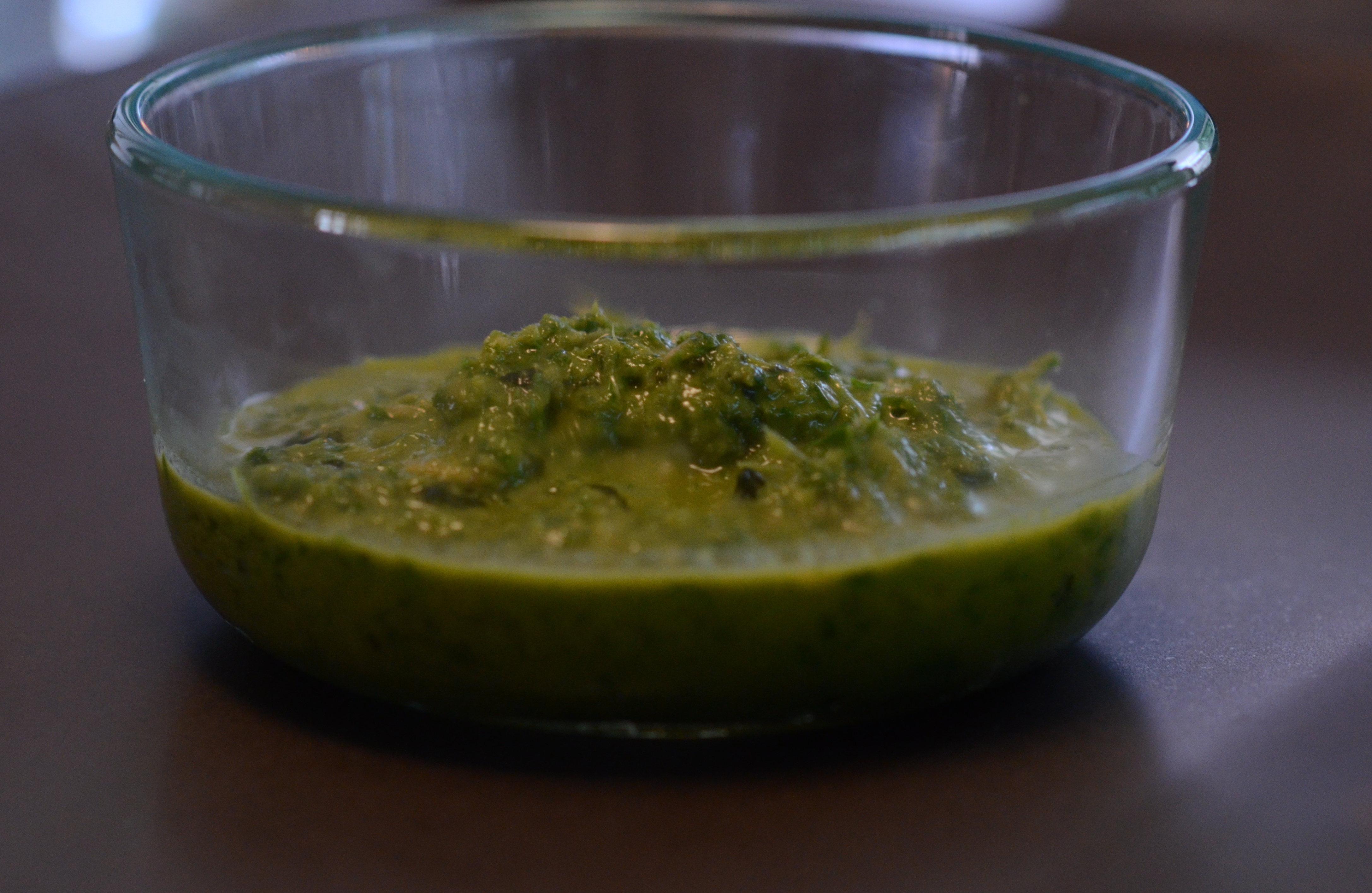
Mint Sauce

From BBC Food Recipes

Bunch of mint

Pinch of salt

4 tablespoons boiling water

1 tablespoon caster sugar

4 tablespoons white wine vinegar

  1. Strip off the mint leaves, sprinkle with salt and chop finely.
  2. Place into a jar, add the sugar, and pour over the boiling water, stir and leave to cool.
  3. Stir in the vinegar and taste.
  4. Add more water or vinegar and adjust seasoning to suit your taste

All I Can Do

It is those last, edgy days of the school year.  Please don’t equate that with a sentiment like hated.  They are just so difficult, physically and emotionally, and the weather is sure to turn hot, and it is difficult to trudge through.  Rereading those last two sentences, I can see that I have been massively influenced by the Jane Eyre audio book I have been listening to, that is scaffolding me through the week.

Tomorrow is Happy Trails day for us.  When we moved to Tunisia, we brought with us a tradition of singing a remixed version of Gene Autry’s “Happy Trails to You” to everyone who is departing from our community on the final day.  Here’s how we do it:

Happy trails to you

Until we meet again.

Happy trails to you

Keep smilin’ until then.

Happy trails to you

Till we meet again.


It’s time to say

Goodbye to our school.

Remember us

‘Cause we’ll remember you.

Au revoir,

Inshallah,

We will meet again someday.

We got this from our great friend, Kathy Shrestha, who worked with us at the Lincoln School in Kathmandu.  She gave everyone there a stuffed heart necklace to remember Lincoln School by.  We give everyone a hand-painted antique key to recall our mission:  Opening doors, hearts, and minds.

It has been an emotionally strange week.  I can feel certain people trying to draw me closer.  I have always noticed when I have been leaving a place that there are people who think we should have been better friends all along and try to take our relationship to the next level right before I or they get on a plane.  On the other hand, there are people who are lashing out, expressing deeply held resentments.    I am just trying to pace through these landmines, gracefully.  I am trying to be honest, and kind, and honoring.  I am not mourning, however.  I did that in December.  I cried my eyes out for the human loss at our school.  Then I focused on a season of presence while we all remained.  Now, I am trying to help everyone pass through the formalities of their departures, but I said goodbye a long time ago.

After an energetic middle school day, today, I was craving my garden and cooking over charcoal.  I made up Simit Kebap. a recipe that intrigued me and one which I had been stashing away the components to make.  Exactly the cure for today was to prep food, mix it, all the while listening to more of Jane Eyre, then grill it in the garden.  It was only as I was assembling the final components that I noticed a quarter-sized hunk missing from the spatula I had been using to push the puree down into the blender.  There were no noticeable pieces of plastic in the puree so I knew it had been well-incorporated.  The whole batch went into the compost bin where the feral neighborhood cats will eat the meat.  My husband went and fetched pizzas and I peeled and cut a cantaloupe, something I am capable of doing tonight.

I shall return to Simit Kebap, a wonderful Turkish kebab, whether here on when I get to Lummi Island next week.  I am going to tuck the recipe here so I can find it when the time is right.

Simit Kebap (ground lamb, bulgur, and pistachio kebabs)

Serves 6-8

  • 1/2 cup shelled pistachios
  • 1/4 cup roughly chopped parsley
  • 1/4 cup roughly chopped mint
  • 1 tsp. crushed red chile flakes
  • 1/2 tsp. ground allspice
  • 6 cloves garlic, peeled
  • 2 scallions, roughly chopped
  • 1/2 small, yellow onion, roughly chopped
  • 1 red Holland chile, stemmed, seeded, and roughly chopped
  • 1 lb ground lamb
  • 1/4 cup fine bulgur, soaked in warm water for 10 minutes and drained
  • Sea salt and freshly ground black pepper to taste
  • 9 metal skewers
  • 2 tbsp.  olive oil
  • 1 tsp sumac
  • Yogurt and hot sauce, for serving

1.  Puree pistachios and 1/4 cup water in a food processor until very smooth.  Add parsley, mint, chile flakes, allspice, garlic, scallions, onions, and chilies; pulse until almost smooth.  Transfer to a bowl.  Add lamb, bulgur, salt, and pepper;  using hands, mix until combined. Form about 1/3 cup mixture around the end of each skewer; refrigerate until meat is firm, about 1 hour.

2.  Heat a charcoal grill or set a gas grill to high;  bank coals or turn off burner on one side.  Grill kebabs on hottest part of grill, turning as needed, until slightly charred and cooked through, 12-15 minutes.  Transfer kebabs to a platter;  drizzle with oil and sprinkle with sumac.  Serve with yogurt and hot sauce.

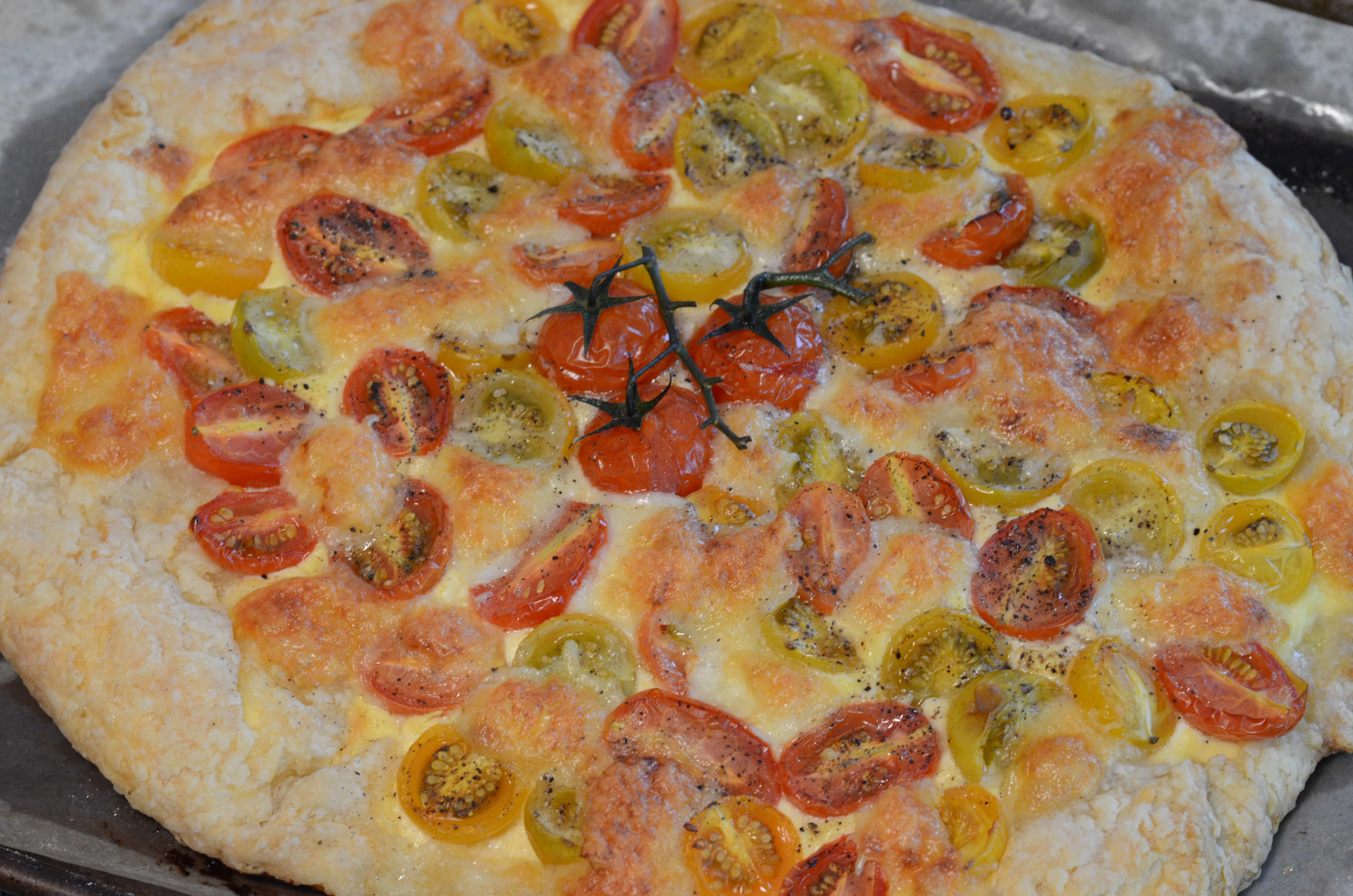
Rustic Tomato Tart

Tomato Tart

I became enamored with this tomato tart idea several years ago.  It seems to me to be an interesting substitute for the carbohydrate in a meal when you want to make something special, but also slightly rustic.  It works as beautifully with a picnic lunch of pate and salad as it does with a dinner of grilled lamb, which is what we had it with last weekend.  You have to work ahead a little to prepare the puff pastry, but if you have a batch of it in the freezer, it is pretty simple to roll it out, put on the toppings, and bake it off.  I should mention that leftover tomato tart is fabulous for breakfast the next day.

Tomato Tart

Adapted from New Zealand Cuisine, No 157 Mar 2013

For the filling

  • 250g ricotta
  • 2 eggs
  • 400g cherry or small tomatoes, halved
  • Olive oil for drizzling
  • 250g mozzarella, torn into bite-sized pieces
  • 4 tablespoons oregano, chives,  and basil leaves or basil flowers, chopped

Preheat the oven to 400 degrees F.  Line 2 baking trays with parchment paper.

Roll the pastry out to about 4mm thick, keeping as circular a shape as you can.

Put the pastry on the prepared baking trays and refrigerate for 10 minutes.  Prick all over with a fork.

Put the ricotta and egg in a bowl and mix well to combine.  Spread the mixture over both pieces of pastry, leaving a 1 inch border.  Fold in the borders to form a rim.  Bake for 12 minutes.

Remove from the oven and arrange the tomatoes, cut side up, over the tarts.  Drizzle with a little oil, then bake for a further 10 minutes.

Nestle the torn mozzarella in among the tomatoes, and bake for a further 2 minutes or until starting to melt and slightly browned.

Once removed from the oven, sprinkle with the chopped herbs, sea salt, and freshly ground pepper.

Cheese Scones with Sweet Chili Jam

Last weekend I confronted the cheese drawer of my refrigerator.  This is really my stash of souvenirs from the trips I’ve taken lately.  It is full of the rinds of hard cheeses that have gotten so low that I might grate my fingernails if I try to get any more off of them, but that still might have some use.  There were pecorinos from Umbria, a hard sheep’s cheese from the Isle of Pag in Croatia, and some parmigiano from Venice.  I actually held them in my two hands, my body the fulcrum, weighing if I would work with them or throw them out.  I decided to set to work trimming them up and then grated the entire batch in my food processor.  Can you believe I got 6 cups of grated, aged cheese?  It was a treasure, and the exact amount to make a triple batch of these scones to take to a friend’s going away brunch this morning.

Cheese Scones

Adapted from the restaurant Prefab in Wellington, NZ

Cheese Scones

Makes 6 large or 12 mini scones

  • 3 cups flour
  • 3 teaspoons baking powder
  • Pinch of freshly ground black pepper
  • 75 g. butter
  • 2 cups grated, hard cheese, plus a little extra for sprinkling
  • 1 1/2-2 cups milk

Preheat the oven to 350 degrees F.

Put the flour, baking powder and pepper in a bowl.  Add the butter and rub it in until it resembles fine breadcrumbs.  Stir in the cheese.

Slowly add the milk to the cheese mix, stirring with a wooden spoon until the mixture forms a dough.  Press the dough out on a floured bench and cut into 6 large or 12 mini scones.  Put on a baking tray then sprinkle with a little extra cheese and bake for 18-20 minutes or until golden.  Serve with the sweet chili jam (recipe follows).

Sweet Chili Jam

Chili Jam

Makes 2 small jars

  • 250 g ripe tomatoes, cored
  • 3 red chilies, deseeded if desired
  • 5 cloves garlic
  • Thumb-sized piece of ginger, peeled
  • 15 ml fish sauce
  • 150g dark muscovado sugar
  • 50 ml red wine vinegar

Put the tomatoes, chilies, garlic, ginger, and fish sauce in a blender and blend to a course puree.

Put the puree, sugar, and vinegar in a saucepan and bring to a boil.  Reduce the heat and simmer for 20-25 minutes, stirring every few minutes until the sauce resembles a jam consistency.  Pour into sterilized jars and store in the fridge.

Quinoa Fruit Cookies

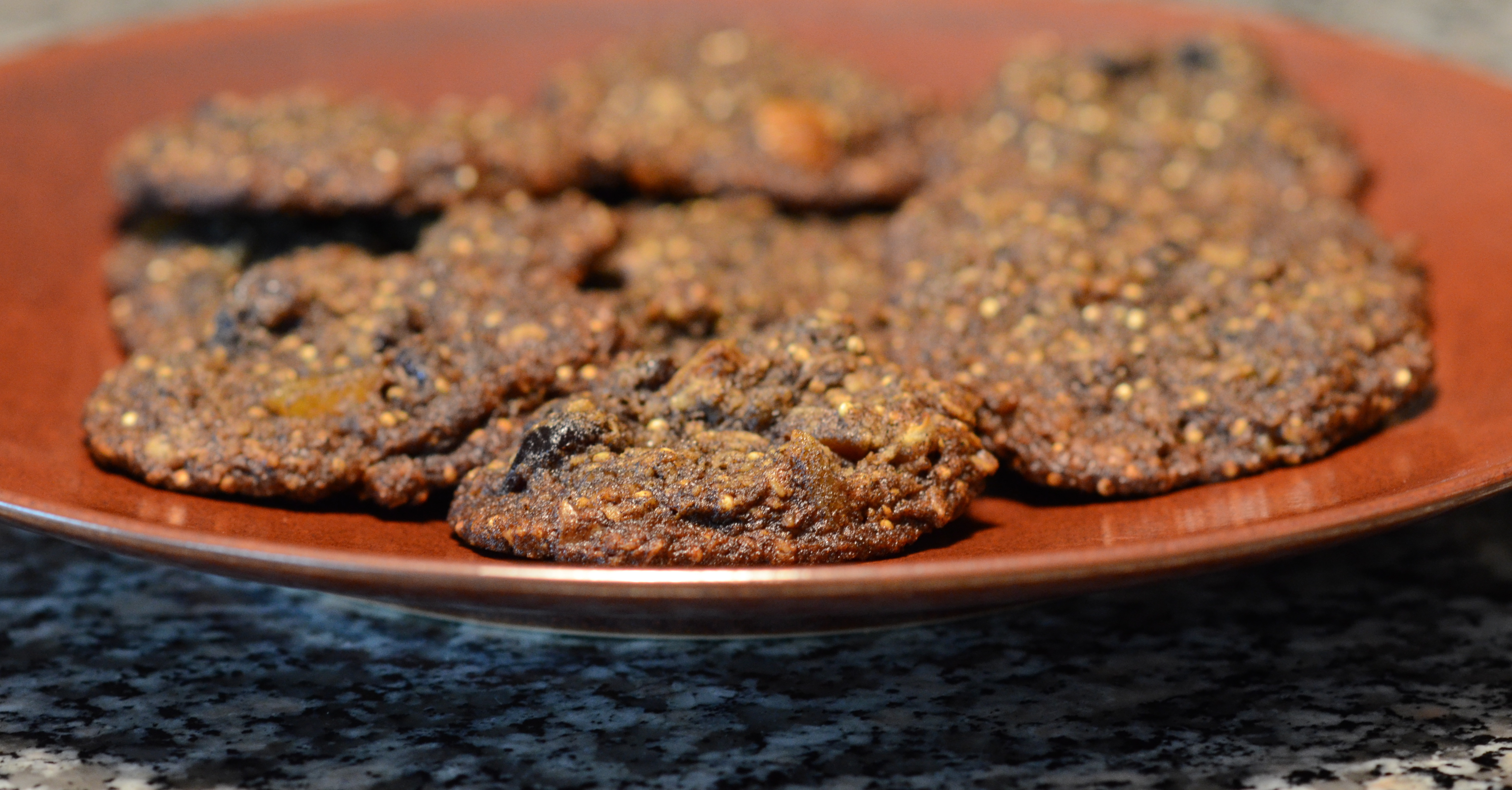
Cookies

Some people like this sort of thing:  a not too sweet cookie that has enough food in it that it could possibly substitute for your mid-morning handful of almonds.  When I read the process for this cookie, I was intrigued.  There is the mixing of baking soda with hot water, the addition of completely raw quinoa, plus it uses all of the dried fruits I have in my pantry:  raisins, dates, apricots, and unsweetened coconut.  I had to see what it was like.  It is a soft cookie.  You can really use any combination of dried fruit you like.  The quinoa softens a little, but not so much.  It remains crunchy, which is nice next to all that chewy fruit.  Finally, it is held together by the buttery golden syrup batter.  I thought they were nice and they packed a little protein, too.

from Ripe Recipes:  A Fresh Batch

Quinoa Fruit Cookies

Makes 35-40

  • 1 cup (100 g) quick cook rolled oats
  • 1 cup (150 g) whole wheat flour
  • 1/2 cup (80 g) soft brown sugar
  • 1 teaspoon ground cinnamon
  • 1/2 teaspoon ground nutmeg
  • 1/2 cup (100 g) quinoa, uncooked
  • 1/2 cup (50 g) desiccated coconut
  • 1 cup (140 g) raisins
  • 2/3 cup (100 g) dried dates, finely chopped
  • 1/4 cup (40 g) dried apricots, finely chopped
  • 1 teaspoon baking soda
  • 180 g unsalted butter, melted
  • 3 tablespoons golden syrup or molasses
  • 1 teaspoon vanilla extract

Preheat oven to 350 degrees F.  Grease and line 2 baking trays with parchment paper.

In a large bowl, combine the rolled oats, flour, sugar, spices, uncooked quinoa, coconut, and dried fruit.

In a medium-sized bowl, dissolve the baking soda with 2 tablespoons hot water.  Whisk in the melted butter, the golden syrup, and vanilla.

Pour the golden syrup mixture into the dry ingredients and mix well to combine.  Place heaped tablespoons of the biscuit mixture on to the prepared baking trays.  Allow plenty of room for the biscuits to spread.  Flatten lightly with the back of a fork.

Place in the oven for approximately 10 minutes, or until the cookies are golden.

Remove from the oven and allow to cool a little before transferring them on to a wire rack.

What We Carry, What We Keep, What We Give Away

My friend Gwen is moving to Venezuela.  I don’t usually mention people by name in my blog, but I feel like writing a little ‘ode to Gwen’.  Gwen has been a safe and supportive friend to me for three years and she is really funny, which I think is the most attractive thing a person can be.  Gwen had a bunch of us to her place one last time last night under the pretense of drinking all of the rest of her booze, of which she had a classy collection.  It was actually an entirely restrained and enjoyable party with lots of homemade food and the right number of people in the room so that you could connect with every one of them.

Gwen packed up her house last weekend, so what she had left was all stuff she isn’t taking along with her.  As I have done myself when I have been moving, she had a table set out with things to give away.  These are usually odds and ends that have some use to someone, but don’t have enough value to warrant putting a price on them to try and sell, as moving expats commonly do.  I spotted this unopened package of cedar grilling planks and knew that was for me.

Cedar Grilling Planks

Now, it’s not that I don’t already have cedar grilling planks.  I also brought some back to Tunis last summer or even possibly the summer before, and seeing that Gwen hadn’t used her planks either got me thinking about the things that expats horde away and why.

I don’t really think I had any intention of cooking on the grilling planks when I bought them.  I am certain that I bought them at Costco during one of our final shopping trips to buy stuff to take back with us.  At that point, usually during the last week of July, we are saying a premature goodbye to summer in the Northwest.  We have finally gotten our farm back to a state of harmonious functioning, and we have had a few weeks of living large on the island: crabbing, and cooking over wood fires, staying up late with the extended daylight hours, and visiting with lots and lots of friends.  We are drenched in the scent of smoke and salt and fish, a life brine that numbs us with contentedness.  In that mixed state of bliss and resignation that the end was near, I spotted cedar grilling planks, and they held all of those sensory ideas:  the wood, the fish, the fire.  Also, they didn’t weigh much and they were unbreakable.  These were a no-brainer purchase; these would make me happy.  I never used them because then I wouldn’t have them anymore.  Ironically, I also don’t get them out and smell them very often because they make me unbearably homesick and I try to live in the present when I’m overseas, not spend my days on the Mediterranean pining for the Northwest.   I know that beautiful life is still there and that I will, hopefully, have my days there again, just not quite yet.

The giveaway.  Moving on to another location slaps one in the face  to the little shrines you have created for various emotional reasons.  You had ideas about how you were going to live your life in this place and maybe that is how you lived and maybe it isn’t.  The fantasy you created was for here, not for the next place.  You are already creating a new mental plan for that life.  Little items that held some joy, that represented an idea you had say of hosting some little party where you grilled Mediterranean fish on cedar planks and treated your friends to a Northwest experience, have vanished.  These little dream-holders become worthless and you can suddenly, easily give them away and are glad to see them go.

I am probably way over signifying Gwen’s grilling planks.  That was all about me there, not necessarily Gwen, but she gave me a little freebie to use them and still not use my own.  I can have my planks and grill on them, too.    When I do,  I am going to think about Gwen and her hopes for Tunis and her continuing ability to hope nice moments for her life ahead and share them with her new friends.

If you are also hording grilling planks in your kitchen, you could break them out and cook this fish dish, pretty much the world around.

Asian-Style Grilled Whole Red Snapper with Radish Salad

Adapted from Food and Wine, June 2013

Ingredients

  • 1 tablespoon soy sauce
  • 1 tablespoon red wine vinegar
  • 1 tablespoon jarred pickled ginger, chopped, plus 2 teaspoons brine from the jar
  • 1 teaspoon brown miso paste
  • 1 teaspoon sherry vinegar
  • 9 radishes- 8 thinly sliced, 1 chopped
  • 1/4 cup extra-virgin olive oil, plus more for brushing
  • Kosher salt and freshly ground pepper
  • Two 2 1/2-pound whole red snappers, cleaned and scaled
  • 1 poblano chile, quartered lengthwise and seeded
  • 20 thyme sprigs
  • 1 lemon, thinly sliced crosswise
  • 1 cup lightly packed radish sprouts

4-12 hours ahead, soak planks in warm water, and weigh them down with with heavy objects.  This will keep them from burning during grilling.  For added flavor, add wine or herbs to the soaking liquid.

Planks

In a blender, combine the soy sauce, red wine vinegar, pickled ginger and brine, miso paste, sherry vinegar and chopped radish and puree until smooth.  With the blender on, drizzle in the 1/4 cup of olive oil.  Season the vinaigrette with salt and pepper and transfer to a small bowl.

Sauce

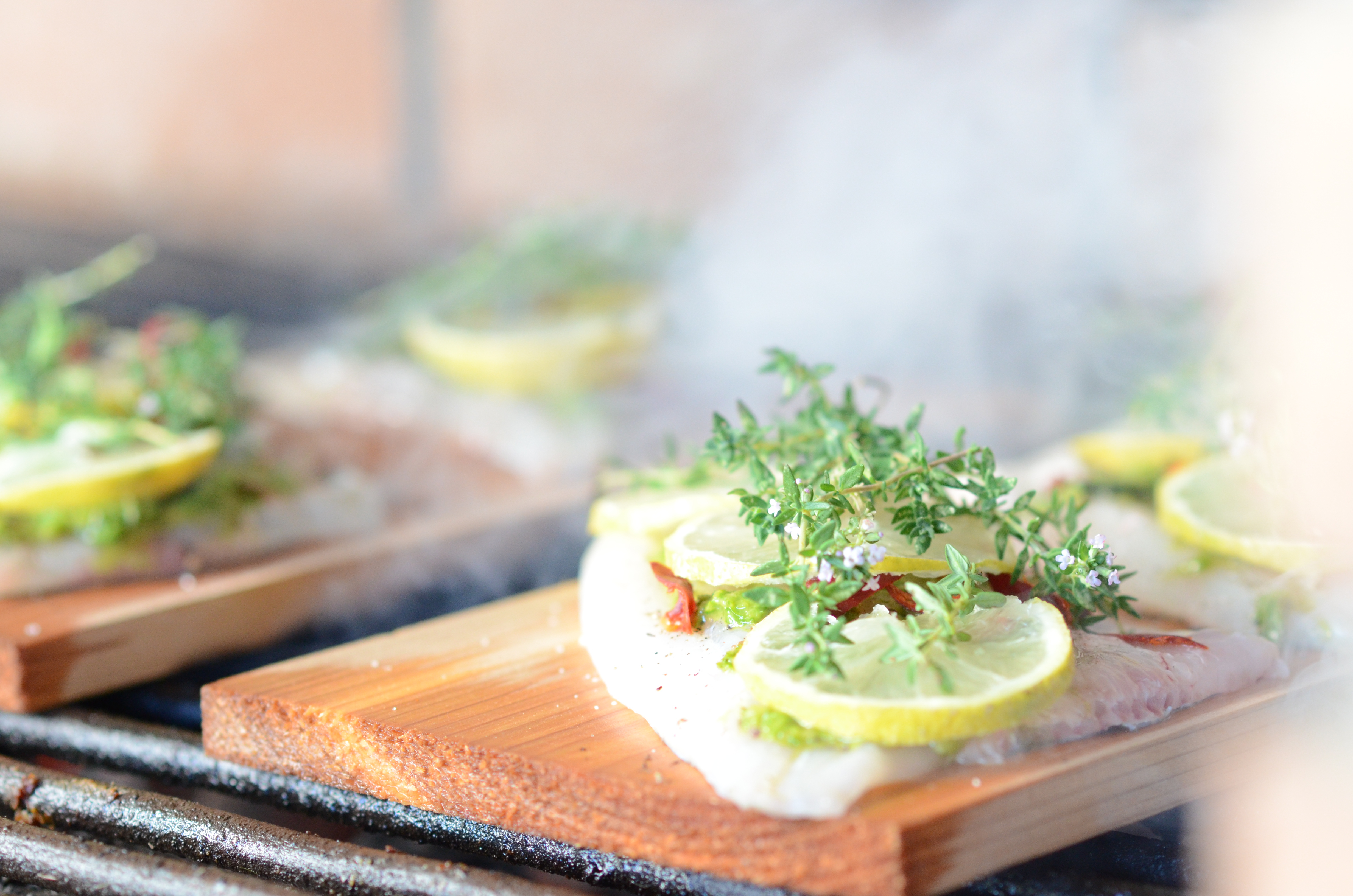
Light a grill or start charcoal or wood.  Season the snapper cavities with salt and pepper and fill with the poblano, thyme sprigs and lemon slices.  Tie the fish with kitchen string at 2-inch intervals.  Generously brush the fish with olive oil and season lightly with salt and pepper.  Alternatively, use filets, and layer the vinaigrette, chili, thyme, and lemon.  If cooking filets, you will not need to flip the fish.

Set the fish on the plank and cook until the flesh just flakes with a fork, about 20 minutes.  If flames flare up, spray them with water.  Pull the fish before it is entirely done and let it rest on the planks for a few minutes before serving, where it will continue to cook.    The planks will warp and char a little or a lot.  That is OK, but keep an eye on what’s happening to the fish.

Smoke

Burned

In a medium bowl, toss the sliced radishes with the sprouts and 2 tablespoons of the vinaigrette.  Top the fish fillets with the radishes.  Drizzle a little of the remaining vinaigrette around the fish and serve.

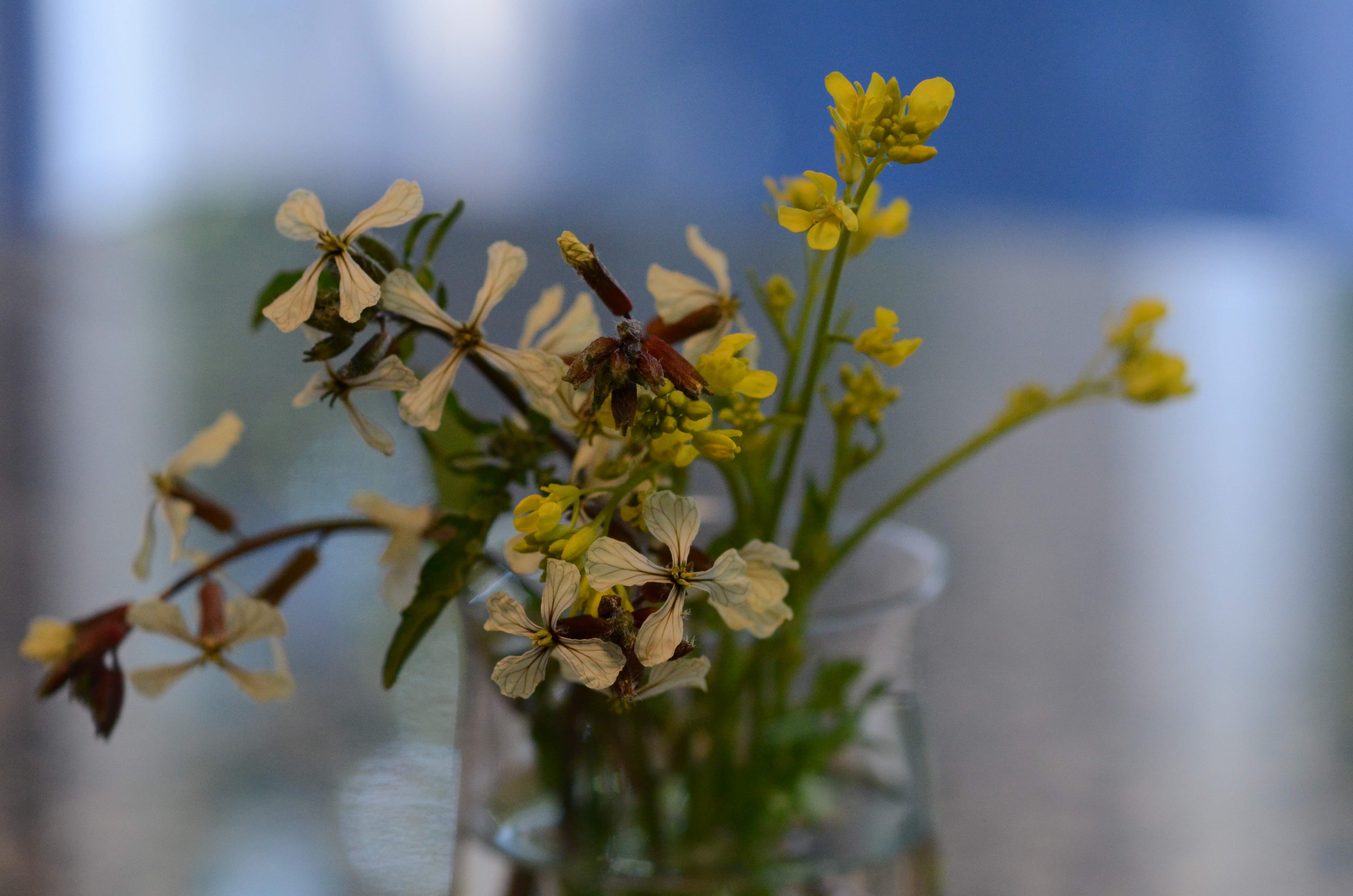
Improvise!  Radishes were not readily accessible to me, but I had mustard greens in the garden and mustard and arugula flowers to use instead of radish sprouts.

Flowers

Rough Puff-Pastry

We are prepping ourselves for the last three weeks of our school year.  I say prepping, as though we have to fortify ourselves, because these will be busy weeks with extra work in addition to many, many, many goodbye parties.  Some of these, I am hosting, and for some, I have offered to bring a dish.  We consider ourselves fortunate that we live in an active community that cares for each other, and we are happy to be part these ending rituals.

Today, my husband went golfing and then to beer-brewing lessons with a friend from school, so I essentially had the house and the day to myself.  Being an introvert to the core, a day like this gives me the time I need to think, plan, and process, so when I go out into the world, I have a together me to offer.  With the collapse of the Skagit River bridge last week and the Ski to Sea race I know will be taking place this weekend, Memorial Weekend, my mind is roaming all over Whatcom and Skagit counties, ruminating on the spectacular natural features of that area and also contemplating my place in that place for the past three decades.  I have especially taken Whatcom County into my blood.  I can mentally and emotionally touch all of the seasons and so many beautiful places and events in my memory.  I decided that since I had some time to myself, I really wanted to listen to the audio book of The Living, by Annie Dillard.   This book is a historical fiction about founding settlers on Bellingham Bay.   I have long said that this is my favorite book, but I clearly remember nursing a baby while I read it the last time.  That was 20 some years ago and it is time for another listen.  I listen to a lot of audio books so I can cook at the same time.  It is my absolute favorite way to spend a quiet afternoon;  it recharges me.

I worked on a batch of puff-pastry this afternoon.  This recipe could not be more simple, but there is a little bit, only a little, of technique to remember.  I sort of chuckle to repeat this advice because I am pretty sure you have read it before.  I know I had read for years that you must maintain sizable chunks of butter in the pastry and that everything must be kept cold throughout the process.  I thought this was a suggestion that wouldn’t make much difference one way or another  until I finally understood the reason why.  We keep pea-sized and sometimes a little larger chunks of butter in the pastry because when we pop it in a hot oven, the butter will melt, leaving air-filled pockets throughout the dough:  voila flaky pastry.  Once I finally committed to this practice, I considerably improved my batting average with making flaky pastry.

This pastry works beautifully for both savory and sweet tarts, which I will be using it for at some upcoming dinners.  I’ve got two bundles of dough now, soft as a baby’s bottom, in my freezer and it will be short work to fill them with fresh produce and bake them off at very short notice.

Rough Puff-Pastry

Makes 2 tarts, adapted from New Zealand Cuisine, No 157 Mar 2013

Before I even begin the ingredients, here is the protocol:  Freeze everything and put it back in the fridge, or even better, the freezer, between steps in the production.  In the photos below, keep your eye on the distinct hunks of butter that remain visible in the dough.

Ingredients

  • 250 grams flour
  • 1 teaspoon salt
  • 150 grams unsalted butter, chilled (or frozen) cubed 1cm

Put the flour and salt in the bowl of a food processor.

Add the butter to the flour, separating each cube, and pulse until the mixture is just becoming large crumbs.

Butter Chunks

You still need to see pea-sized chunks of butter in the flour.  Tip on to a work surface and make a well in the center, then pour in about 100 ml ice-cold water, mixing and bringing together gently until you have a rough dough.  Do not knead.   Add a little extra water if needed.  Wrap in plastic wrap and refrigerate for 20 minutes.

Rough Dough

Turn the pastry on to a lightly floured board and gently knead together to form a rectangle.  Roll the dough out, in one direction only, until about 20cm x 50 cm.  Keep edges as straight and as even as possible.

First Roll

Fold the top third of the pastry down to the center, then fold the bottom third up and over the top third.

First Fold  Give the dough a quarter turn and roll out again to three times its length.  Fold as before, then wrap in plastic wrap and chill for at least 20 minutes before use.  This pastry freezes well.

Two Packets

Poppy-Seed Lavash

LavoshI think the word lavash is elegant, but also evokes the daily rituals of life in Armenia, Azerbaijan, Iran, and Turkey.  In Tunisia, the baguette is our bread currency, a legacy of French colonization, but as you move farther east, fabulous flatbreads are the staff of life.  Typically baked by slapping a yeast dough against the side of an underground clay oven called a tonir, the breads have a rustic shape and brown inconsistently, giving them some chewy parts and some toasted, crisp bits.

Armenian cooking can be complicated, incorporating an array of no less than 300 types of herbs and wild flowers.  This recipe, however, simply features poppy seeds.  I recommend making up a batch of this dough when you want something to bring a meal together or give it a little heft as with soup or roasted meat and salad.  Lavash can provide that burst of toasted flavor and chewy/crispy texture to make it a satisfying meal.  It is also great as a leftover.  Turning crispy in the air, you can use it the next day with a dip or crumbled in a salad.

Poppy-Seed Lavash

Reprinted from Martha Stewart Living and Matt Dillon, chef at Sitka & Spruce in Seattle

Ingredients

  • 1 1/4 cups whole milk
  • 5 tablespoons unsalted butter
  • 1/4 teaspoons dry active yeast
  • Pinch of sugar
  • 4 cups all-purpose flour or a combination (I used 1/4 rye flour)
  • 1 3/4 teaspoons course salt
  • 2 tablespoons poppy seeds, plus more for sprinkling
  • Extra-virgin olive oil, for brushing
  • Flaky sea salt, such as Maldon, for sprinkling

Steps

1.  Combine milk and butter in a small saucepan and heat just until butter melts.  Place warm water in a small bowl, sprinkle yeast and sugar on top, and let stand until foamy and fragrant, about 5 minutes.  Whisk together flour, course salt, and poppy seeds in a large bowl.  Gather mixture into a large mound and create a well in the center.  Pour milk and yeast mixtures into well.  Gradually stir together mixtures with a wooden spoon, starting in center and working outward, until a dough forms.

2.  Transfer dough to a lightly floured work surface and, with lightly floured hands, knead dough, adding more flour if necessary if dough is too sticky, until smooth and shiny, about 10 minutes.  Cover dough with a lightly floured kitchen towel and let rise in a warm place until dough is doubled in size, about 2 hours.

3.  Preheat oven to 500 degrees with a pizza stone placed on rack in lowest position, or heat a covered gas barbecue to 500 degrees.  Meanwhile, punch down dough with lightly floured hands, cover with towel, and let rise again until doubled in size, about 1 hour.  Divide dough into 4 equal portions.  Working with 1 portion and keeping remaining portions covered, roll out dough as thinly as possible without tearing, about 1/8 inch thick, with a floured rolling pin.  Prick dough all over with a fork and transfer to a lightly floured pizza peel, baking sheet, or grates of gas grill.  Lightly brush with oil and sprinkle with poppy seeds and flaky salt.  Slide dough onto pizza stone and bake until dough bubbles and blisters in places and edges become crisp and golden brown, about 5 minutes.  Repeat process with 3 remaining dough portions; serve warm.