It Ain’t Over ‘Till the Pie Bird Sings

            We’re packing out to go and live the second half of our summer in Tunis.  Going together to Tunis, all four of us,  is the carrot, but counting down all of the “lasts” of our Lummi summer is sad.  We’ve got the last times to see family and friends we love.
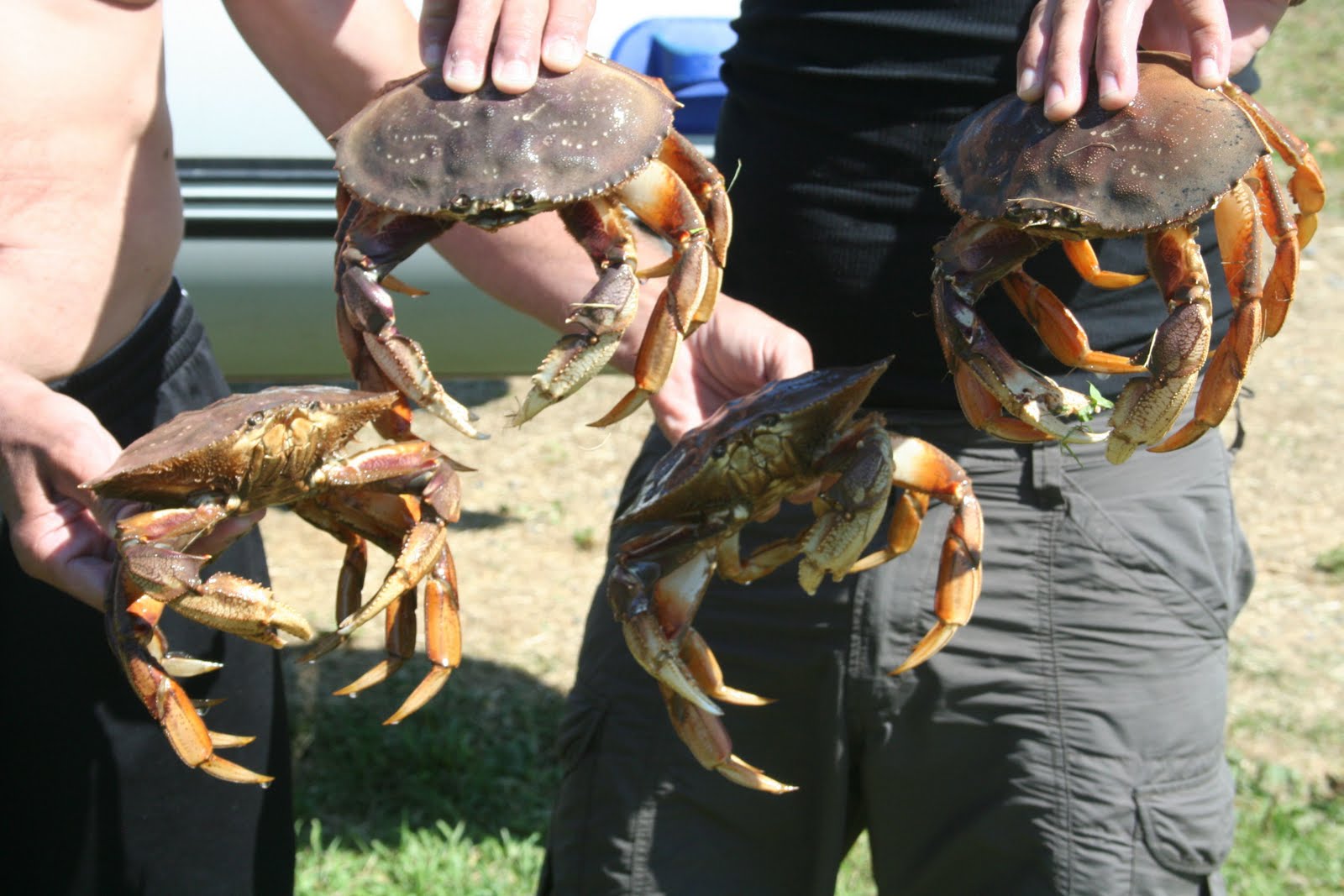
The last pull of the crab pots.
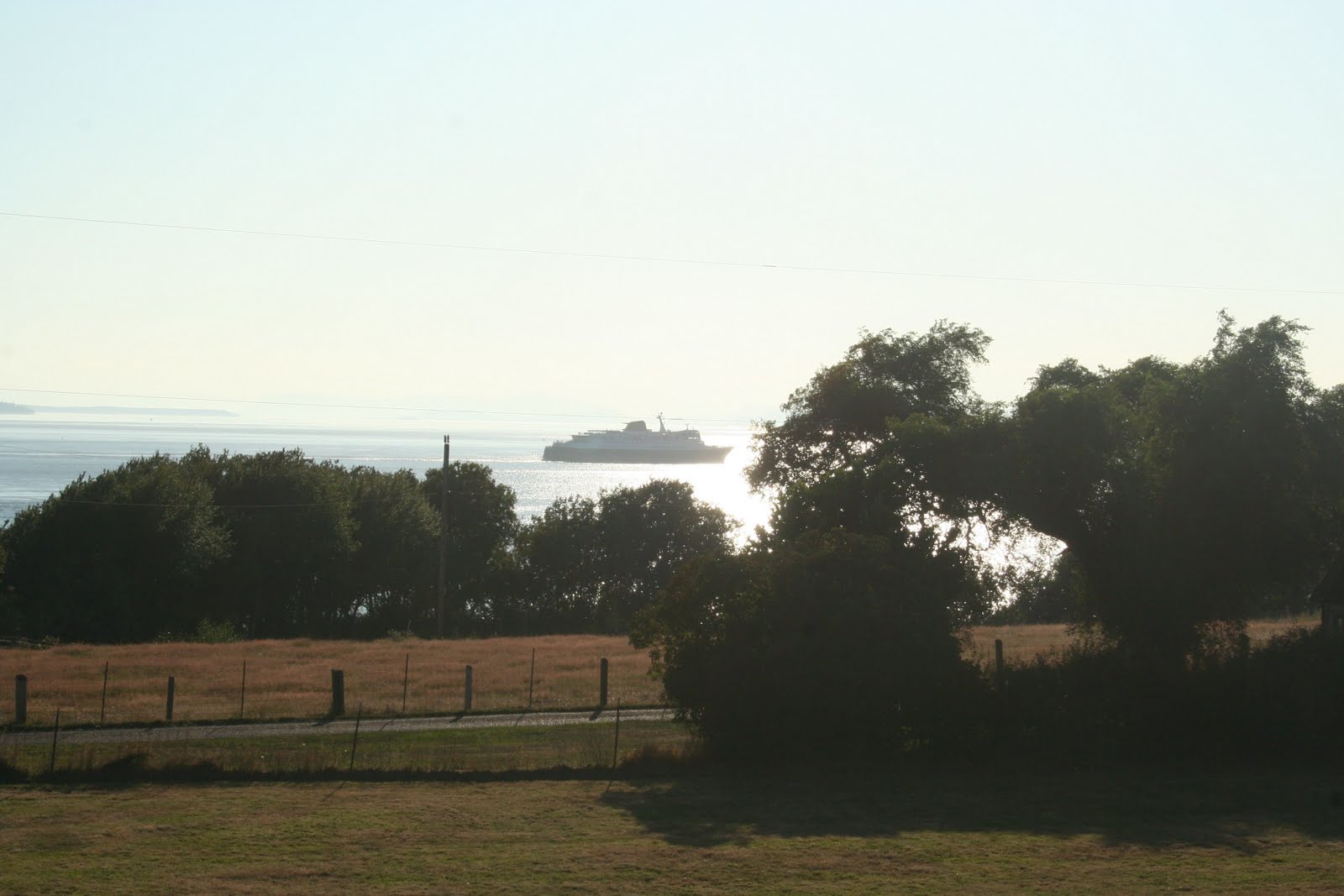
The last time to watch the Alaska ferry cruise past our house into the sunset with its load of adventurous passengers destined to witness the Inside Passage.
We gasped this week realizing that we hadn’t yet had our fill of blueberries, one berry we won’t get in Tunis this year.
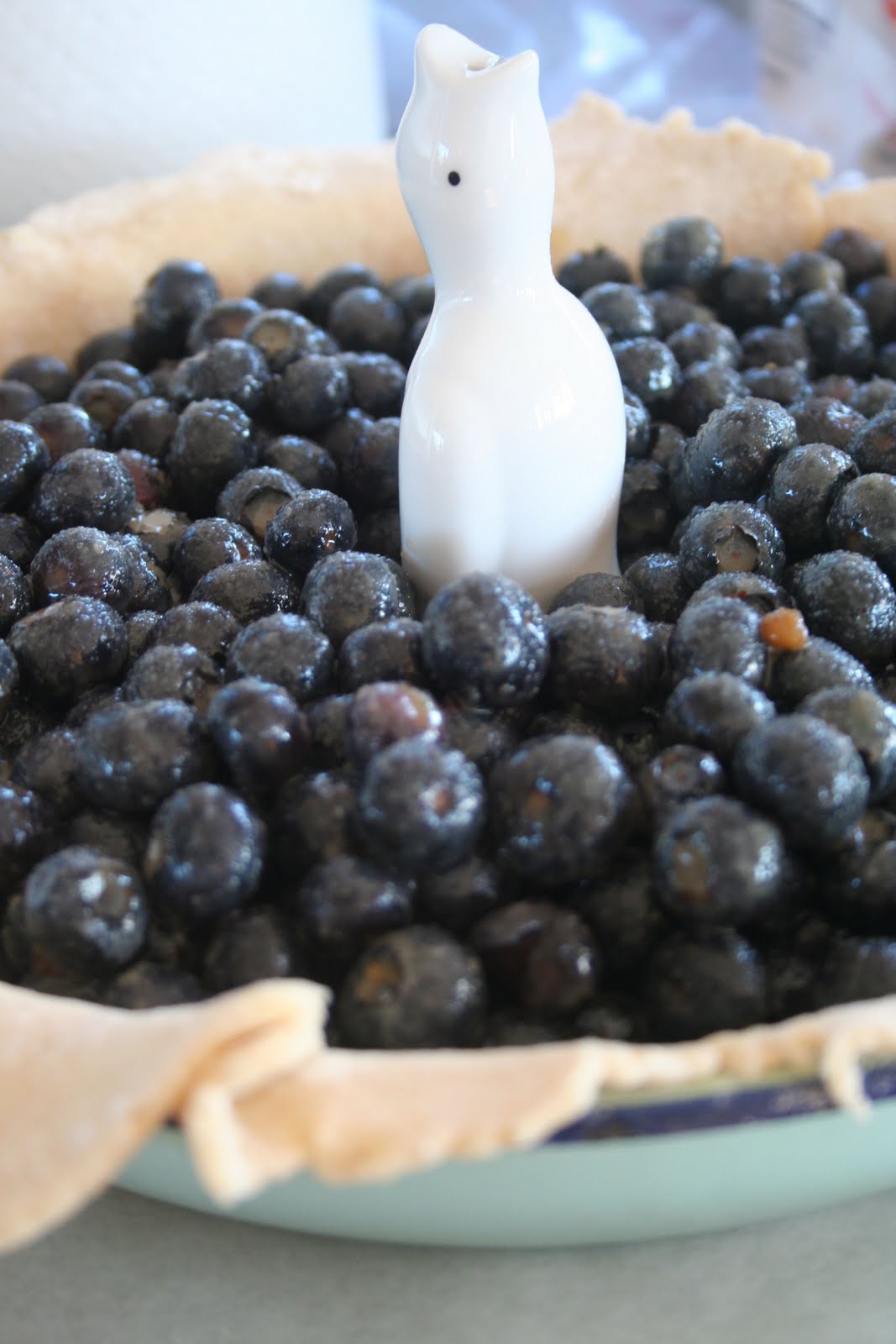
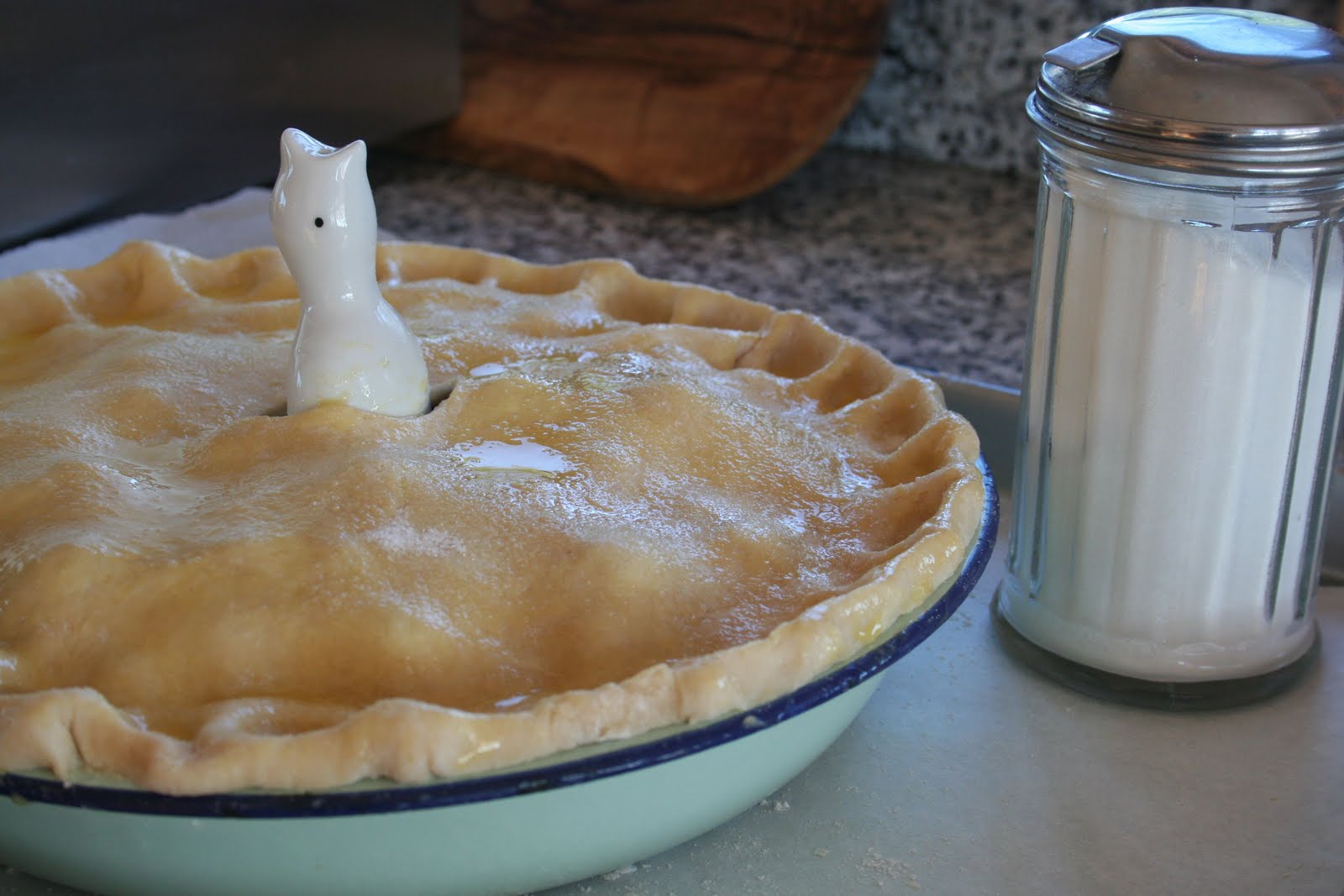
This pie is in honor of all the beautiful things we will be saying goodbye to this week.
All-butter Pie Pastry
From Rustic Fruit Desserts (Schreiber, Richardson)
Makes four 9-inch pie shells
5 cups all-purpose flour
3 tablespoons granulated sugar
1 1/2 teaspoons fine sea salt
2 cups ( 1 pound) cold unsalted butter
1 cup ice water
2 tablespoons freshly squeezed lemon juice
     Put the flour, sugar, and salt in a bowl, stir to combine, then put the bowl in the freezer for about 10 minutes, until super cold.
     Cut the butter into 1-inch cubes, then add it to the flour mixture and toss to evenly coat.  Cut the butter into the flour mixture using a pastry blender, food processor, electric mixer, or your hands, just until the mixture becomes course and crumbly ad the butter is about the size of peas.
     Stir the water and lemon juice together, then drizzle over the dry ingredients, 1/3 cup at a time, tossing with a fork to distribute the liquid.  The pastry will be shaggy, but should hold together when squeezed in the palm of your hand; if not, add an additional teaspoon or two of ice water.
     Dump the pastry onto a lightly floured work surface and press down on the dough, folding it over on itself a few times until it holds together.  Thy not to handle it too much or it will warm up and may become overdeveloped.  Divide the pastry int 4 equal parts and shape each piece into a disk, 1 inch thick.  Wrap each disk in plastic wrap and chill for 1 hour.
Blueberry Pie
adapted from Kingston Hotel Cafe Cookbook (Weinstock)
1/2 recipe all-butter pie pastry
6 cups blueberries
2 tablespoons cornstarch
2 tablespoons flour
3/4 cup brown sugar
6 tablespoons white sugar
1/4 teaspoon salt
1 teaspoon ground ginger
2 tablespoons freshly squeezed lemon juice
2 tablespoons unsalted butter
     Prepare all-butter pie pastry and line a 9 inch pie pan, reserving some dough for the top crust.  Chill reserved dough.
     In a large mixing bowl, combine all of the filling ingredients except the butter.  Pour into the pastry-lined pie pa.  Dot the top of the fruit with the butter.
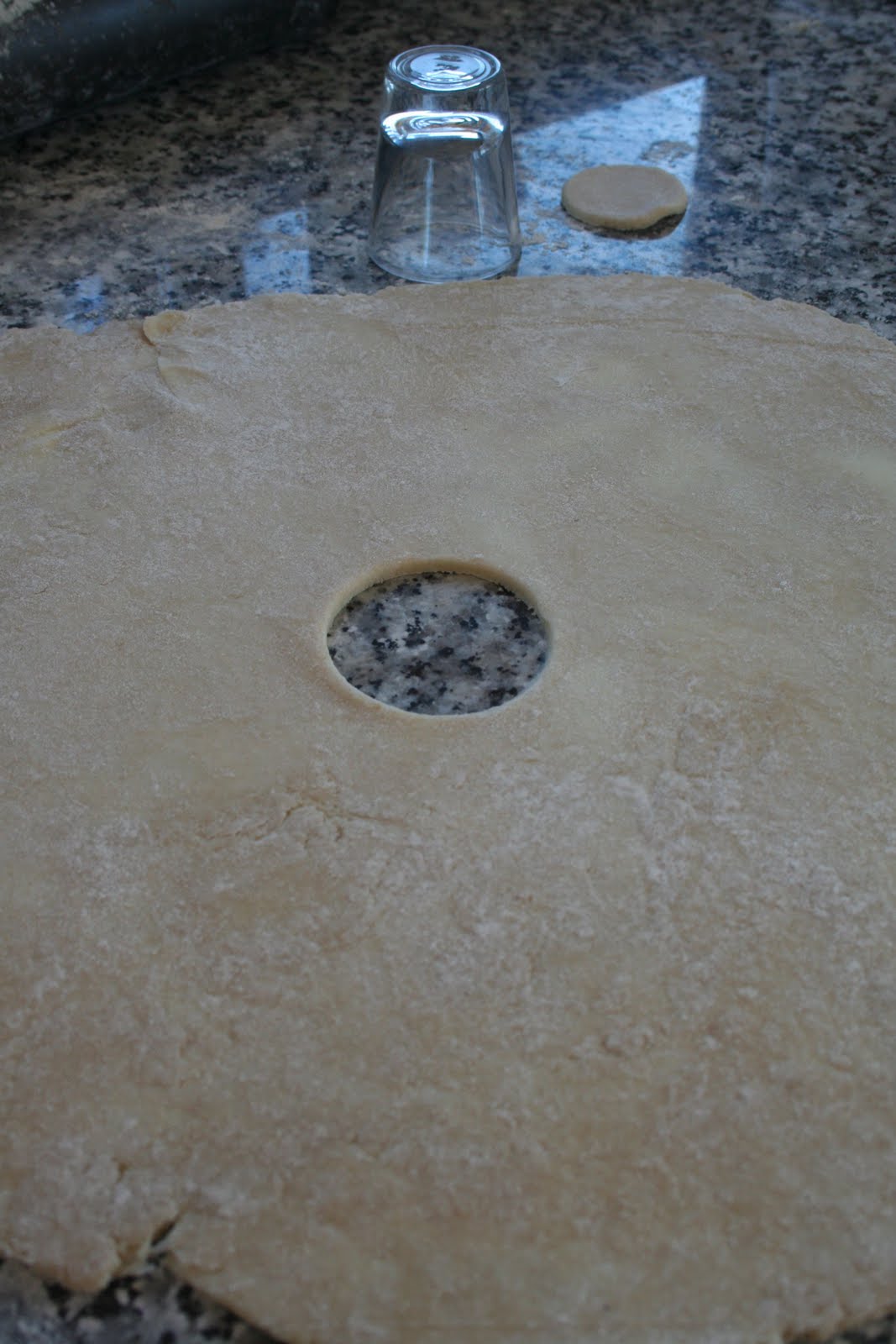
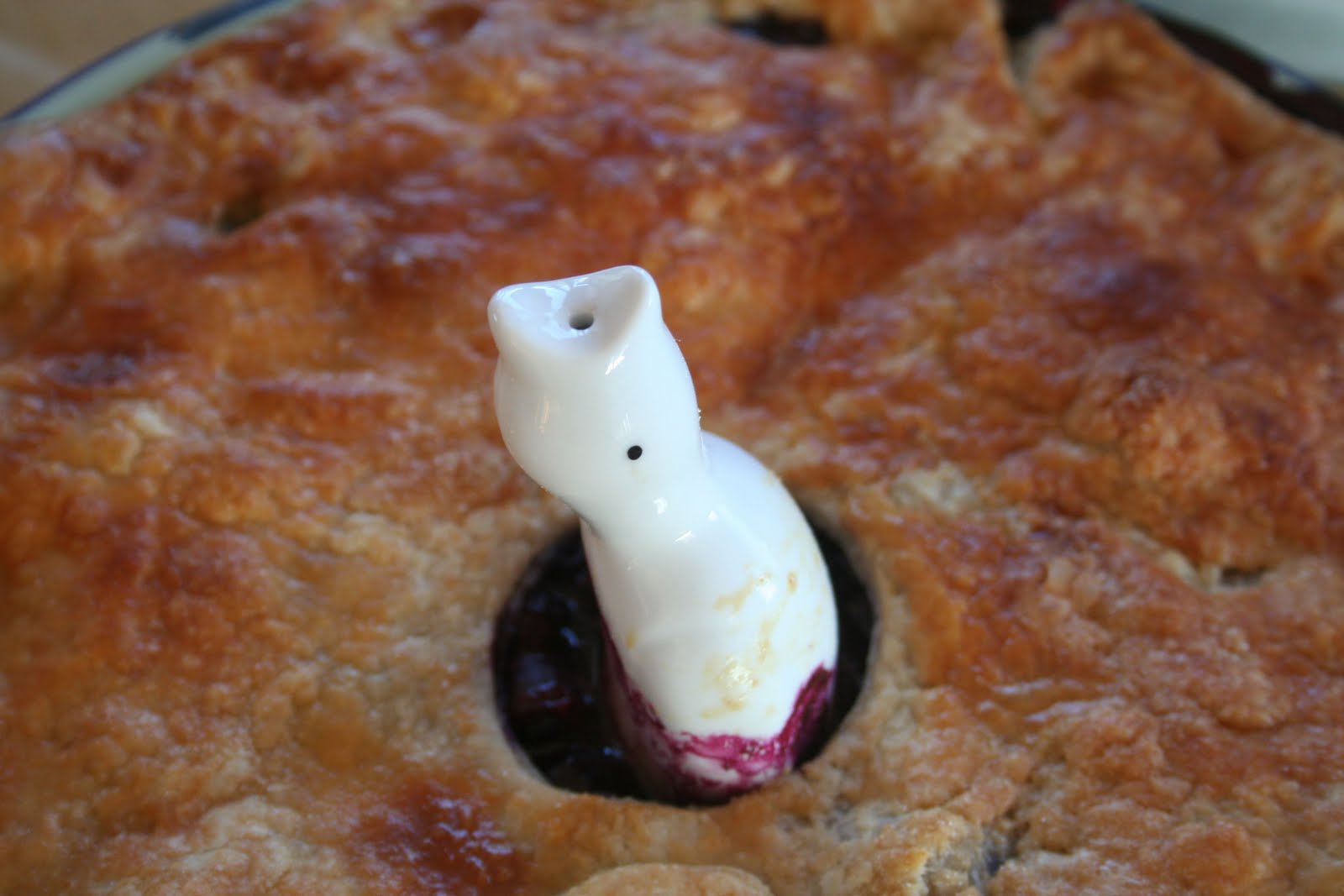
     Roll out the top crust.  Wet the rim of the bottom crust with ice water and place the top crust over the berries.  Turn the edges under and crimp.  Make little slits in the top of the crust or cut a small circle to insert over the top of a pie bird to allow steam to escape while baking.
     Place the pie in the center of a parchment covered baking sheet.
     Bake at 425 degrees F for 10 minutes.  Turn the oven down to 350 degrees F and bake for about 45 minutes.  Cover edges with aluminum foil if browning too quickly.  Uncover, then bake for another 30 minutes or until the top crust is golden brown and the juices are thick and bubbling out the top.

Wood-fired Cooking

@font-face { font-family: “Cambria”;}p.MsoNormal, li.MsoNormal, div.MsoNormal { margin: 0in 0in 0.0001pt; font-size: 12pt; font-family: “Times New Roman”; }div.Section1 { page: Section1; }

          This summer we’re experimenting with cooking over a wood fire, basically, cowboy cooking.  We have an old-school backyard barbecue at our house in Tunis and I want to develop some skills this next year in cooking over wood.  My son, Gabe, has an interest in essentially “making fires” so he and I made a start this summer.  This barbecue pit was his design and it turned out to be clever and definitely atmospheric for parties.  
 We have a bounty of dungeness crab for a few weeks in the summer.  Tossing cooked crab halves in a cast iron pan with garlic, lemon, and white wine gives them a nice dressing and a little wood smoke flavor.
  Similarly, halved artichokes roasted in olive oil and lemons, melts them into a ready-made sauce.
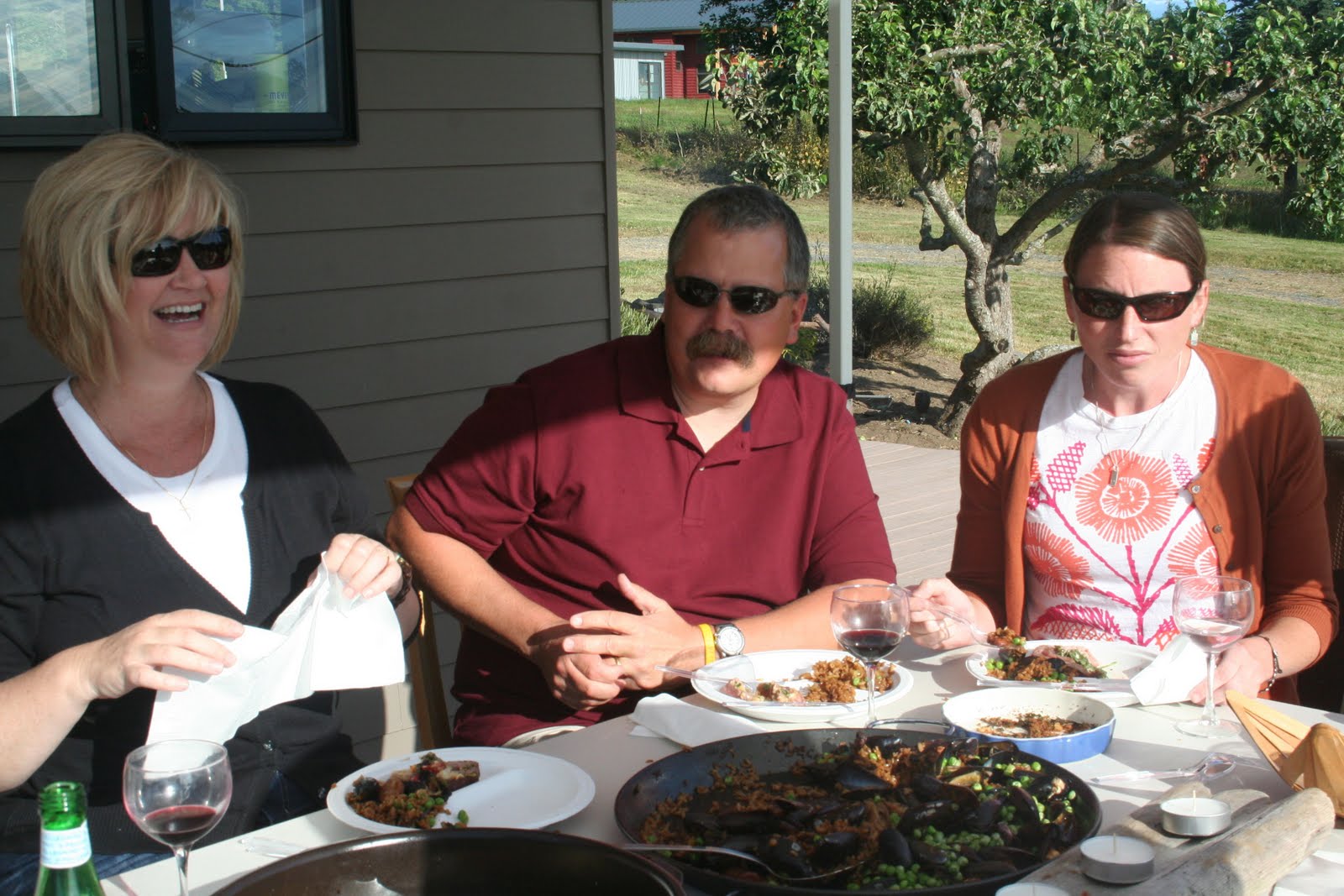
Paella is traditionally made on the beaches of Catalan over wood fires, topped with shellfish.  It fits my conditions of a summer entertainment dish that you can make from memory and vary with local ingredients.  Bon Appetit has a great starter recipe.
Good friends who are always happy to sample experimental cooking.

“Go To” Menu Items

@font-face { font-family: “Cambria”;}p.MsoNormal, li.MsoNormal, div.MsoNormal { margin: 0in 0in 0.0001pt; font-size: 12pt; font-family: “Times New Roman”; }p.MsoListParagraph, li.MsoListParagraph, div.MsoListParagraph { margin: 0in 0in 0.0001pt 0.5in; font-size: 12pt; font-family: “Times New Roman”; }p.MsoListParagraphCxSpFirst, li.MsoListParagraphCxSpFirst, div.MsoListParagraphCxSpFirst { margin: 0in 0in 0.0001pt 0.5in; font-size: 12pt; font-family: “Times New Roman”; }p.MsoListParagraphCxSpMiddle, li.MsoListParagraphCxSpMiddle, div.MsoListParagraphCxSpMiddle { margin: 0in 0in 0.0001pt 0.5in; font-size: 12pt; font-family: “Times New Roman”; }p.MsoListParagraphCxSpLast, li.MsoListParagraphCxSpLast, div.MsoListParagraphCxSpLast { margin: 0in 0in 0.0001pt 0.5in; font-size: 12pt; font-family: “Times New Roman”; }div.Section1 { page: Section1; }ol { margin-bottom: 0in; }ul { margin-bottom: 0in; }

            As our summer entertainment schedule began to take shape, it looked like we would be hosting about five big dinner parties, of about 20 people each, within two weeks.  It has long been our motto here on the island: If you will come, we will cook.  This way we get to see the people we want to spend time with without running off to town and missing a day on Lummi.  I like to learn to cook some new things in the summer, but I’ve finally convinced myself that I don’t have to create a completely unique menu for each party nor, probably, should I.  I’ve also made a summer vow to be a guest at my own parties instead of frantically pulling some complicated meal together in the kitchen. 
            I think for a menu item to become truly useful, you need to know it well enough that you can make it without pulling out any recipes.  It also needs to allow for variation, depending on what you can find in the market.  Following are my three anchor recipes for the 2011 summer season narrated in the way I’ve crunched them in my mind.
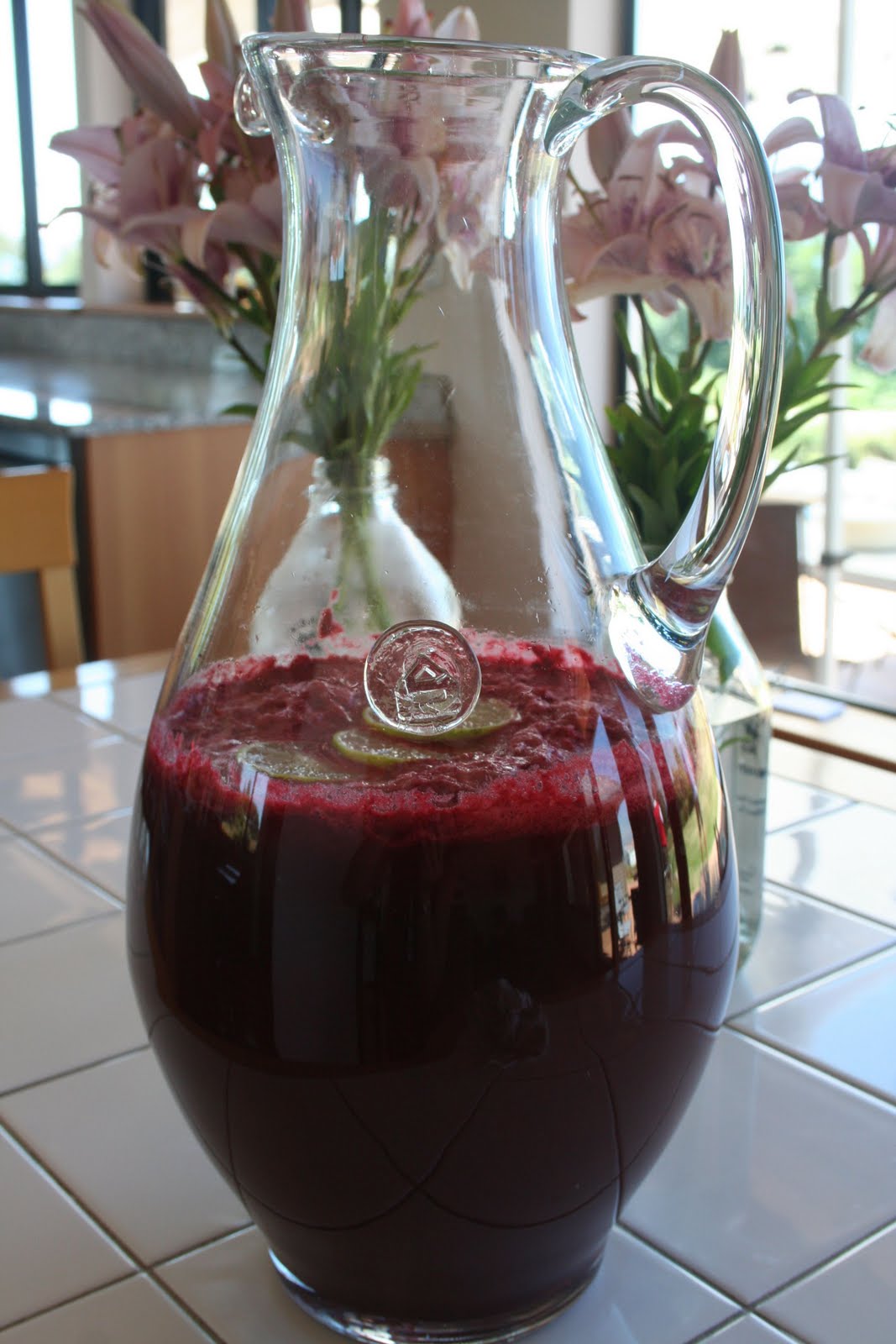
Mocktails or, as my sons point out, ….juice.
I wanted to put as much thought and effort into a nonalcoholic beverage as is put into selecting beer and wine.  We bought this giant novelty pitcher for the presentation.  It was handblown in Romania and has a charming seal on the side.  I only wish I knew what the glassblowers who made it thought it would be used for.  Anyway, it makes a statement and I’ve pretty much forced all of our guests to hydrate and antioxidate at some point in the party.  I think they’ve felt the better for it.
Process:
1.     Puree four pints of berries in a blender
2.     Press the puree through a sieve and collect the juice
3.     Juice enough lemons and/or limes to match the amount of berry juice
4.     Cook a simple syrup of equal parts sugar to water.  For this amount of juice, I would make 4 cups of sugar and 4 cups of water.  Steep any herbs or spices you like in the hot syrup like mint, basil, crushed cinnamon, or cardamom.  Strain the syrup and cool. 
5.     Pour juice into a large pitcher.  Add enough syrup to sweeten.  Top off with a liter of chilled sparkling water.  Adjust flavoring.  Serve over ice.
Pulled Pork Sandwiches
I know, pulled pork is ubiquitous this summer, but that’s what makes it a pretty good party item.  It’s more thoughtful than hot dogs and hamburgers, but familiar to most people.  If you have a slow cooker, you toss it in and then spend the next 7 hours doing something else, possibly sleeping. 
Process:
1.     Stem, seed, and chop a variety of fresh chili peppers (adjust for heat and flavor) to equal 8 cups.  Place in bottom of cooker.
2.     Rub the largest pork loin that will fit in your pot with 2 tsp. sea salt and 1 tsp. freshly ground pepper.  Place on top of peppers.
3.     Drizzle the loin with ½ cup agave nectar.  Drizzle another ½ cup nectar around the peppers.  Pour 1 cup of water over the peppers.
4.     Slow cook for about 7 hours or until peppers are mushy and pork is falling apart.
5.     Remove pork and shred.
6.     Transfer peppers and liquid to a pan and cook over med/high heat until liquid is reduced by about 1/3.
7.     Puree pepper liquid in a blender, pour over shredded pork, and reheat if needed.
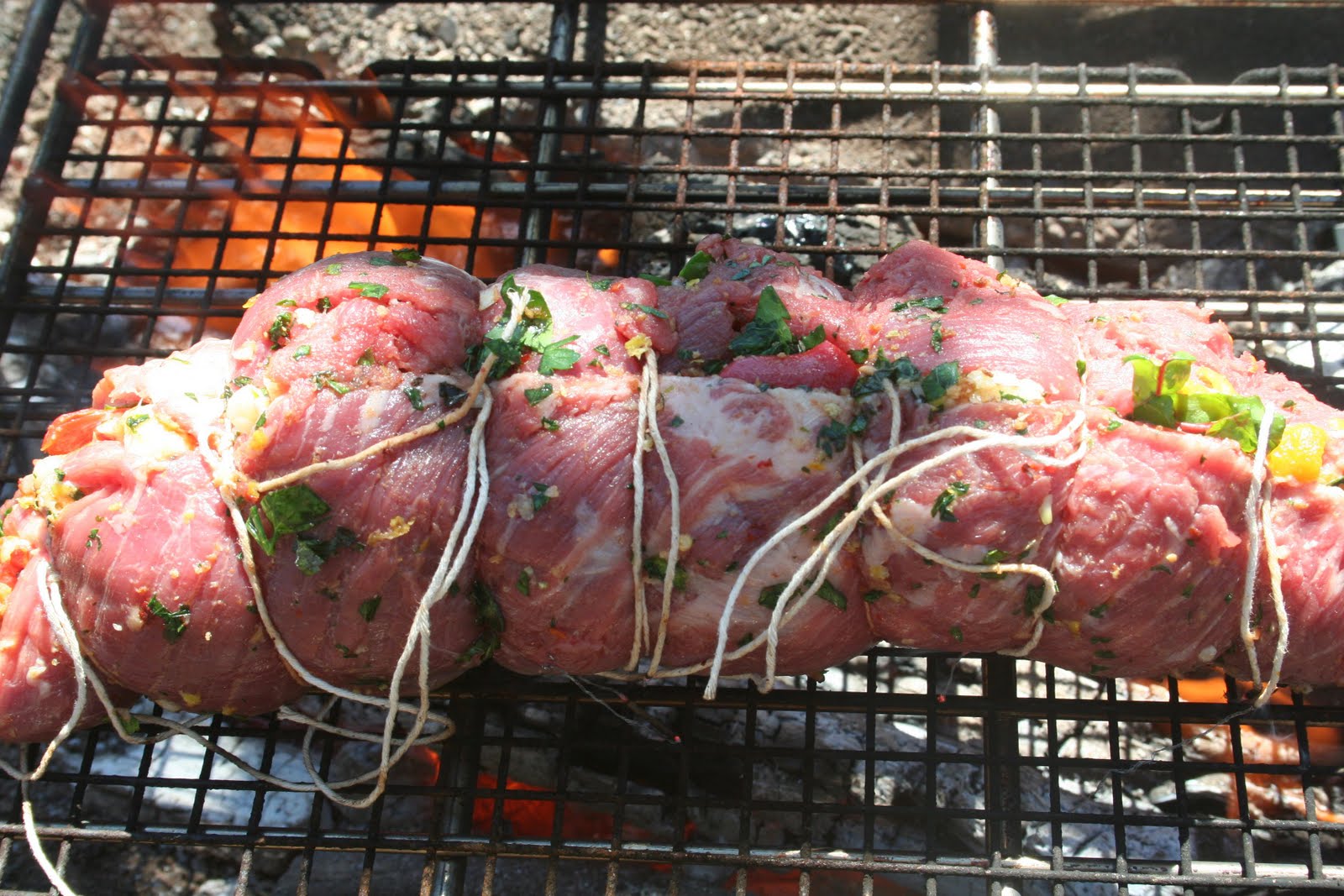
Grilled and Stuffed Flank Steak
 
This one looks a little fancier, but once you make it once or twice, you can do it from memory and include some variations.
Prepare:
Two large flank steaks pounded into rectangles of consistent thickness
Gremolata
1 cup finely chopped flat-leaf Italian parsley
¼ up finely chopped basil or other herb combination
6 garlic cloves, chopped
1/3 cup bread crumbs
zest of 1 lemon
1/2 tsp. red pepper flakes
1/2 tsp sea salt
Moisten with 2 tbsp. olive oil
3 bell peppers, roasted, peeled, seeded, cut into wide pieces
8oz. Fontina cheese (or any cheese) sliced
2 cups sturdy greens (spinach, chard, kale) washed and dried
Process:
1.     Layer over the steaks the greens, cheese, peppers, and finally the gremolata, reserving ¼ cup for a garnish
2.     Roll the meat, carefully keeping the stuffing inside.  Tie at intervals with cotton twine
3.     Rub with olive oil, salt, and pepper
4.     Sear steak rolls on a charcoal or gas grill.  Move to a cooler part of the grill or finish in a 350 degree oven until internal temperature is between 120 to 130 degrees F. 
5.     Allow to rest for about 10 minutes before slicing.  Sprinkle with reserved gremolata.

Lummi Island Spot Prawns

@font-face { font-family: “Cambria”;}p.MsoNormal, li.MsoNormal, div.MsoNormal { margin: 0in 0in 0.0001pt; font-size: 12pt; font-family: “Times New Roman”; }div.Section1 { page: Section1; }

            Oh my, we had a homemade summer seafood feast tonight.  Our neighbor, Leo Travenshek, has a specialty seafood business raising enormous spot prawns.  The Willows Inn, here on the island, has a special each Sunday serving spot prawns on their deck, but we were hungry for them on Monday so we bought and cooked them ourselves.  Allan has perfected the garlic, butter, olive oil sauté and he made the prawns.
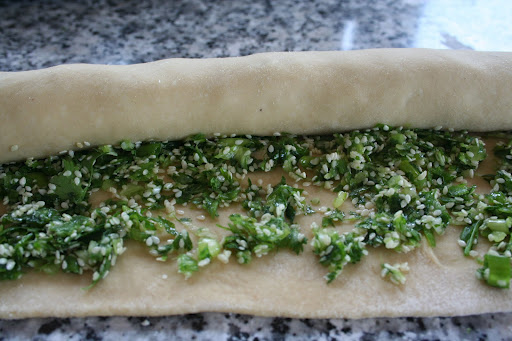
          Fortunately, I had already been working for hours on another recipe from the July Bon Apettit, the Cilantro Scallion Bread.
          That’s all we had, prawns and the bread, and it was perfect.  The bread is a buttery soft dough absolutely stuffed with the vegetables and herbs and then there are the sesame seeds that get a toasty flavor as they bake.  Alongside the rich prawns, they were light, bright, and nutty. 
Fantastic combination.

Brothers

@font-face { font-family: “Cambria”;}p.MsoNormal, li.MsoNormal, div.MsoNormal { margin: 0in 0in 0.0001pt; font-size: 12pt; font-family: “Times New Roman”; }div.Section1 { page: Section1; }

I wrote last May about an endeavor that I am in support of called The Perennial Plate (see But These Are My Friends).  This is a web-based series written by a chef, Daniel Kline, and his girlfriend, Mira, as they tour around the US meeting very common people and making short films about how they are growing and more often than you maybe realize, foraging for food.  The program is presenting different viewpoints about the word “sustainable”, which is used a lot these days.  Sustainability doesn’t always just mean growing organic vegetables.  It can mean managing an invasive animal population like the feral pigs introduced to Texas by the Spaniards hundreds of years ago.  It’s not always a neat or pretty topic and this program is doing a great job of simply presenting how people are feeding themselves from the earth’s provisions. 
This last program, Brothers, struck numerous heartstrings for me.  This is an episode about twins who are living off-the-grid outside Durango, Colorado.  They are living exactly where I grew up, on a red-soil farm where finding an ancient Anasazi arrowhead or grinding stone (we fed our dog out of one) was a usual occurrence.  My parents still own their farmland and they struggle a lot these days about whether to sell or keep it for our family.  The government has just offered my parents a plan to plant their farm in wildflowers to keep the farmland in reserve for food production and to hopefully contribute toward the regeneration of the honeybee population.  It’s a great project, but not effortless and they aren’t sure that in their mid-eighties they can keep up with the land maintenance it will require. 
This short film further amused me because I birthed two brothers who are as close as twins and one of them is very interested in living in a way that makes him prepared to support himself and his family if some unexpected disruption to life as we know it should occur.  The other one’s biggest fear is that they will end up as the Old Bredy Brothers, holed up on a remote farm, living off the land.  In fact, he spelled out to his brother just a couple of weeks ago that that would not be their fate.  Just to be clear. 
We laugh a little about taking such drastic measures to live independently, but the note from this film that families could, if ever needed, congregate together on farmland and survive meant something to me and I know that my family, immediate and extended,  could do it.

Summer Thinking

@font-face { font-family: “Cambria”;}p.MsoNormal, li.MsoNormal, div.MsoNormal { margin: 0in 0in 0.0001pt; font-size: 12pt; font-family: “Times New Roman”; }p.MsoListParagraph, li.MsoListParagraph, div.MsoListParagraph { margin: 0in 0in 0.0001pt 0.5in; font-size: 12pt; font-family: “Times New Roman”; }p.MsoListParagraphCxSpFirst, li.MsoListParagraphCxSpFirst, div.MsoListParagraphCxSpFirst { margin: 0in 0in 0.0001pt 0.5in; font-size: 12pt; font-family: “Times New Roman”; }p.MsoListParagraphCxSpMiddle, li.MsoListParagraphCxSpMiddle, div.MsoListParagraphCxSpMiddle { margin: 0in 0in 0.0001pt 0.5in; font-size: 12pt; font-family: “Times New Roman”; }p.MsoListParagraphCxSpLast, li.MsoListParagraphCxSpLast, div.MsoListParagraphCxSpLast { margin: 0in 0in 0.0001pt 0.5in; font-size: 12pt; font-family: “Times New Roman”; }div.Section1 { page: Section1; }ol { margin-bottom: 0in; }ul { margin-bottom: 0in; }

Summer is complicated no matter how old you are.  A lot of personal growth needs to take place during those long weeks of daylight.  If you’re five, you’re trying to get tall and brave enough for kindergarten.  If you are a middle school girl, you are trying to groom a look and attitude that can win you popularity the next year.  It’s no surprise then that it’s also a time of huge expectation and personal growth for those of us who live the rest of the year abroad. Little by little, you start to reconnect with your dear friends and family and find that conversations have been saved for your return.  The stories come out:  children who are making lifestyle choices contrary to their parents’ vision for them, financial issues, loves found, loves leaving.  They look older, you look older, and those who have gone are missed more, not less, over time.  It’s a lot of life to internalize in a short amount of time.
We’re half way through our summer vacation and my heart is already quite full of thoughts about all of these people who are vitally important to me and then I also want some still time to regenerate my own spirit and mind.  What do I do?  I go to some rituals like walks by the ocean, organizing my life, and of course cooking.  I can’t write about all of the big things so I’m going to systematically write about food experiences I want to undertake while I still have a little time.  This may sound like avoidance or denial, but in reality this is the way I structure time for my mind to work on things and at the same time,  have some documentation about what I learn and experience.  So here are two cool things from today.
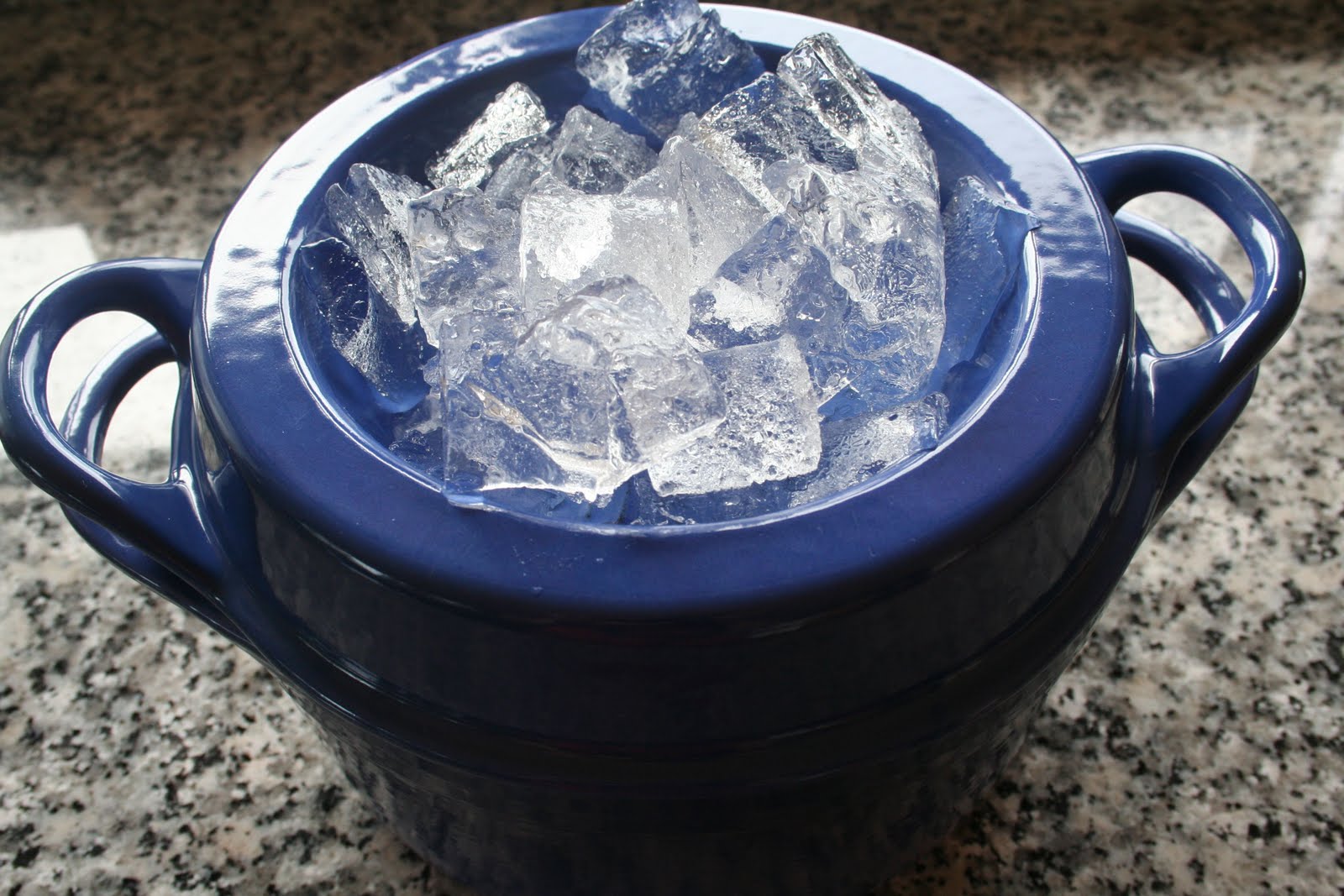
1.                     This Le Creuset pan is called  a Doufeu.  It may sound a little gimmicky, but it has a recessed lid with little nibs on the underside.  What you do is put in a long-cooking dish with a moderate amount of liquid.  You place the tight-fitting lid and then fill the recession with ice.  The cool lid creates a condensation cycle in the pot which makes the pot self-basting, like continuous rain on your dish without watering it down.  I used it for the first time tonight and got a nicely tender piece of lamb with a rich sauce.  I’m looking forward to experimenting with many types of meat and vegetables, along with different liquids.  
2.                     The July Bon Appetit is a great publication.  If you have been a long time Bon Appetit reader, you won’t think there is anything new about a picture of barbecued meat on the cover and the promise of berry recipes inside, but BA has a new editor, Adam Rapoport, and the tone of the magazine seems sharper, more technically interesting, and features some unexpected uses of seasonal ingredients.  I hope to cook a lot of the recipes, but I started tonight with the Zucchini Cornbread and it was a beautiful recipe.  The process begins with browned butter and that flavor remains distinct even in the finished bread.  It was delectably moist as zucchini-based baked goods generally are.  
          So while I’m thinking and processing my summer conversations, I am going to cook through some new recipes which I’m certain will eventually lead me to some new summer insights.

I Love the Idea of This

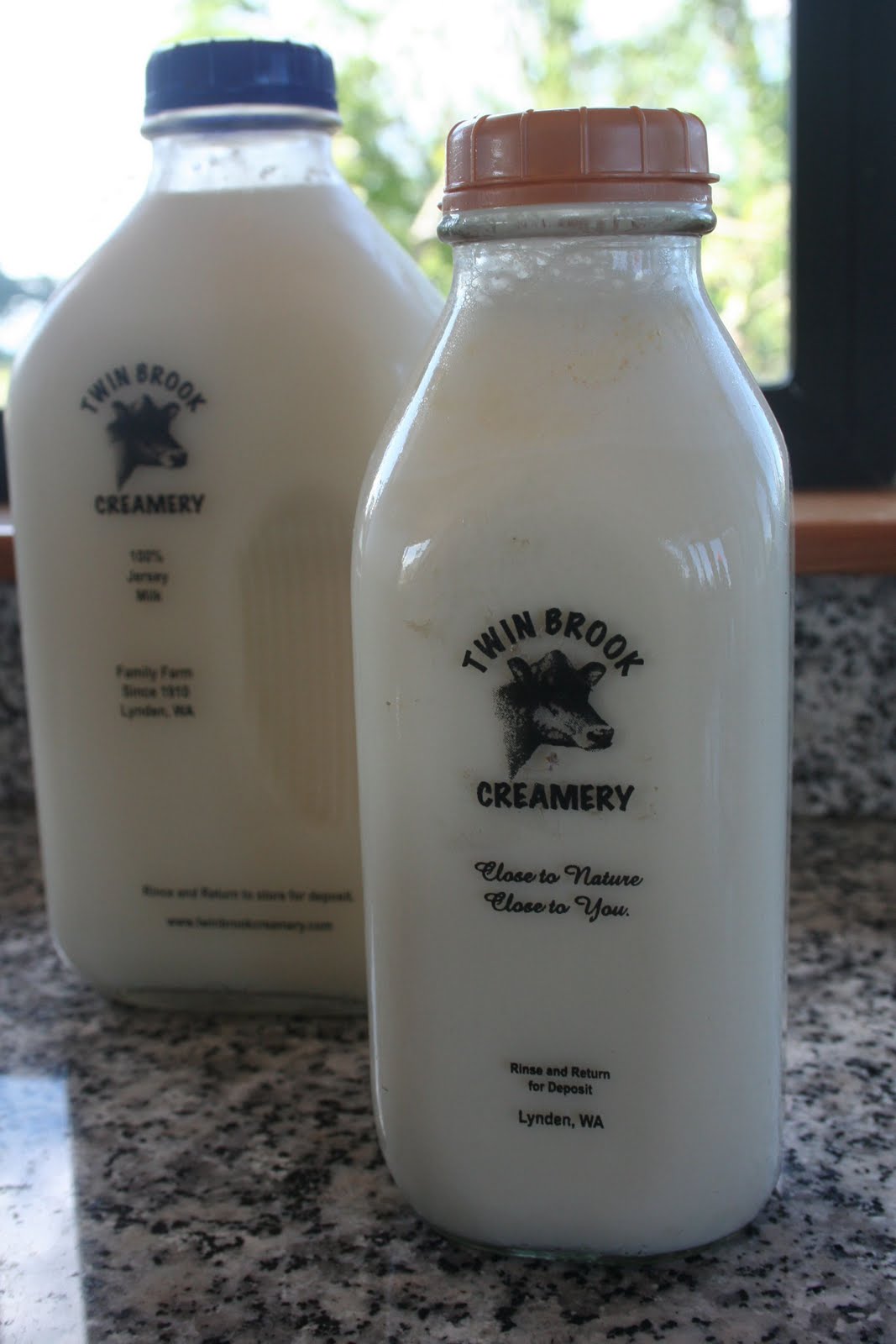
These bottles of milk in our local grocery chain may have been available for awhile, but they are new to me.  When I saw them, everything in my body screamed, “Yes, this is so right!”  You see, Whatcom County, where we live, is diverse in its talents and beauties and one corner of it, nestled in a valley just below the Canadian border, is home to some of the sweetest, most earnest dairies in the world.
The town of Lynden, in particular, was founded by a collective of Dutch immigrants.  Their community grew around their adherence to the Dutch Reform Church and so morality was legalized and vice versa.  In Lynden, you can dance or you can drink, but never both in the same establishment.  A drive down Main Street conjures up the set of Pleasantville.  The streets are wide and clean and the modest homes have impossibly manicured lawns.  The children of Lynden, boosted by their genetics and steady calcium intake, are uncommonly tall for these parts and regularly dominate the high school basketball league.  Even the perfectly laid-out cemetery, the cornerstone of their city planning, is a continual reminder that we’re all going to meet our maker and we had better be wearing clean underwear when it happens.  All of this attention to cleanliness and self-discipline has also been applied to the dairy farms on the surrounding acreages.  Picturesque family owned and operated dairies, their round-roofed barns and silos marking the individual properties, are scattered from Lynden to the border.
Back to the milk bottles.  The idea of buying milk, produced on these righteous farms, not 10 miles from the store, fits with all of my values.  The fact that the milk is bottled in reusable glass jars that you get a substantial refund for returning to the store made me squeal (inside) with happiness.  I still have growing boys at home and plastic milk jugs make up the biggest bulk in our recycling bins.
And so these nostalgic looking bottles are sitting in my refrigerator while I continue to pour every last drop of milk and half and half from the plastic and cardboard containers we already had.  Sure it makes sense to use up the older product first, but is there a problem?  I can’t believe I am still dealing with this at my age, but I have had a life-long phobia about drinking milk that comes directly out of cows.  We had a milk cow on our farm in Colorado when I was a child and when she was giving milk, we had tons of it.  My dad would bring a 5-gallon bucket of steamy, raw milk into the kitchen where my mom would proceed with straining and chilling it. Then she would separate a substantial layer of cream from the milk, though there was plenty still floating around.  From there we actually churned butter and made cottage cheese.  These are all things I support in theory.  Problem was that I hated the taste of the milk.  It tasted cowy.  I also didn’t like seeing chunks of cream floating in my cereal bowl and so when it was homemade milk season at our house, I pretty much went off dairy.  My mom even tried to trick me once by pouring our farm-fresh stuff into a leftover cardboard milk container from the store, but I knew in an instant what she had done.  Now, staring at these translucent bottles, I can see that the color of the milk isn’t pure white, but an ivory color.  A thick head of cream is clogging the neck of the bottle and a true anxiety begins to wash over me at the thought of cracking open the lid and pouring/glopping it out.  I just don’t know if this is going to work for me.  I find myself yearning for the comfort and familiarity of the bleached white, plastic bottled milk I know. But I have an idea, I saw a jug of this milk in the store done in a chocolate version.  Maybe I will revert to my old “add chocolate flavoring” trick to resolve my dairy contradiction.

Solstice is Here!

@font-face { font-family: “Times”;}@font-face { font-family: “Cambria”;}@font-face { font-family: “Tahoma”;}p.MsoNormal, li.MsoNormal, div.MsoNormal { margin: 0in 0in 0.0001pt; font-size: 12pt; font-family: “Times New Roman”; }p { margin: 0in 0in 0.0001pt; font-size: 10pt; font-family: “Times New Roman”; }p.image, li.image, div.image { margin: 0in 0in 0.0001pt; font-size: 10pt; font-family: “Times New Roman”; }div.Section1 { page: Section1; }

            As the years go by, and the longer we live in cultures outside of the US, the sentimental holidays that used to mark the calendar year have fallen from our interest.  Birthdays are still sacred, of course, and we also love Thanksgiving and Easter, especially when we are in a Catholic or Orthodox country at the time, but many of the other seasonal holidays pass by us without much observance.  What I can get truly thrilled about, on the other hand, are the solstices, perhaps partly because they coincide with our twice-yearly homecomings.  I love the cloaking darkness of the winter solstice in the Northwest.  It feels like the perfect time to gather inside a cozy house with dear friends and great food to appreciate the goodness of this moment in our lives.  Conversely, the summer solstice in June indicates to us, at least psychologically, that summer has arrived and that we have a few upcoming weeks to revel in the dizzying natural beauty of the Northwest and partake of the generous bounty the earth provides at this latitude.  I really can’t understand what can be considered pagan, or unchristian, about pausing a few times each year to notice and appreciate that we are on a complex, yet rhythmic, planet that abundantly gives us what we need. 
            My friend Beth is a Feng Shui consultant in Fremont, Washington.  Being tuned into the energy cycles in life, she wrote some insightful thoughts about summer. 
The larger purpose of summer is to allow us to expand our sense of Self so we have more to offer the World … The summer season in our part of the world is a brief window of a few precious weeks. As August winds down and we approach fall, all that we have gained personally begins to come into form in the shape of the inspiration we have to offer the world. There will be ample time for sharing later in the year. For now, make your JOY the priority! Have fun and celebrate your life!

            Fremont hosts a unique annual parade that is precisely about enjoying being yourself, outside.  You can Google it if you would like to see pictures, but there will be naked people on bicycles so be forewarned.
            My favorite solstice celebration ever was the summer we were in Norway.  Scandinavians have good reasons to be in awe of the earth’s rotation as it plunges them into nearly 24-hour darkness for part of the year and 24-hour daylight for another.  We were staying with Allan’s relatives in Allesund about ten years ago and were lucky enough to be there for Mid Summer’s Eve.  The tradition is for families and neighbors to build towering bonfires all around the fiords and then go down to the rocky beach to share food and drink.  The adults, wrapped in blankets, ate barbecued hotdogs and potluck dishes while visiting on the beach or in boats.  The children, including our Gabe, ever the seal, took dips in the near-ice sea then ran back to their parents to get warm and have a bite of food.  It was all rustic and elemental and communal.  I have wanted to bring this tradition to Lummi Island, but so far we’ve just kept the fire to our own backyard.  http://www.ballardnewstribune.com/sites/all/themes/robinsonnews/images/badge_bnt.png
To: 
From: 
Note: 
  
            I have developed a ritual meal that we have twice a year, called Solstice Stew.  It is an adaptation of the German-style Square Soup that Allan’s grandmother used to make.  The perfect ending to this meal is a hunk of gooey chocolate cake, eaten, of course, around a roaring bonfire with people you love.  Have a joyous summer!
Solstice Stew
Ham Stock
1 meaty, smoked ham hock
16 cups water
1 large onion, quartered
4 ribs celery, chunked
3 carrots, chunked
2 bay leaves
Simmer the stock for one hour.  Remove the hock, pull off all of the meat, and reserve.  Strain the liquid and discard the bone and vegetables.  Cool the stock, skim off the fat, and reserve.
Egg Noodles
3 whole eggs
Enough flour to form a dough
Pinch of salt
Crack eggs into a mixing bowl.  Add a pinch of salt and then begin adding flour until a soft, but workable dough forms.  Turn out onto a floured surface and roll to 1/8 inch thickness.  Cut into desired shapes, preferably with star or sun shaped cutters.
Simmer the ham stock.  Add the reserved meat and then the pasta.  Serve when pasta is chewy, but still tender.
Confession:  My family much prefers that I make this soup with a package of those Lil’ Smokey sausages that are nothing but fat, and salt, and smoke flavoring.  I continue to resist.

It Wants to Go Wild

@font-face { font-family: “Cambria”;}p.MsoNormal, li.MsoNormal, div.MsoNormal { margin: 0in 0in 0.0001pt; font-size: 12pt; font-family: “Times New Roman”; }div.Section1 { page: Section1; }

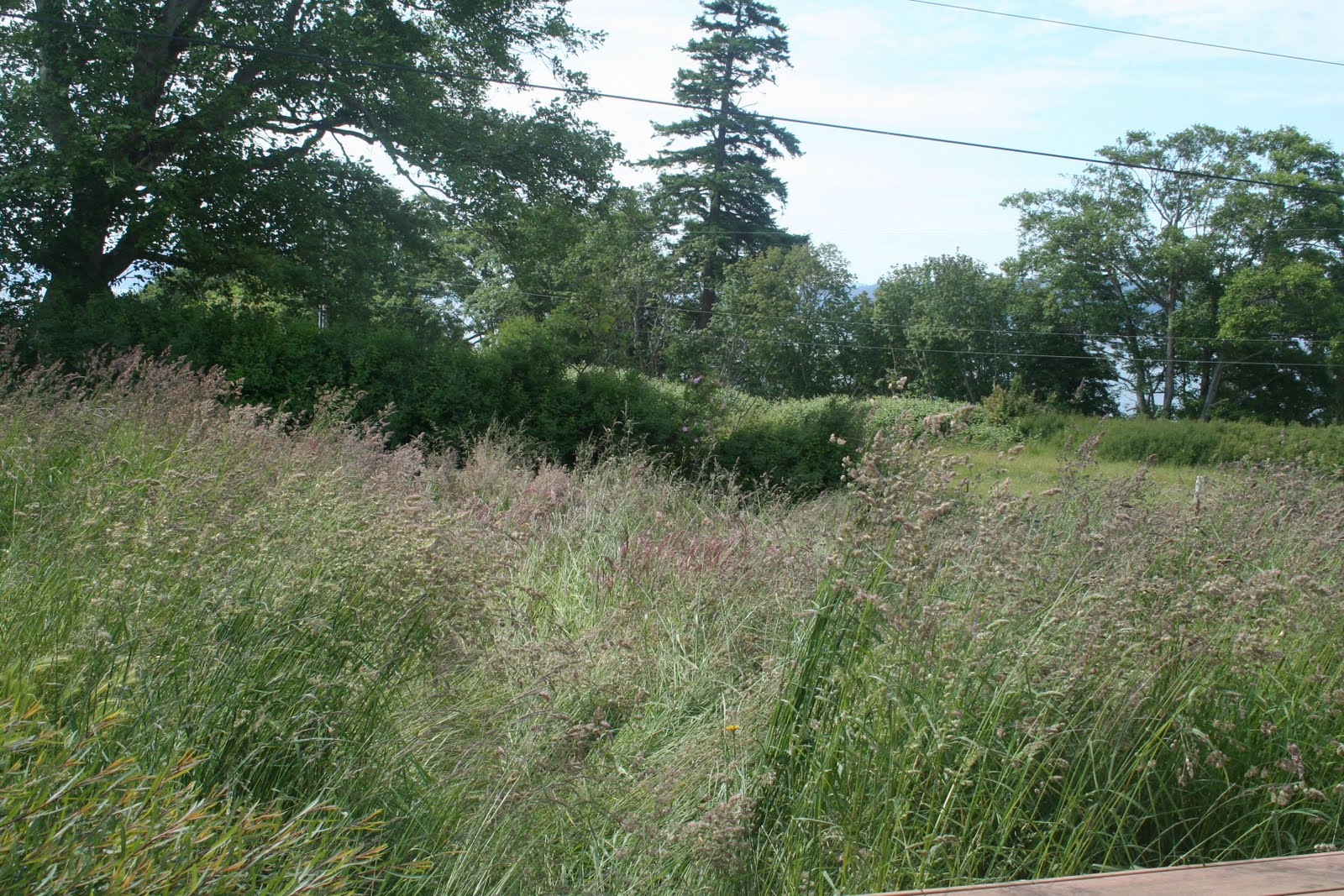
            Sitting half a world away thinking about my five acre farm on Lummi Island, it’s all pastoral perfection and seaside serenity.  But pulling into the driveway, after six months away, I see that nature has once again exerted her dominance over the place and I think our home could be in an episode of that television show that speculates how nature would undo man’s edifices in short order if we suddenly vanished from the earth.  My house already has a head start and during my first 48 hours at home, I shook my head several times and muttered Karen Blixen’s lament from Out of Africa, “Everytime I turn my back, it wants to go wild again.”  It does. 
The most noticeable effect of nature’s invasion is a solid sea of grass as high as and right up to the window sills.  We can’t even figure out where to jump in to begin forcing it back.  My sons had been working at it with a weed eater for a few days before we arrived and had barely cleared a swath to the door.  Of course, our Husqvana riding mower is no match for this type of tenacious growth and so it is perennially in the shop, which is a contributing factor to this whole thing getting out of hand to begin with.
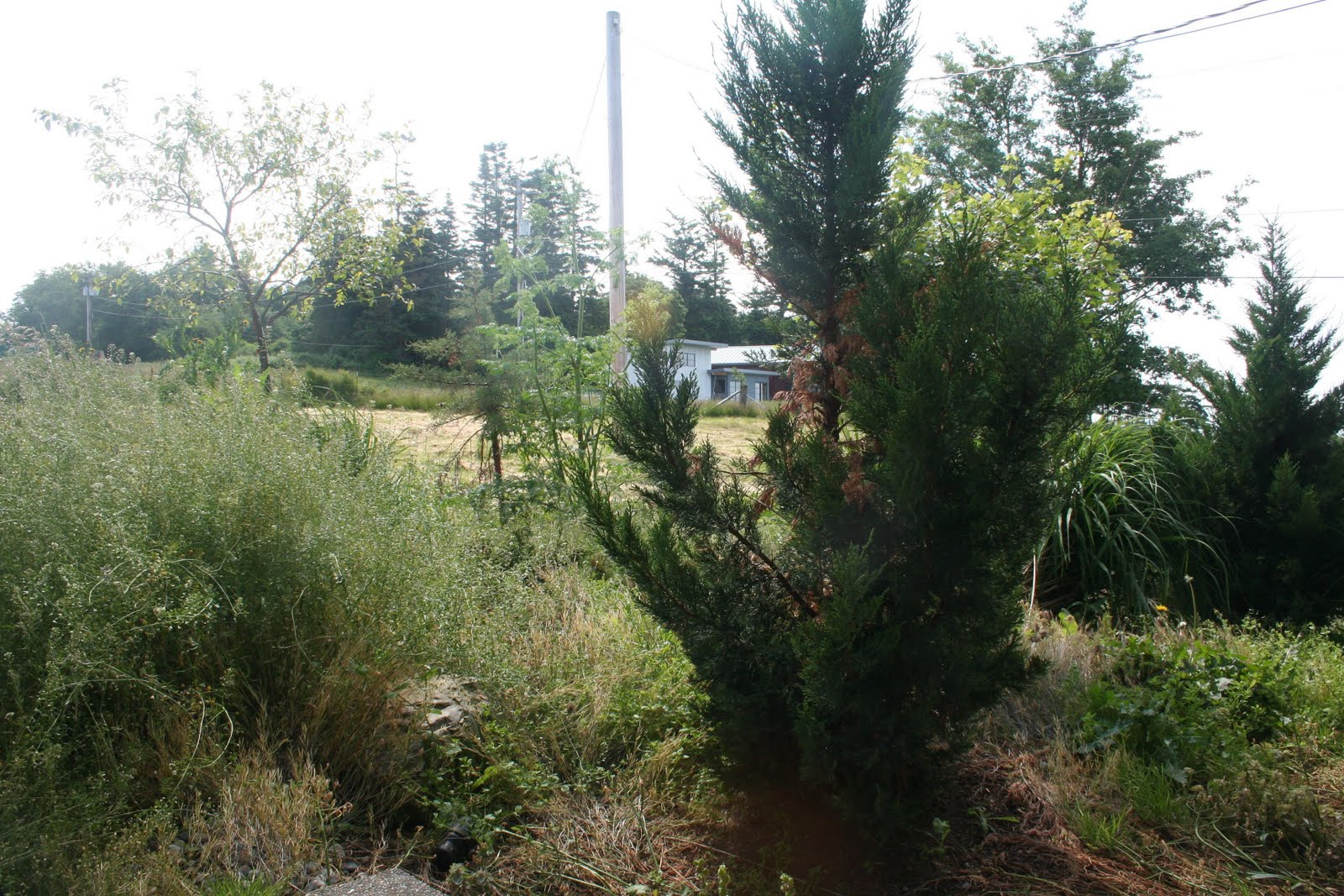
  The garden berms and flagstone patio we have been working on developing over the past two summers are undetectable, also grown over with tall grass and big bruisers of invasive weeds that have taken advantage of a lightly supervised garden bed situation.  Trees and shrubs we planted late last summer, Japanese evergreens, miniature fruit trees,  and a couple of olives are either dead twigs or stumps that have been chewed to a nub by the deer.  What could deer possibly find palatable about pine trees?
The pump in our “good” well had already broken at Christmas and we weren’t able to get anyone to fix it during the holidays.  Since then, the house has been running off of the ancient hand dug well that the property came equipped with.  Did I mention the herd of cattle who live happy lives right uphill?  Fortunately, living in Kathmandu for five years built such bacterial resistance in us that we can live in these sorts of conditions without stomach disturbance. 
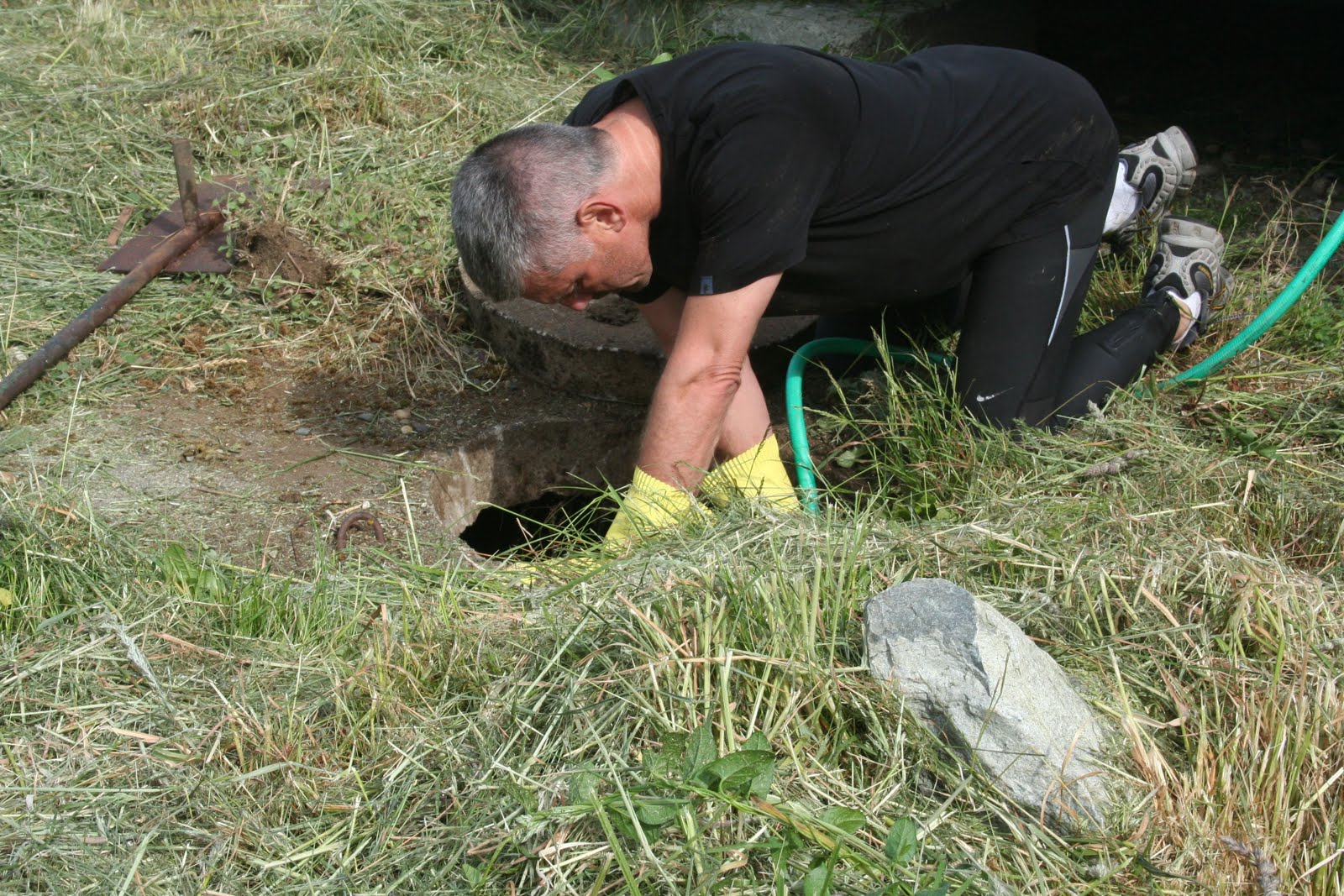
Then the boys broke the news to us that as they were running loads of laundry, the sewer began to back up into the showers, requiring, of course, every towel in the house to prevent damage to the floors.  Quick thinking.  But we came home to mounds of soaking wet laundry, sewer sludge in the bottom of the showers, and no water evacuation from the house.  It turned out to be a broken pipe where the house waste empties into the septic system, no doubt caused by winter freezing.  For the first two days, we couldn’t jump into large scale cleaning like dishes and laundry, took fun outdoor baths from 5 gallon buckets, and poor Allan spent many hours with his head stuck in our septic manhole.
So that’s what I mean: It’s an uphill battle.  But it’s our little square of paradise, even if we have to beat the natural world back with a whip and a chair.  Bit by bit, we will reexert our dominance and will once again project the illusion of an effortless island life.

A Satisfying Ending

@font-face { font-family: “Cambria”;}p.MsoNormal, li.MsoNormal, div.MsoNormal { margin: 0in 0in 0.0001pt; font-size: 12pt; font-family: “Times New Roman”; }div.Section1 { page: Section1; }

Working in schools as an adult gives your life a distinct rhythm.  You pour yourself into setting up the course of instruction each August, strive to deeply get to know students throughout the fall, press them to make the gains you know they can make through the winter, and then assess them in the spring.  In a nutshell, that is the pace.  The thing is that none of this can be accomplished in a relational vacuum.  I just completed my 26th year of teaching and one thing I know is that I have to contribute my “pound of flesh” to match the gains I want my students to achieve.  The other thing I know is once you give so much of yourself to an effort, the result is a deep bond of trust and affection and it is difficult to end the relationship.
All schools have their year-end rituals and to anyone who says “They’re not doing anything at school the last week,” I defend that we have to end an intense relationship in a way that feels like a satisfying ending, not unlike a story.  We actually put a tremendous amount of thought and effort into the last week of school.  It feels very much like bringing a train into the station.    International schools, however, have the added intensity of families and faculty who are moving on from that location, so there is the overhanging melancholy that you aren’t going to see some of these people, ever again.
          The last day of school at an international school reminds me so much of the last day of summer camp.   When I was growing up, my family was very involved in Christian summer camps.  For as long as I can remember, my dad was on the board at Miracle Ranch, in the ponderosa pines near Dove Creek, Colorado.  Every one of my five siblings and I, throughout our different years of attendance, experienced significant life challenges and teaching at that camp.  I do remember, though, the tearful goodbyes and promises to write as my parents herded me to the car, where I collapsed in the backseat, grimy and exhausted. 
            This time of year, I bring that background experience to my overseas life.  We have had multiple parties, dinners, lunches, outings, wanting to make the parting as complete as it can be.  Last night, we had one last party at our house, but it wasn’t about goodbyes, but hellos.  Some dear friends of ours are moving here to help us do this work and they are in Tunis for a few days to settle their dog and see where they will be living.  We had a barbecue in our backyard with some of the staff, who are not leaving, so they can begin to make their new friends.  And the cycle begins all over again.
            I made a custard cake I have wanted to try.  The recipe calls for raspberries, but we have cherries at the moment so I substituted them and I can’t imagine it being any better.  Clearly, you could use any soft fruit.  There were several unsolicited comments of, ”This is the best cake I have ever eaten,” so I think it is worth posting for friends who are just heading into berry season in North America.  
Raspberry Custard Cake
Recipe adapted from Alice’s Cookbook by Alice Hart
Makes one 9-inch cake
Custard
2 cups light cream or half-and-half 
1 vanilla bean, split lengthwise   
2 egg yolks 
2 teaspoons cornstarch
2 tablespoons sugar
Cake
1 cup (2 sticks) unsalted butter, softened, plus more for the pan
3 cups raspberries (or any soft fruit) 
1 1⁄4 cups granulated sugar    
4 eggs    
1 2/3 cups all-purpose flour   
2 teaspoons baking powder     
1⁄2 cup milk     
1⁄4 cup Demerara sugar
1. Make the custard: In a small saucepan over low heat, warm the cream or half and half. Using the tip of a sharp knife, scrape the seeds from the vanilla bean into the cream, then drop in the empty pod. Meanwhile, mix the egg yolks, cornstarch, and sugar together in a heatproof mixing bowl.
2.When the cream is almost”but not quite”boiling, remove from the heat and pour slowly into the egg mixture, stirring constantly. Pour the mixture back into the pan and cook over medium heat, stirring constantly with a wooden spoon, until the mixture bubbles and thickens. Boil about 1 minute; the cornstarch will prevent the custard from curdling. Remove from the heat and cover the surface with plastic wrap or a circle of parchment paper so a skin cannot form. Let cool; once cool, remove the vanilla pod.
3.Make the cake: Preheat the oven to 325 degrees. Butter a 9-inch spring-form cake pan and line the bottom with a round of parchment paper. Crush the raspberries roughly with a fork to release their juice. Stir half the crushed raspberries into the cooled custard and set aside.
4.In a medium bowl, beat the 1 cup of butter and granulated sugar together until light and fluffy. Add the eggs, one at a time, beating thoroughly between each addition; if the mixture starts to look a bit curdled, stir in a spoonful of flour. Sift in the remaining flour with the baking powder. Pour in the milk and gently mix together. Fold in the remaining crushed raspberries until just combined.
5.Pour half the batter into the prepared spring-form pan and make a shallow well in the center with the back of a spoon. Pour the raspberry custard into the well, then cover with the rest of the cake batter. Sprinkle with the Demerara sugar. Bake until golden but still a bit wobbly in the center, about 1 hour.
6.Let the cake cool in the pan, then chill in the refrigerator overnight or for at least 4 hours. Remove from the pan when completely cold; you may need to run a knife around the edge to loosen. Cut into slices and serve.
            And now, with a huge feeling of satisfaction about our first year’s work in Tunis, and excitement about starting it all up again in August, we are leaving tomorrow for Lummi Island and our fabulous boys.  It’s going to be a wonderful summer.