A Day of Design

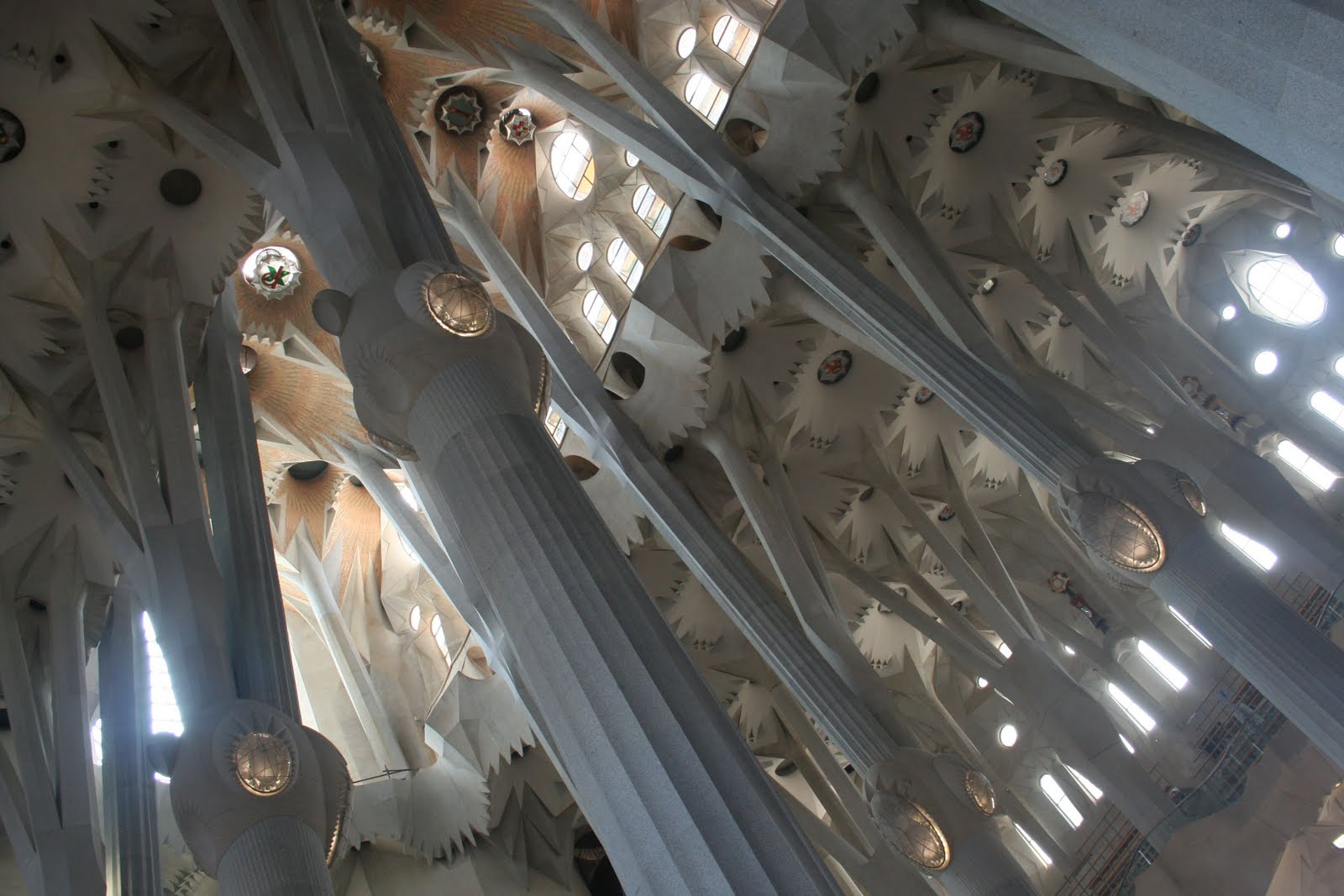
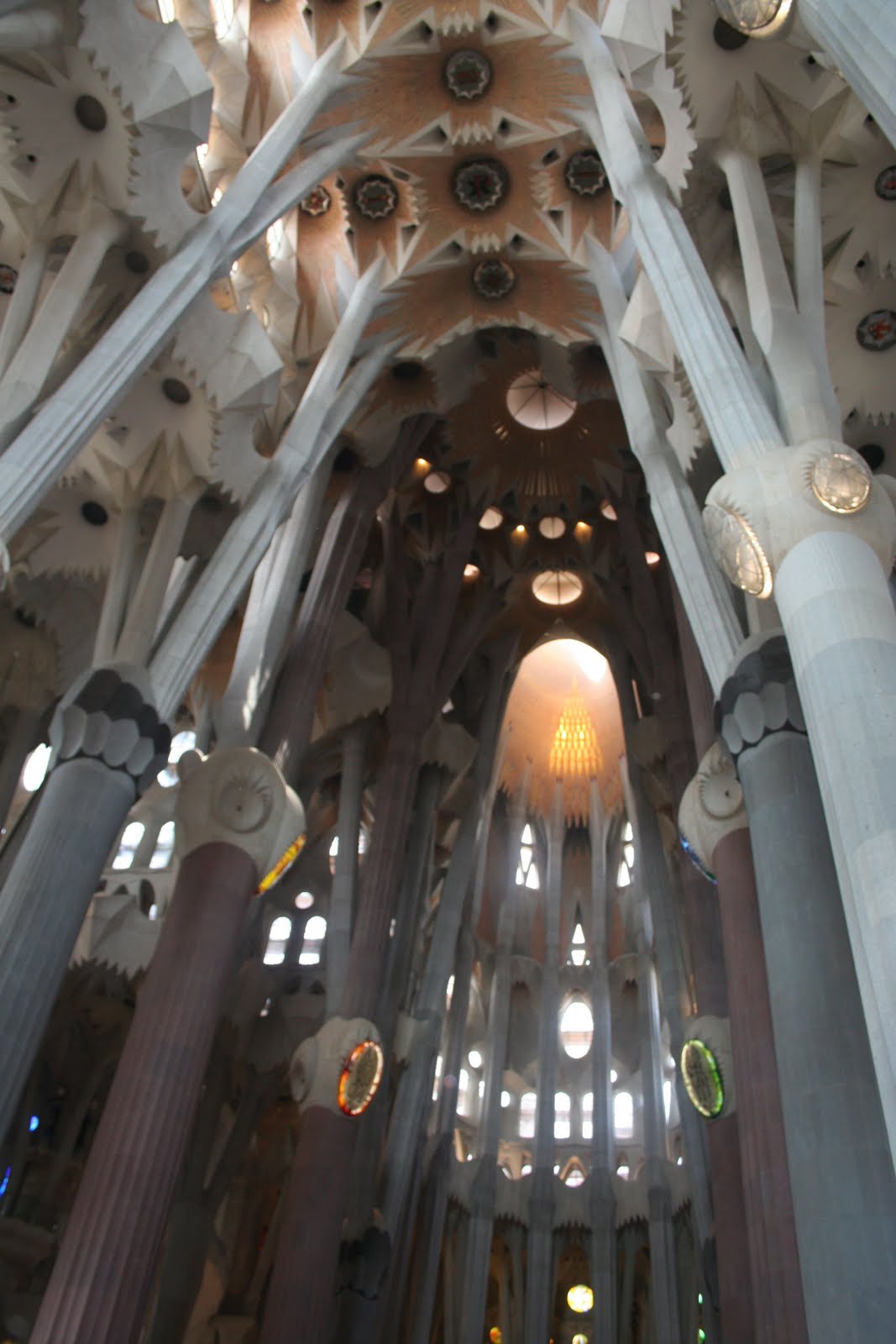
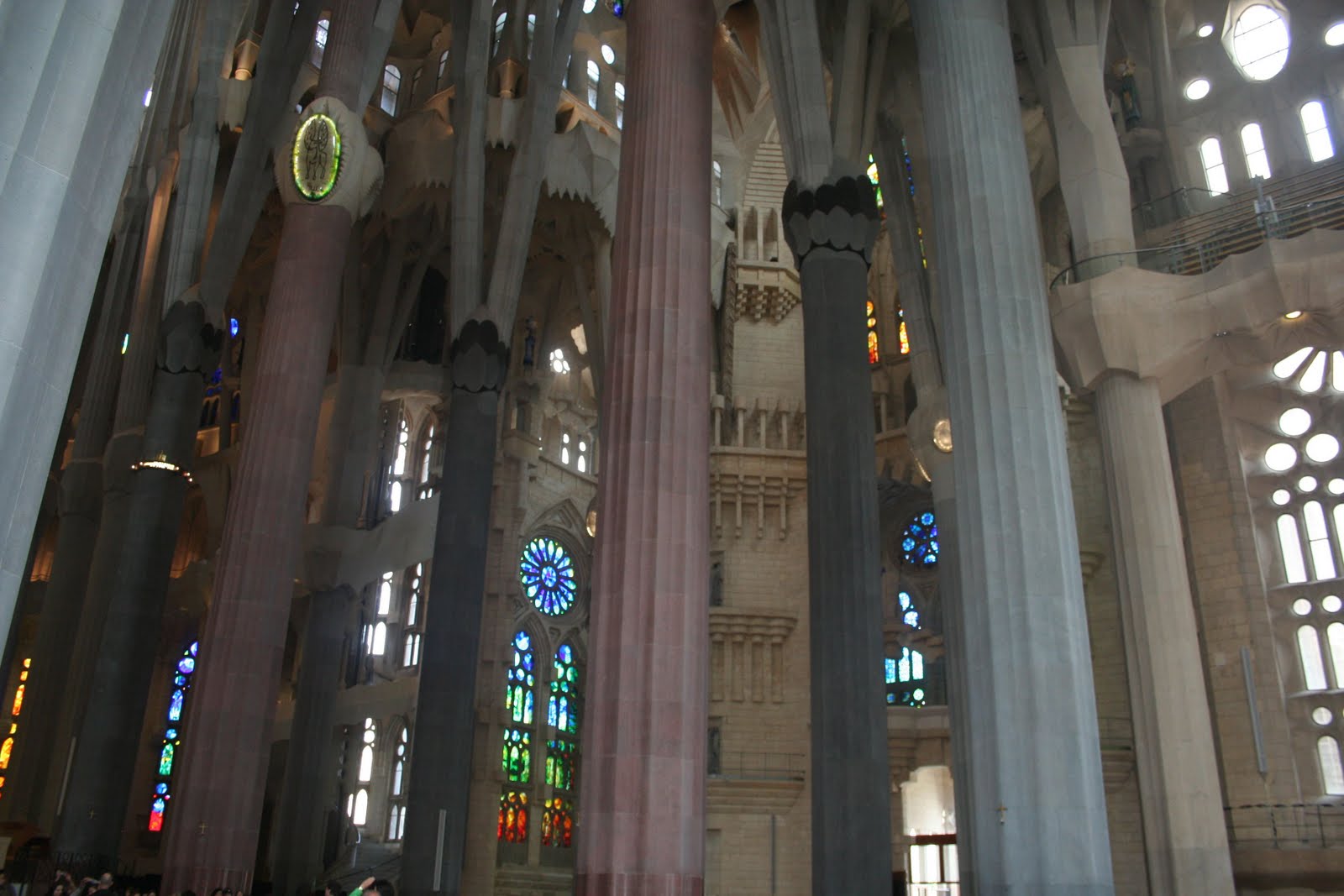
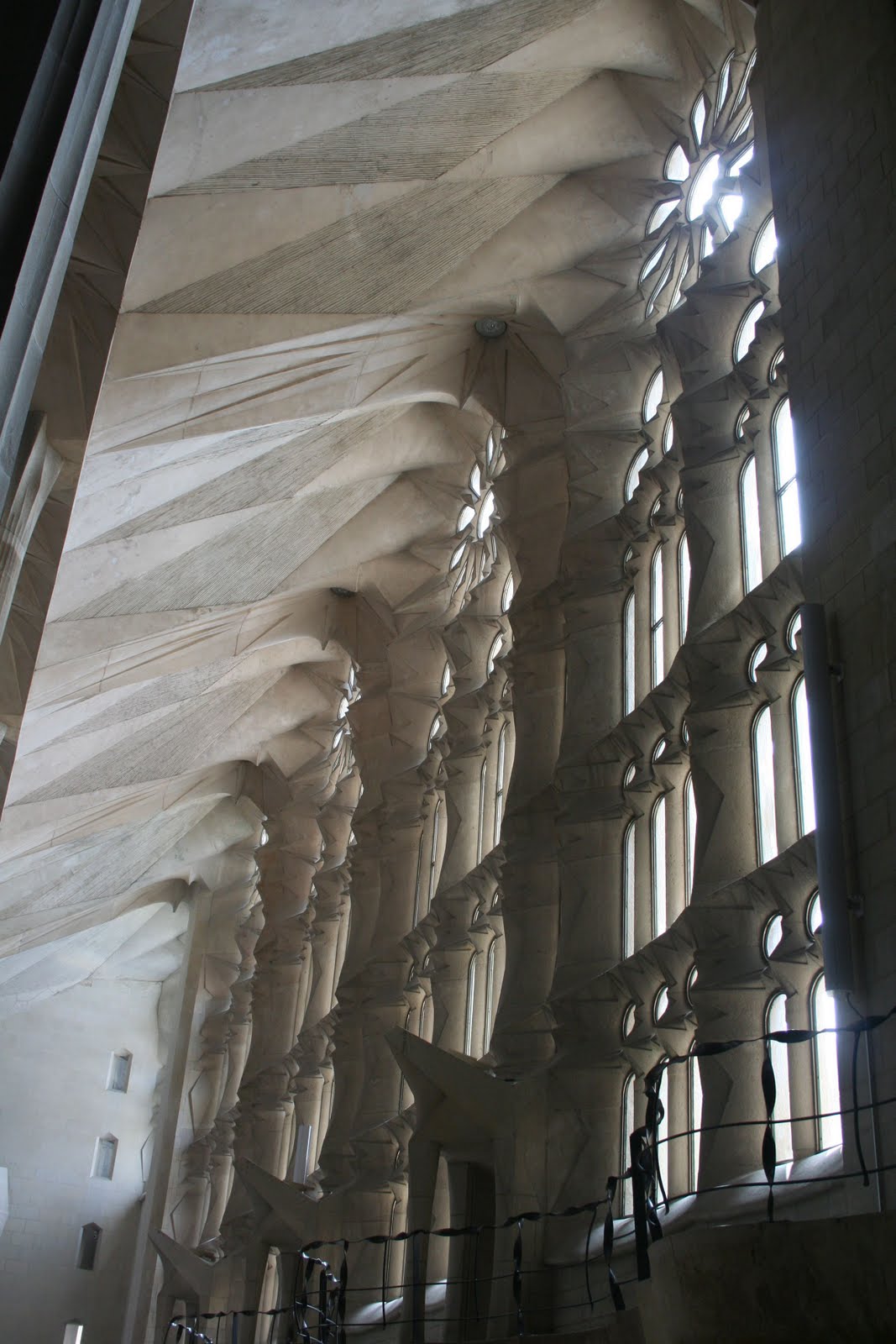
            I don’t have any business trying to photograph the great architectural sites of Barcelona.  I don’t have any cool lenses.  At one point, I was completely lense shamed into just putting my camera away, choosing instead to save memories in my heart, but then I got into Sagrada Familia and I wanted to at least take I was here pictures.  Graciously, Gaudi just shows up so well in pictures that some of them came through in the end.  We knew we had really big Gaudi stops to make still.  These are his most famous: La Sagrada Familia and La Padrera.  It was a little hard to face the crowds and the lines, but in the end, we didn’t regret one minute of the time we spent in line and we felt like we had plenty of space and time inside the buildings to soak them in.  They are spectacular and where with other architecture, you feel like you are inside the architect’s work, in these buildings, you feel like you are inside of Antoni Gaudi’s mind they are so original and well… genius.
La Sagrada Familia
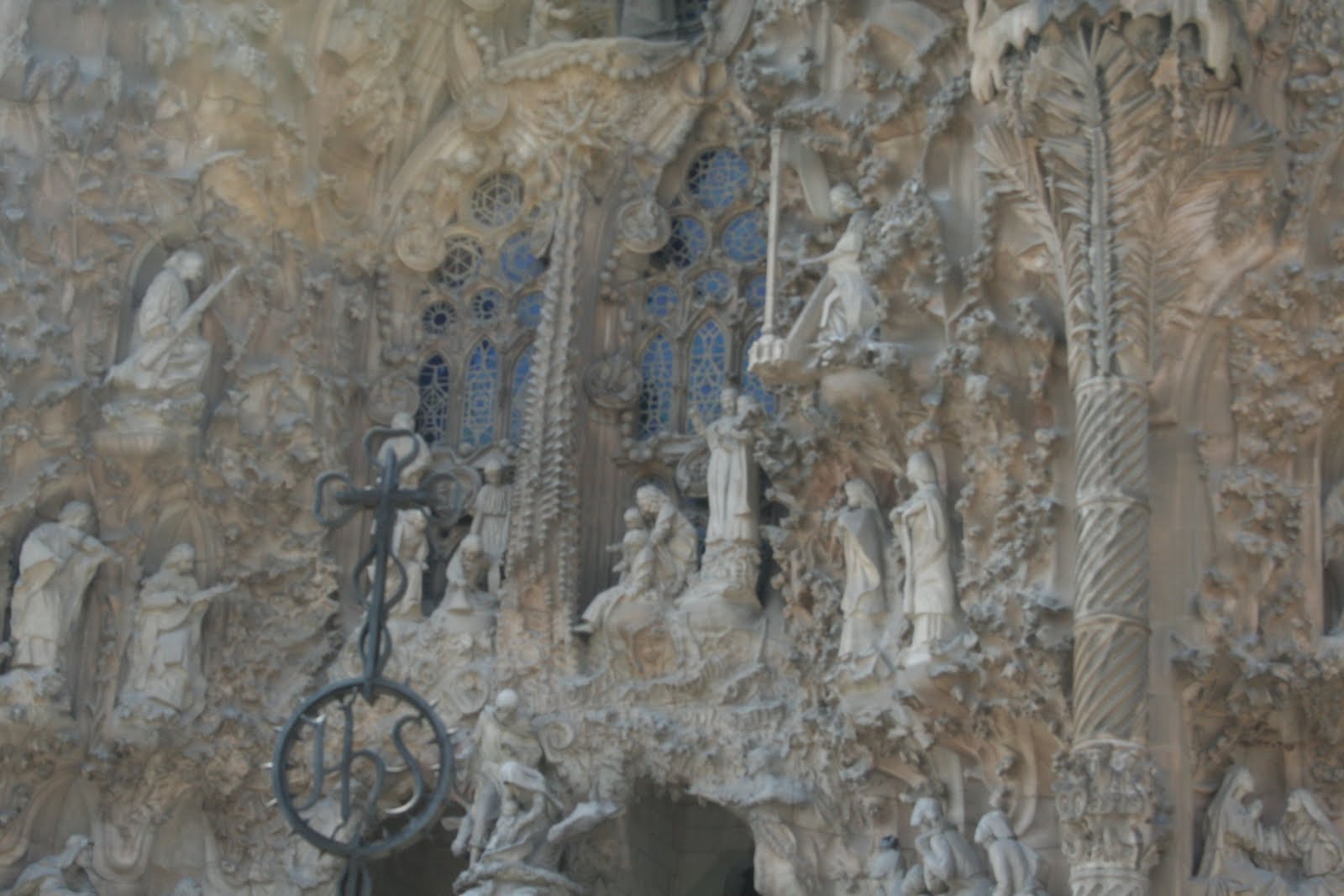
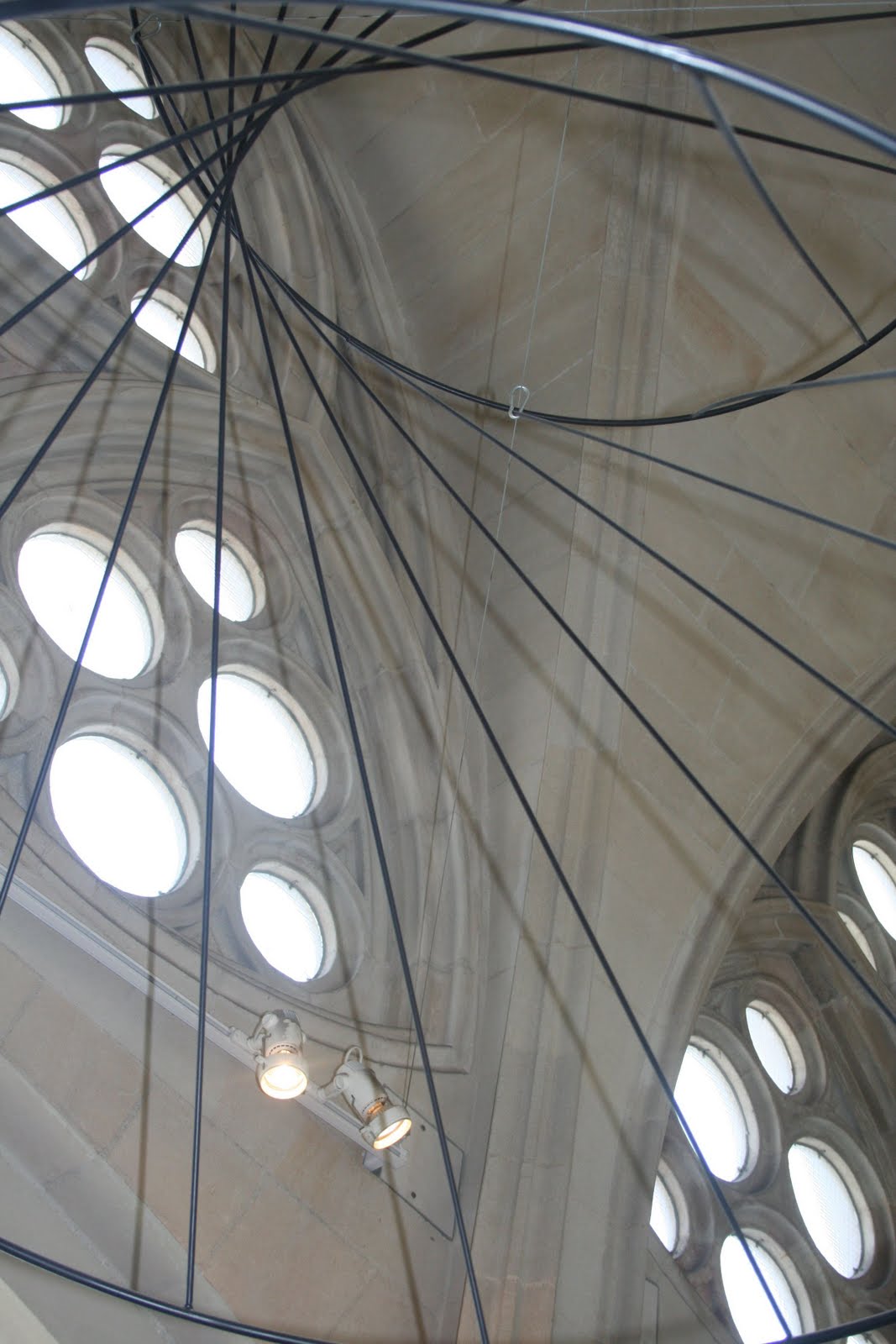
            You see this massive cathedral from all over the city and you think it is going to look like some other Gothic cathedral you have been to.  Then you walk in and it looks like a concept from the 1960s, with angular, clean lines, lots of natural light, and abstract decorative applications.  I never could grasp where Gaudi used repetition.  Every surface seemed to be unique and yet they made a harmonious whole.
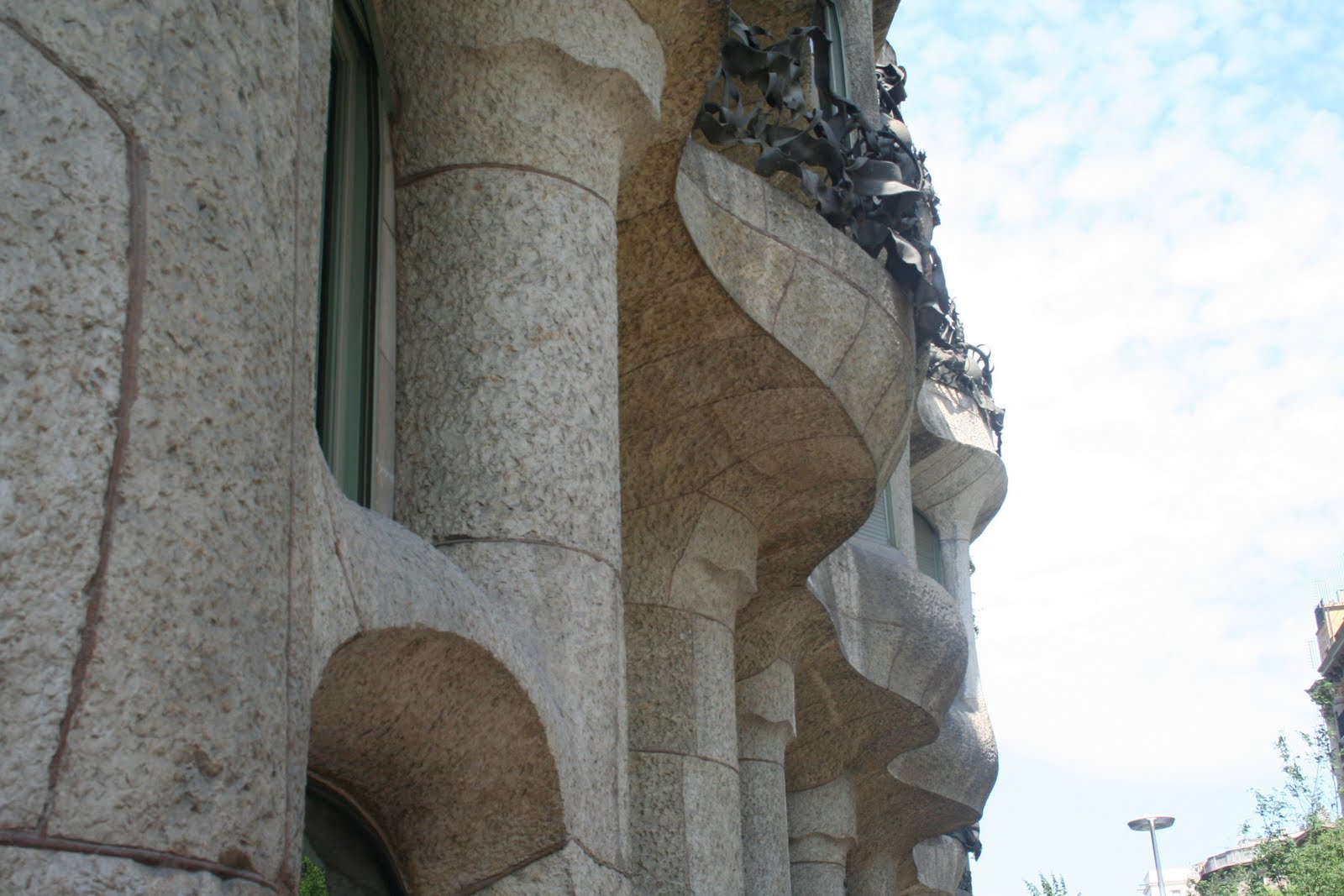
La Pedrera
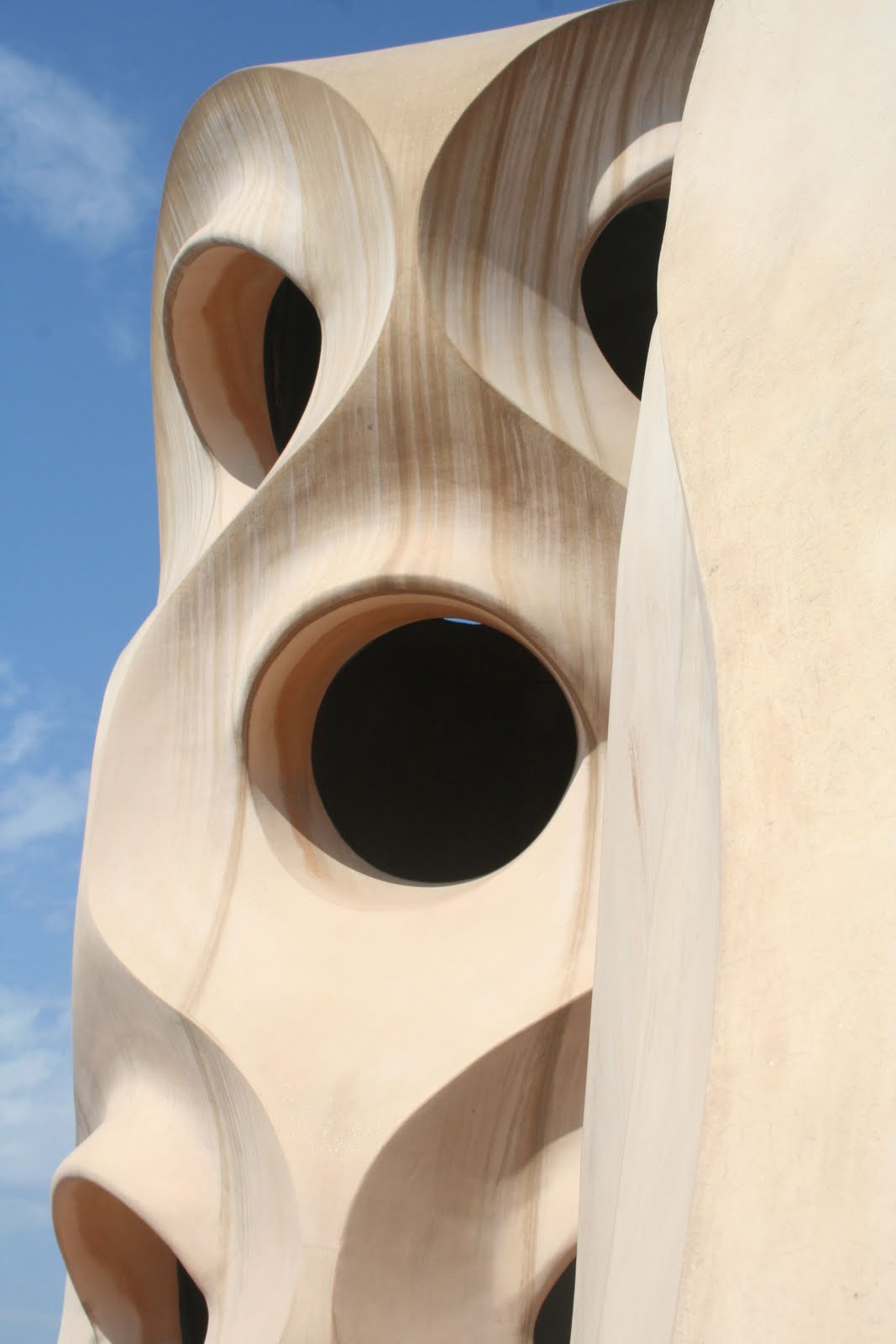
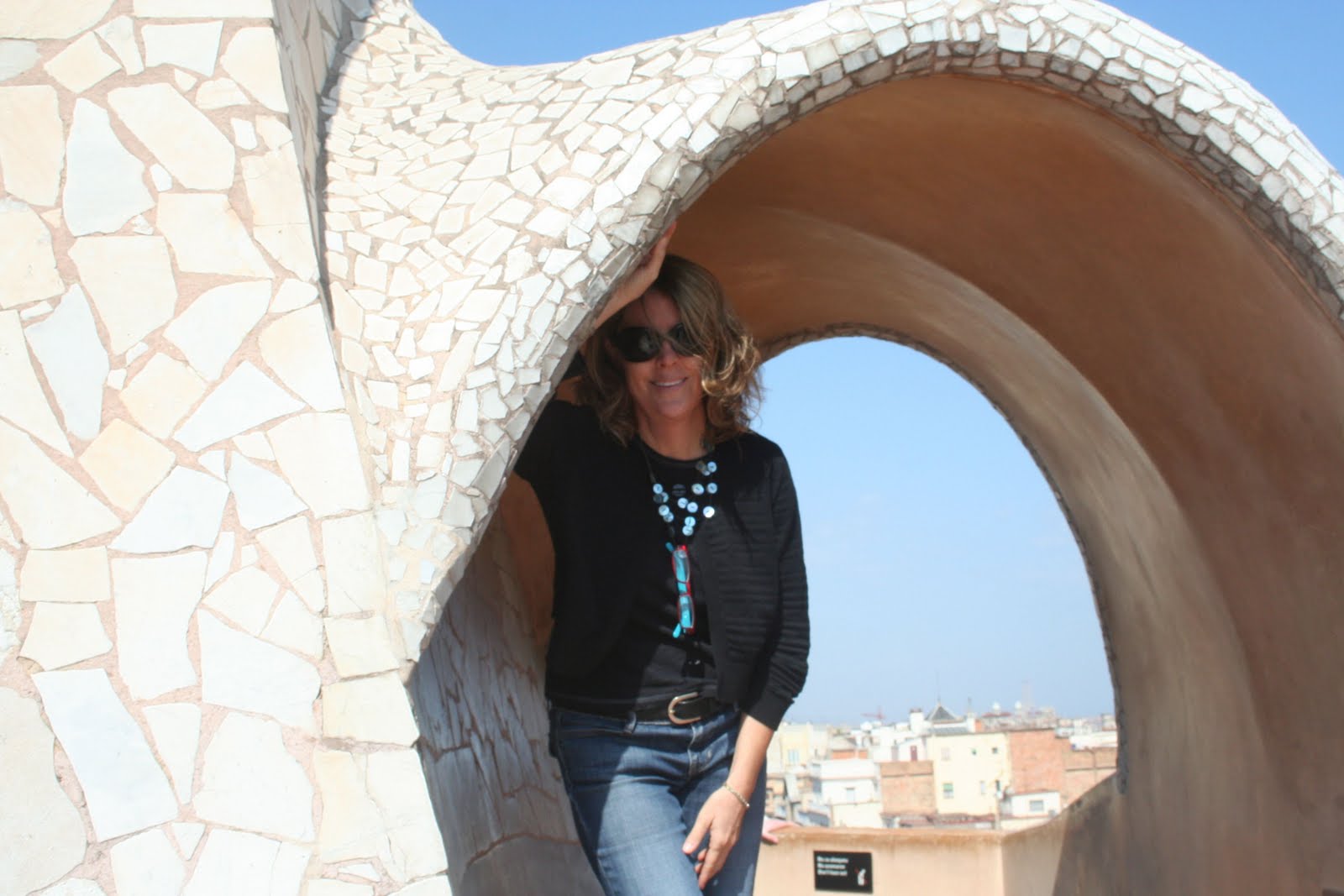
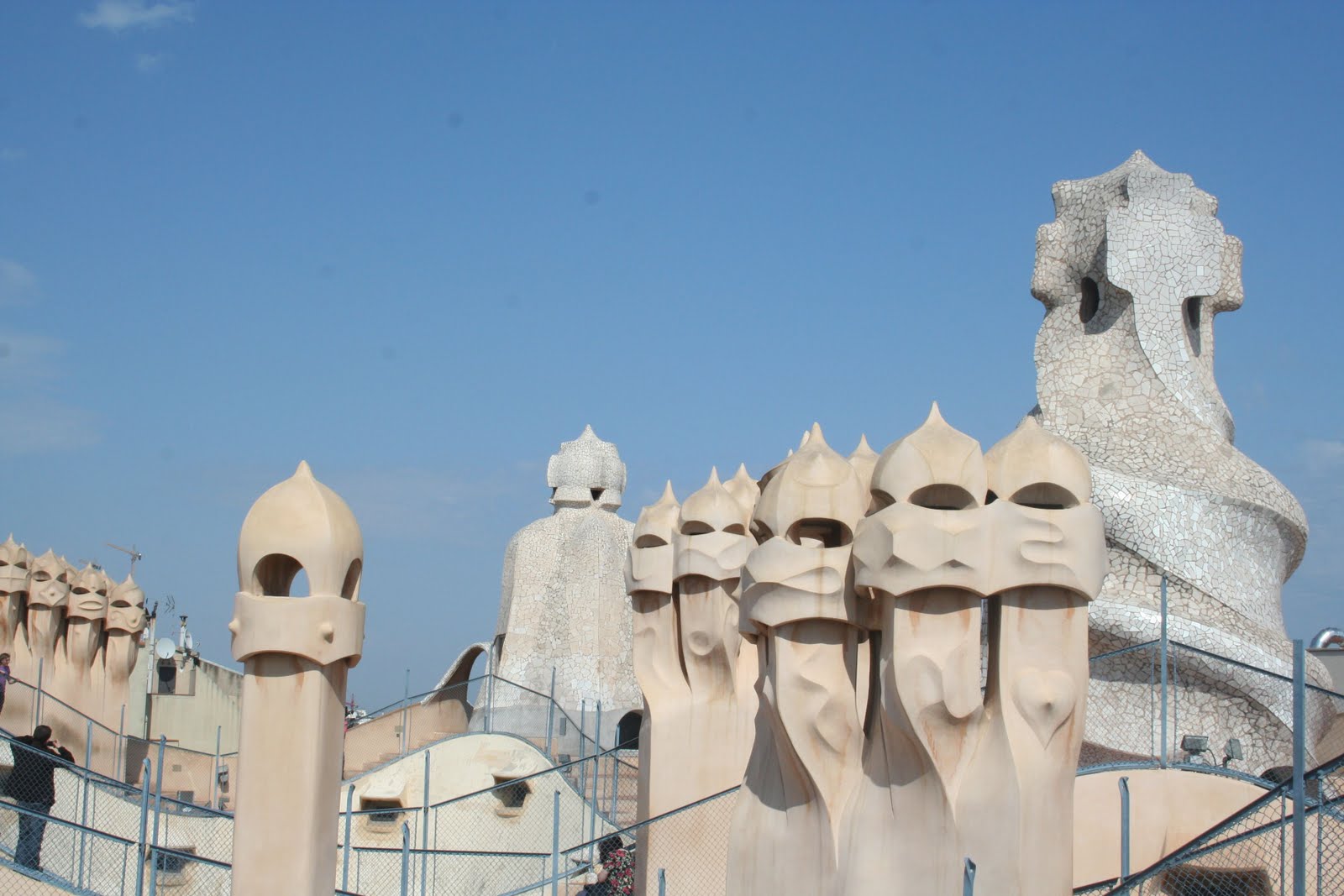
            This was the last residential project Gaudi worked on before dedicating the rest of his life to La Sagrada Familia.  There are things about it that I struggle with.  It looks Flintstonish to me sometimes with the curvaceous stone exterior and the nonangular window and door frames.  But again, the space inside has such a feeling of calm.  The sculpture garden on the rooftop is fantastic in the definition of being from one’s imagination.  Who thought this was OK to do in 1910?  It is completely out of time, but these sculptures against the Mediterranean sky are ethereal.  They remind me both of the monolithic moai of Easter Island and of the wind-made sandstone sculptures at the national parks in Utah.
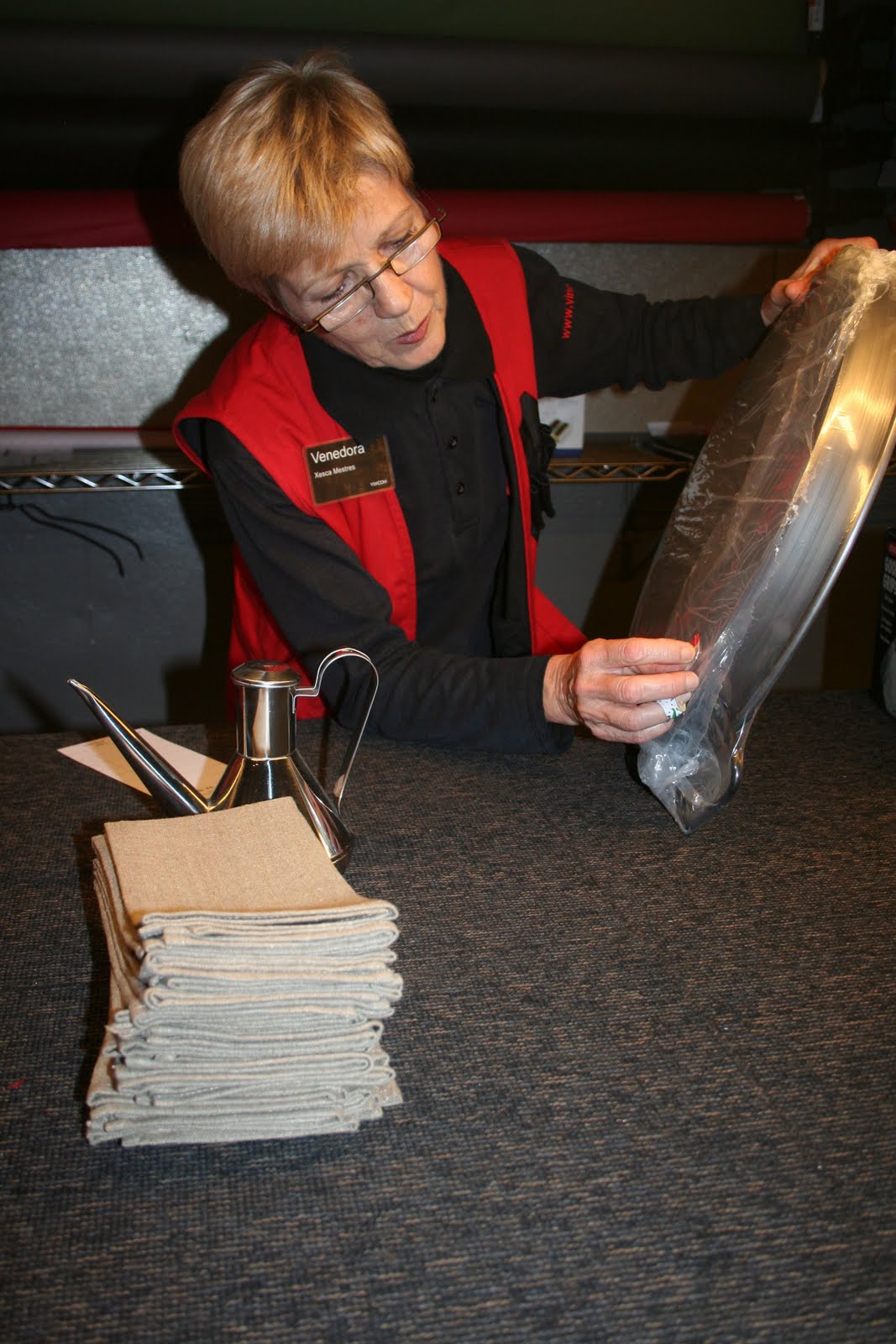
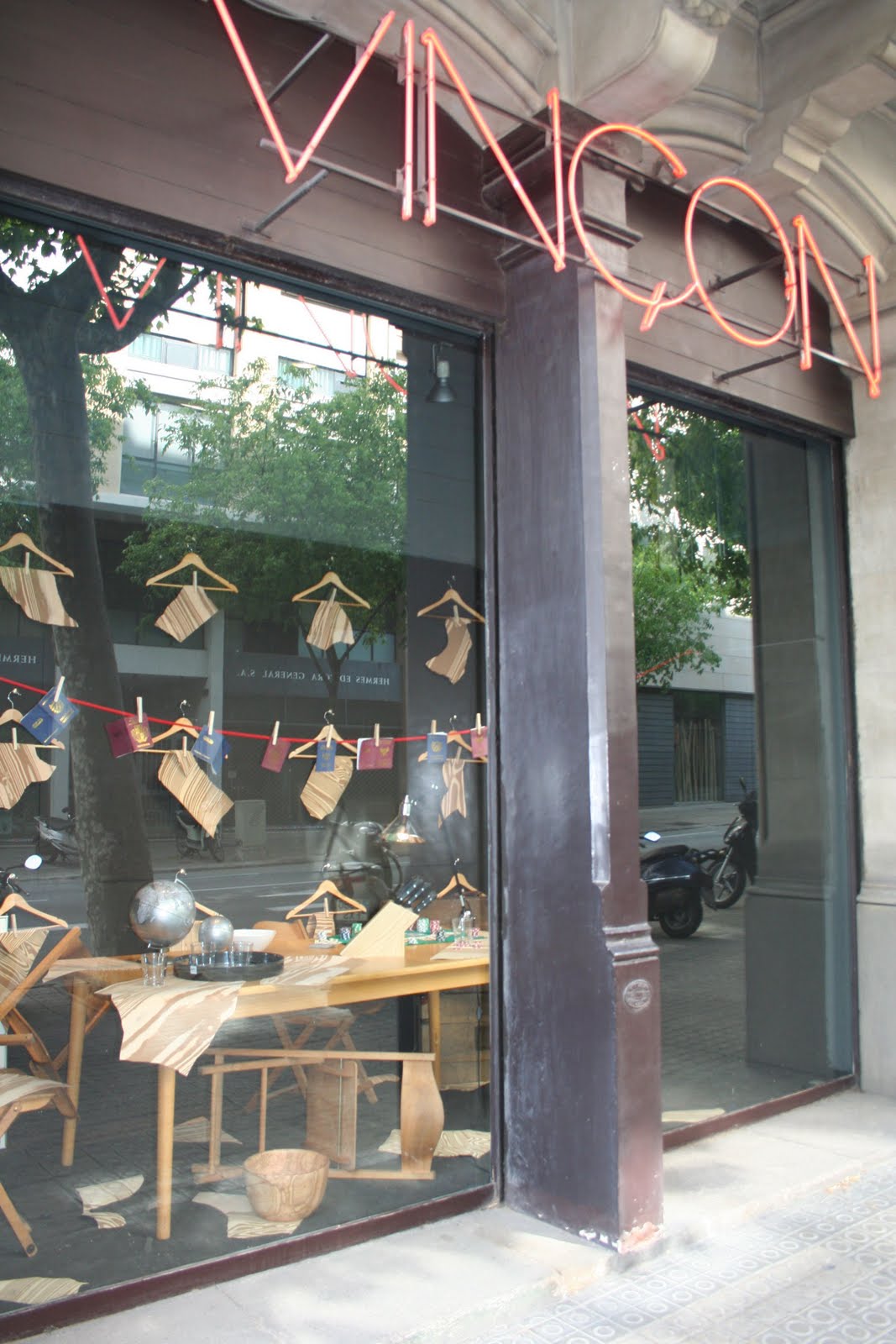
            And then I just happened upon Vincon, a shop I had read about, but hadn’t planned to completely seek out.  It is one of those really cool housewares stores, a combination of industrial and luxurious.  I think I remained pretty cool, considering.  I bought a huge paella pan to use for paella or many other foods on our backyard wood barbecue, a salad spinner, 10 linen napkins, and an olive oil pourer to keep near the stove for cooking.  I took a picture of the woman checking me out.  She was surprised, but she couldn’t know how long it has been since I’ve had a dose of retail cool like this.
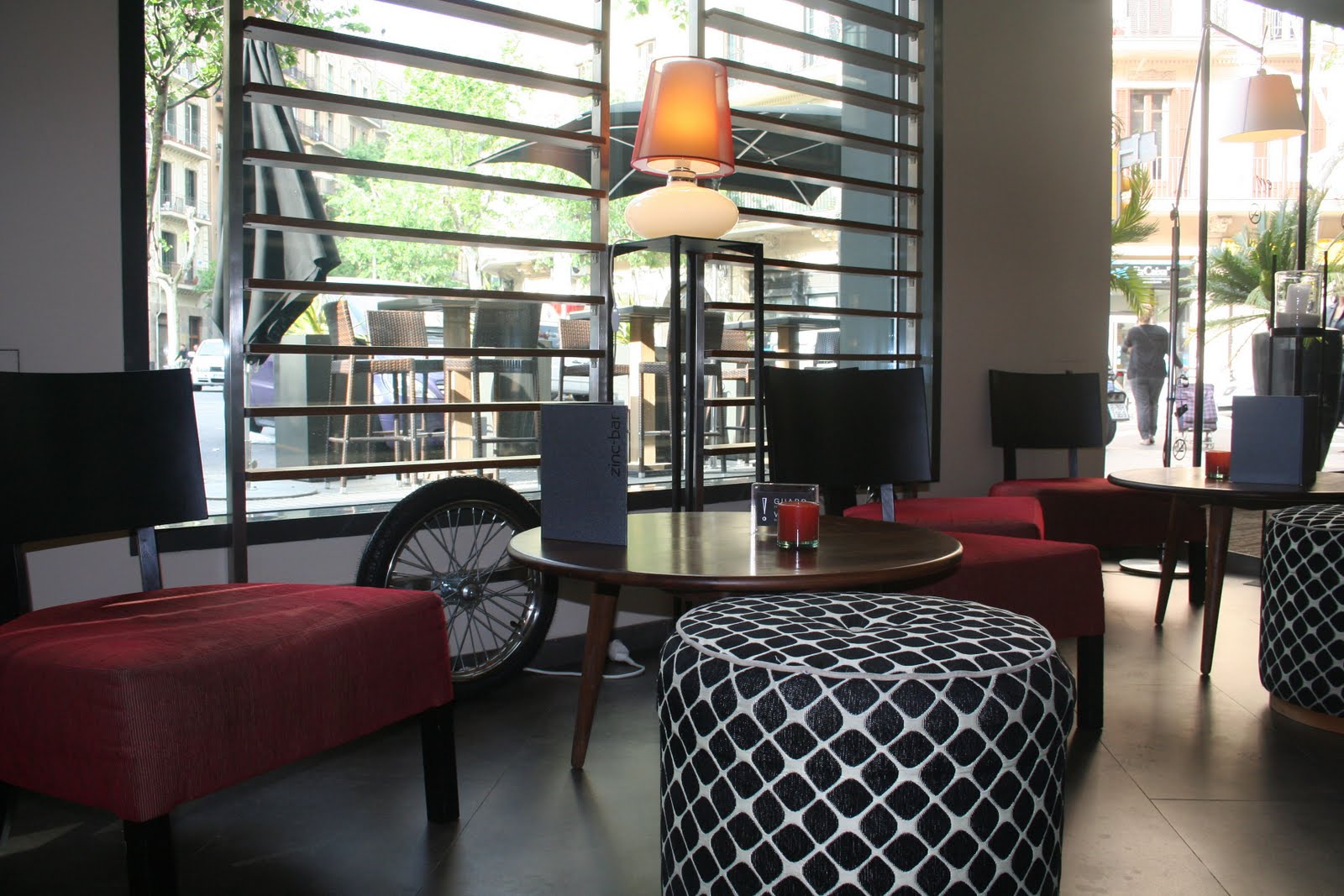
            Finally, I took some pictures of our wonderful boutique hotel, Villa Emilia.  This is such a clever hotel: urban, hip, comfortable, smart.  We have loved staying here and I will be using many of the ideas I have seen.
            Lots and lots of visual stimulation in Barcelona.  It will be resonating with me for some time.

And the Cheese Tray Stole the Evening

@font-face { font-family: “Cambria”;}p.MsoNormal, li.MsoNormal, div.MsoNormal { margin: 0in 0in 0.0001pt; font-size: 12pt; font-family: “Times New Roman”; }p.MsoListParagraph, li.MsoListParagraph, div.MsoListParagraph { margin: 0in 0in 0.0001pt 0.5in; font-size: 12pt; font-family: “Times New Roman”; }p.MsoListParagraphCxSpFirst, li.MsoListParagraphCxSpFirst, div.MsoListParagraphCxSpFirst { margin: 0in 0in 0.0001pt 0.5in; font-size: 12pt; font-family: “Times New Roman”; }p.MsoListParagraphCxSpMiddle, li.MsoListParagraphCxSpMiddle, div.MsoListParagraphCxSpMiddle { margin: 0in 0in 0.0001pt 0.5in; font-size: 12pt; font-family: “Times New Roman”; }p.MsoListParagraphCxSpLast, li.MsoListParagraphCxSpLast, div.MsoListParagraphCxSpLast { margin: 0in 0in 0.0001pt 0.5in; font-size: 12pt; font-family: “Times New Roman”; }div.Section1 { page: Section1; }ol { margin-bottom: 0in; }ul { margin-bottom: 0in; }

            We are eating a lot of rich food this week, particularly shellfish.  I thought I might have an inexhaustible appetite for shellfish, but I am noticing a saturation building up.  I read Bill Bryson’s new book Home this winter.  In one chapter he described how plentiful lobsters were on the Atlantic coast of America during the Industrial Revolution.  They were so common, in fact, that factory workers included in their union negotiations a limit to the number of times per week they would be fed lobster as their employee meal.  So I guess it is possible to have had enough. 
            For something different, we tried a restaurant of Galician culture.  This is an autonomous cultural region in the northwest corner of Spain on the Atlantic.  Galicia has some topographical distinctions from other parts of Spain.  Due to the mountains that rise up from the sea, Galicia has a multitude of small rivers giving it the moniker, “land of a thousand rivers”.  Another distinguishing feature, and also related to its interaction with water, is the presence of many, many inlets called rias, which were drowned out estuaries following Europe’s last ice age.  These inlets are rich beds for the growth of sea life.  Our restaurant was called Rias de Galicia and now we both have the context to understand the name.
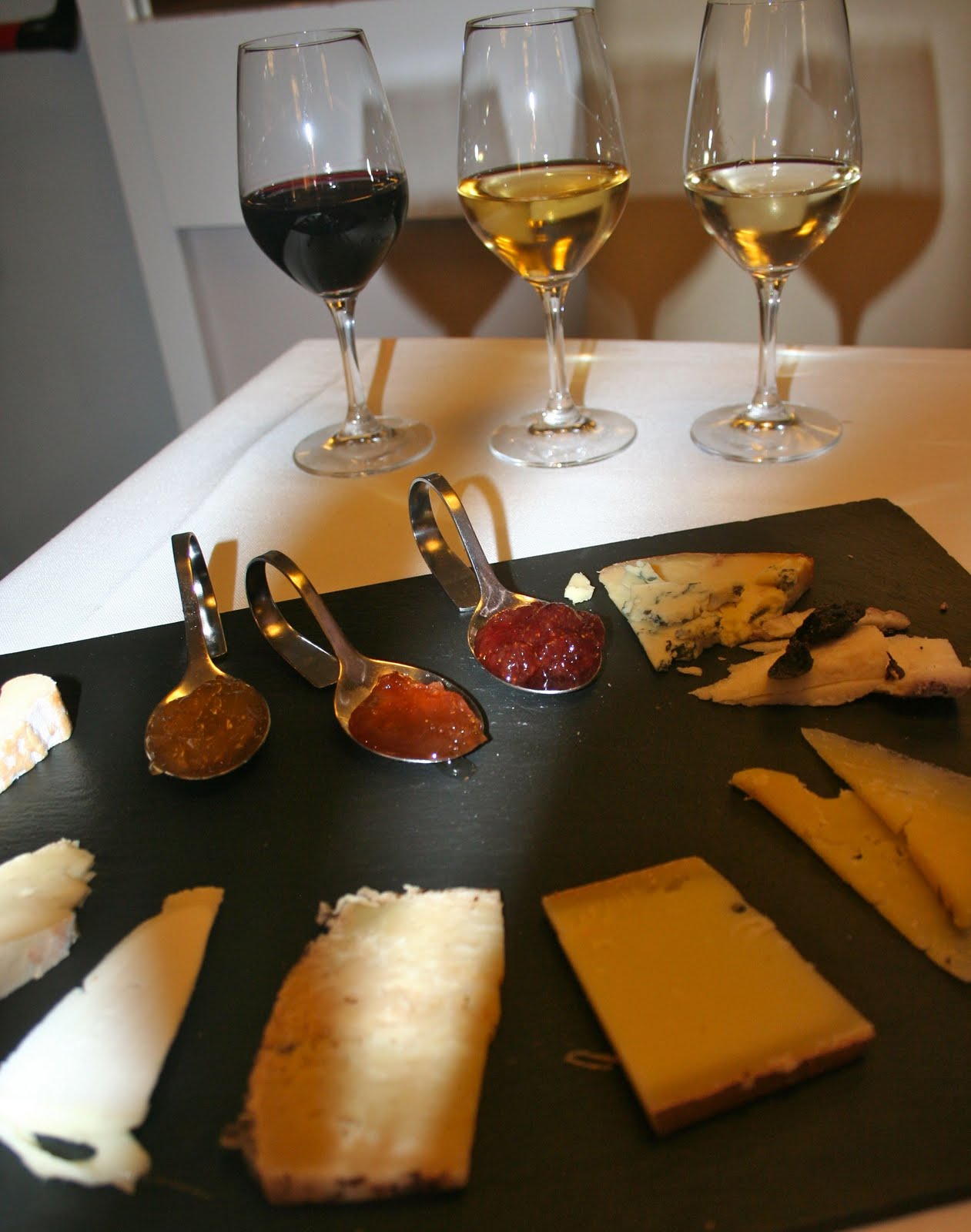
            But it was not the seafood, but the cheese tray, offered at the end of the meal, that was the most interesting for us.  Because of Galicia’s geographic connection to the British Isles, and the mountains of Switzerland, France, and Italy, they had sourced a rare combination of cheeses.  When we read the following description on the menu, we simply had to try them:
These cheeses have been selected after a tasting blindly of 28 of the best cheeses of all the world among our customers and friends: and then it goes on to actually name the restaurants nine and possibly blind friends who gave their thumbs up to the cheese platter selections.  We didn’t have one disagreement and here they are from left to right.
1.     Abbaye de Citeaux                        Upper Savoy (France)
Made using only raw whole milk from cows which pasture in the monastery.  It comes from the Reblochon family and has a creamy texture with a yeast and fresh walnut taste.
2.     Vacherin Haut-Doubs                        Mont d’Or Massif
                                                                 (France-Switzerland border)
There has always been some discussion about who was the first to produce Vacherin cheese.  From this confrontation (their word), we have had two different kinds of Vacherins:  the French Haut-doubs and the Swiss Mont d’Or.  Either way, the cheese, being made of raw cow milk, is sticky and tender.  The taste will remind you of grass and it smells like cut wood and resin.
3.     Pouligny St. Pierre                        Central Region (France)
It is popularly know as the Eiffel Tower because of its shape.  It is made of raw goat milk, giving it an intense smell of goat milk and straw.  It becomes acidic as it ripens, with a hazelnut aftertaste.
4.     Payoyo with bran                        Cadiz (Spain)
Coming from the south of Spain, this cured cheese is made of raw Papoya sheep milk and ripened with fat and bran for a minimum of 8 months.
5.     Abondance Fermier                        Summer 2008, Upper Savoy (France)
Abondance is an original cheese from the Upper Savoy between Lemman Lake and Mont Blanc.  It has been made for more than 1000 years by St. Marie d’Abondance monks.  It belongs to the gruyere or comte family, but is smaller with a stronger taste.
6.     Cheddar Montgomery’s             Offaly County (Southern Ireland)
Typical English cheese is made of raw cow milk and curd.  It takes more than 12 months to ripen and is one of the most valued kinds of cheese in the isle.  The taste is balanced and the smell is of humidity and wood that comes from the cotton cloth and the fat that cover the pieces when they are taken to the natural caves to ripen.  It is sweet and not very salty.  
7.     Testum al Barolo                        (Northern Italy)
This is a mixture of cow, goat, and a little buffalo milk, managing to have an amazing image since the cheese is wrapped with Barolo wine raisins.
8.     Stichelton                                    Nottinghamshire (Great Britain)
Unlike the famous English Stilton, this wonderful kind of blue cheese is made of raw and whole cow milk.  As it comes from London surrounding, it ripens quickly and so does its taste.  It is sweet, tasty, and with a strong hazelnut final taste.  
And to complete the tasting:
Three confits:  rose petals, green figs, and wild strawberries
Three dessert wines:  Ochoa Moscatel, Oremus Tokaji, Olivares
The cheese menu ends with an invitation:  
If you want to be promised of the next selection of cheeses of Rias, make it for us know.

Tapas

@font-face { font-family: “Cambria”;}p.MsoNormal, li.MsoNormal, div.MsoNormal { margin: 0in 0in 0.0001pt; font-size: 12pt; font-family: “Times New Roman”; }a:link, span.MsoHyperlink { color: blue; text-decoration: underline; }a:visited, span.MsoHyperlinkFollowed { color: purple; text-decoration: underline; }div.Section1 { page: Section1; }

            I remember beginning to hear about Spanish tapas sometime in the last decade and the first time I actually had them was in Alexandria, Virginia at a wonderful Spanish restaurant.  I had pictured ordering tapas would be a Spanish version of ordering sushi off of a little conveyor belt, but the dishes we had that night were more like a series of starter or first course dishes made to order from a menu.  The plates were very good, but two, three, or at the most four was a full meal for two people so I still didn’t understand the Spanish idea of nibbling on these before going to dinner.  I have been curious ever since to find out what the true Spanish tapas are like.
            The idea is simple and evolves from a little saying, “Eat when you drink and drink when you eat”.  This isn’t a motto from over a tavern door, but comes from a more agrarian setting where men didn’t drink at home and didn’t drink alone.  They congregated after a day’s work at a home or commercial wine cellar to share a glass with their neighbors.  Following the above saying, they would have some bread with a simple topping of ham or cheese and place it atop their glass, between bites, to keep the flies off, thus the tapas, or top.  If another glass was poured, a different snack was introduced allowing them to communally enjoy the food along with the wine.  From this comes the variety of plates expected at a tapas bar or restaurant.  
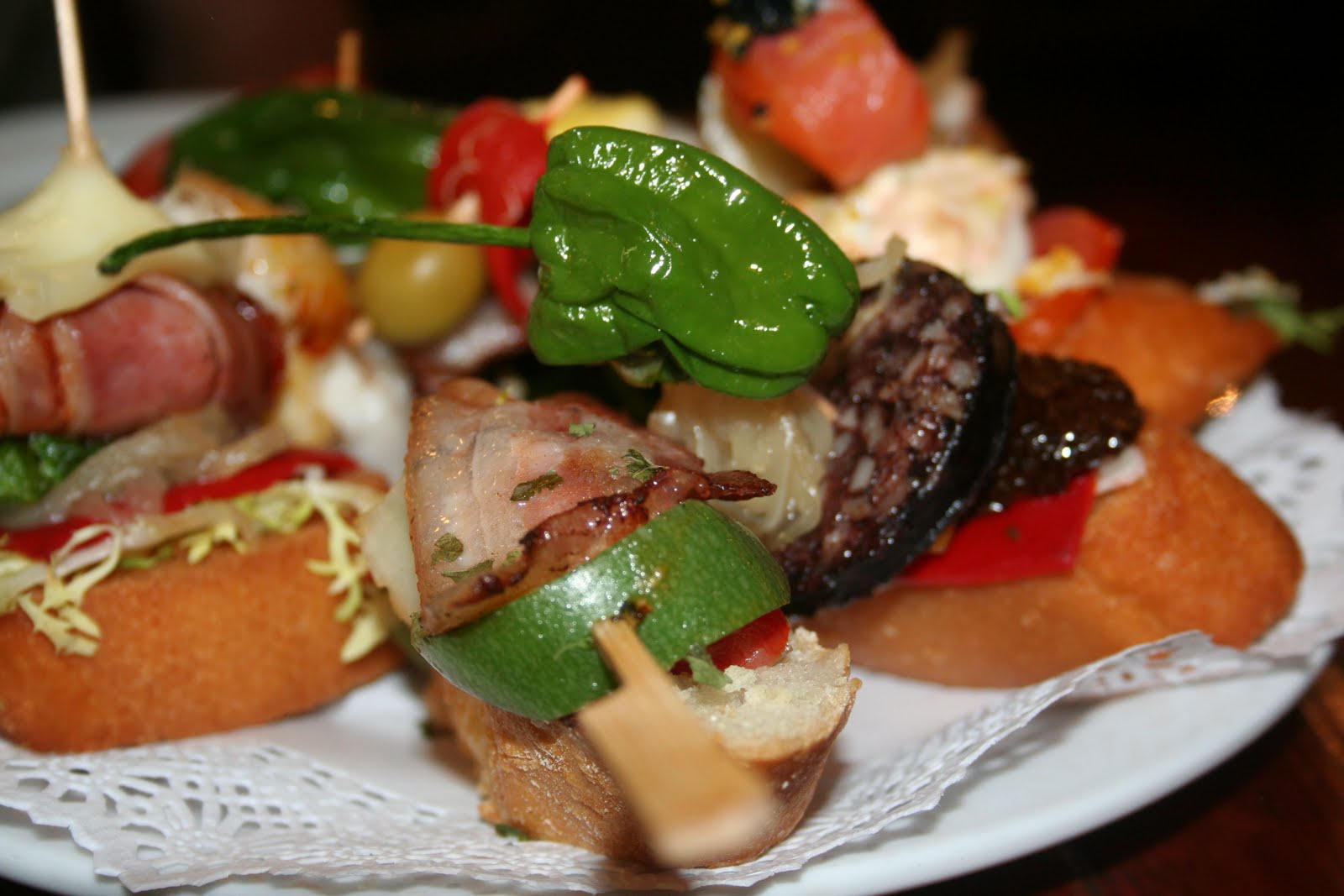
            The first spectacular tapas restaurant we encountered in Barcelona had a display of about 100 premade plates, mostly comprised of multi-layered open-faced baguette sandwiches.  They were each little bits of artwork, but I feared, when we ordered a selection for lunch, that they might just look pretty, but all taste about the same.  You know the experience of those disappointing buffet sandwiches?  I’m happy to report, however, that my fears were unfounded.  Each one was a unique layering of a spread, a meat, a cheese, maybe some caramelized onions, and then little garnishes like olives, a shaving of a marinated vegetable, or even caviar that didn’t just look pretty, but actually contributed to the overall mouthful.  They were fun to eat, but they were rich.  
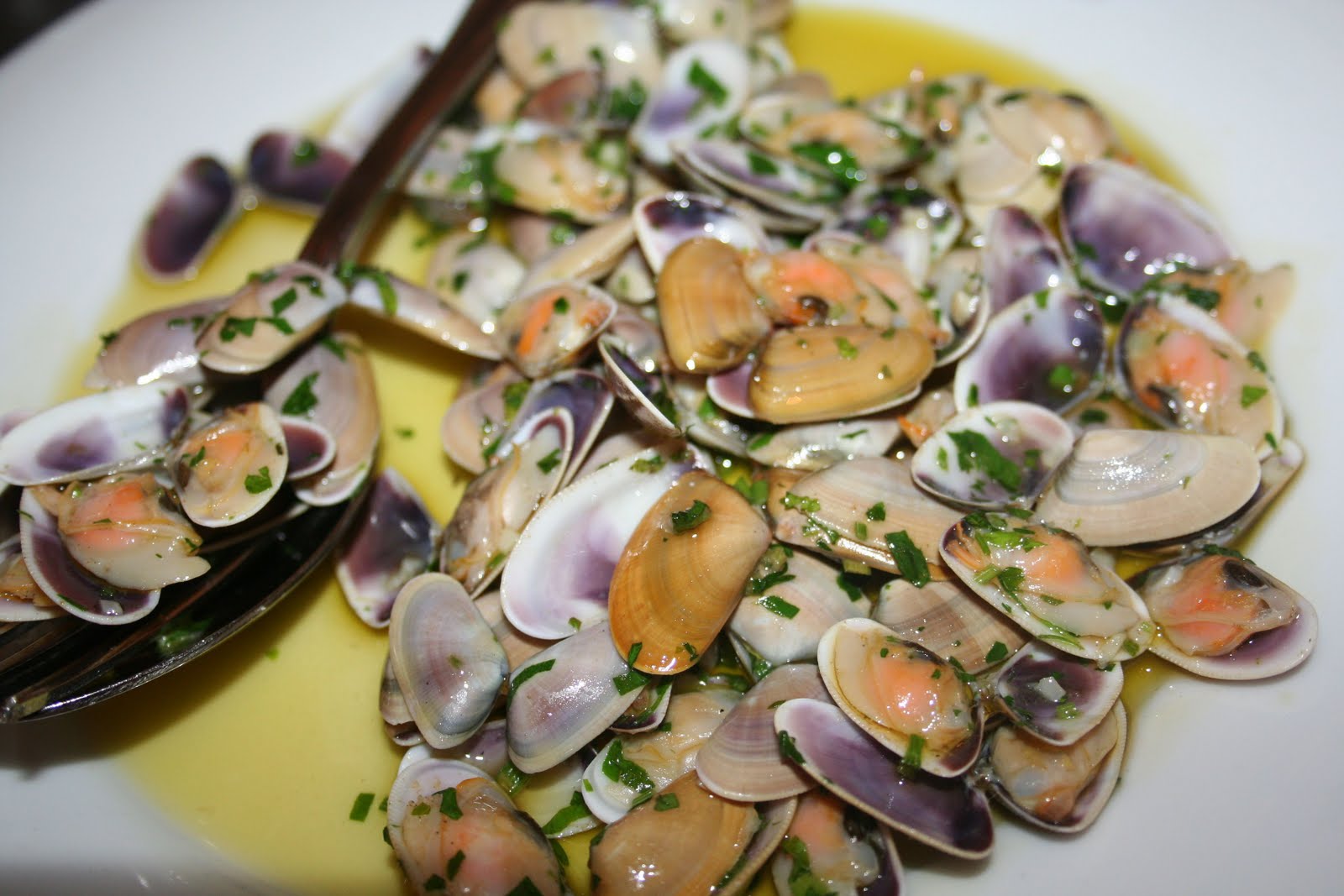
            We have been following the restaurant advice of a Barcelona resident Allan recently met and when Allan told me the restaurant he had made a reservation at for that night also specialized in tapas, I frankly felt a little sick.  I really didn’t think I could face more of those over the top little sandwiches.  But we went to the restaurant, an old place that is so small that when someone uses the cubicle sized washroom, they have to run the loud, electric hand dryer right in the dining space.  The waitress told us they had two specials of the day.  One was fresh clams in a garlic butter sauce and the other was baby octopus with beans.  Thinking …when in Barcelona… we ordered her two suggestions.  The clams came first and tasted exactly as clams in butter sauce always do.  
 Then came the beans and octopus dish.  What a surprise.  Two foods that had never previously been associated in my mind before were intermarried on this plate.  The white beans were soft and buttery, the octopus pieces were no bigger than the end of my pinkie and they were tender and blended with the soft bean flavor rather than standing out with fishiness.  All of this sat surrounded by a pool of a light flavored olive oil.  I don’t know how this sounds to you, but it was the best thing I have put in my mouth or my stomach since I got here.  It was Spanish comfort food and I am thinking my way through an attempt to replicate it at home.  There is no picture, but it wouldn’t look like much anyway because it was just mostly white.
            I researched some tapas recipes and quickly saw that many of them err on the side of being too simplistic, going down that dreadful road of looking cute, but tasting ubiquitous.  This particular website offers 71 tapas recipes and they actually look pretty authentic, meaning, multi flavored and built around seafood or jamon. http://euro.tienda.com/recipes/appetizers.html Unfortunately, I don’t see my coveted white beans with baby octopus on the list so I think I’m still going to have to make that one up, somehow.  But I may try a few of these others, too. 

Gaudi All Day

 
@font-face { font-family: “Times”;}@font-face { font-family: “Cambria”;}p.MsoNormal, li.MsoNormal, div.MsoNormal { margin: 0in 0in 0.0001pt; font-size: 12pt; font-family: “Times New Roman”; }h1 { margin: 0in 0in 0.0001pt; font-size: 24pt; font-family: “Times New Roman”; }a:link, span.MsoHyperlink { color: blue; text-decoration: underline; }a:visited, span.MsoHyperlinkFollowed { color: purple; text-decoration: underline; }span.Heading1Char { font-family: Times; font-weight: bold; }div.Section1 { page: Section1; }

            
            One of the “must dos” when in Barcelona is to study the works of the Modernista architect, interior designer, and artist, Antoni Gaudi.  Living in Catalonia between 1852 and 1926, he is Barcelona’s native son.

            To understand the context of his work you must learn something about the Modernistas in Spain.  This was a social movement at the end of the 19th century that had an element of reaction to a perception that Spanish, particularly Catalonian, culture had fallen behind that of its European neighbors in sophistication and innovation.  Catalonian artists, writers, and architects were inspired to create, making references to Gothic and Islamic architecture, but personalizing and humanizing those styles. The Modernistas incorporated motifs from the natural world, such as plants and other organic shapes, similarly to what was taking place in the Art Nouveau or Arts and Crafts Movement in the US and other parts of Europe. 
@font-face { font-family: “Cambria”;}p.MsoNormal, li.MsoNormal, div.MsoNormal { margin: 0in 0in 0.0001pt; font-size: 12pt; font-family: “Times New Roman”; }div.Section1 { page: Section1; }
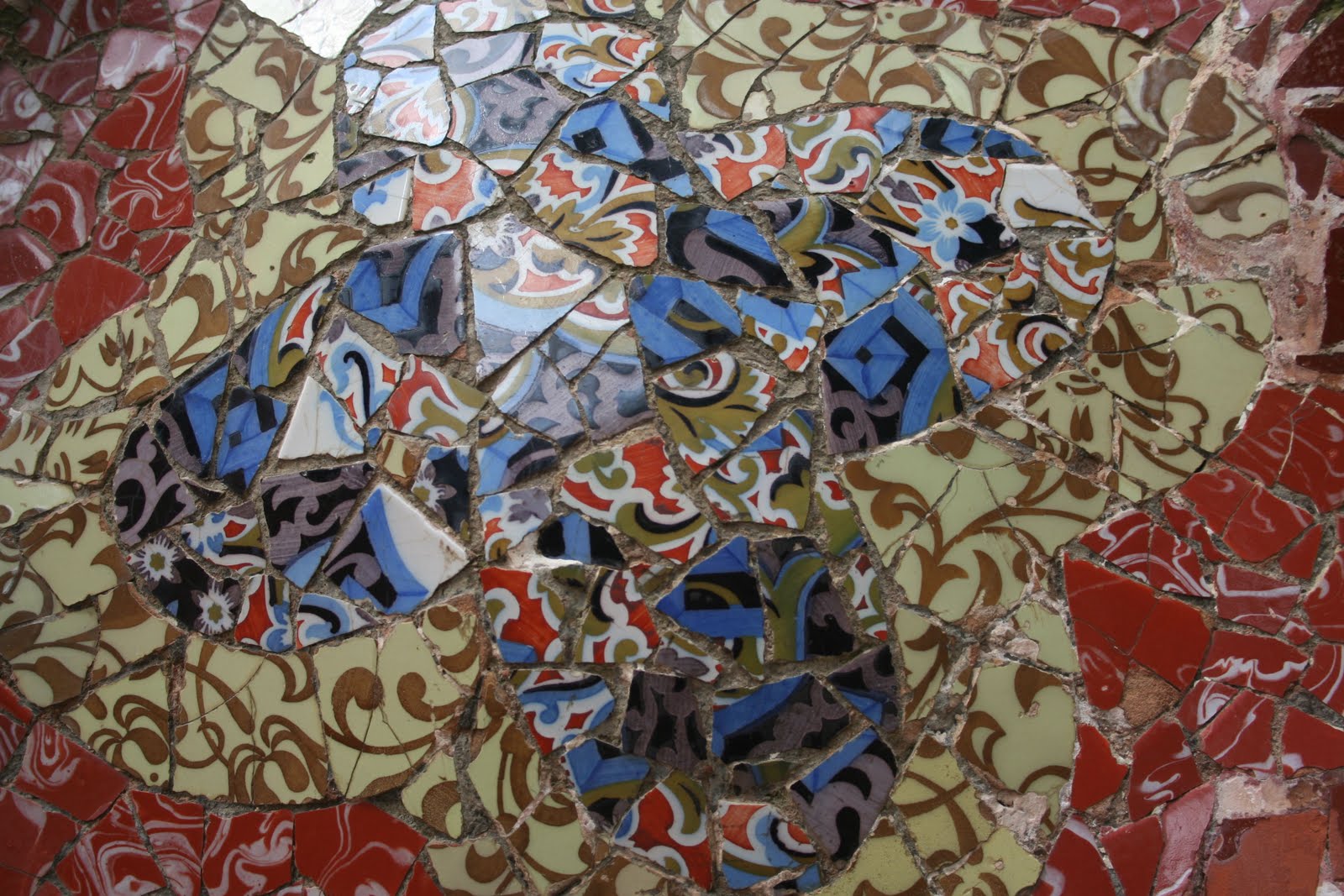
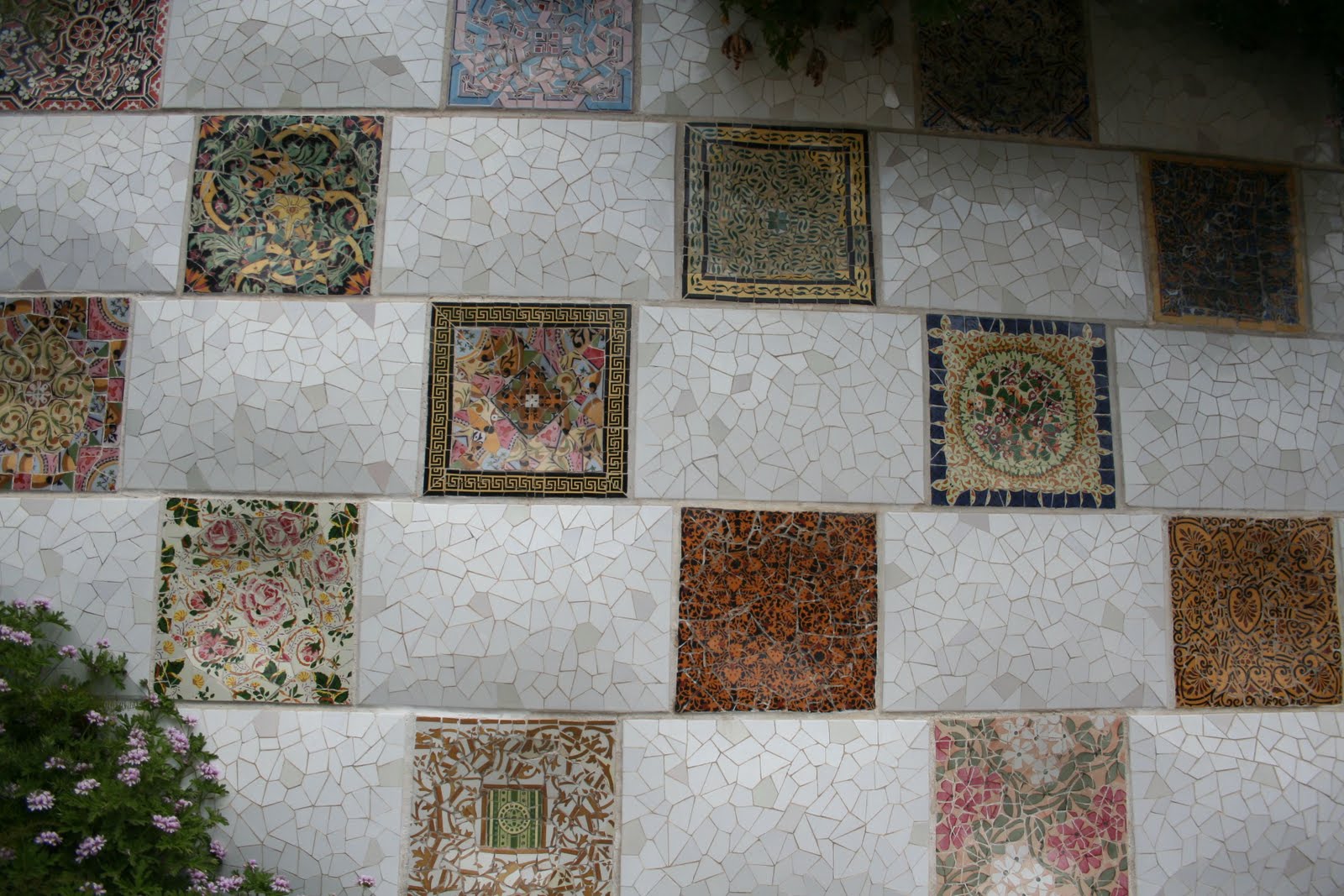
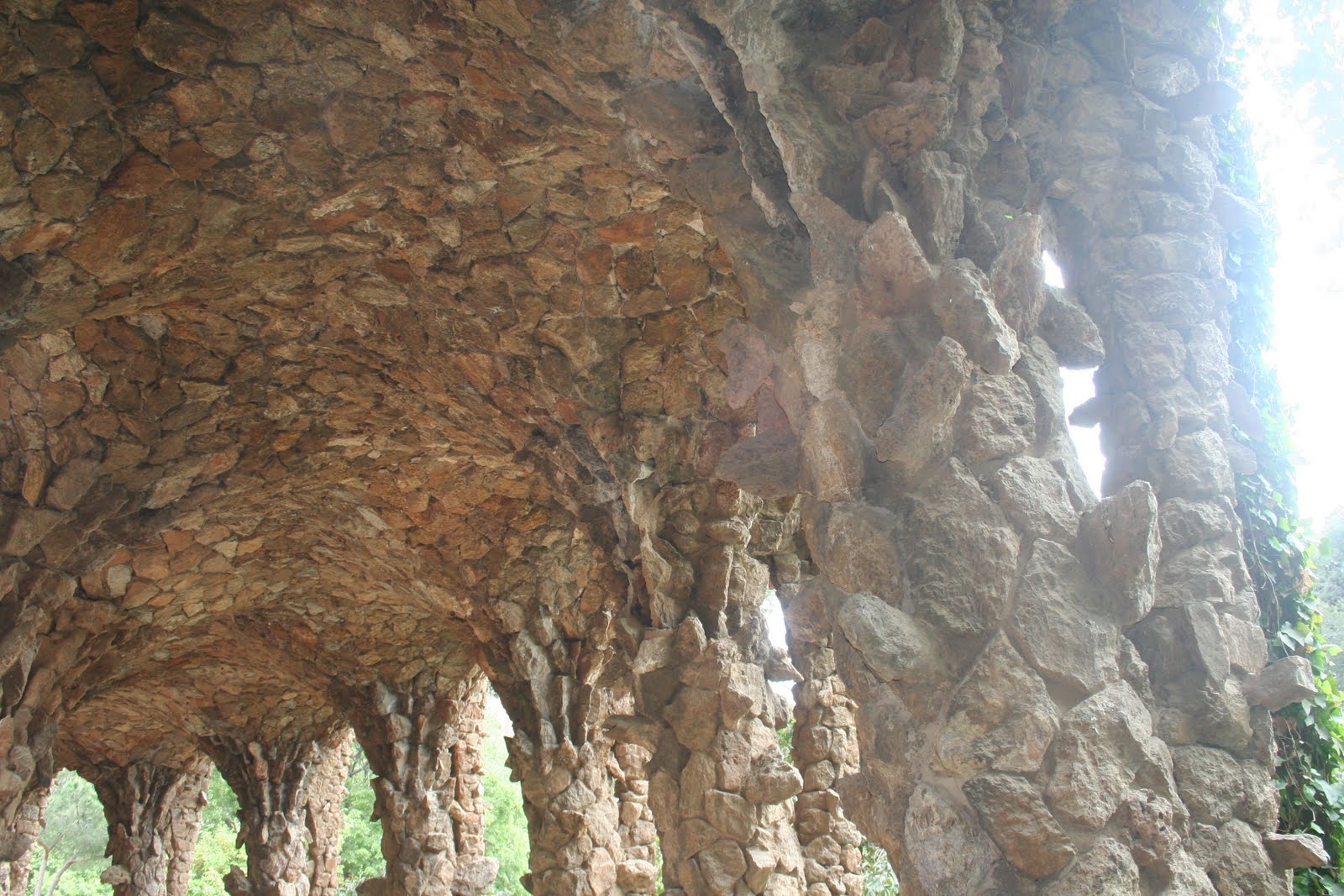
Antoni Gaudi’s designs repeat ideas from his four loves: architecture, nature, religion, and Catalonia, particularly the sea.  He heavily used decorative detail, especially mosaics, in curvaceous, asymmetrical structures.
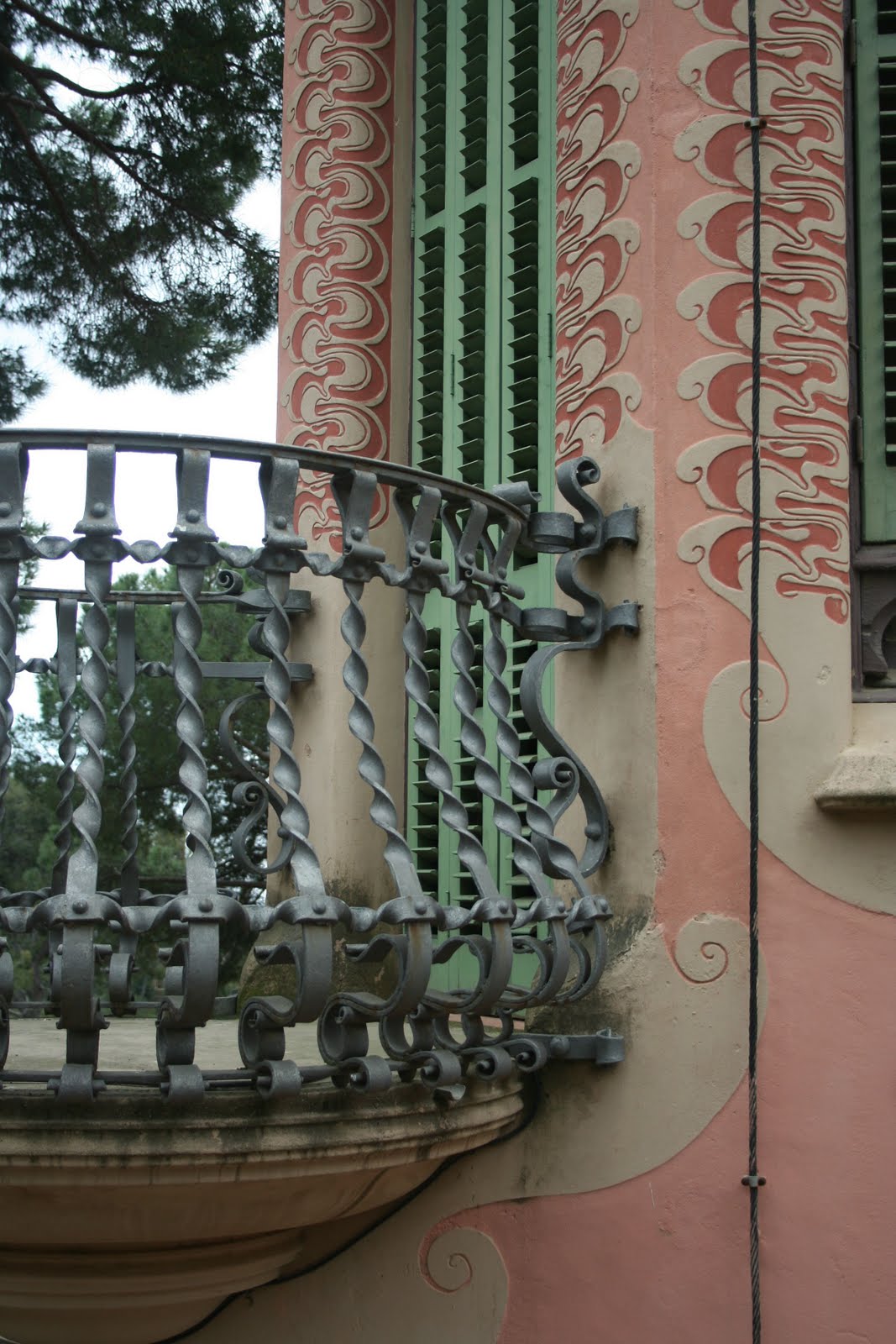
Even today, his works are slightly unsettling.  I can’t even imagine how they were received in his time.  When I look at synonyms for ornate, the following are listed: elaborate, flowery, florid, grandiose, pompous, pretentious, high-flown, orotund, magniloquent, grandiloquent, rhetorical, oratorical, bombastic, overwrought, overblown and every one of them seemed true of his work, even the ones I’d never heard of before.  But walking around the Park Güell and entering his fantasy of a cottage on the site, a definite peace and serenity transpired.  There is a balance, even if it is not symmetry. 
I admire Catalonia for its inspiring natural beauty, for being an open society where a man like Gaudi could express his passions and vision in a huge way (see Sagrada Familia), for not tearing these buildings down when they went way out of fashion, and for funding and even continuing to add to them today.
And then, of course, we had lunch, at 3:00.


Jamon

@font-face { font-family: “Times”;}@font-face { font-family: “Cambria”;}p.MsoNormal, li.MsoNormal, div.MsoNormal { margin: 0in 0in 0.0001pt; font-size: 12pt; font-family: “Times New Roman”; }div.Section1 { page: Section1; }

Spaniards are serious about ham.  Not only are they the biggest producers in the world of air-dried, cured pork, but they are also the biggest consumers, eating approximately 5kg. per person, per year.  I feel like I’ve eaten about half that much already in the two days I’ve been here.  But ham is not just one thing in Spain.  There are different breeds of pigs, different curing techniques, and then within those styles, there are many grades.  The title photo shows how the pricing can vary according to the product.  This explains why you pay about $17.00 US for 5 or 6 slices of Iberico ham at Costco. 
The two main types of dried ham are Jamon Serrano or “mountain ham” and Jamon Iberico from the Iberian Peninsula.  Meat, dried and cured with salt, has been in the Iberian diet since Roman times.  When the Moors invaded, bringing the dietary laws of Islam, it was outlawed, but when the Christians regained control of the region, it regained popularity.    
            So what’s the difference? The Serrano ham is made from a variety of grain fed white pigs, which are cured between 7 and 16 months. The Ibérico pig feeds on some grains, but also grazes naturally on grass and acorns among groves of oak and cork trees. The meat is then cured between 14 and 36 months.  It is this exceptional breeding, care, and processing that has earned Ibérico ham the title as the caviar of cured hams, definitely distinguished as the best in the world.  
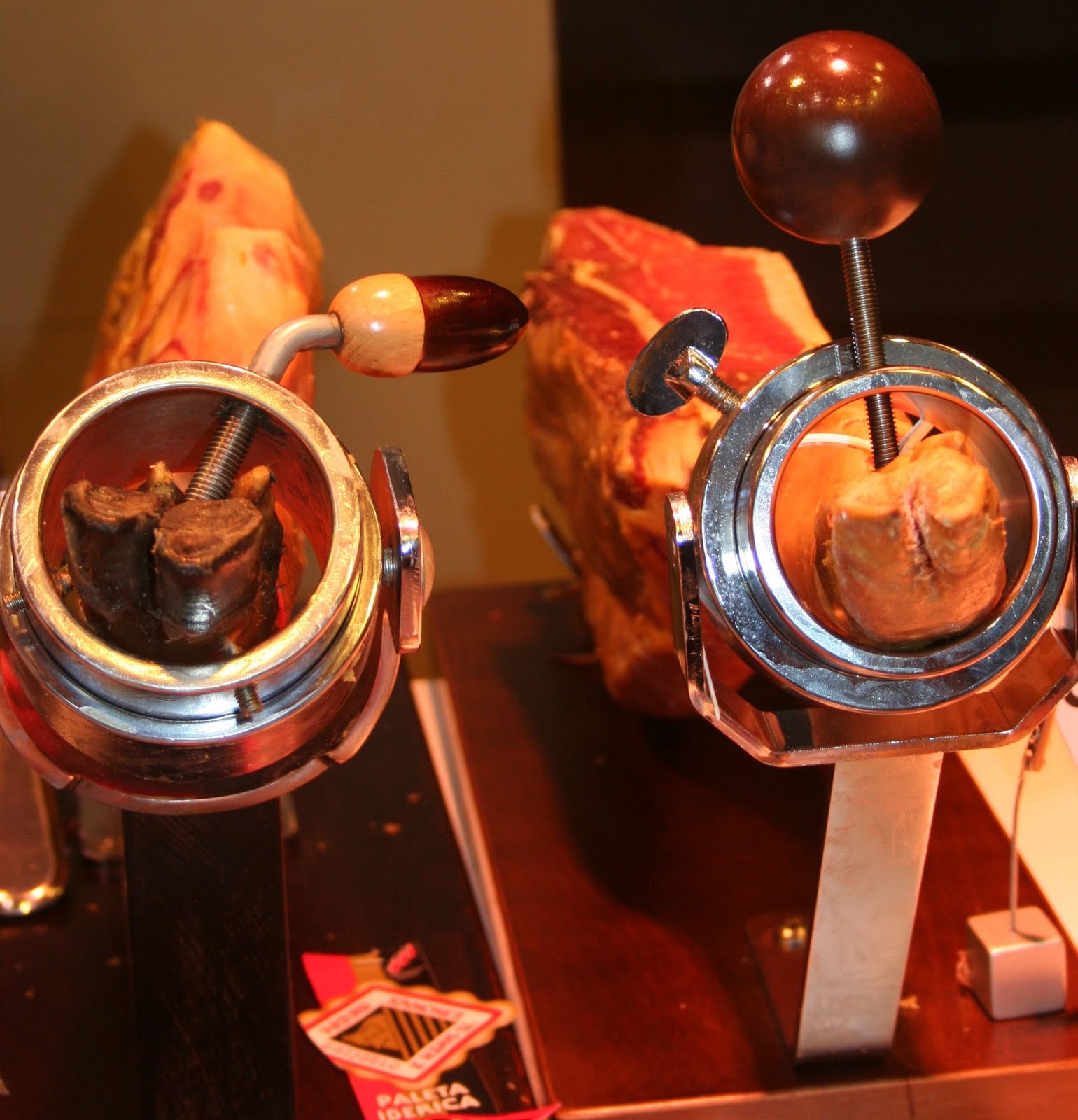
Technology used to slice ham off the hoof.
            If you have only ever eaten American style ham, this will seem like a very different substance to you.  It can be dry and waxy or soft and a little chewy.  Either way, it is sliced as thinly as possible.  The flavor is also quite different from an American ham and may require some getting used to.  About the easiest way to begin experimenting with Spanish hams is with the simple appetizer of ham wrapped melon.  In the US, where we generally have the extra large, truck ripened cantaloupes, I didn’t completely get the magic of this dish.  Lately in Tunis, however,  we have had small, vine –ripened melons that are so sweet and flavorful that just one fills the house with its scent and rivals any other dessert you might match it against and I’m not one of those people who claims they would always prefer fresh fruit over a real dessert.  This kind of melon is a worthy partner for the salt and mysterious flavors of air-dried ham.  I have usually wrapped strips of the dried ham around pieces of melon, but I like this melon salad idea, served in a ham cone.  I suggest keeping both the ham and the salad cold until serving time as the ham almost melts when it gets warm.
Jamon Serrano with Melon
Ingredients:
1 fresh, ripe melon
12 thin slices of Jamón Serrano
1 carrot, grated
Juice of 1 lemon
1 scallion, finely chopped
8 tbsp olive oil
6 tbsp sherry vinegar
Salt and freshly ground pepper
Preparation:
Cut melon in half, scoop into balls with a teaspoon or melon baller. Mix in bowl with oil, lemon juice, vinegar and salt and pepper. Add the carrot and scallion, mix thoroughly and chill for 2 hours. Shape ham slices into cones and serve with melon.
Recipe courtesy of Spain GourmeTour magazine.

http://euro.tienda.com/images/clearpix.gif

Paella, Long Time Coming

@font-face { font-family: “Cambria”;}p.MsoNormal, li.MsoNormal, div.MsoNormal { margin: 0in 0in 0.0001pt; font-size: 12pt; font-family: “Times New Roman”; }div.Section1 { page: Section1; }

            It’s not one bit original or surprising to lead off a series of blogs written from Barcelona with a paella, but paella happened today.  I haven’t eaten paella in a long time.  I can say almost exactly how long:  pretty much 19 years and 9 months.  The last time I ate paella, I was approximately three months pregnant with my second baby, who is 20 today. 
            When I was a younger woman, I really wanted to learn some serious cooking skills so I used to give myself cooking school assignments on Saturdays.  An example would be, today I shall spend 16 hours replicating James Beard’s recipe for puff pastry.  I kept that sort of thing up for many years.  One Saturday, I determined that it was the day to make paella.  As I said in the intro. I was about three months pregnant with my Anton.  I can’t claim to have suffered greatly from morning sickness in my pregnancies, but I was still in the soda cracker munching stage.  Being a determined woman, however,  paella it would be.  I bought the dearly priced ingredients and set to work.  My feet got heavier and heavier as I prepped all of the various ingredients and began to execute the finely timed dish, adding the precious saffron at just the right time.  I don’t recall that I had ever actually eaten saffron prior to making that dish so I didn’t know what to expect.  If you know it, it is a difficult spice to describe.  It’s slightly floral in a musty kind of way.  It’s strong and peculiar and it didn’t sit well with my first trimester digestion.  I didn’t throw up, but I did create an aversion that lasted for about 20 years.  I didn’t really think I could like saffron anymore, but I love the idea of saffron, like I love the idea of anchovies, which I can’t stand.  But today, when we sat down at a beautiful harbor side café for lunch and smelled the mingling seafood and saffron, there was no question that paella for two would be our order.  The saffron was subtle and perfectly balanced with the seafood and rice and I didn’t hate it one bit.  In fact, I will have much more.
            Happy birthday week to my babies, Gabe and Anton, who I miss with every bite.

Mon Mari Douche a L’exterieur

@font-face { font-family: “Cambria”;}p.MsoNormal, li.MsoNormal, div.MsoNormal { margin: 0in 0in 0.0001pt; font-size: 12pt; font-family: “Times New Roman”; }div.Section1 { page: Section1; }

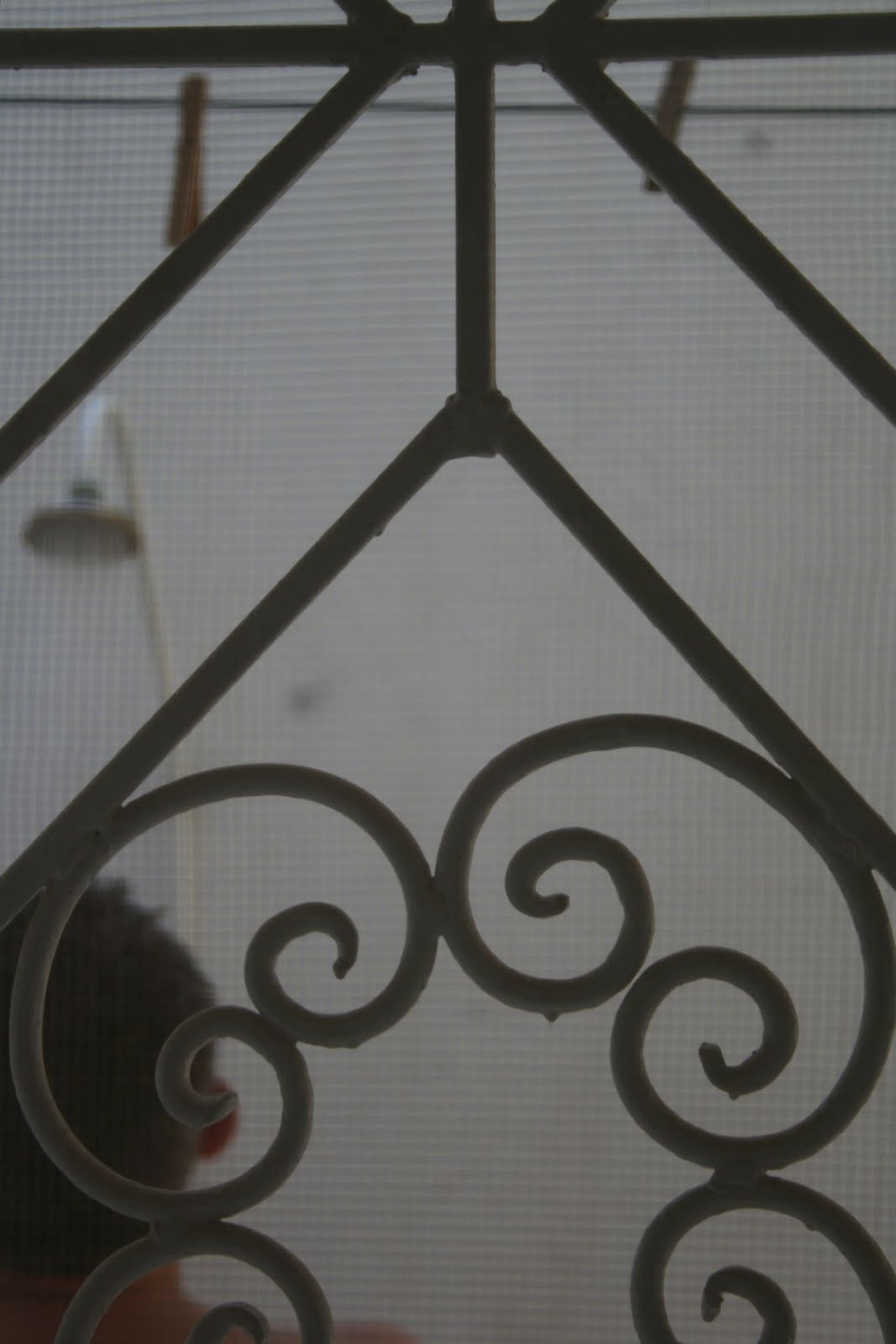
Douche is an off-limits vocabulary word in English.  Any of us who were teenagers in the 70s remember it as a common derogatory term and we are still perplexed by the lyrics of Blinded by the Light, which we thought was also, somehow, about that word.  But when I moved to Tunisia, I learned that douche is a very nice common word.  It simply means ‘to shower’ and while I giggled inwardly when I was looking at houses and the realtor pointed out the douche, I got over it, eventually.  One of my first week in Tunisia ridiculous moments, there were many, came early one morning.  We were basically camping out in the house we had rented because it was still under renovation and the only shower was outdoors.  That may sound rustic, but this one is brilliant.  It is in a completely private space and has hot and cold water.  It is actually pretty fabulous and Allan continued showering there until the end of November when he finally retreated indoors. 
As this house hadn’t been properly cleaned from the previous tenants and also had a film of construction grit all over it, we hired two French cleaning ladies to detail it from top to bottom.  I had a week before I had to begin working, but Allan was already trying to appear to be a professional at his job.  The ladies were supposed to begin at 8:00, but they thought, why not start at 7:30?  Unfortunately, Allan was showering at 7:30- outside.  He had to come back through the house to get to his clothes.  It fell to me to explain to the cleaning ladies about our “situation”. 
We got past the typical “Bonjour, ca va?”  interchange.  Then I had to deliver the information. “Mon mari douche a l’exterieur, “ was the best I could put together.  I can remember, exactly, their faces as they grasped some comprehension of my odd sentence and without even looking at each other, pivoted and went outside to wait on the stoop. 
I see those ladies everyday at work now.  I consider them my little angels since they really helped me get on top of this house before I had to start work.  We’re still not much past the “Bonjour, ca va?” stage, but I always feel like we share a little secret.
And now it’s outdoor shower season again.

Earth Day Pledge

@font-face { font-family: “Cambria”;}p.MsoNormal, li.MsoNormal, div.MsoNormal { margin: 0in 0in 0.0001pt; font-size: 12pt; font-family: “Times New Roman”; }div.Section1 { page: Section1; }

            I will not waste vegetables.  I won’t take them for granted.  I won’t buy too many at one time, feeling optimistic about my energy and time to prepare them before they wilt in my refrigerator.  But if I do, I have two backups.

Dinner at Diane’s

@font-face { font-family: “Cambria”;}p.MsoNormal, li.MsoNormal, div.MsoNormal { margin: 0in 0in 0.0001pt; font-size: 12pt; font-family: “Times New Roman”; }div.Section1 { page: Section1; }

     The invitation said, “Bring a pizza and I will provide the salad and beer”.  My go to pizza lately has become a focaccia from Heart of the Artichoke, by David Tanis.  You mix it up a day in advance and then let it experience a slow rise in the refrigerator.  When you pat it into the baking pan the next day and give it a final one-hour rise, it takes on a spongy, chewy texture that crisps on the outside during baking.  You can keep it very simple with just some rosemary and sea salt or top it like a pizza.  I added onions, sliced and shredded mozzarella, chopped prosciutto, fresh cherry tomatoes,  and some grated Parmesan.  After baking, I put on some touches of basil from our garden.
    Diane always says of her decorating style that she likes it old.  She has a way of achieving an elegant balance of objects and collections without becoming cluttered.  She is also the first one at the FRIP, the public market,  on Sunday mornings and gets great stuff for nothing.  

     All of the pizzas and salads were thoughtful and delicious; it was a perfect neighborhood evening in Carthage.  

Rosemary and Scallion Focaccia
1 recipe makes one flat bread about 10 by 15 inches
11/2 cups lukewarm water
1 tablespoon active dry yeast
3 cups all-purpose flour, plus extra for sprinkling
2 teaspoons fine sea salt
1/2 cup olive oil, plus extra for drizzling
1/2 cup roughly chopped scallions
1 tablespoon roughly chopped rosemary
Course salt for sprinkling
Put 1/2 cup of the warm water in a mixing bowl. Add the yeast and 3 tablespoons of the flour and stir together.  Let the mixture sit until it gets bubbly, about 4 minutes.
     Add the remaining 1 cup water, the rest of the flour, the salt, and olive oil.  Stir with a wooden spoon until the mixture gathers into a rough, sticky mass.  Sprinkle the dough lightly with a little more flour, and knead the dough in the bowl for a minute or so.  Then turn the dough out onto the table and just give it a couple of turns with your hands.  (Note:  I have a question if the liquid to flour ratio is correct in the recipe.  When I use this amount, I get a sticky, unworkable mess and the focaccia comes out more like bread stick texture and not chewy.  I add more flour until I have a moist ball that holds together, at least.)
     Lightly oil a bowl large enough to contain the dough- it will rise a little bit in the fridge.  Turn the dough in the oil, cover tightly with plastic wrap, and refrigerate overnight.  
     The next day, remove the dough from the refrigerator and pat and press it into a generously oiled baking sheet.  It might spring back a bit.  Allow this to happen, and wait a few minutes.  It will eventually relax and become more malleable.
     Now the focaccia needs to rise in a warm place for a out an hour, covered well with plastic wrap or wax paper.
     Preheat the oven to 400 degrees F.  Scatter the scallions and rosemary evenly across the top of the dough and drizzle with olive oil.  Poke little dimples evenly over the top of the focaccia, and sprinkle with coarse sea salt.  Bake for 25-30 minutes, until it’s nicely browned on top and the bottom seems done.  Cool to room temperature, if you can wait.
Other Toppings David Tanis  Recommends:
Instead of rosemary and scallions, sprinkle the dough with 2 teaspoons crushed fennel seeds, some red pepper flakes, and a generous amount of freshly ground black pepper.  Or poke green olives or chopped pancetta into the dimples on top of the focaccia.
And the one I will try when I get the right ingredients:
Wine Grape Focaccia
In the autumn, a wonderful sweet and savory focaccia can be made with ripe wine grapes and caramelized onions.  Replace the scallions with a cup of red onion caramelized in a little olive oil with salt and pepper, and poke wine grapes into the dimples you’ve made on the surface of the dough (You could also use fresh table grapes, but that’s not as romantic, is it?).  Top it with the rosemary and salt.

Progress Report on Tunisia

@font-face { font-family: “Times”;}@font-face { font-family: “Cambria”;}p.MsoNormal, li.MsoNormal, div.MsoNormal { margin: 0in 0in 0.0001pt; font-size: 12pt; font-family: “Times New Roman”; }h1 { margin: 0in 0in 0.0001pt; font-size: 24pt; font-family: “Times New Roman”; }a:link, span.MsoHyperlink { color: blue; text-decoration: underline; }a:visited, span.MsoHyperlinkFollowed { color: purple; text-decoration: underline; }span.Heading1Char { font-family: Times; font-weight: bold; }div.Section1 { page: Section1; }

      What’s happening lately in Tunisia?  How is the formation of the new government proceeding?  Is the economy picking up?  Where did all of those secret police go?  Are we affected by the situation in Libya?  These are questions we also wonder about.  We pass close to the presidential palace every morning on our way to work and many days we have to wait for the passing of an official government motorcade.  Someone important is going to work, but we don’t know who it is or what’s on the agenda.  Some skirmishes are still erupting.  Last week, we cancelled a trip to take our fifth graders on a three-day trip to nearby Hammamet because of some low scale, but seriously violent protests there.  When we ask what they are protesting, our friends are a little unsure and worry that at least some of these issues might be related to Islamic fundamentalists.  Spring just suddenly burst upon us this week.  The weather is glorious, the sites are magnificent, but where are the tourists?  We are encountering refugees from Libya in our work now- students, their parents, and exiled teachers from the American School of Tripoli, who are looking for new jobs since the school has already declared it will be closed next year.  We just see indicators, but don’t know much about the big picture. 
     Robert Siegel, of National Public Radio, was in Tunis this week and produced four segments attempting to give a progress report of Tunisia at this moment.  He also only scratched the surface of a complicated topic, but I think he went to some of the right places and delved into some good questions.  These are the things our Tunisian friends talk with us about.  So listen through these four episodes.  They are short and afterward, you will have about the same picture as we have.
Tunisia: Origin Of Middle East, African Uprisings

‘We Cut The Head,’ But ‘The Animal Is Still Alive,’ Tunisian Activist Says

In Tunisia: ‘We Have No Idea’ If Secular Or Islamist Views Will Prevail

Post-Revolution Tunisia Faces Economic Woes