O. Pat

@font-face { font-family: “Times”;}@font-face { font-family: “Cambria”;}p.MsoNormal, li.MsoNormal, div.MsoNormal { margin: 0in 0in 0.0001pt; font-size: 12pt; font-family: “Times New Roman”; }div.Section1 { page: Section1; }


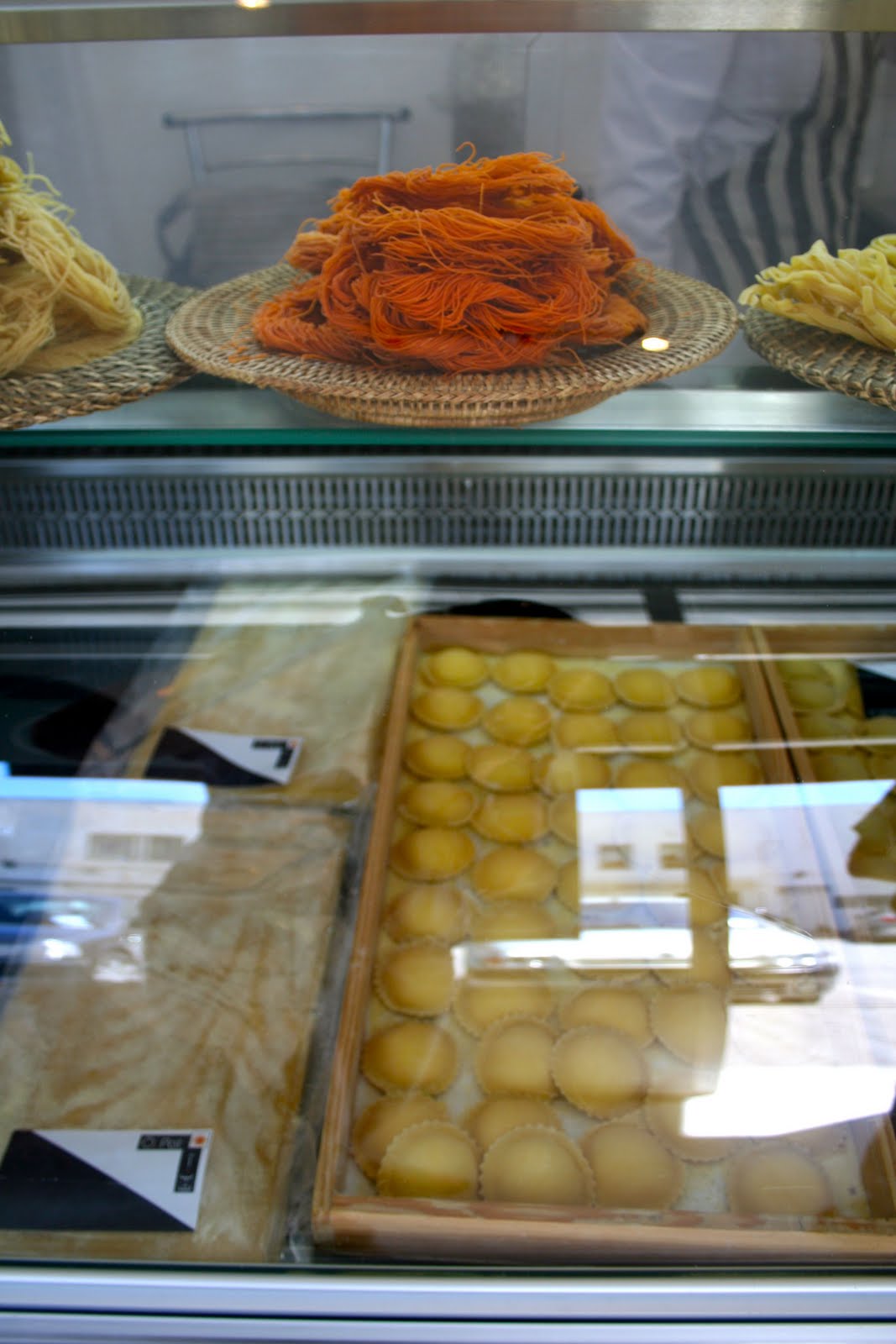
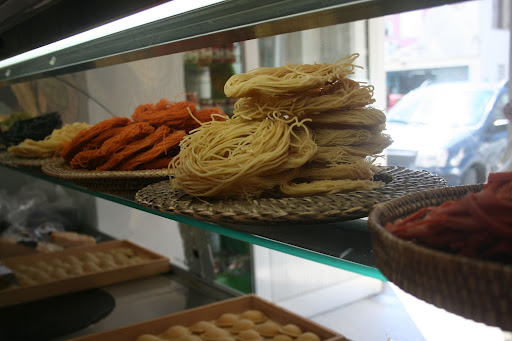
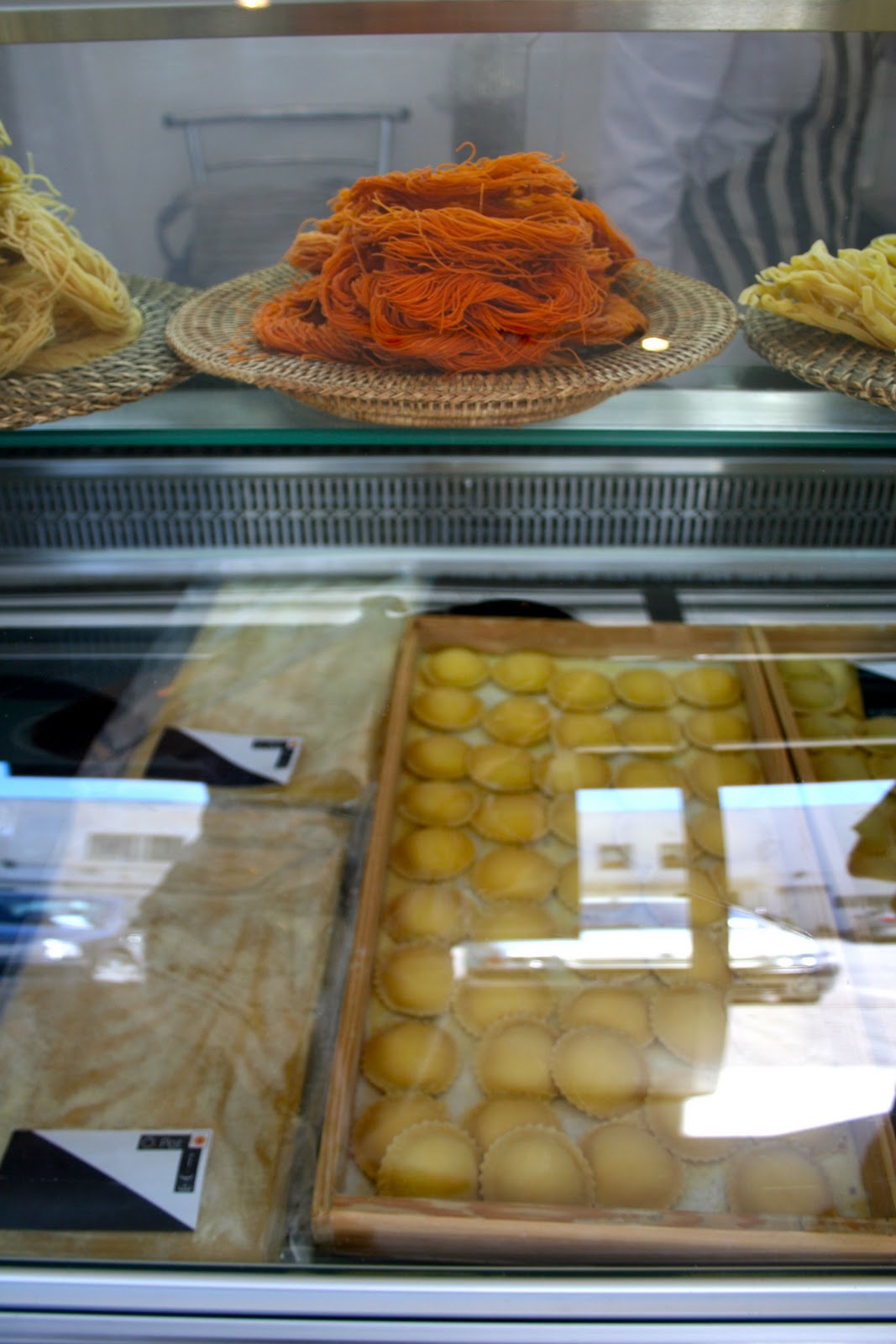
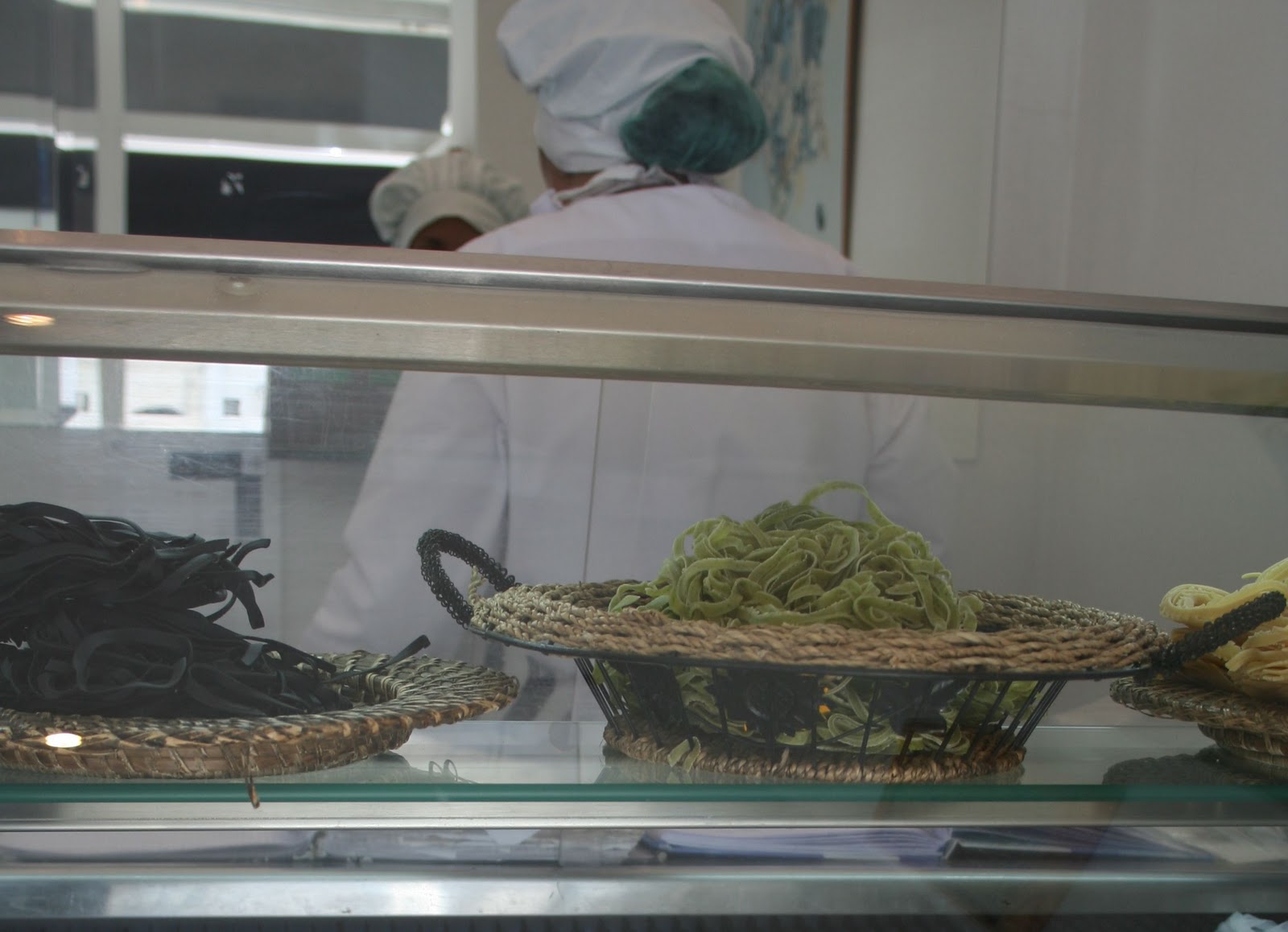
     I don’t honestly understand the name of the shop yet.  If you do, please explain it to me.  I am assuming it is a word play in French.  Is a pasta shop called a patisserie?  The first time I walked by this postage stamp sized shop at La Marsa market, I almost thought it was a sweets shop, as set off by the black and white background was jewel colored pasta in only green, orange, ivory, and black.  And they only make four forms: linguine, spaghetti, ravioli, and sheets for lasagna.  It is just those repeated themes and it makes you dizzy with choice. 


     I wanted one of everything, but then I had a reality check and thought I should finish up  with what I had already ordered, which was several bundles of pasta.  The cashier told me the price:  1800TDS.  Still being a little fuzzy with Tunisian currency, which goes to the 1,000ths place, I handed her 20 dinars, expecting 2 dinars for change.  About 13 US dollars seemed fair enough to me for this handmade artwork.  The cashier scrunched up her face and asked if I had change.  It couldn’t be possible that she was asking me for less than 2 dinars could it?  About $1.30 in US currency?  But she was and she was much relieved when I fished a couple of coins from my purse and walked away.   This is beautiful and clearly, inexpensive comfort food. 

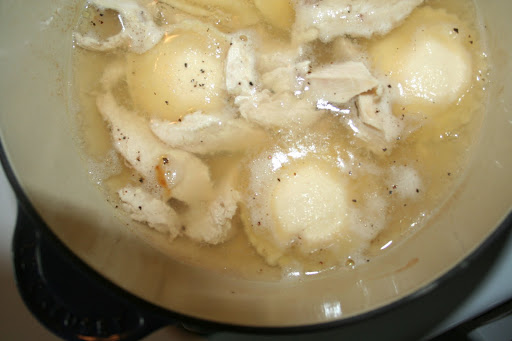
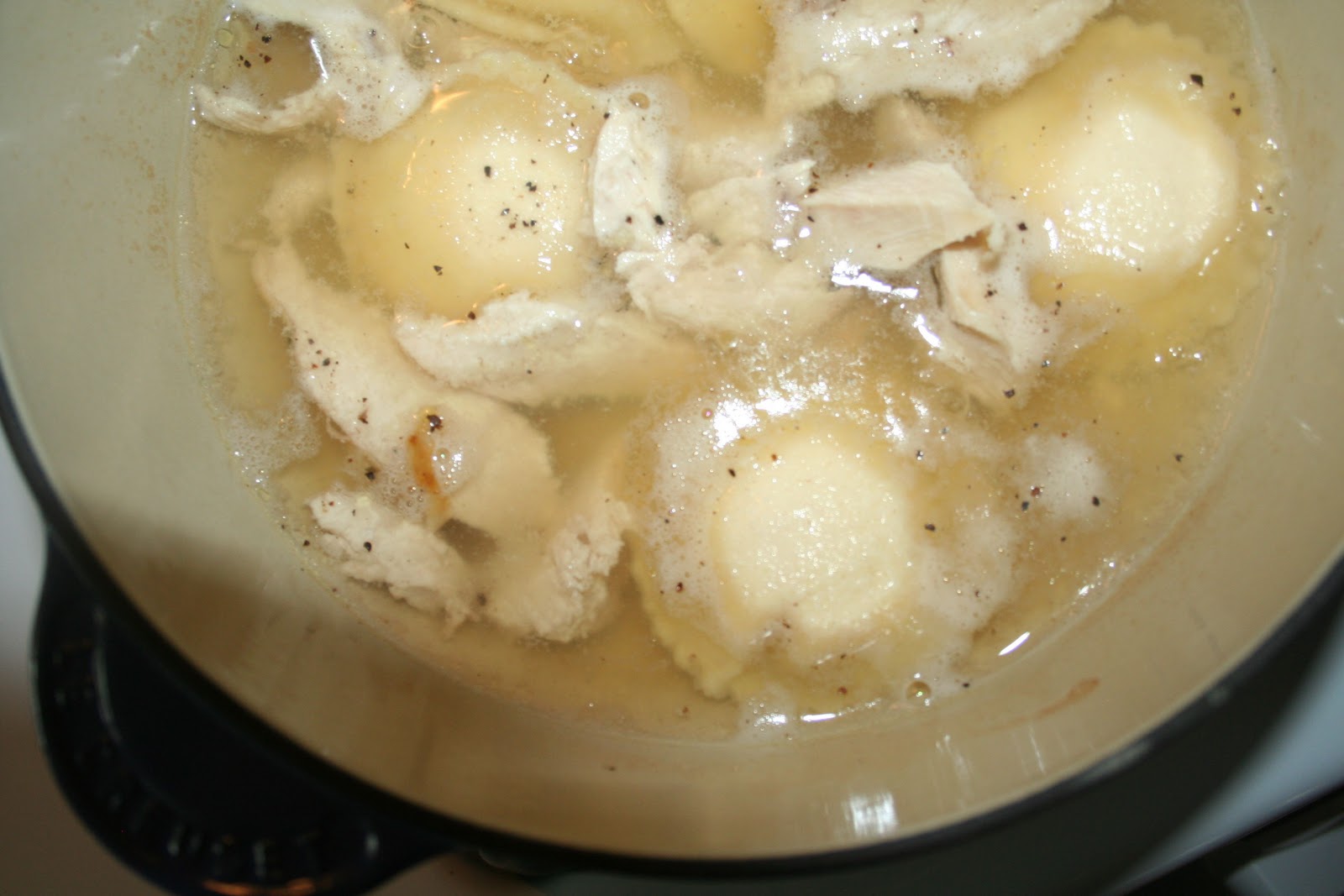
     Allan is away tonight so I made a nice little soup for one.  I’ll admit that it’s very white being poached chicken and four cheese ravioli, in homemade chicken stock.  It took me about 15 minutes to make and O. was it perfect.

The Antidote

@font-face { font-family: “Cambria”;}p.MsoNormal, li.MsoNormal, div.MsoNormal { margin: 0in 0in 0.0001pt; font-size: 12pt; font-family: “Times New Roman”; }div.Section1 { page: Section1; }

     As long as a cool touch persists in our spring weather, we will continue to have these big, beautiful strawberries available.  My friend L, who is moving here from Kathmandu, reminded me recently of the strawberries that were available to us in the winter there.  I had heard that the introduction of strawberries to the Himalayas was an aid project from some decade, which is part of the experience of living in Kathmandu: realizing a variety of surprising cultural introductions that well intentioned organizations thought Nepalis needed.  Maybe they did.  As a result, for a few weeks in the winter, we could preorder little boxes of berries.  They arrived, neatly packed and tiny, more white than red.  Still, at a time of year when the fresh produce selection was the holy trinity of cauliflower, carrots, and tomatoes, they provided some longed for acidity and sweetness.  At least a little.
     I’m craving acidity today.  We had one of those community international day events at the school yesterday where families wear their national dress and bring their best national dishes to share.  It was actually pretty incredible.  There are 74 countries represented in our student population, but the African countries always take the prize for me on days like this and we have students from 38 out of the 52 African countries.  You can only imagine the color, particularly since I didn’t take any pictures.  But eating kim chi, next to Omani stuffed fry bread, topped off with Ethiopian injera, and then a number of European sweets has left me feeling a little like a dog that knows it needs to go munch on some grass in the yard.
      The only thing that sounds good to me is Dorie Greenspan’s “Mozzarella, Tomato, and Strawberry Salad”.  You can’t believe the interplay of the ingredients in this salad unless you try it.  As she points out, tomatoes and strawberries actually have quite a bit in common, aside from the fact that they are both red, unless you are in Nepal.  It’s the acidity quality they share and with some shreds of fresh basil and just a drizzle of our ‘touch of bitter’ Tunisian olive oil, it’s the tonic.  But, and this is key, you must have some slices of the best possible mozzarella on the side as a creamy counterbalance to the berries and tomatoes.  If you can, it is well worth it to buy the finest mozzarella di bufala.  Unfortunately, our Italian import shop was out of it today so I had to settle for the more common buffalo mozzarella in the plastic packages, which is still acceptable.
     At the market, we lucked into finding some bunches of chive bulbs, cilantro, and a ruby red piece of fresh tuna so we made a spicy tuna tartare for the side.

     Finally, I made some strawberry cakes from a Martha Stewart recipe.  They were wonderful, with the perfect balance of butter to fruit and not too sweet.

     I am feeling much better tonight.

Thank you Dorie for this rejuvenating ‘day after international day’ antidote. 
½ pound fresh mozzarella
16 small sweet strawberries, hulled
16 grape or cherry tomatoes or 2 regular tomatoes
Sea salt and freshly ground pepper
Extra-virgin olive oil
A few pink peppercorns
4 fresh basil leaves, halved lengthwise and shredded
Raspberry or balsamic vinegar (optional)
Assemble this salad immediately before eating as the acid in the produce will quickly start to break down the cheese.
Drain the mozzarella, if it’s in water, and lightly pat it dry.  Cut into slices and put two on each plate.
Cut strawberries in half, lengthwise, or into thirds if they are large, and put them in a bowl. Cut the tomatoes crosswise if they are small or into cubes the size of the strawberry pieces if they are large.  Add them to the strawberries.  Season lightly with salt and pepper and moisten, Dorie emphasizes just moisten, with a few drops of olive oil.  Turn the fruit around gently in the bowl and taste for seasoning.  Decide if you want to add a dash of vinegar, but don’t add it yet.  Arrange the berries and tomatoes alongside the mozzarella on the plates.
Finish the salad by pouring a little olive oil over the mozzarella, then crushing the pink peppercorns between your fingertip and sprinkling over the salad.  Scatter shredded basil leaves over the top.  Now, add the touch of vinegar if you have chosen to so as not to diminish the juiciness of the fruit.
Makes 4 servings
From Around My French Table, page 118

Ah April

@font-face { font-family: “Cambria”;}p.MsoNormal, li.MsoNormal, div.MsoNormal { margin: 0in 0in 0.0001pt; font-size: 12pt; font-family: “Times New Roman”; }div.Section1 { page: Section1; }

     I haven’t had a vacation in a long time.  I have been working every weekday and several weekends since we came back from our winter vacation and with all of those dang freshly squeezed orange juices at breakfast, I can’t even get in a sick day.  Everyone has had spring break but us, right?  But our break is tied to Easter and Easter is late this year and so we wait, and wait, and wait. 
     But who can complain, or get any sympathy if you do, when one turns the page of the calendar and sees two beautiful words on it:  Barcelona and Rome.  This is one of the glorious benefits of living in Tunis: We’ve got amazing neighbors.  The day after school lets out on April 16th, we are catching a civil 1:00 PM flight to Barcelona.  We will be there, checked into our hotel, well before dinnertime, especially by Spanish customs, and we will have experienced no jet lag.  We will return exactly one week later, having lived the fabulous, gluttonous Spanish life for one week and still have a day to do our laundry before we return to work. 
     Our colleagues ask each other quite a lot now, where are you going for Spring Break?  Just talking about it helps us get by these last three weeks, like a car running on fumes in the tank.  When we say Barcelona, our friends know that that is a fairly inexpensive, local trip.  I have to put this in a broader perspective.  If we were living in Washington State and doing the sort of traveling we did as public school teachers=none, this could be a trip of a lifetime.  It is anyway; I have really high hopes. 
     Spain has put out some brilliant television advertising lately.  Have you seen it?  The commercial shows a healthy, hard working, double income family with about three children.  While the family is enjoying all of the wholesome goodness of the region, there is a series of comments all beginning with “I don’t need” and finishing with statements such as “to see the menu”, “to speak the language”, “to be an expert”, and finally ending with, “I need Spain”.  Well, I get it.  I cannot wait to get there and eat and observe and experience something new.  I NEED SPAIN… first, and then I need Rome.

Ice Cream or Gelato?

@font-face { font-family: “Arial”;}@font-face { font-family: “Times”;}@font-face { font-family: “Cambria”;}p.MsoNormal, li.MsoNormal, div.MsoNormal { margin: 0in 0in 0.0001pt; font-size: 12pt; font-family: “Times New Roman”; }p { margin: 0in 0in 0.0001pt; font-size: 10pt; font-family: “Times New Roman”; }span.burgundy-dark { }p.merchandise, li.merchandise, div.merchandise { margin: 0in 0in 0.0001pt; font-size: 10pt; font-family: “Times New Roman”; }div.Section1 { page: Section1; }

     While recently showcasing our fair city to our visiting friends, I showed their young sons a typical gelato shop, of which there are many.  My friend asked me, what’s the difference between gelato and ice cream and, actually, I didn’t know, so here is my research. 
Gelato. Gelato is Italian-style ice cream. It is made from water, milk and/or soy milk, combined with flavorings, sweeteners, and a stabilizing agent. Gelato comes from the Italian word for “frozen.” Traditionally, it has had two major points of differentiation from American ice cream: density and butterfat. Unlike ice cream, gelato machinery whips almost no air into the product (i.e., much less overrun), resulting in a dense and more intensely-flavored product.
Ah, that’s why we think it is so much better than ice cream.  
     I have had brief experimentations with making ice cream.  In June, I thought I was going to be all about making ice cream that summer, but one or at the most two super rich batches put an end to that.  My young adult sons still call my lavender ice cream one of the most horrid things they’ve ever put in their mouths and beg me not to make it again.  I actually loved the lavender essence, but with a custard base and a high cream content, even I could only eat about 3 teaspoons of the stuff. 
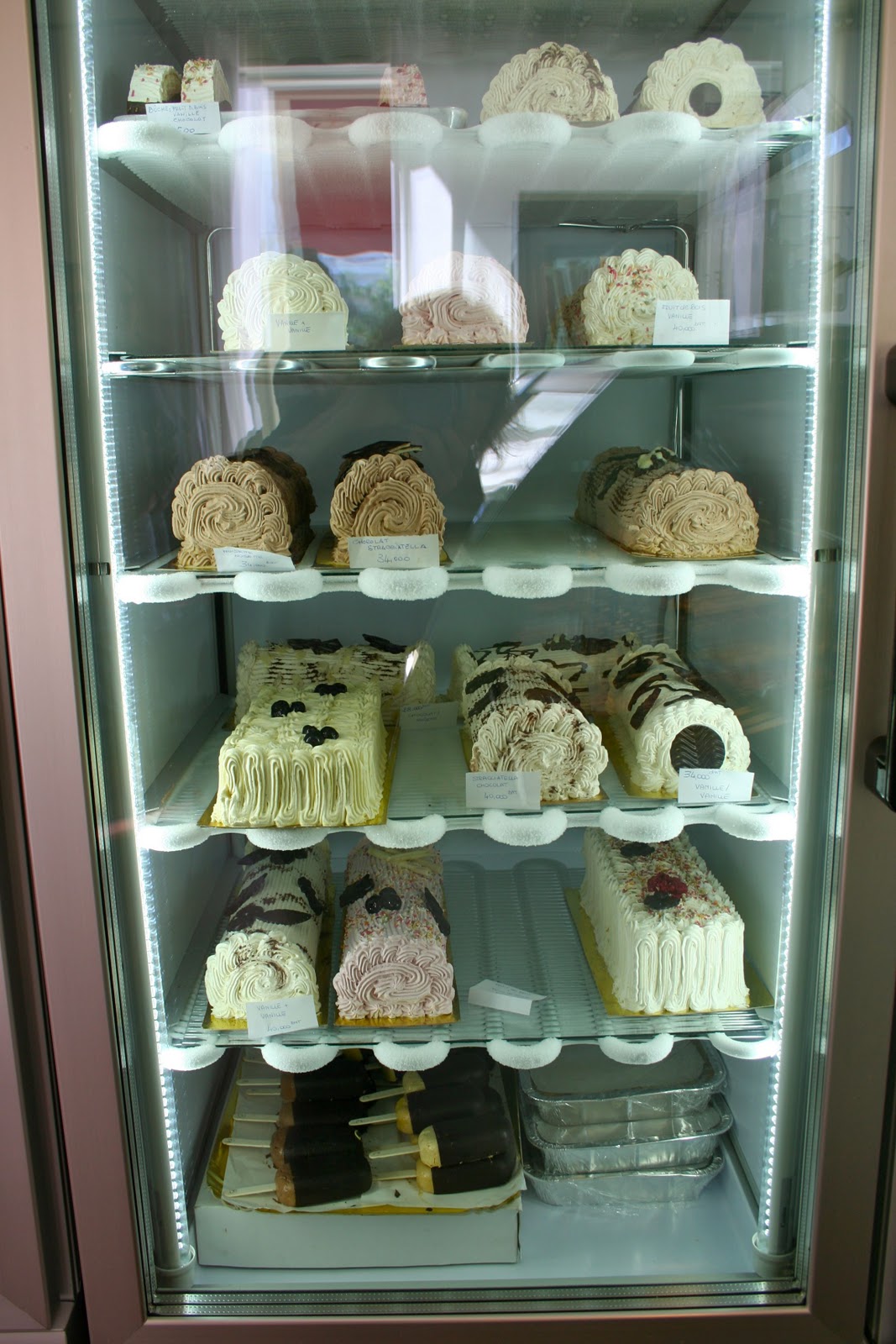
     I asked a shop owner if I could take these photos after we and two of our friends had just purchased double scoops of her gelato.  She said, yes, but sat in a chair about five feet away pouting like a jealous teenager, clearly feeling that I was taking something away from her.  It was weird.  Anyway, she does have a charming shop, including other chilled and frozen desserts, and wood-fired pizzas. I intend to bring many expats there, never telling them about her unanticipated response to photography.  

     Here is my recipe for lavender ice cream.  Make it if you want to.  It’s awesome, but the last thing we need around here is a full batch of this highly caloric, way overrun, concoction to add about 1,000 calories to our daily diet.  But let me know how you like it.
Lavender Honey Custard Ice Cream
¾ cup milk
1/3  cup honey
1 tablespoon dried culinary lavender buds
1 ½ cup heavy cream
½ vanilla bean, cut in half, lengthwise
10 large egg yolks
2/3 cup sugar
1 tablespoon vanilla extract
In a medium saucepan, whisk together the milk, honey, lavender, and ¾ cup of the cream.  Add the vanilla bean.  Heat, stirring often, until small bubbles start to form around the edge; do not boil.  Set aside to cool slightly.
In a large bowl, combine the egg yolks and sugar.  Beat with an electric mixer for 5 minutes, or the mixture is a light lemony yellow and forms ad slowly dissolving ribbon when the beater is lifted.
Slowly beat in the milk mixture.  Pour back into the saucepan.  Use a paring knife to scrape the seeds from the vanilla bean and add them to the pan.  Cook over medium heat, stirring constantly, until the mixture thicken s and reaches 175 degrees F on an instant-read thermometer (don’t go above 180 degrees or the eggs will curdle).
Strain into a medium bowl.  Place over a larger bowl containing ice cubes and cold water.  Stir often until cool.  Stir in the vanilla extract and the remaining ¾ cup cream.  Transfer to an ice cream maker and freeze according to the manufacturer’s directions. 
References:
The Lavender Cookbook, Sharon Shipley, Running Press, 2004, pg. 140.
*“2004 Ice Cream Outlook,” by Donna Berry, Dairy Foods, March, 2004..

Tortoise Ranch

@font-face { font-family: “Cambria”;}p.MsoNormal, li.MsoNormal, div.MsoNormal { margin: 0in 0in 0.0001pt; font-size: 12pt; font-family: “Times New Roman”; }div.Section1 { page: Section1; }

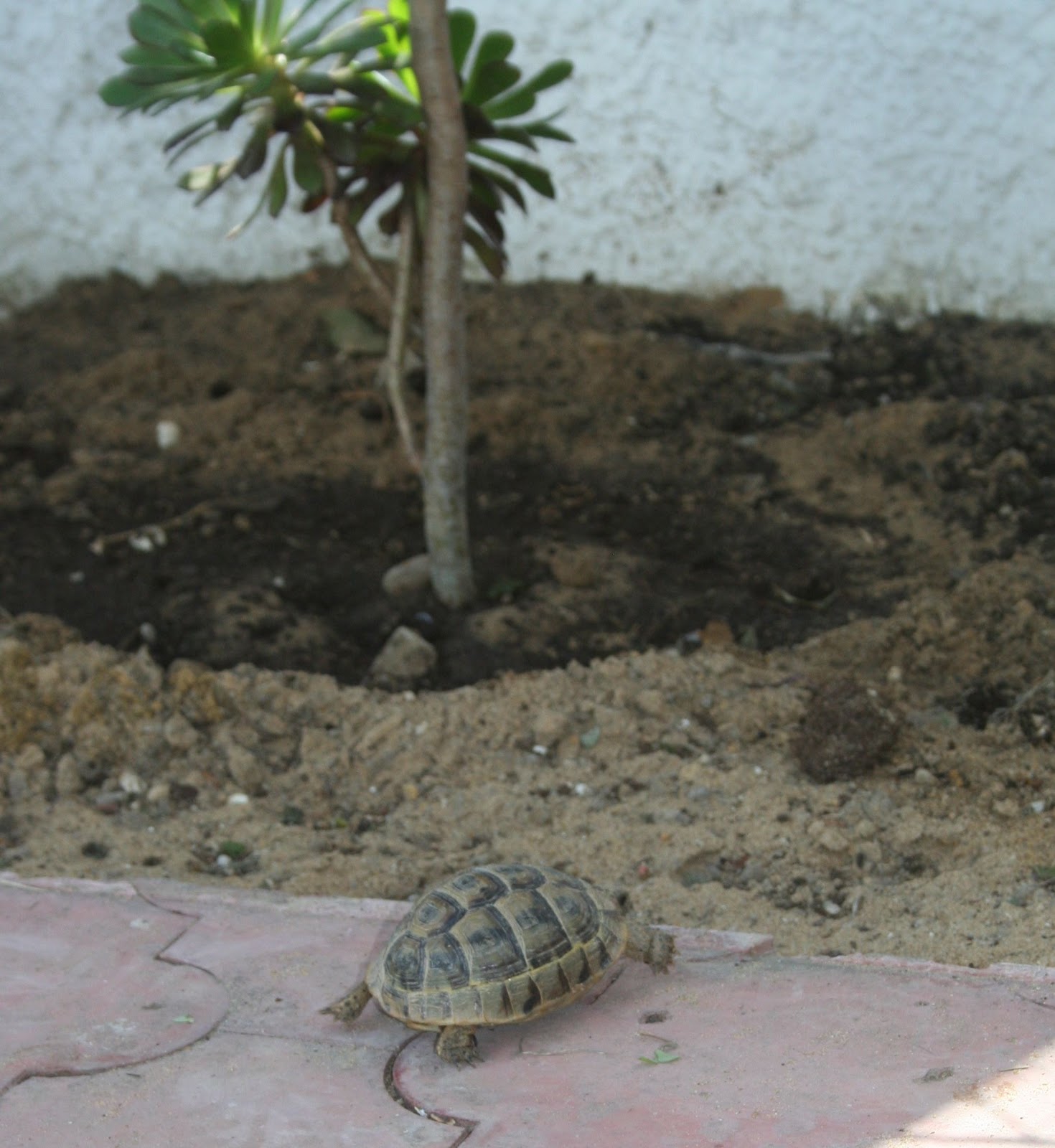
     From the first day we moved into this house in Carthage, I was aware that we had a resident tortoise in the garden.  I might get a glimpse of him for a minute, but not be able to find him again in five minutes or for a week.  Don’t believe anything about a tortoise being slow.  They can transport themselves across a yard, lickety split.  I was sure having a tortoise live in your yard must be a sign of good luck in some folklore and I felt happy about our cohabitation while he was self-sufficient in our yard.  I repeat, I did think that he was finding what he needed on his own. 
     We have been doing some major yard work this spring and we’ve hired a gray haired, French gardener to help us.  He was not at the house five minutes before he was standing at the sliding glass door holding the tortoise with a what’s wrong with you people look on his face. “Salade Madame!” he scolded.  I got it and scurried to the refrigerator where I pulled out a head of something I was probably planning to use for dinner and handed over the whole thing.  He set up the tortoise in a sunny patch of a garden berm, with the greens, and the whole bunch was gone within an hour.  I guess he was hungry.
     This got us watching the tortoise (pronounced tor-twa in French) and getting intrigued with his movements and patterns.  And then Allan got an idea.  Let’s get more of them.  Let’s get some males and females and see if they will have babies.  Now I just wrote about an abundance gene that I think runs in my family.  Allan’s family definitely has an animal husbandry gene.  His father has passed now, but he was a true genius at breeding animals, especially birds.  Allan’s sister has become a well-known bulldog breeder in the US and our family has cycled through a great number of pets, often at Allan’s inspiration. 
     But tortoises seem like a low commitment pet and our new garden is designed perfectly for them with a gravel base and gently sloping earth berms around the perimeter.  From the oversized sliding glass doors that open to the yard, it’s like we’re living in a giant terrarium. 
Junior, sunning his shell and cooling his underside.
So at the market yesterday, we bought three more Tunisian spur-thighed tortoises, one male and two females.  I can’t believe the personalities they exhibit and they are so active.  The adolescent male barely had his feet on the ground before he was shell ramming our granddad tortoise like an elk during mating season.  We finally thought it might be too traumatic for our old-timer and removed the newbie, but this morning, we saw our old tortoise facing off the young one as he slunk away so I think they’ve somehow got their hierarchy established.   
Baby girl wandering off.
One female is an adolescent and she’s pretty independent and then there is a girl baby and she’s all over the place finding herself in little predicaments, like toddling babies do.
     We really have no idea how old these reptiles are and when they might be of reproduction age, but one day, we might witness up to 30 spider sized babies emerge from a hole in the garden and start to flounder their ways around the garden, with no help from their parents.  Then what are we going to do?
Gramps getting acquainted with Little Sister.  Isn’t that nice?

The Abundance Gene

@font-face { font-family: “Cambria”;}p.MsoNormal, li.MsoNormal, div.MsoNormal { margin: 0in 0in 0.0001pt; font-size: 12pt; font-family: “Times New Roman”; }a:link, span.MsoHyperlink { color: blue; text-decoration: underline; }a:visited, span.MsoHyperlinkFollowed { color: purple; text-decoration: underline; }div.Section1 { page: Section1; }

     I have a thing with abundance.  Making a statement like that you might immediately think, Oh no, she’s a collector/hoarder, which isn’t true.  I actually live pretty minimally and love sparseness in my daily life, but when it comes to food, I have long harbored fantasies about having a lot of one food at a particular time and then knowing just what to do to cleverly cook or preserve it.  This either must come from a childhood on a farm or else it’s in my genes.  On our farm, when it was the day to butcher chickens or cut, wrap, and freeze a cow, the whole family got involved, all day.  And then we had IT for dinner.  Childhood summer memories for me recall waking up to my mom setting out all of the supplies: the jars and lids, colander, pressure cooker (we lived in the high plateaus of Colorado) and then beginning to process and jar 3-5 bushel-sized boxes of apricots, peaches, tomatoes, and green beans.  By day’s end, she and I sat adoring the still warm jars full of our labor and delighting every time another jar lid popped, indicating its contents were properly sealed.  But it’s not as though I looked forward to these rituals.  Processing food is sweaty, backbreaking work and there is no stopping mid-job or you lose the freshness peak you are trying to capture.  How on earth did my mom do it?  I truly think a lot of her motivation was that she loved interacting with the food, but then, of course, there was also the necessity to have the pantry stocked to feed a family of eight through the year in a day when there was no Costco or even the convenience of running to the store to pick up an ingredient.
      But it’s not really the idea of having a ton of a particular food that intrigues me; I love being thrown seasonal foods that I’m not completely familiar with and challenging myself to handily make use of them.  When we lived in Port Angeles, Washington there was an admirable organic farm in nearby Sequim.  You could become a member of their garden and during the harvest seasons, receive a surprise box each week containing an assortment of vegetables and herbs du jour.  This is the sort of thing that sends me over the moon.  I am thrilled by the idea of being delivered a bunch of rutabagas or kohlrabi or tiny artichokes and getting right into action, researching and making decisions about how best to use them.  Sadly, my skill level and my time haven’t always matched my enthusiasm and I will confess that more than one perfect vegetal specimen slowly withered away in my refrigerator due to my inaction. 
     That’s what I like about Daniel Klein http://www.theperennialplate.com/episodes-all/.  I especially like Episode 50:  Duck 5 Ways.  I think if I had a sudden windfall of about 25 ducks, I might get overwhelmed and stick them all in a chest freezer, which isn’t a terribly bad way to go.  This guy, however, has some classic cooking skills. Many of the techniques we consider to be fancy food preparations are in fact very old European preservation methods.  Rillettes is meat, slowly cooked in its own rendered fat until it is tender enough to shred.  Rillettes and pate can both be potted and then covered with a lid of rendered fat, forming a seal.  This preparation of the food gives it some longevity and also portability so it can be taken away to eat midday, as in the typical ploughman’s lunch. You have to look at the five ways Daniel Klein chose to prepare his ducks, using the entire bird.  It is inspiring, but man does it look like hard work.
     Our son has just spent his spring break from university breaking up the rocky sod and planting a vegetable garden on the island.  He is a busy student and in my mind I thought you probably don’t have time to tend a garden, but I clamped my hand over my mouth remembering how determinedly I’ve put in many an unlikely garden.  I haven’t always made huge yields from my efforts, but I have learned a lot about our food and I don’t regret any of the time or strength I’ve spent gardening.  The act, in itself, of a young man learning to grow food is a valuable practice and if he gets a bumper crop of one vegetable or another, he will get the opportunity to make some decisions about how to use it all.  And now, I’m thinking that abundance thing must be in the genes.

Facesplats in French

@font-face { font-family: “Cambria”;}p.MsoNormal, li.MsoNormal, div.MsoNormal { margin: 0in 0in 0.0001pt; font-size: 12pt; font-family: “Times New Roman”; }div.Section1 { page: Section1; }

Last night I went to buy more minutes for my phone.  I went to the place where I bought it, where they first installed the minutes on my phone, and started my usual pattern of poking French nouns and verbs at the really helpful salesboy.  He wanted to help me, I could tell, but he could not figure out what in the heck I wanted.   At one point he took out my battery and licked it.  I knew we were way off.  Finally, he asked me in French where I was from.  I told him, sheepishly, as I always do, that I was American and then he said, relieved, “Oh, we can speak English.”  He knew a little English, but he still could never figure out these “minutes” I was trying to get from him.  He was cute, but I went away with no new minutes. 
Sometimes I feel a little large about myself here and my ability to extend simple greetings or order a meal in a restaurant.  I start imagining that French is actually rubbing off on me and that the period of time I dedicated to real study gave me a great foundation and I’m just going on from there.  And then I have an encounter, like yesterday, when I just have to leave empty-handed due to my inadequacies with the official country language and I know I’ve got some work to do.
This reminded me of some fun stories us newbies (people who are here for the first year) were sharing on a Sunday afternoon a few weeks ago.  We were at a local winery enjoying a four-hour lunch and as the winter sun began to hang near the horizon, we volunteered our most embarrassing French faux pas thus far. 
I am never good at that parlor game of sharing your most embarrassing moment, because believe me, if it’s actually my most embarrassing moment, I’m still embarrassed about it and I’m definitely not going to tell anyone.  I usually choose some little scenario that could happen to the best of people and shrug my shoulders and then the others give me a disgusted look, knowing I’m not coming clean, and move on.  That’s the way I work.
Our super cute friend, K, opened up the trust circle with a couple of her tales.   One involved a misunderstanding of the word <joli> which many Americans might think they know means happy.  In truth it means pretty and it is the similar <joie> that means happy.  Sweet K had been going all over town telling this taxi driver and that bakery worker that she was tres joli, feeling in her heart that she was expressing her pure joy in living in such a delightful place, when in reality she was telling everyone she met how pretty she was.  It was some weeks before she learned that truth.  Then there was another episode when she was out in her neighborhood on a stormy night, looking for their newly adopted kitten.  As she wandered about in her nightgown looking under shrubs and parked cars she asked the guard “Ou est le petite gateau?” Much later, when she ran that back in her head, she knew that the important noun there should have been <chat>.  She was asking the guard, “Where is my little cake?” rather than “Where is my little cat?”  It’s an important distinction.
OK, I’m getting to me.  Mine isn’t cute or dotty, like K.  I was in a busy store one afternoon at the crammed check out stand.  Perhaps it was during Ramadan.  I can’t even remember what we needed, but we had to clear up some confusion.  The check out girl just rolled her eyes at our attempts to communicate and finally, I wondered if perhaps she spoke English, sometimes people do.  I asked her, rather pointedly, “Je suis Anglais?”  I was sure I had just asked her, “Do you speak English?” but then Allan looked at me a little horrified and when I think I repeated it, he asked me to stop it.  It came around to me instantly that I was demanding of this woman, “Am I English?”  This was a question she was completely dumbfounded about answering, though her first instinct may have told her I was more American than English.  And that was my moment when it was like the room went silent as I fell in slow motion right on my face and it splatted like an overripe tomato.  I refused to speak another word of French, for that day.
Afterword:  We just returned from the hardware store where we successfully purchased 4 meters of chicken wire and some electrical adaptors.  I also, finally, updated my minutes.  Feeling a little large again.

Porc-a-licious

@font-face { font-family: “Cambria”;}p.MsoNormal, li.MsoNormal, div.MsoNormal { margin: 0in 0in 0.0001pt; font-size: 12pt; font-family: “Times New Roman”; }div.Section1 { page: Section1; }

     We came to Tunisia last August with two suitcases each, fully aware that our “things”, meaning our shipment, might not arrive until the end of October.  That sounded insane and we thought our employer was being overly cautious with that ETA to spare us any disappointment, but still, we bore it in mind.  Knowing it would be really hot for at least a couple of those months, I packed plenty of flippy cotton skirts, sleeveless shirts, and sandals.  And then mid to late October arrived and a cool beam shot through the Mediterranean sea breeze and suddenly, I missed pants.  And pork. 
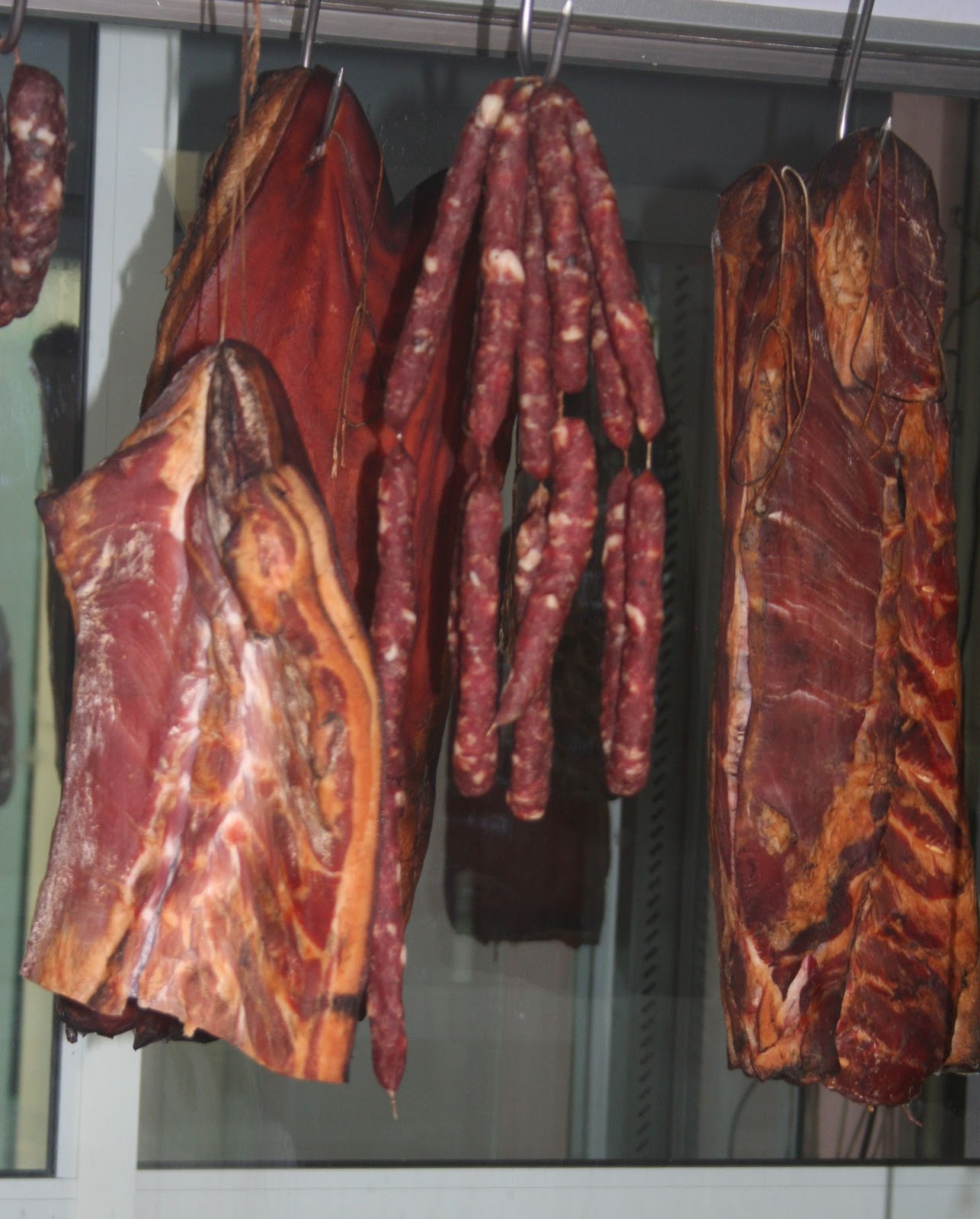
     I hadn’t even mentioned pork to anyone because I knew it was impossible.  Having just moved from a Hindu country, where we ate buff or yak, never beef, I was well aware that certain cultural rules don’t bend.  But somehow, I did mention to a friend that I missed bacon and he said you can have it and he gave me the directions to a French charcuterie, which sounded interesting except I knew the location.  It was sandwiched right between two motorcycle shops on a busy, dusty highway.  It sounded unlikely to me that this was going to be good and I know better than to take a risk trying out something on the fringe in a town when I’m deep in the throes of culture shock, so I didn’t stop in.  And then one day, I think after repeated praise from various expats, we went in and I swear I heard angels singing when I opened the door.  The tiny space sparkled with surgical cleanliness, but the homemade specialty foods were cozy and charming.  Hanging in the back case was what we had come for:  smoked pork and the woody, salty scent clung to our skin even after we had left the shop.  
     The proprietress is a French woman who doesn’t mind if you practice your French with her a little, but then switches to perfect English when the ordering begins.  I like that a lot.  You just point to everything you want and she semi-circles around you packaging it up:  a side of baby pork ribs, duck legs and thighs confit, a jar of house made artichoke sauce, and a lasagna for the freezer for a night when we’re too busy to cook.  Some of her products are imported from France, but all of the pork is produced in a town south of Tunis and of course the cooked foods are made right on site.  
     And so now we have it all here in Tunis since we’ve found Le Petit Coin De France or the little corner of France and believe me we go there regularly for a little shot of happiness.  By the way, that shipment didn’t arrive until December.
This piece is not for my lovely friend Cindee who is moving here from Romania and reveres pigs.  Cindee, we’ll find other things to talk about .

Getting a Little Political

@font-face { font-family: “Times”;}@font-face { font-family: “Cambria”;}p.MsoNormal, li.MsoNormal, div.MsoNormal { margin: 0in 0in 0.0001pt; font-size: 12pt; font-family: “Times New Roman”; }p { margin: 0in 0in 0.0001pt; font-size: 10pt; font-family: “Times New Roman”; }div.Section1 { page: Section1; }

Allan and I stopped by an enormous furniture fair yesterday.  We thought it might have been more local and ethnic furnishings, but it wasn’t.  This was an upscale fashion furnishings show, sponsored by 220 of the fanciest stores in Tunis.    We were wildly, inappropriately dressed for such an event for any culture in any season.  See, we had been to the gym after work and then this fair venue was right by our gym and we were not going to go home to change our clothes and then come back again and as I said, we were a little misinformed about the event to begin with.  At least my legs and arms were mostly covered.  Allan was wearing a sleeveless shirt and shorts, which would draw stares here even if he were clearly jogging down a sidewalk.  He offered to toss on a sport coat, but then you have a guy in a sport coat with no pants on, which is the classic look of a pervert so we just tossed back our heads, paid our two dinars entrance fee, and walked in.  My best hope was that the locals would think we were misguided tourists who were all about catching the rays on their late-winter holiday.  I wish we had had the presence of mind to slap some hastily made Spring Break ’11 signs on our backs.  I’m still cringing at the memory.  We didn’t stay long. 
Why am I mentioning this at all? I mention it because the fair was full of well-dressed, middle-aged Tunisian couples shopping for chic furniture to fill all the salles in their beautiful homes.  They were walking, heads together, arms linked, making plans, and as we left, we were assured that this country will continue to develop, no doubt about it.  There are just so many educated, prosperous-enough Tunisians that they are not going back to the kind of foolishness they have endured here for decades.  They are so proud of their revolution.  Last week, when Hillary Clinton stopped by, Tunisian friends I talked to were more teary-eyed over statements of affirmation about the significance of their revolution to the future of the region and the world than they were over the promises of monetary aid. They are clearly going to work their own country out.  
But what about Egypt?  And what about Libya?  Can the dominoes tumble in a consecutive, predictable pattern with the same expected results?  The truth is, no one knows.  Each of those countries is a completely different microcosm with its own set of variables.  Knowing whom to support, who is representing the “right” side is possibly impossible to know.  John Kerry is in the region this week and I heard him interviewed by Melissa Block on NPR regarding the recent military support of the revolt in Libya.  When asked about who the US is communicating with as a representative of the rebels and if they’ve got the right person, he responded as follows:
Sen. KERRY: Well, no, but this is their designated representative. We also know through them who a lot of the other players are. But look, are there some bad interests there? Yes, just like there are in Egypt, for heaven sakes. We didn’t know exactly what would happen when the Soviet Union fell. And we helped 19 nations to be able to define their future.
Today, they’re members of NATO. But that wasn’t guaranteed. We didn’t know who the players were in almost any one of those countries. But at this particular moment, all we’re doing is an effort to prevent the massacre of people by a man who is a delusional tyrant, who has already menaced the world, and who really ought to go. 
So a few countries are trying to offer a little muscle to hopefully level the field.  If this carries on and gets complicated, I will once again be exposed as being naïve, but I am believing, at the moment, that a majority of Libyans mostly want what Tunisians mostly want: to be able to make some plans and enjoy their own opportunities.