This is the rhythm I’ve been keeping. I stayed home for 11 days straight then ventured to town last Saturday. I was surprised at how taxing brunch, a nap in the car while the boys had haircuts, and 1/2 hour of shopping at Target could be. Clearly, I wasn’t ready for life yet, so I’m back in the quiet for one more week before the boys are finished with school for the quarter, and then nothing will be quiet here for awhile.
I’ve looked at magazines and blogs and the “me who does stuff just to do it” tells me to make cookies and decorate stuff. I haven’t been here for Christmas for a couple of years and never have I been home this early. I must have Christmassing to make up for. Thankfully, I have had some good advisers, both people I know and through the website Hystersisters, telling me to say no, keep life on hold, and rest, rest, rest. The last time I remember having such peaceful options was right after Gabel was born. I can’t say after Anton was born, even though Anton was an easy baby, because I had two year old Gabe then to keep up with. Now that was close to a quarter of a century ago, so I think I will covet these days for myself a teeny bit longer.
Before I had my surgery, the “me who does stuff just to do it” took a fancy to a Martha Stewart dyeing project. I ordered an assortment of these dyes and some economically priced, cotton, bar towels that can work nicely as generous napkins. MS used towels from IKEA, but I couldn’t order those towels. I am happy with something similar I bought from Amazon. The water soluble dye packet and 1 cup of kosher salt went right into the washing machine. I ran the load on hot, for heavily soiled clothing, which has the longest wash cycle, giving the fabric the most contact with the dye. At the end of the dyeing cycle, I ran another short cycle on warm with a couple of teaspoons of a dye fixative. Finally, I ran one more quick wash with a little detergent, and then dried them in the dryer. If you’ve ever dyed stuff before, then you can predict that I looked all over the house for things that could be improved with some dye. In went stained kitchen dishtowels and my son’s stained white t-shirts that were in a bag reserved for Goodwill.
The results were incredibly fun. You might not find these colors very Christmassy, but then I am a person who likes to use blues and browns for Christmas decorating, and also, it won’t be Christmas all year. The army green ones are possibly my favorite, like men’s suiting fabric. This project sated my urge to create something while not requiring me to stand in the kitchen for hours. Now, they will be fun either as gifts or at the table once we really start cooking here.
Here I sit at my house on Lummi Island, exactly one week post-op. Last week was a bit of a blur, the edges filtered through narcotics. It hurt, yes ma’m. I think the uterus fairies had a prior booking that day and all that were available were Thing 1 and Thing 2. They banged around and generally bruised everything, but the job was done, in the end. For a few days following, there was no keeping ahead of the pain. It showed up every three hours on the dot and demanded a handful of pills as ransom. I complied and then watched life happen around me in dreamy snippets, half in and half out. Standout images were of Gabe rustling up a massive Thanksgiving dinner: 20something lb. turkey, two dressings, two kinds of potatoes, gravy, and cranberries. Anton playing his bass. The boys taking Giest in and out for little diversion adventures: fake hunting in the field, swimming and fetching practice in the strait. We also became obsessed with this Mansonish hippy band/cult and watched everything they had on the internet. Yes, our interests range in odd directions.
Then, some Jehovah’s Witnesses actually knocked on my door on Saturday morning. They were dressed in professional clothing, including panty hose, and I truly admired their dedication to canvas the island on a rain-spitting Saturday morning. This, and the Pilgrims, and Edward Sharpe tumbled around in my mind and reminded me of myself at one of my most zealous times of life. I was raised in a small, country, evangelical community, which if you define cult as “of forming its own culture”, then it was a cult for sure, with its own practices and expectations within a closed membership. When I was of high school age, I didn’t want to abandon my Christian beliefs, but I became interested in the allowable counter-culture expressions, largely derived from the Jesus Movement. I was fascinated with communal living and if I had had the connections, would possibly have spent some time doing industrial amounts of cooking and becoming disillusioned in a Christian commune. These were my first two cookbooks, aside from the Betty Crocker cookbook that was the only one I knew my mom to own. These books fueled my imagination about the processes behind ingredient driven, formula-based cooking that still interest me today.
My favorite little cafe in Durango, at that time, was called The Warm Flow. They served food on hand-thrown pottery dishes and had daily postings of their bread, salad, soup, and quiche. The first thing I cooked from the Tassajara cookbook was a cauliflower and swiss cheese quiche with whole wheat crust. Proudly presenting this to my family for dinner, it was about as close as I got to seeing my dad cry. It wasn’t that he was proud of my accomplishment, it was that he couldn’t bear thinking that this was what he had to eat for dinner.
Today is the last day to use up our Thanksgiving turkey and I think I’ll borrow a recipe from my old Tassajara Cooking, making their Half and Half Pie Crust in a pot pie that I think even my dad would love.
Half and Half Pie Crust
Adapted from The Complete Tassajara Cookbook
The half and half title comes from using half white, half whole wheat flour, and half butter, half oil for the fat.
Makes two medium-sized or one large pie crust
1 cup white flour
1 cup whole wheat flour
1/4 tsp. salt
1/3 cup butter
1/3 cup oil (I used olive)
5 Tbsp. ice water
Mix together the flours and salt. Cut in the chilled butter, leaving pea-sized chunks. Mix in the oil and enough ice water to bind. Form into one or two disks and chill or freeze until ready to use. When ready, bake in preheated 400 degree oven until browned.
Farmers’ Market/Thanksgiving Turkey Pot Pie
This was a delicious use for not only the rest of our shredded turkey, but also the Farmers’ Market vegetables I had optimistically stocked up on two days before my surgery. They were gracious enough to wait for me in the crisper of the refrigerator until I could come back around.
Cut all vegetables to a similar size.
1 large onion
3 stalks celery and some of the leaves
3 peeled carrots, preferable multi-colored
3 small potatoes, peeled
1 small head of cauliflower
1 small bunch of kale
4 cups shredded meat (preferably turkey)
1/3 cup water
1/4 cup flour
4 cups poultry stock (preferably freshly made turkey stock)
Sea salt, freshly ground pepper, and good quality paprika to taste
In a large, heavy-bottom pan, saute vegetables in olive oil until beginning to soften, then pour water over them, covering the pot to let them sweat for 5 minutes more. Add shredded meat. Sprinkle flour and stir to coat ingredients. Cook the floured mixture for 2-3 minutes more. Add poultry stock. Allow the sauce to thicken a little. Adjust seasonings.
Pour filling into a deep baking dish. Roll out pastry and lay over the top. Place in 400 degree, preheated oven, with a baking sheet underneath to catch drips from boiling over. Bake until pastry is browned and filling is bubbling. Allow to rest for 5-10 minutes to cool and allow sauce to thicken.
I have a friend who just completed the Hajj. This is the pilgrimage to Mecca, in Saudi Arabia, that all Muslims must try to make at least once, to fulfill the fifth pillar of Islam. She had a small group to her house on Friday evening where she served us possibly the most delicious Tunisian food I have eaten and told us the story of her trip. My mental image, previously, was simplistic, picturing Muslims, in their white clothing, merely walking a few times around the Ka’aba, the black marble shrine reputedly built by Abraham.
In reality, the Hajj is a sequence of activities that takes about a week to complete, and some may stay there as long as a month. This link gives a concise explanation of the daily activities with a few good photos. What struck me was the storyline these actions are linked to. Coming from a Judeo-Christian worldview, I’m still taken by surprise every time I am reminded that the story I know to be of Abraham being willing to sacrifice his son Isaac, the only son of Sarah, is not the narrative understood in the Muslim world. In their view, the footnote of my story, Sarah’s maid Hagar (also Hajar) and her son Ishmael, who Abraham banished to the desert to quell Sarah’s jealously over being barren, becomes the real story. The primary symbolism of the Hajj is about Abraham resisting Satan’s temptation to not obediently sacrifice his oldest son, Ishmael. It is also about Hagar’s survival in the desert, how she searched desperately for water before discovering a spring that saved them.
My friend completely believes these stories of her faith, and so she was able to submit herself, with abandon, to the spiritual lessons and personal transformation that were possible. She returned radiant, open-hearted, and dare I say, pure. It was remarkable to be with her as she recounted her experience. The change in her is indisputable.
I thought the next day about the similarity of the Hajj to other pilgrimages such as The Stations of the Cross or even the Hindu pilgrimage we used to observe in Singapore called Thaipusam, involving piercing the body with many sharp skewers and then performing a walk in a pain-trance to atone for sin or show gratitude for good favor from the gods. None of these displays, however, would be more than self-inflicted agony without an underlying story to give it significance. It seems we often need a small storyline in our daily lives to help us get through challenging circumstances. When life gets a bit too dire to fully confront, placing some faith in a convenient myth can help to take a little of the edge off. I recalled some of the “God’s will” language from my cultural background. It does help at times to allow yourself to believe a situation is out of your control and that there is a wise, loving entity that will make it come out alright. And in fact that may be entirely true. It’s just that we don’t know, exactly, and so there must be some of our own imagination involved, which is what creates mythology.
I am facing my own difficult reality these next weeks. I am leaving Tunis for Seattle tomorrow to have a hysterectomy. If you are one of the dozens of women who have said to me, “It’s a piece of cake; you’ll be a new person, ” thank you. Those affirmations really have given me resolve and courage. I believe, without a doubt, that this is what I must do right now. It’s just that the ugly reality of the actual surgery remains. I try not to fool myself about realities in life, anymore. I am trying to open my eyes and look at the truth as much as I can, as I’ve found that sheltering myself in my naive state can bring me more pain in the long run when my blinders must be removed. I am fortunate enough to have this procedure at a time in medical development when invasive surgery isn’t necessary, and I can choose to have tiny robotic hands carry out the precise work. Allan and I both tried to look at a YouTube video of a daVinci hysterectomy this week (notice: no link, though I just gave you the search string if you think you can watch). He was able to watch it through to the end because he wanted to really know what was going to happen. I watched for about a minute, and when I felt myself becoming nauseous, I turned it off. I found that I, too, needed some mythology to move me through this, because the truth was more than I could confront. My preferred narrative is that I will take a warm, comfortable nap, and while I am sleeping, skilled doctors will release tiny fairies into my body. These careful and sympathetic fairies will dislodge my ailing uterus, probably with a gentle rocking motion, and will deliver it back to the point of insertion where the doctors can take it away. I’m even surprised about the fairy thing. I’m not generally into the fantasy world; I find it rather boring, but this image is working for me and fairies it will be. If you are the praying/thinking type and would like to send your well wishes to my uterus fairies, it looks like I will be the first surgery of the day on Monday, November 25th, Seattle time.
The best preparation for me today, for this sojourn that begins tomorrow, is visiting the stations of my kitchen. That is my meditation and where I become grounded. This is what I’m making for a comfort-food dinner with my husband tonight. I hope we have some left over to keep him feeling loved, in my absence.
I know this is totally cheating, but I think I will borrow this beautiful photo, just this once, to save me the effort of setting up my own studio later to photograph my dish. Credit goes to David Prince.
Coq Au Vin
Serves 6
2 750-ml bottles dry, full-bodied red wine
2 3 1/2-lb chickens, cut into 4 breasts, 4 thighs, and 4 legs
4 celery stalks, peeled and cut into 2″ batons
2 heads garlic, sliced in half
2 lbs. button mushrooms, cleaned and trimmed
1 lb. pearl onions, peeled
1/2 lb. slab bacon, cut into 1/4″ batons
1 sachet of 8 sprigs thyme, 1 fresh bay leaf, 2 tsp. coriander seed, ans 1 tsp. cracked pepper, tied in cheesecloth with twine.
4 T flour
4 cups unsalted chicken stock
1/2 bunch fresh parsley, leaves picked
Salt and freshly ground pepper to taste
In a large saucepan, reduce the wine by half, then set aside to cool. Place the chicken in a large container with the celery, garlic, mushrooms, onions, bacon, and sachet. Cover all ingredients with reduced wine and marinate in the refrigerator overnight.
Preheat the oven to 325 degrees F. Drain the marinated ingredients; reserve the wine. Pat the ingredients dry, and season the chicken with salt and pepper. Place a large Dutch oven over medium heat and add the bacon. Cook, stirring until crisp, and then remove with a slotted spoon and reserve. Sear the chicken on all sides in the bacon fat (you may need to do this in batches). Remove the chicken ; add the vegetables and sachet, and cook, stirring occasionally, about 5 minutes. Add the flour and cook, stirring, for another 4 minutes.
Add the wine, crisped bacon, chicken, and chicken stock. Bring to a simmer, cover with a round of parchment, and transfer to the oven. Cook, stirring and basting the chicken at least three times, until the chicken is tender at the bone, 1 to 1 1/2 hours.
If the sauce seems too thin, remove the chicken and vegetables, return the sauce to the heat, and reduce until it reaches the desired consistency (it should coat the back of a spoon). Incorporate all the ingredients back together, season to taste, and serve, garnished with the parsley.
Spaetzle
3/4 cup whole milk
3 eggs plus 1 yolk
1/2 cup creme fraiche (or sour cream)
2 1/4 cups flour
1/2 tsp. salt, plus more to taste
1/8 tsp. ground pepper, plus more to taste
1/8 tsp. ground nutmeg
2 tsp. olive oil
2 T butter
3 T chopped parsley
Bring a large pot of salted water to a boil. In a small bowl, whisk the milk, eggs, yolk, and creme fraiche until smooth. In a large bowl, whisk to combine the flour, 1/2 teaspoon salt, 1/8 tsp. pepper, and nutmeg, and make a well in the center. Pour the egg mixture into the well, and, using a spoon, stir from the middle outward, slowly pulling the dry ingredients into the wet. Once fully incorporated, stir for a few seconds more until the batter looks sticky. The batter should be fairly wet, but with a consistency thick enough to sit on top of a spaetzle maker, food mill, or colander. Press the batter through the spaetzle maker or colander into the boiling water. Once all the spaetzle rise to the surface, strain them, rinse in cold water, and toss in the olive oil to prevent sticking.
Brown half of the butter in a large nonstick saute pan. Add half of the spaetzle, toss until lightly browned, and then toss in half of the parsley. Transfer the browned spaetzle to a bowl, and repeat the process with the remaining ingredients. If needed, season to taste with more salt and pepper.
I just got back in the house from a quick six-night trip home to Bellingham. We have a week-long mid-term break this year, and I decided last summer to just book the ticket and come home for a little check-in. When most of my friends were going on local trips to London, or Switzerland, or Sicily, it felt a little ambitious to be heading off on that long-haul flight to the Northwest, but was it worth it? Of course, every second of it.
All members of our family put some commitments in place last summer toward accomplishing things we want to achieve in our near futures. These goals run a vast gamut, and I wanted to see for myself how it was all going. First of all, the Lummi house was spectacular. We did so much work last summer to bring it back up to the level of a cared-for home. Gabe is living there this year and he has really invested himself in making it his home. All of the structure was still in place and I could crash-land there for six nights and just enjoy it. That was a wonderful experience.
Gabe is thick into caring for an adorable baby. His new weimaraner pup structures his entire life, which is helping him have nicely productive days, and is also showing him that he would do well in some other professional and personal pursuits he wants in his life.
Anton has been working hard at his musicianship as well as some other things. He is getting recognition for the practice and leadership he has been investing in the music department. This also affirms him about his capacity to move toward his next goals in life.
I had a few hours to myself when I got back to Tunis today, and I was reflecting on how life is a constant process of paying attention to the routines and motivations in your life, and then making small adjustments when you notice something is taking too big of a priority. NPR Weekend Edition Sunday was doing stories with a focus on addictions: alcohol, internet, food etc. There was a lot in the stories for me and a lot, I think, for everyone who wants to avoid unproductive traps in life.
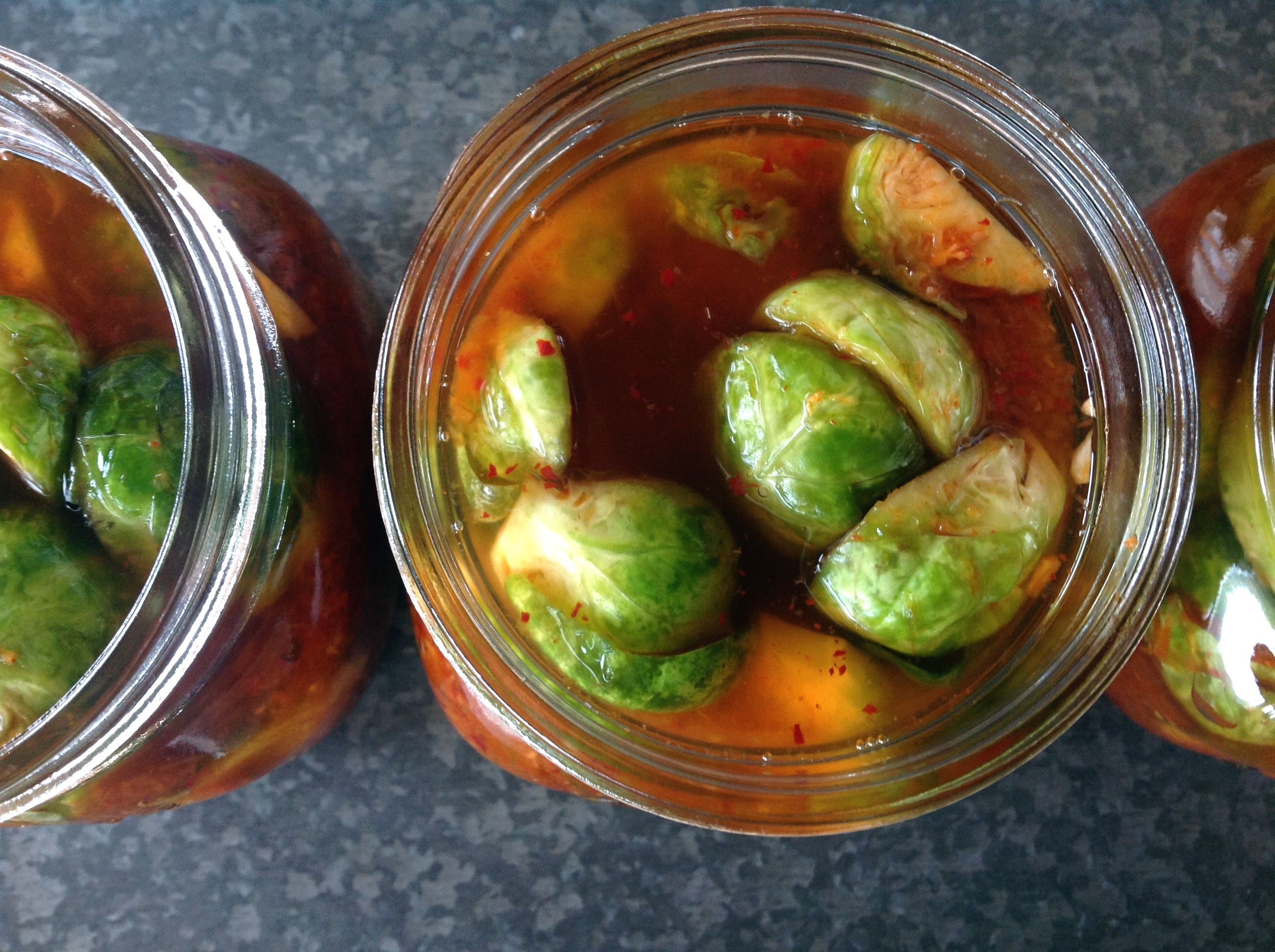
So the week didn’t just fly by without something to show for it, Gabe and I selected an anchor cooking project. He bought Brussels sprouts at the farmer’s market the day before I arrived, and then I did a little prep each day toward making up a few jars of this kimchi. I tell you our kitchen smelled just like a Korean restaurant the day I left, which is a cozy place, in my mind. Notice the tiny air bubbles around the jar rims in the picture. That is natural fermentation taking place. These should be incredibly delicious when I get back to Bellingham in early December to take care of a surgery I am finally willing to undergo. That is my commitment from the summer: to get past an unhealthy situation with my body.
Brussels Sprouts Kimchi
Bon Appetit, October 2013
3.5 oz. plus .7 kosher salt*
1 1/2 lb. small Brussels sprouts, trimmed, halved
1/2 small onion, coursely chopped
2 scallions, sliced
4 garlic cloves
1/4 cup gochugaru (course Korean red pepper powder, found at Asian markets or from Amazon)
2 Tbsp. fish sauce (such as nam pla or nuoc nam)
2 Tbsp. Sriracha
1 Tbsp. grated peeled ginger
1 Tbsp. soy sauce
2 tsp. coriander seeds, crushed
2 tsp. fennel seeds, crushed
Makes 2 quarts
Combine 3.5 oz. salt and 2 quarts warm water in a large bowl, whisking to dissolve salt. Add Brussels sprouts and top with a plate to keep Brussels sprouts submerged. Let sit at room temperature 4 hours; drain. Rinse, drain, and place in a large bowl.
Pulse onion, scallions, garlic, gochugaru, fish sauce, Sriracha, ginger, soy sauce, and coriander and fennel seeds in a food processor until smooth. Add to bowl with Brussels sprouts and toss. Transfer mixture to canning jars (your choice of sizes), packing down to eliminate air gaps.
Combine remaining .7 oz. salt and 1 quart warm water in a large bowl, whisking to dissolve salt. Add pickling liquid to jars to cover Brussels sprouts, leaving at least 1″ headspace. Cover jars with lids. Let sit out of direct sunlight at room temperature until kimchi tastes tangy and releases bubbles when stirred, 3-5 days. Chill.
Kimchi can be made 2 months ahead (flavor will deepen). Keep chilled.
*The shape of the crystals varies quite a bit from brand to brand, so measuring kosher salts by weight is the most reliable method. Following is a conversion scale:
Recently, I noticed a blog Tasting Table pushed out. The title was Mastering the Art of Piroshki, and the feature article was promoting a new book by Anya von Bremzen called Mastering the Art of Soviet Cooking. It’s a little tongue in cheek word play against Julia Child’s famous tomb, meant to poke some fun at the dreary picture most people have of Soviet-era cuisine, but also a real cookbook of classic Russian dishes that survived that period. She and her mother made a little video about making piroshkis and I know I would like to have both of them as friends.
Having a strange compulsion for Eastern European foods, I was quickly attracted to this book. But then I watched the video. The dough they mixed in a small ceramic bowl seemed a little dry, worn out, and thin. And then she offered a second recipe for making piroshki using American biscuit dough in a tube, a product I despise, and then I knew that this wasn’t my cookbook.
But Allan noticed the title over my shoulder and said, “Piroshkis. Remember, we used to buy them from a guy on Vendor’s Row, near the Viking Union.” This was at Western Washington University, where we both eventually graduated. I had not thought about that for 30 years, but when he mentioned it, I could remember sometimes buying a mysterious triangular-shaped stuffed dough for lunch. That brought back sweet memories of meeting Allan at Vendor’s Row for lunch when we were in the flirting stage of our relationship, 6 weeks before we were engaged, (Oh, get over it. We’ve been married for 30 years. It’s all a memoir, now). I was coming from music theory class or Cultural Anthropology and he was coming from some upper division political science class, often about the parliamentary system. I usually had a little lunch with me because I worked most mornings from 5:30-8:30 at the Fountain Bakery, and they gave me 1/2 sandwich and a bag of chips as an employee meal. But somedays, I didn’t work, and then we bought a piroshki or bagels and some pastrami and cream cheese to go on them. Allan thought I was unique because I was shopping at the Food Co-op, making all of my own bread, and eating bulgur wheat with homemade yogurt for breakfast. I thought he was interesting and exotic because he ate piroshkis, worked at a restaurant that specialized in wild game dishes, and went to BC to visit his relatives. We were both ready to get on with our adult lives and we saw ourselves in each other. We didn’t really know what we were getting in to, but who does? We got lucky. We have maintained the same pace of change and still find each other interesting.
I wanted to make piroshkis for a little date night. I researched recipes and found one that sounded great from the LA Farmer’s Market. That’s what you want, right? A piroshki that is being sold from a cart. This turned out to be an outstanding recipe. You could be completely happy making it as it is printed. I had just returned from our own market and had been a little overambitious in my purchases so I didn’t mind spending a few hours to use some fine food products. This dough is stellar. You can actually put anything in it and it will be wonderful. I made three fillings today. It did take me three hours to make three fillings and then another couple of hours to make the dough and shape and bake them. That is a 5 hour Saturday project, but I listened to podcasts and had a nice time and now, I have 6 bags of piroshkis in the freezer for delightful weeknight dinners. Make the fillings and then make the dough since it doesn’t rise for long. You could even make the fillings over a day or two and then put it all together in a couple of hours.
Curried Butternut Squash, Sage, and Caramelized Onions
Peel a butternut squash and cut into 1″ cubes. Steam until completely tender. In a covered saute pan, cook a sliced red onion and about 20 sage leaves in some olive oil. Leave a lid on until they sweat and soften. Remove the lid and continue to cook until they begin to brown and release their sugars. Remove from pan. Add steamed squash seasoned with curry powder, in batches if necessary so as not to overcrowd the pan, and also brown until the squash releases its sugars. Put the entire mixture in food processor and puree until smooth and fluffy. Correct the seasoning with curry powder, salt, and pepper. Refrigerate until use.
Braised Lamb, Roasted Onion, Petit Pois, and Mashed Potatoes
Marinate lamb for several hours in olive oil, chopped mint leaves, and finely grated lemon zest. Braise, with a little water, for several hours at 280 degrees until tender and falling off the bone. Chop a red onion. Toss with olive oil, salt, and pepper and roast in a 350 degree oven until soft and caramelized. Peel and cube, into 1″ hunks, 3 or 4 russet potatoes. Steam until completely tender. Drain and hand-mash, with a knob of butter and a little milk. Season with salt and pepper. Mix together shredded lamb, roasted onions, 1 small can of petite pois, and a balanced amount of mashed potatoes. Adjust seasonings. Refrigerate until use.
Freshly Ground Turkey, Leeks, Chanterelles, and Dill
Grind turkey if not available in the market. Chop 3-4 leeks and saute in olive oil until softened. Chop 2 cups of chanterelle mushrooms and add to saute. Add ground turkey and cook through. Add 2 tablespoons freshly chopped parsley leaves and 2 tablespoons fresh dill. Season with salt and pepper. Refrigerate until use.
Dough
Ingredients
package (1/4 ounce) active dry yeast
1 teaspoon sugar
1 1/4 cups warm water
3 cups all-purpose flour, plus more for dusting
2 tablespoons butter
1 large egg
1 1/2 teaspoons salt
In a small bowl, combine the yeast, sugar, and 1/4 cup of the warm water; stir gently to dissolve. Sprinkle in 1 teaspoon of flour and let the mixture stand until the yeast comes alive and starts to foam, about 5 to 10 minutes.
Put the remaining flour in a large bowl and make a well in the center. Pour in the remaining 1 cup warm water. Add the butter and break it up with your fingers into the warm water so it melts. Add the egg, salt, and yeast mixture. Mix with your hands, incorporating more and more flour into the center to form a soft, sticky dough. Lightly dust your hands with flour as the dough sticks to your fingers. Take care not to add too much extra flour, however, or the dough will become dense. Turn the dough out onto a lightly floured work surface and fold it over itself, kneading with the heel of your hand, until it’s smooth and elastic, about 5 minutes.
Cut the dough into 6 equal pieces and roll into balls; they should be about 4 ounces each (about the size of a cue ball). Sprinkle the rounds lightly with flour. Cover and let rest for at least 30 minutes so they will be easier to stretch.
Pat each dough piece into an oblong about 6 inches long and 2 inches wide. Mound about 3/4 cup of the filling evenly down the length of each piece, keeping a small border all the way around. Dust your fingers with flour and bring the long edges up to enclose the filling, pinching them together to form a tight seal. Check for any holes or tears, making sure the piroshki are completely closed.
Gently pat the piroshki into 8-inch-long pies; they should spread out fairly easily. Turn the piroshki seam side down and gently pat the tops to spread them out. Lightly dust with flour, cover, and let rise again for about 10 minutes.
Arranging them on a parchment paper lined baking pan. Brush with a beaten egg and top with poppy seeds. Bake in a 375°F (190°C) oven until golden brown, about 20 minutes.
I like this little forward from the blog that posted the recipe. I made blueberry and raspberry hand-pies on the Fourth of July in Montana and my family laughed every time I said it. It does sound funny somehow, doesn’t it?
Potato Piroshki are probably the best-known Russian hand pies. Like all the incredible baked goods from Tbilisi N Yerevan Bakery, in West Hollywood, this recipe hails from Rita’s father, Elko Kakiyashvili, and has been in the family for generations. Although T & Y features five different fillings, the traditional potato piroshki with dill and caramelized onion continues to be the most celebrated. These piroshki are as authentic as you can get without traveling to Russia. Steaming the potatoes instead of boiling produces the creamiest mashed potato texture.”–JoAnn Cianciulli
September has been a month of bittersweet moments. It’s always that way. We reluctantly close the door on summer, while looking forward to autumn’s rotations. School starts, people make adjustments. We all get in our new places where we can hold tight for the next 9 month sequence.
Almost two weeks ago, we said goodbye to Gabe, who has been our housemate here since last December. He is great company, and he loves his rituals in Carthage, including daily swims in the Med., cooking, and reading in the garden, along with studying Arabic. He will be finishing university this year, commuting from the farm on Lummi. Here he is with his new roommate, a weimaraner puppy that is a total heart stealer.
Photo by Anton Bredy
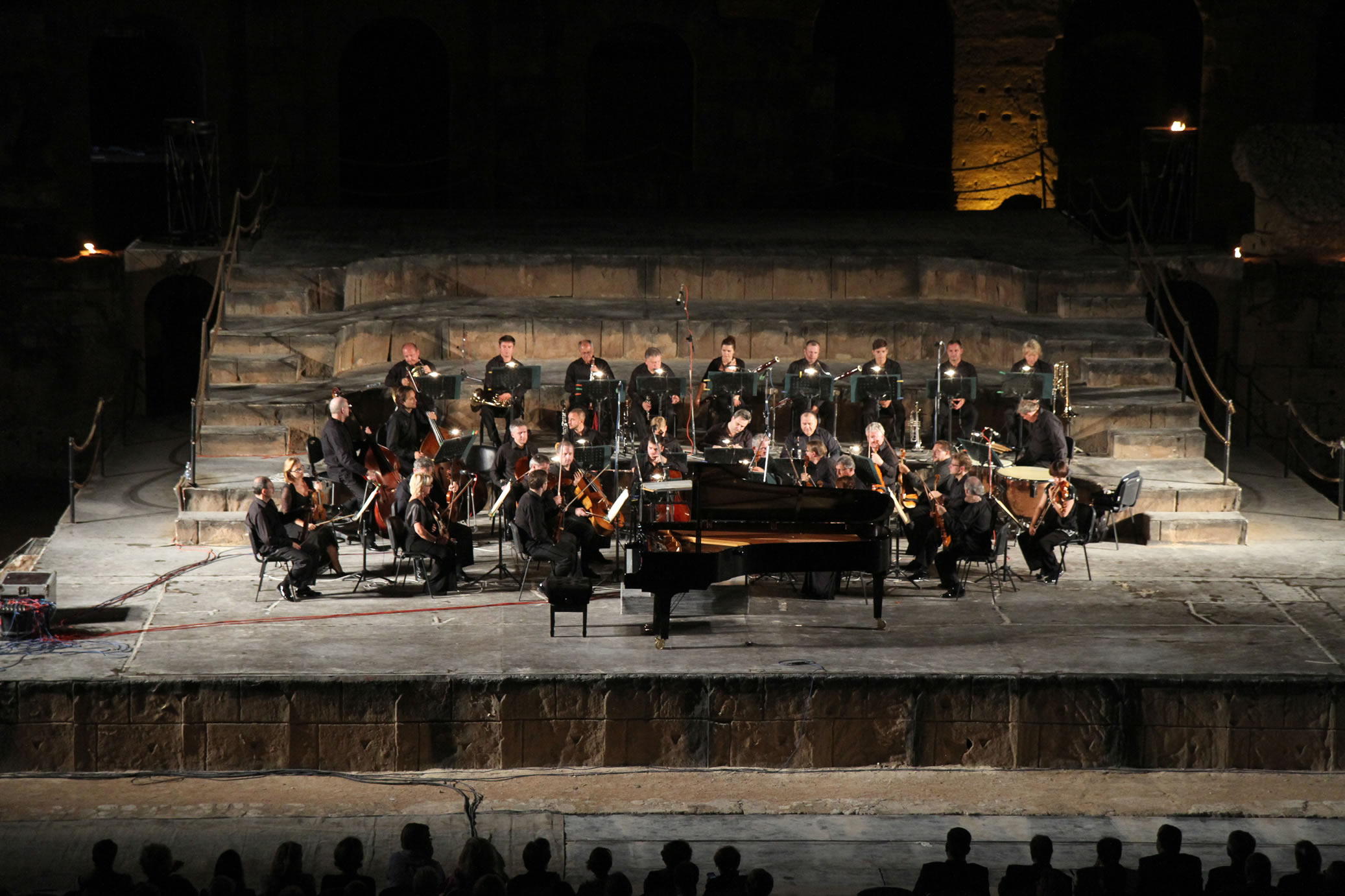
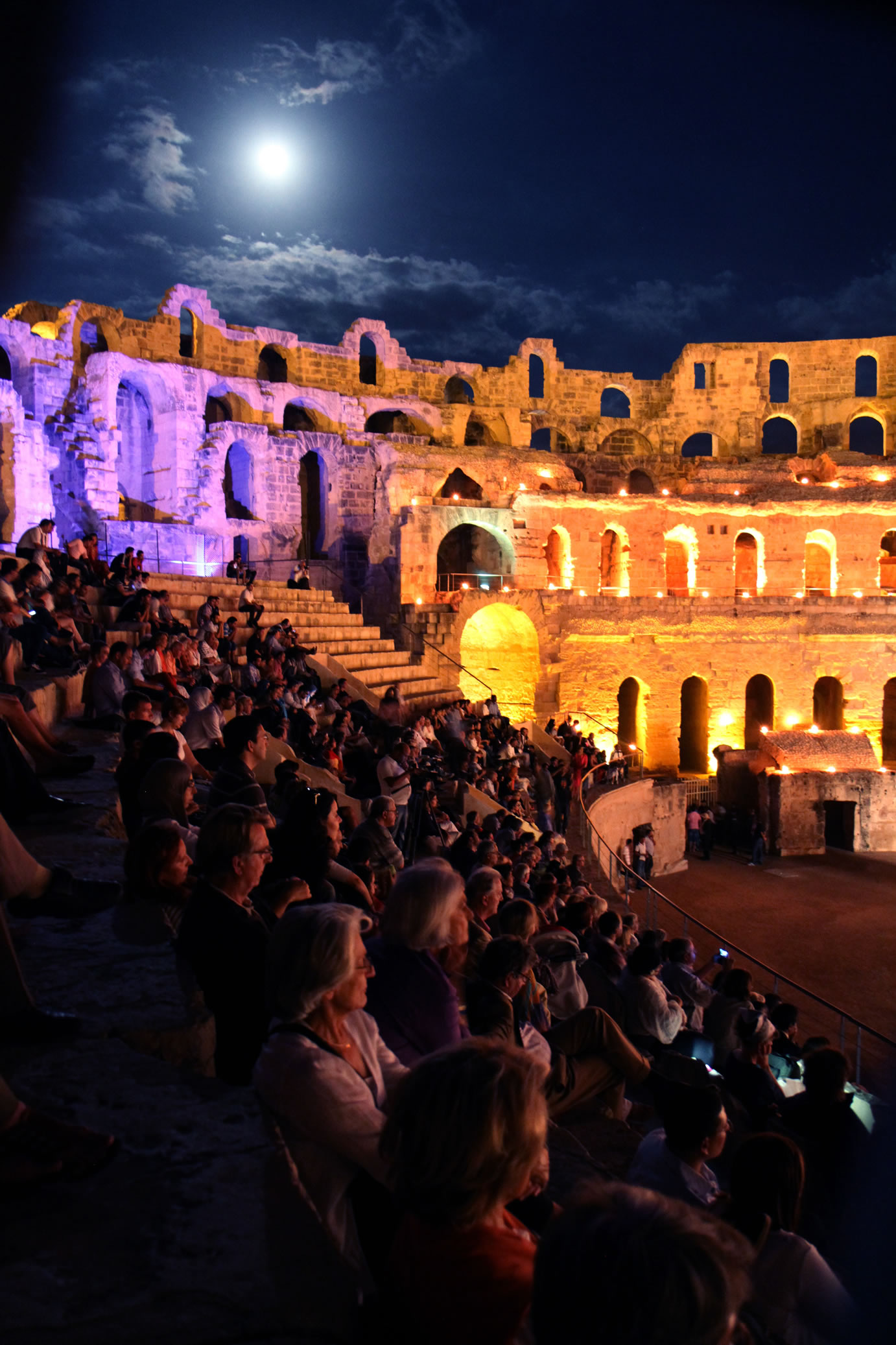
Last weekend, we were witnesses to an out of time, magical experience. We saw the Warsaw Symphony perform in an open-air concert at El Jem, The third largest remaining coliseum in all of Romandome. The mass of the structure is at the same time thrilling and awful, especially if you have a good imagination and can picture a scene from Gladiators taking place there.
El Jem photos by Stan Richards
Relishing what will surely be one of the final warm evenings, we sat on cushions, amongst friends, anticipating a harvest moon that finally peeked over the tops of the upper-level arches. Bats darted through the air as a troupe of young men climbed over the many levels, right before performance time, lighting torches. When the scene was perfectly set, the orchestra began. We thought the acoustics would be something in that space. I anticipated the sound to be large as it reverberated from the stones. Quite the opposite, the orchestra was delicate and restrained, showing the maturity of professionals who have played together for so very long. I sat next to our music teacher from Moscow, and she perfectly said, “It is fragile, just like Chopin should be.” It was all that beautiful implies, but the juxtaposition between the massive, ancient space and the precise almost insect-like music is my remaining impression. We were so fortunate to be there.
On our way home through the countryside, we bought our weekly produce.
I am posting yet another picture of my groceries because I can never say enough about our fruit and vegetable situation, here. I bought all of this: 2 large potatoes, 3 huge pomegranates, 8 young lemons, 6 red onions, and a leafy head of cabbage. I asked the vendor to repeat the price when he told me how much I needed to pay. It was trois dinar, neuf cent. This is almost 4 Tunisan dinars. This is the equivalence of about 2 US dollars. The price of local food is one reason why Tunisia is one of the very least expensive places to live in the world, while maintaining an excellent quality of life.
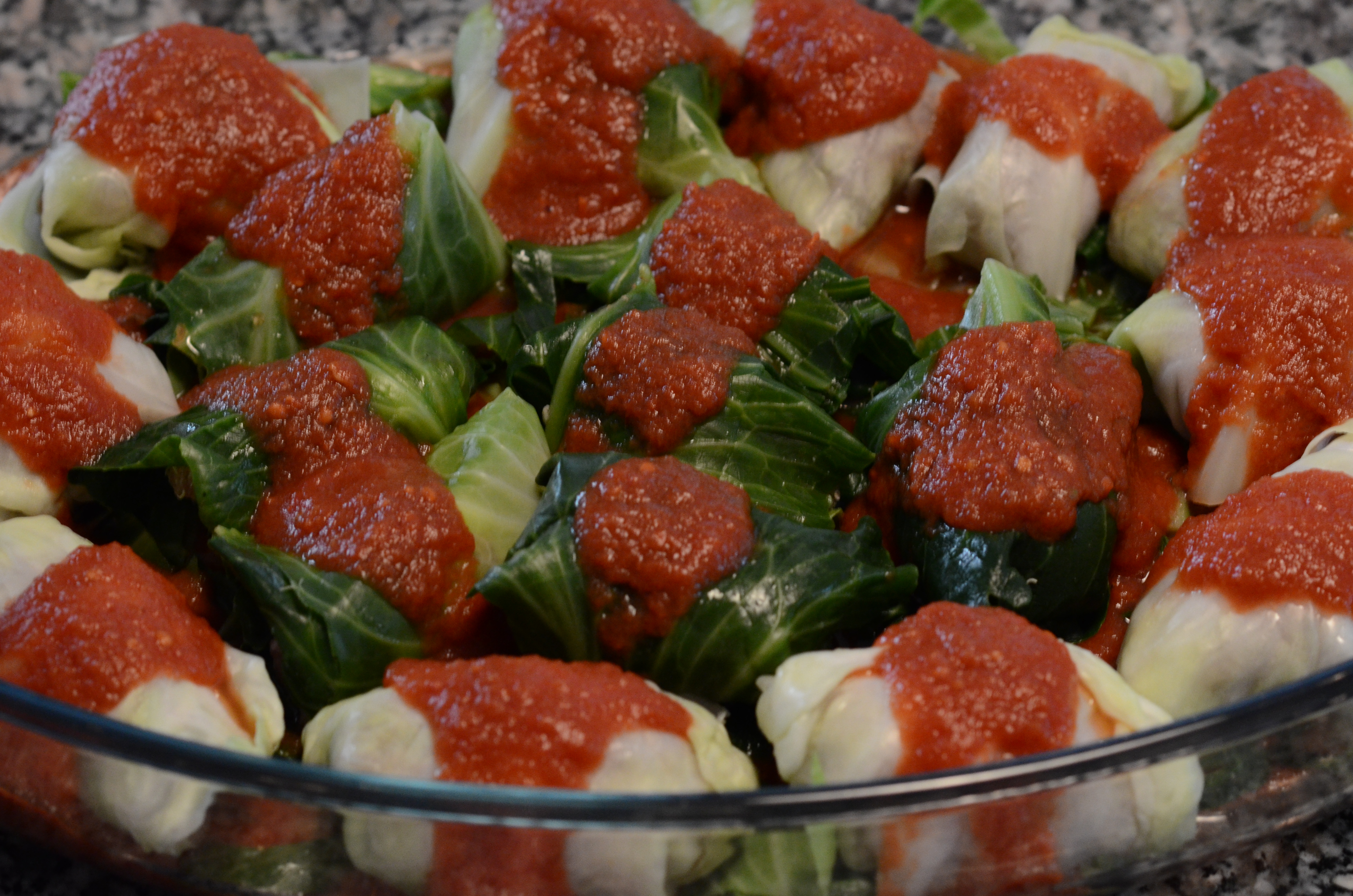
I have seen some magazine articles this month for stuffed cabbage leaves, but I hit on a recipe last fall that is still resonating with me, much like that concert. While we may think of stuffed cabbage as being heavy, stick to your ribs food, these rolls are lightened by puffed quinoa, herbs, and freshly ground turkey. Additionally, a delicate sweet and sour sauce lightens the traditional tomato sauce.
Turkey and Quinoa Cabbage Rolls with Sweet and Sour Sauce
Adapted from a recipe by Emeril Lagasse
6 servings
Ingredients
1/2 cup quinoa
1 head green cabbage
1 pound ground turkey
1 onion, finely minced
1 tablespoon garlic, minced
3 tablespoons parsley, minced
1 1/2 teaspoons sea salt
1/2 teaspoon freshly ground pepper
1/2 teaspoon ground allspice
1/2 teaspoon dried savory
1/2 teaspoon dried marjoram
1/2 cup water
3 cups tomato sauce
1/2 cup apple cider vinegar
1/4 cup light brown sugar
Procedure
Preheat the oven to 350 degrees F.
In a large saucepan, parboil quinoa for 10 minutes. Turn off heat and let it sit. Fluff with a fork before using.
Core cabbage and bring water to a boil in a large stockpot. Add the cabbage, cover the pan, and cook until cabbage is softened, about 5 minutes. Keep removing leaves as they peel off easily. Chop the leaves that are too small or torn. Cut a triangle of the core from the whole leaves and set them aside.
Blend raw ground turkey, the onions, garlic, salt, pepper, allspice, savory, marjoram and
parboiled quinoa. Mix well, adding enough water to make mixture sticky.
Using a small ice cream scoop, mound the turkey mixture onto the broadest part of the cabbage leaf. Wrap sides around and tuck under. Continue until all of the turkey and cabbage has been used. If more meat remains than you can use, place it in a loaf pan to bake for 45 minutes.
Mix tomato sauce with vinegar and sugar. Place stuffed cabbage in baking pan on top of a layer of sauce and chopped cabbage pieces. Spoon tomato sauce over the cabbage. Cover the pan with foil and bake covered for 1 1/2 to 2 hours.
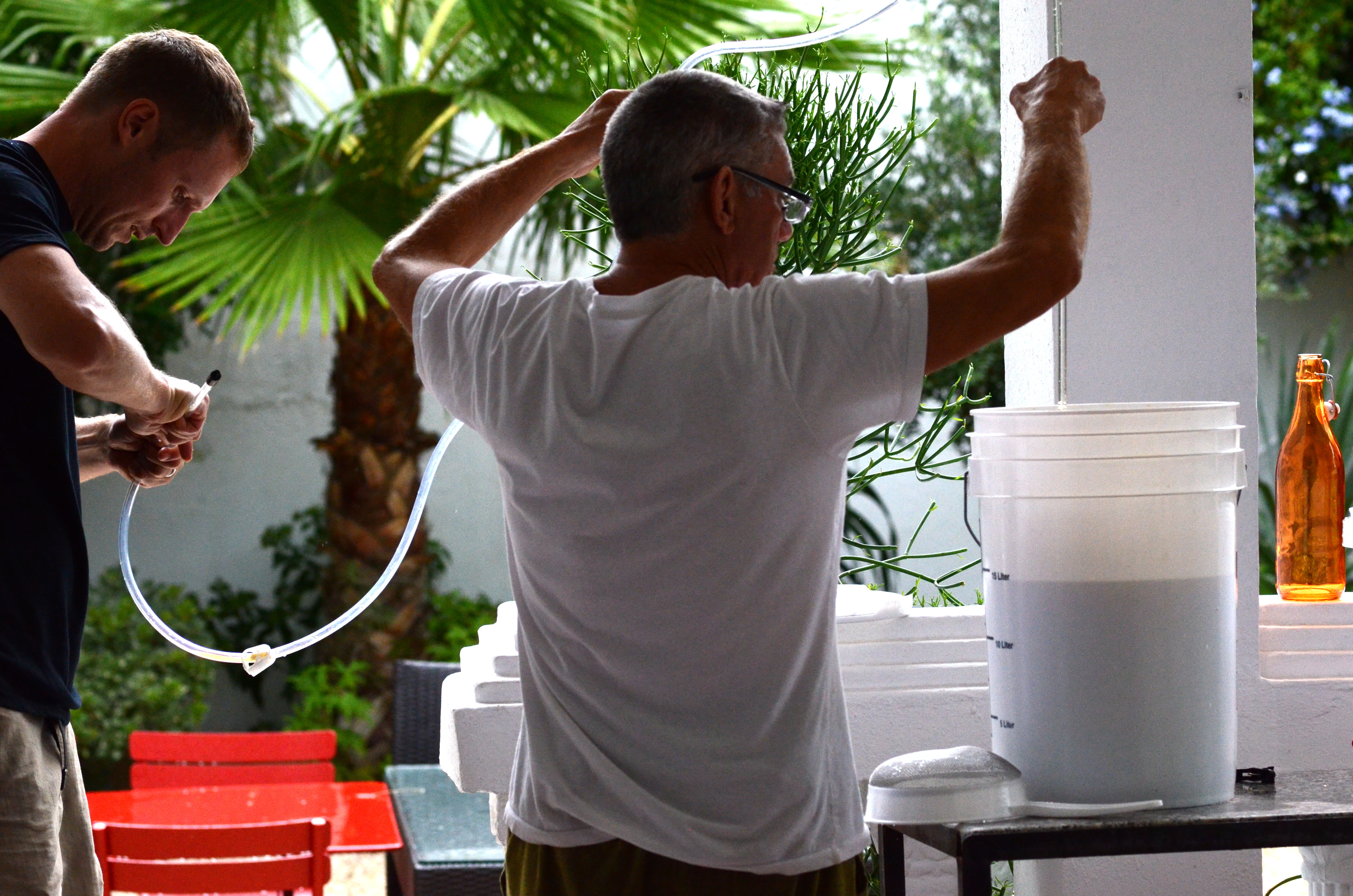
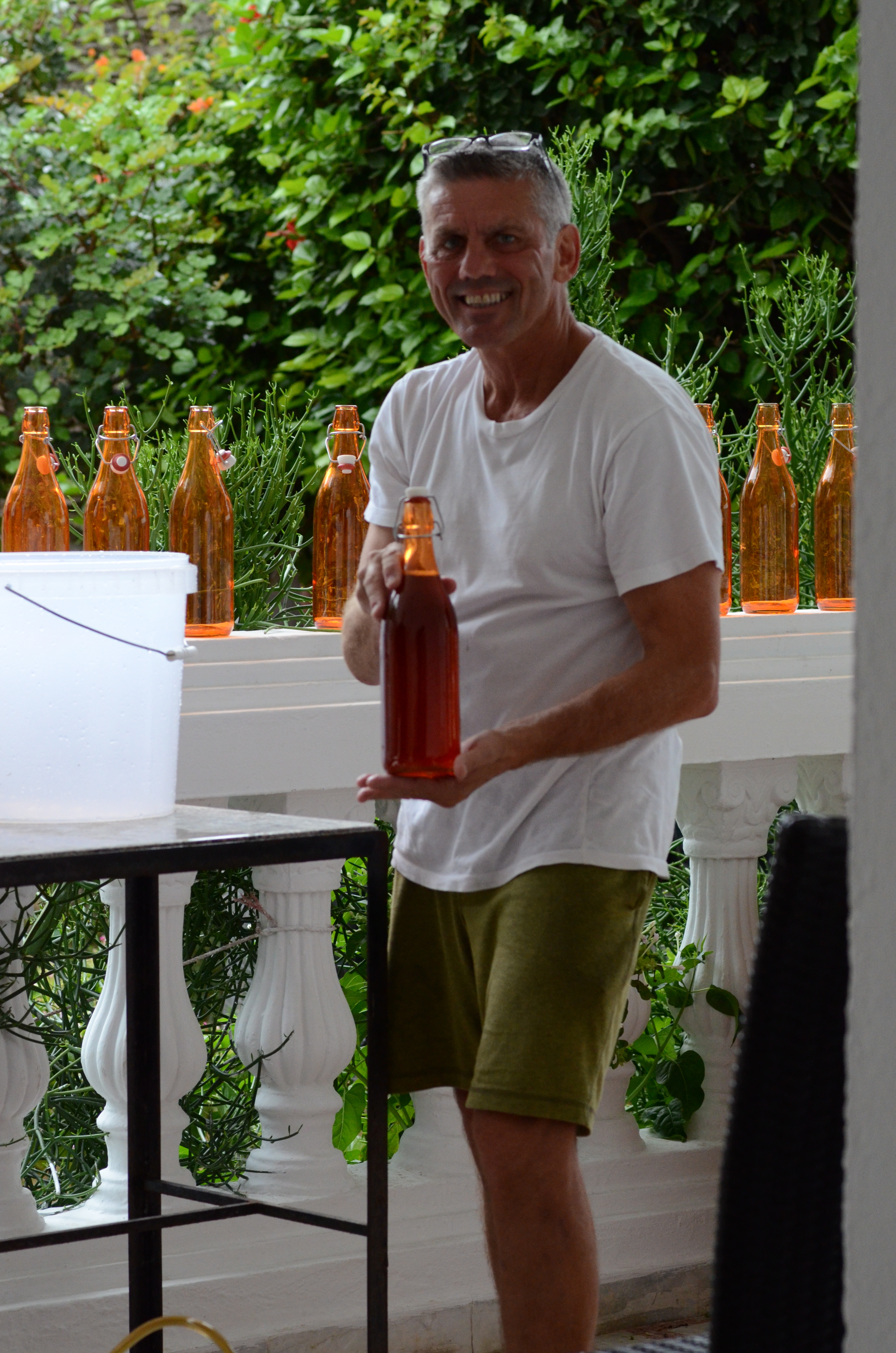
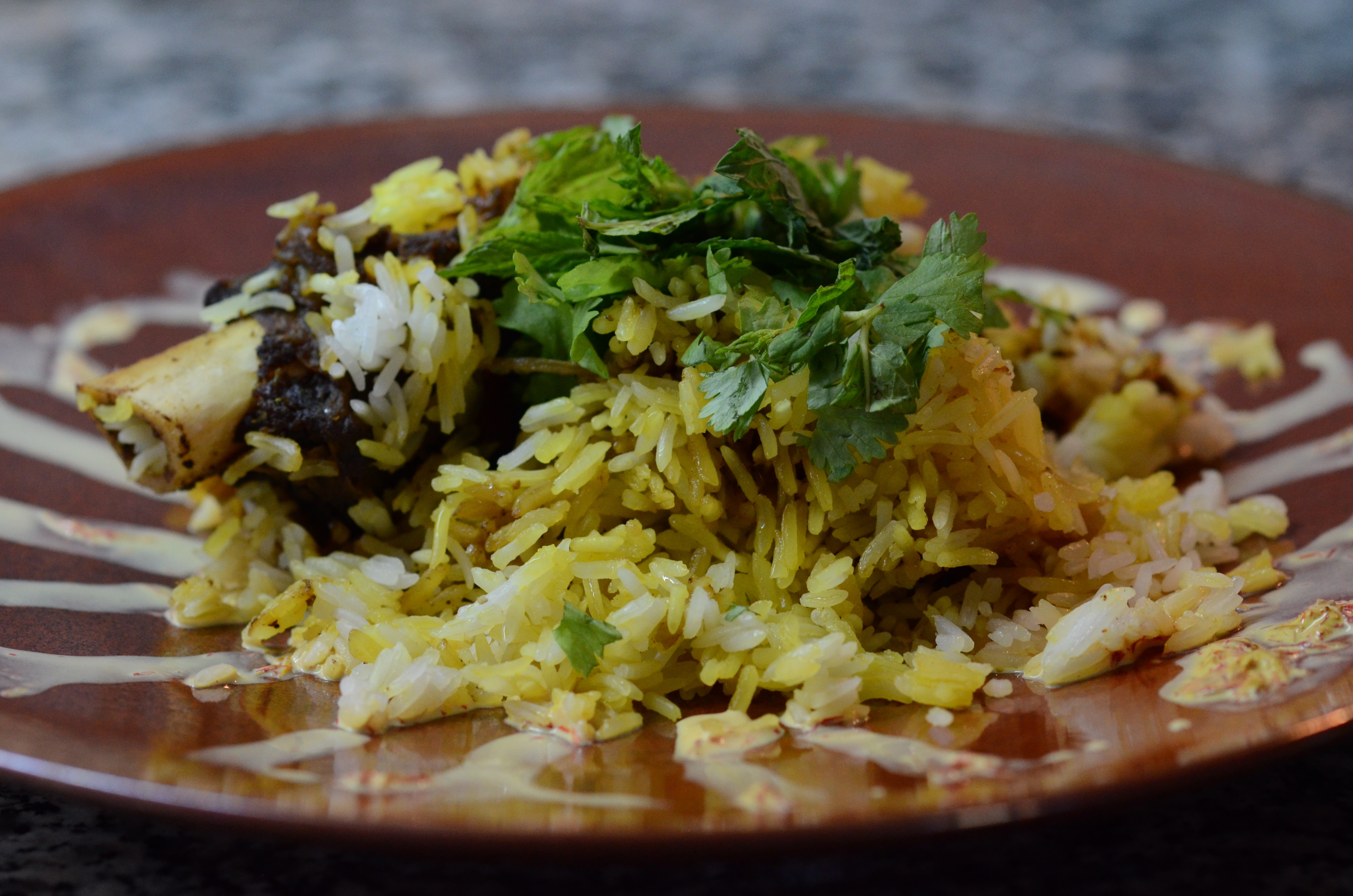
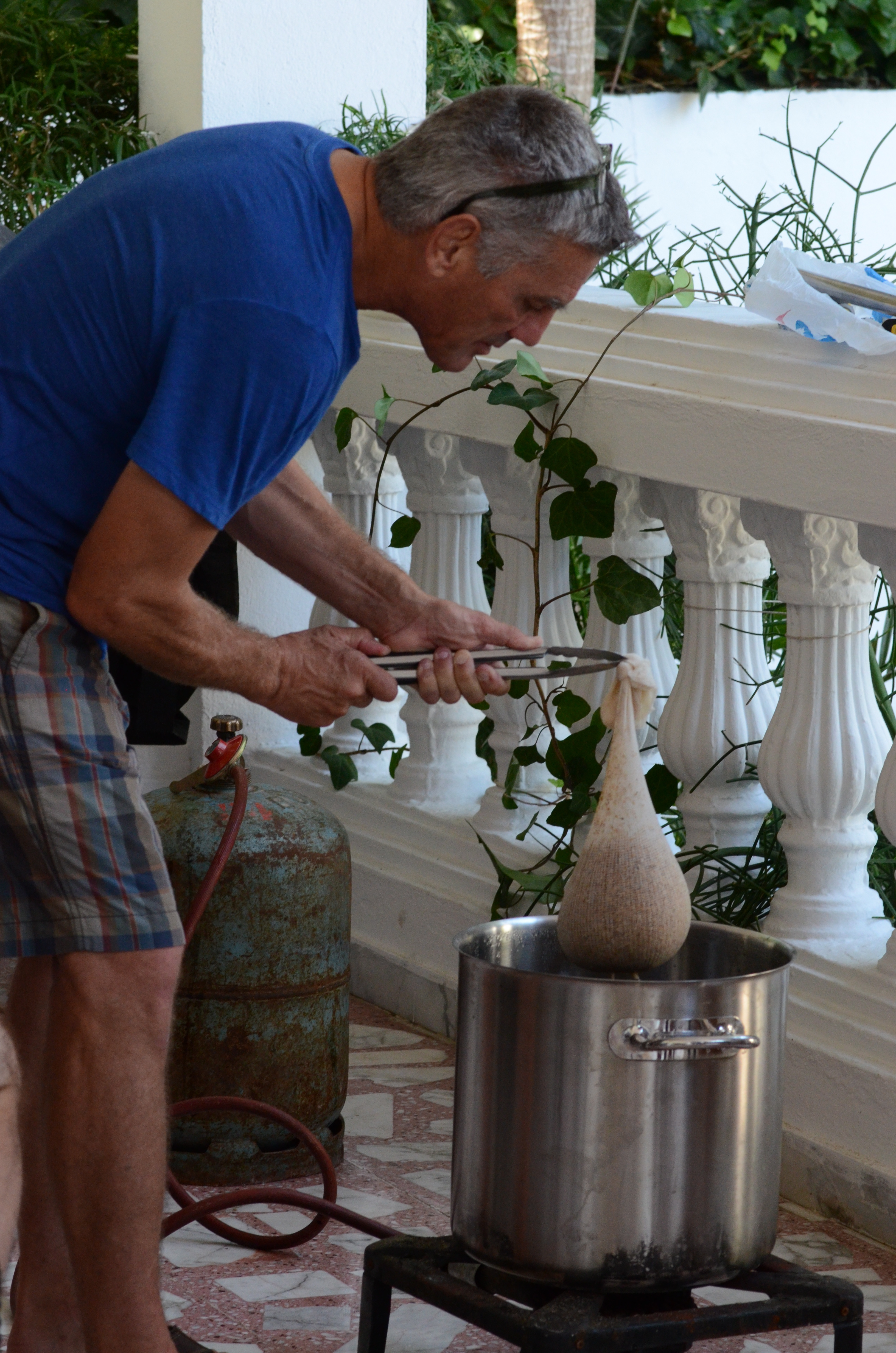
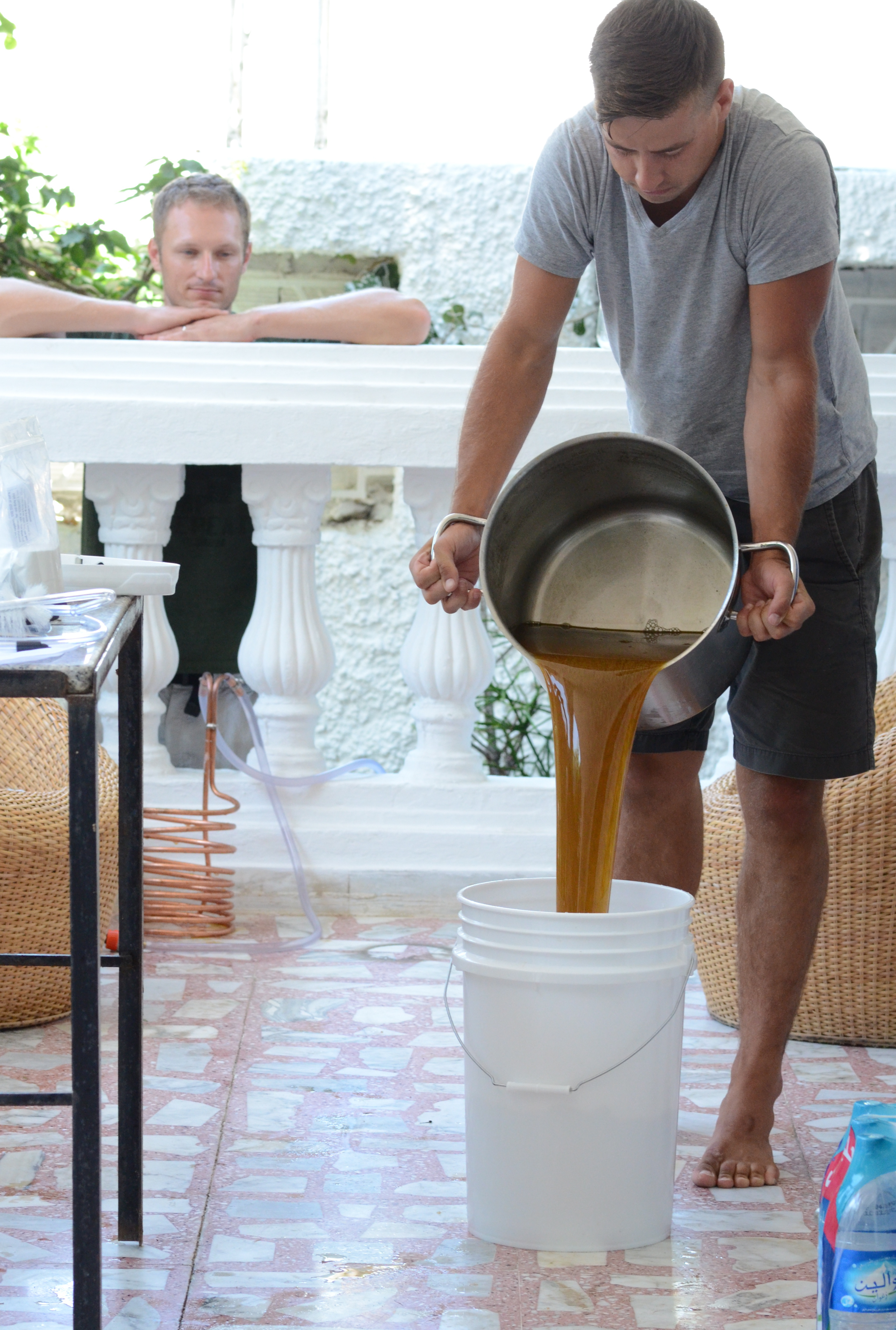
This is a follow up to the beer brewing we have been enjoying these last weekends of summer. I know it looks like a lot of beer, but once it gets shared out and some tasted along the process, it’s not so much. It has been fun to watch these men learn some good science together. I decided that bottling day needed a special lunch, one that stood up to a not-yet-carbonated Double IPA. Stout. Indian Biryani rice was a perfect reverse pairing.
Lamb Biryani
1 (4 inch) piece ginger, peeled and grated
4 garlic cloves, peeled and grated
4-6 green Thai, serrano, or cayenne chiles, stems removed
2 tablespoons garam masala
1 teaspoon red chile powder
1 teaspoon turmeric powder
1 teaspoon salt
2/3 cup chopped fresh cilantro
1/4 cup fresh mint, chopped
2 lbs. boneless or 4 lbs. with bone lamb leg or shoulder, cut into 1 inch cubes or shanks
1 cup plain yogurt
3 medium yellow or red onions, peeled and very thinly sliced
4 tablespoons oil
1 1/2 cups water
2 1/2 cups uncooked basmati rice
1 tablespoon salt
1/2 teaspoon saffron strands, soaked in 2 tablespoons milk
1. In a deep bowl, mix together the ginger, garlic, green chiles, garam masala, red chile powder, turmeric, 1 teaspoon of salt, cilantro, and mint. Add the lamb and mix to coat. Marinate at least 2 hours in the refrigerator or, ideally, overnight.
2. After marinating, add the yogurt to the lamb and mix well.
3. Brown the onions in oil on the stove top.
4. Turn the slow cooker on low. Add the onions, 2 tablespoons of the oil, and the marinated lamb to the slow cooker. Cook for 2 hours.
4. On the stove top, bring the water to a boil over medium-high heat. Add the rice and the tablespoon of salt and turn the heat to low. Allow the rice to simmer for 3 to 5 minutes, at which point most of the water will have evaporated. If it has not, use a slotted spoon to transfer the rice to the slow cooker. Discard any remaining water. Level the rice in the slow cooker with the back of a spoon. Drizzle the rice with the remaining oil and the saffron /milk mixture, if desired.
5. Cook for 1 hour, occasionally fluffing the rice with a fork. scoop and serve.
Last summer, on Lummi Island, the lavender shrubs that surround our off-kitchen patio were swarming with honeybees. After all of the trouble we have heard about colony-collapse and the catastrophic loss of our right-hand pollinators, it was heartening to see them thriving. A visiting friend, however, told me she had recently read that there is no such thing as a wild honeybee, anymore. She suspected those bees belonged to some keeper and they were just free-ranging on our lavender. Day-trippers.
I have been savoring Honeybees, by Naomi Shihab Nye these past weeks. It is a small collection of poetry and memoirs that in some way connect to the issues and characteristics of these members of the Apini tribe. From the front flap, we can anticipate all of the life connections we will be making to this symbol of ourselves.
Where would we be without them? Where would we be without one another?”
Between the bees and the book and our school start-up, I have been thinking a lot about community building, how we try to orchestrate it, but how it ends up happening organically. Some people have extraordinary intelligence for finding intersecting points between us. If you haven’t been in an international school, you might assume Allan and I, or the leadership team, or a social committee facilitates the community building, and we do and they do, but those events are only platforms. The relationships develop when a colleague brings her team mates homemade muffins on a Monday morning, a neighbor brings by fresh lemons from her tree to everyone living in a 5 block radius, someone calls to spontaneously ask you over for soup, or out to a simple fish lunch, or for a bike ride. It happens like pollination: single points of touch until eventually, something has amassed and has its own life. We have some key connectors with us here. We need them to help build the relational culture of our school. Allan and I need them to build a community for us to live in.
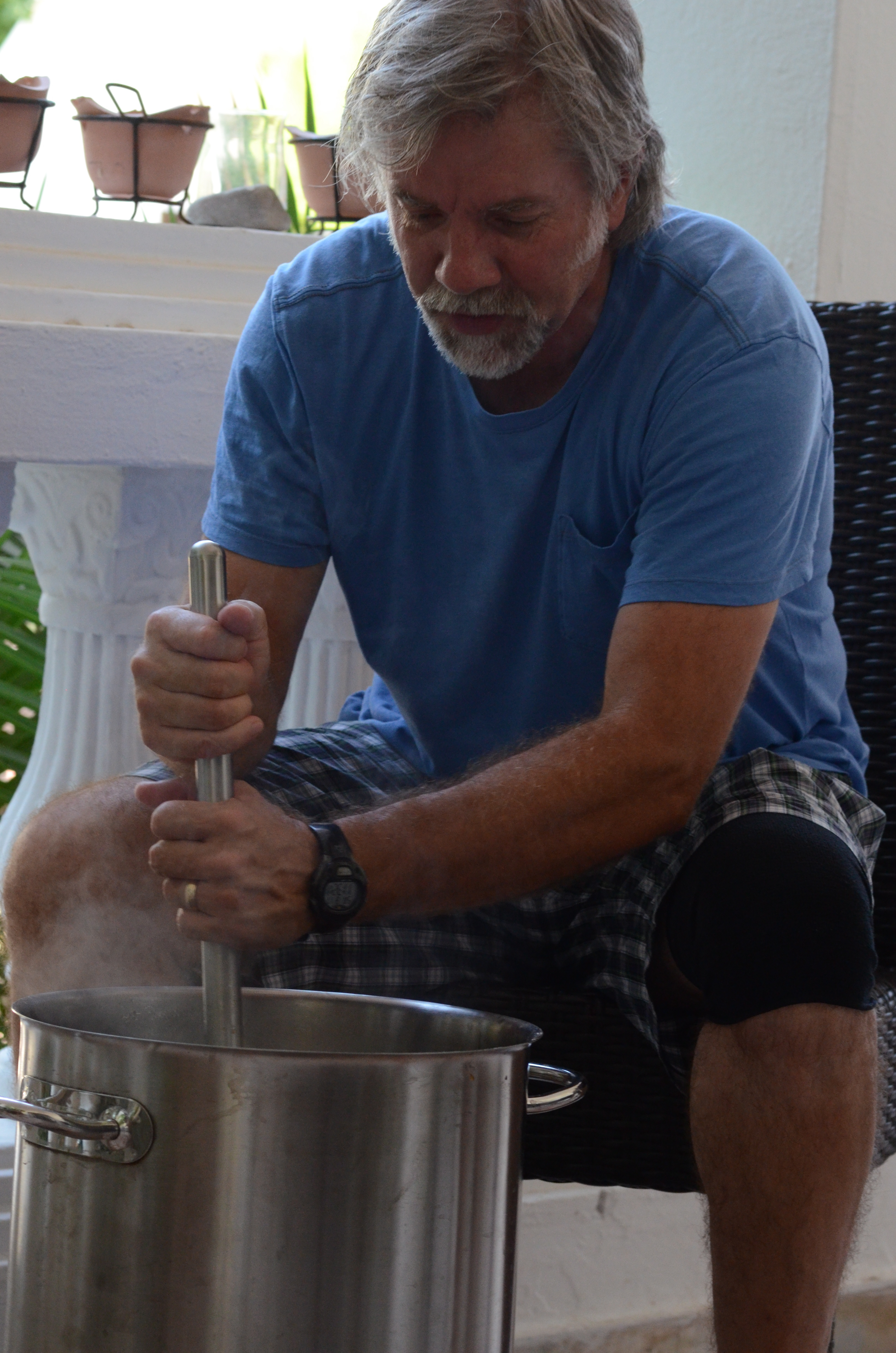
Case in point: A hobby of home-brewing is the current rage for some of the staff. Our friend and experienced brew-master has spent several weekend hours at our house lately coaching novice brewers toward their first batch of beer. Tomorrow will be bottling day, but the time spent visiting while stirring, and boiling, and cooling has been the best part of the experience. Additionally, there will be a nice beer, Punic Port Double IPA, for the outcome.
And because I promised this recipe to a new family who are vegans, I am adding my tabouli recipe. This is from Paula Wolfert who wrote The Slow Mediterranean Kitchen. She is another master teacher who collected and developed recipes from the best home and professional cooks she encountered throughout her season of living around the Mediterranean rim. I wish I could have this wealth of regional knowledge by the time I leave here.
Tabouli
The secret to the deep flavor base of this salad is soaking the bulgur in lemon juice for about an hour before proceeding with the recipe. Other soaking liquid alternatives are tomato juice, onion juice, or fresh pressed and strained sour grape juice.
Serves 6; Makes 4 cups
1/2 cup fine grain bulgur
1/4 cup fresh lemon juice
2 cups finely diced tomatoes
1/2 cup thinly sliced scallions
Salt and freshly ground pepper
1/3 cup extra virgin olive oil
2 cups finely chopped flat-leaf parsley
2 tablespoons slivered fresh mint leaves
Tender romaine leaves
1. Place the bulgur in a fine sieve, rinse under cold running water, squeeze dry, and soak in the lemon juice for 45 minutes. Use a fork to fluff the bulgur.
2. In a bowl, combine the tomatoes, scallions, and a few pinches of salt and pepper. Drizzle on the olive oil and toss. Fold in the bulgur, parsley, and mint and mix well. Refrigerate, stirring occasionally.
3. Taste and correct the flavors with lemon juice, salt, and pepper. Serve with crisp inner leaves of romaine lettuce for scooping up the salad.
It is Saturday morning of the first weekend after the first days of school. It’s not that I was living for the weekend because I don’t like my work. It is that one week ago, I was racked by a psychological disorder, common to most educators, called First Day Jitters. Thinking about my classes, I could only picture blank, emotionless avatars of 7th graders. I was over-planned, but then lacked confidence about my choices for hitting just the right tone for the first days: a balance between fun and structure, opportunities for free-choice and laid-out requirements. One day back in the saddle, though, and I again quoted my old friend, Susan Williams, a Southern woman, who says, “They’re all just a bunch of nice little ol’ kids.” That’s all they come down to, though honestly, our students here do seem to be even nicer than average. I found my muscle memory quickly returning, guiding me on how to engage them and move them forward.
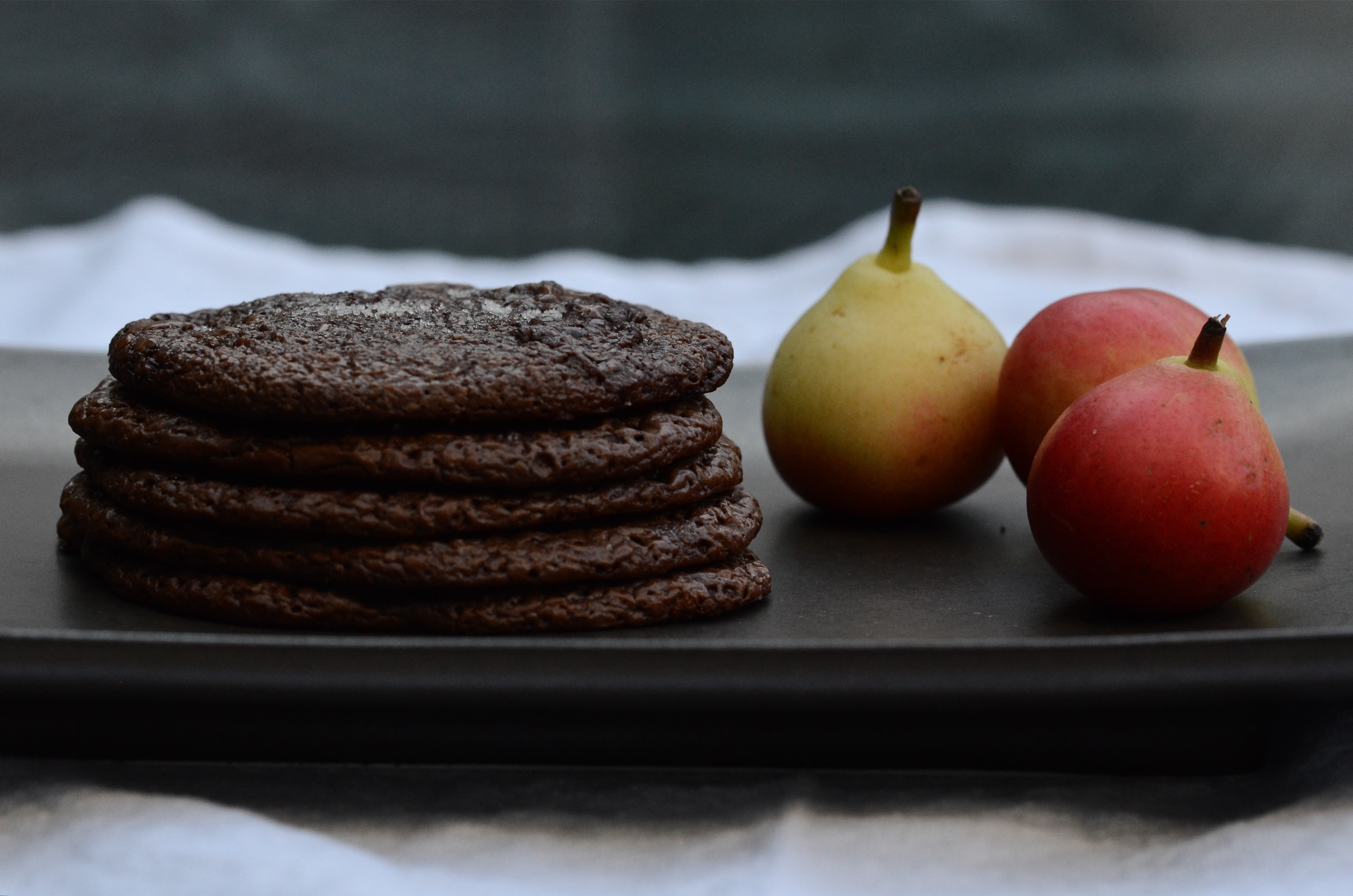
And the first Saturday, I am enjoying knowing that I’ve kind of got it down. I have a good picture of where I’m headed, at least, and I can relish a little of the day and this gorgeous time of year. The weather is still a bit hot and we’re eating light, snacking on lots of fruit. I just noticed these teeny Japanese pears in the market this year. They are only about an inch in diameter and have a remarkably long life. We’ve had a bowl of them available all the time for a few weeks. They are nothing but juice and only a few bites per pear, so they are refreshing without being time consuming or filling to eat.
Living in a truly seasonal and local food system brings me so much happiness. It is a delight to discover gems of the produce world at a certain time of year, knowing they will only be available for a few weeks. You can go ahead and make yourself sick on them because you won’t see them again for a year and by then, they will be novel again. It keeps my mental and physical taste buds interested and excited for the next turn.
It is feeling like we have only a couple more weeks of fringe summer living. I say fringe because we do have to keep a schedule now, but when we get home, we can still cook and eat lightly. We’ve got beach outings lined up for the next two weekends and while I’m chaise lounging, my mind will be starting to plot buying a hunk of pumpkin to make a soup or roasting beetroot. It won’t be long until we have a complete set change at the market and we’ll be into an entirely new palette of foods.
This was a sneak peek recipe from the latest cookbook of the now famous Tartine bakery in San Francisco, Chad Robertson being the celebrity chef du jour. The recipe for his naturally leavened simple country bread, in his book Tartine Bread, is famously 38 pages long. There are blog sites committed to the at-home discipline of attempting to recreate this loaf. His new cookbook will be published in November, by Chronicle Books. The title will be simply Tartine Book No. 3, and I didn’t find anything too complicated about making these chewy, salty drops that went divinely with pears.
Salted Chocolate Rye Cookies
Yield: 5 dozen small cookies
1 pound bittersweet chocolate
2 oz or 4 tablespoons unsalted butter
3 oz or ¾ cup rye flour
1 teaspoon baking powder
½ teaspoon salt
4 large eggs, at room temperature
12 oz or 1 ¾ cups muscovado sugar
1 tablespoon vanilla extract
Good-quality sea salt, such as Maldon or fleur de sel, for topping
In a heatproof bowl set over simmering water, melt together the chocolate and butter, stirring occasionally. Once melted, remove from the heat and let cool slightly.
In a small bowl, whisk together the flour, baking powder, and salt and set aside.
Place the eggs in the bowl of a stand mixer fitted with the whip attachment. Beat on medium-high speed, adding the sugar a little bit at a time, until all the sugar is incorporated. Turn the mixer to high and whip until the eggs have nearly tripled in volume, about 6 minutes.
Reduce the mixer speed to low and add the melted chocolate and butter mixture and the vanilla extract. Mix to combine, scraping down the sides of the bowl as needed, then mix in the flour mixture. At this point, the dough will be very soft and loose, which is normal; it will firm up as it chills.
Chill the dough in the mixing bowl in the refrigerator until it is just firm to the touch, about 30 minutes (the longer you chill the dough, the harder it is to scoop; if it chills for more than an hour, remove the dough from the fridge to warm up to room temperature before scooping).
Preheat the oven to 350 degrees F and line two baking sheets with parchment paper. Remove the dough from the fridge and scoop with a rounded tablespoon onto the pans, spacing the balls of dough 2 inches apart. Top each mound of dough with a few flakes of salt, pressing gently so it adheres. Bake for 8 to 10 minutes, until the cookies have completely puffed up and have a smooth bottom and rounded top. Remove the pans from the oven and let cool slightly (the cookies may flatten a bit when cooling), then transfer to a wire rack and let cool completely. Store the cookies in an airtight container for up to 3 days.
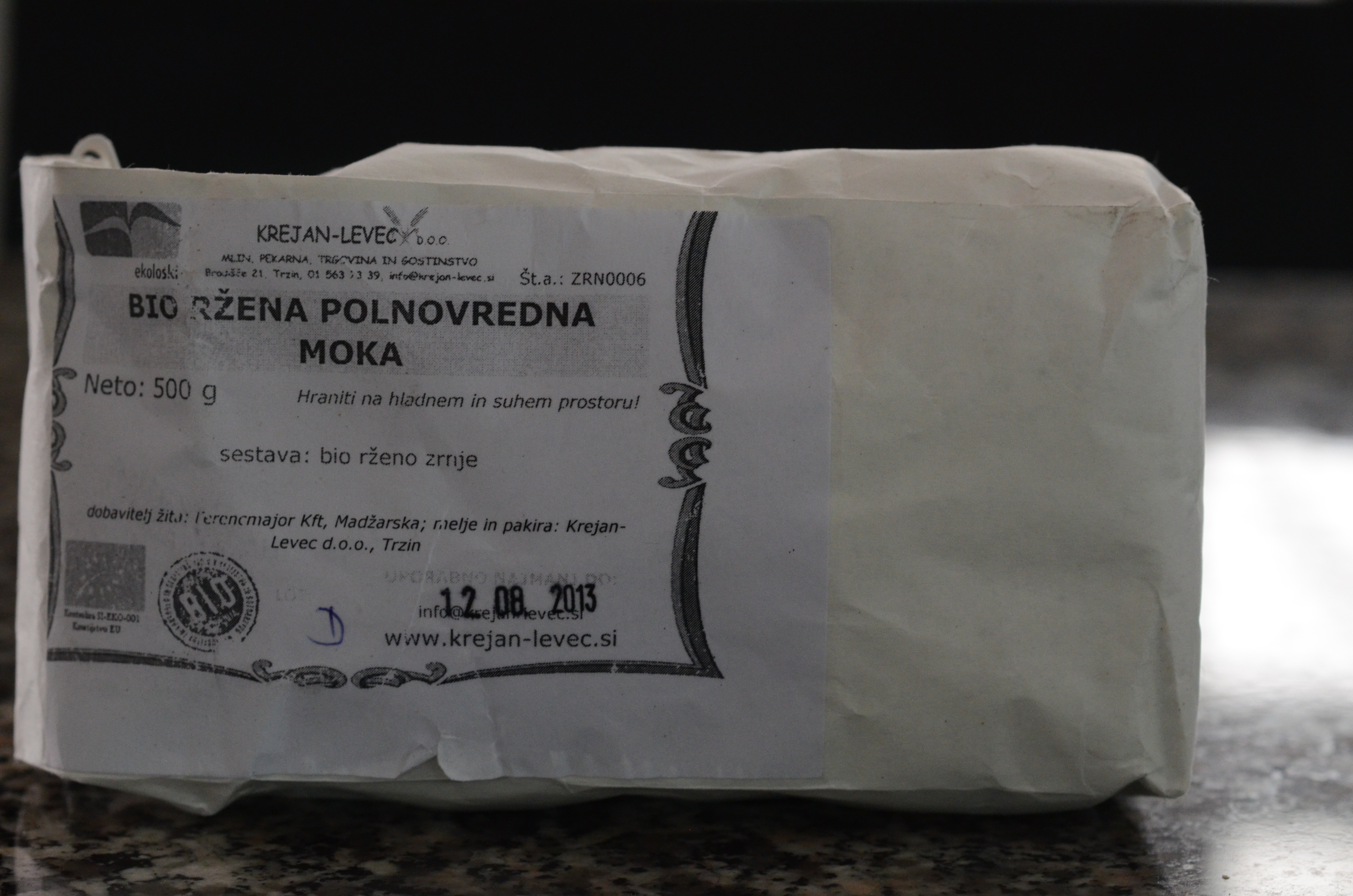
Organic rye flour I bought in Ljubljana, Slovenia last spring.
Thanks so much for the comments some of you made about my last post. Many of them were about writing, and they were encouraging. One old friend, however, read between the lines about the bag of plums providing the first peace I had experienced in weeks. She messaged me privately and asked, “What is making you unpeaceful?” It is a fact that my summer was unpeaceful and I considered how to reply to her and tell her that I’m worried about my aging parents. I ache for my young adult sons as they navigate their newly independent lives. I am aware of my own aging and my husband’s and I wonder how the next decades will spin out. I have a lot of responsibilities, and sometimes, I think my knees are going to buckle. I have relationships that confound me.
I could picture my friend’s undivided attention as she listened to me, applying the full context of how she knows me and my family, waiting expectantly for me to drop the bomb about what is really stealing my joy because everything else I just mentioned is also, I know for a fact, her life and the life of every other mother/daughter/spouse/employee she knows. These things are life and I guess, like the Buddha pointed out to us: life is suffering.
I was Skyping with my youngest son this morning, who is a gifted, natural counselor. I didn’t share any of my stewings with him, but he just happened to mention an article he had read about the unreliability of our perceptions of experiences we have. This article stated that the narrative that takes place in our minds about other people and events is contrived by our own emotional needs to the point of being almost fantasy. It seems that humans are the species best adapted to enduring long-term suffering, physical and emotional, and in a sadistic way, it provides mental conundrums to solve which has a reinforcing effect on us. He paraphrased a C.S. Lewis quote (that I couldn’t confirm) that he had suffered much in his lifetime, some of which was for things that had actually happened.
These two bits of input today helped me. I might be at a stage of life now where a few more life factors have compounded, but it isn’t exclusive to me. I think I might start to give myself permission not to own it all, all of the time. I also think I need to meditate, which brings me back to the plums and how they helped me take notice of something that I’m grateful about. To all my friends who have more than enough of life at the moment, I hope you find your own small joys.
Here is the recipe for using the egg whites you were left with if you made a triple or quadruple batch of the semifreddo from my last post, which, by the way, you could make with a myriad of fruits if you don’t have or aren’t into figs.
Brown Sugar Angel Food Cake
From Gourmet Grilling, 2011
Serves 8-10
1 cup cake flour (not self-rising)
1 1/2 cups packed light brown sugar, divided
1/2 tsp. salt, divided
12 large egg whites (1 1/2 cups), at room temperature for 30 minutes
1 Tbsp. fresh lemon juice
1 tsp. pure vanilla extract
Preheat oven to 350 degrees F, with rack in middle.
Sift flour, then sift again with 3/4 cup packed brown sugar and 1/4 teaspoon salt.
Beat whites with lemon juice, vanilla, and remaining 1/4 teaspoon salt in a large bowl with an electric mixer at medium-high speed, add remaining 3/4 cup brown sugar by tablespoons, beating until whites hold stiff, glossy peaks, 3 to 5 minutes (longer if using hand-held mixer).
If using a stand mixer, transfer whites to a wide large bowl to facilitate folding. Sift flour mixture over whites and fold in gently, but thoroughly with a large rubber spatula.
Spoon batter into ungreased tube pan and smooth top. Run rubber spatula or a long knife through batter once to eliminate air bubbles.
Bake until a cake tester or wooden pick inserted into cake comes out clean, 40-45 minutes. Remove from oven and immediately invert pan. If pan has “legs,” stand it on those. Otherwise, place pan over neck of a wine bottle. Cool cake completely, upside down, 1 to 1 1/2 hours.
Turn pan right side up. Run a knife around edge and center tube of pan. Lift out cake, still on bottom of pan, then run a knife under bottom of cake to loosen. Invert to release cake from tube, then reinvert onto a plate.
Cake can be baked, cooled, and unmolded 1 day ahead and kept, well wrapped in plastic or foil, at room temperature.
Serve with fruit and herbs grilled with olive oil, sea salt, and a little sugar, along with whipped cream.




















 bergamot orange