Pure Tunisia

@font-face { font-family: “Cambria”;}p.MsoNormal, li.MsoNormal, div.MsoNormal { margin: 0in 0in 0.0001pt; font-size: 12pt; font-family: “Times New Roman”; }div.Section1 { page: Section1; }

            It’s too bad that New Zealand already took the adjective “pure” for their tourist advertising, although it certainly does describe New Zealand.  A whole county that can claim they don’t have giardia, that’s impressively pure.  So I guess I don’t mean that kind of pure about Tunisia.  I think what I mean is essential.  Life in Tunisia, in my view, is marked by three elements:  sea, sky, and farm food.  At least those are the three things that I cannot stop exclaiming about pretty much every day.  In fact, I’m pretty sure I started a blog to have somewhere to write about my impressions of these three things whenever I need to.  And it’s pretty often. 
            I have been gallivanting around Europe a little bit lately.  It has been super fun.  Barcelona? Rome?  These are world-class cities and that means they’ve got everything.  They have history, culture, art, modern conveniences, stores, selling anything you might want to buy and restaurants, anything you might want to eat.   But (you heard that but coming didn’t you?), I don’t need all of that all of the time.  It’s too much for me.  It doesn’t give me enough blank space in my mind or my life to process, use what I have, stop spending money, and just exist without getting more, which can mean stuff or stimulation.  After our terrific weekend in Rome and Umbria we were full, in every sense, and craving essential Tunis. 

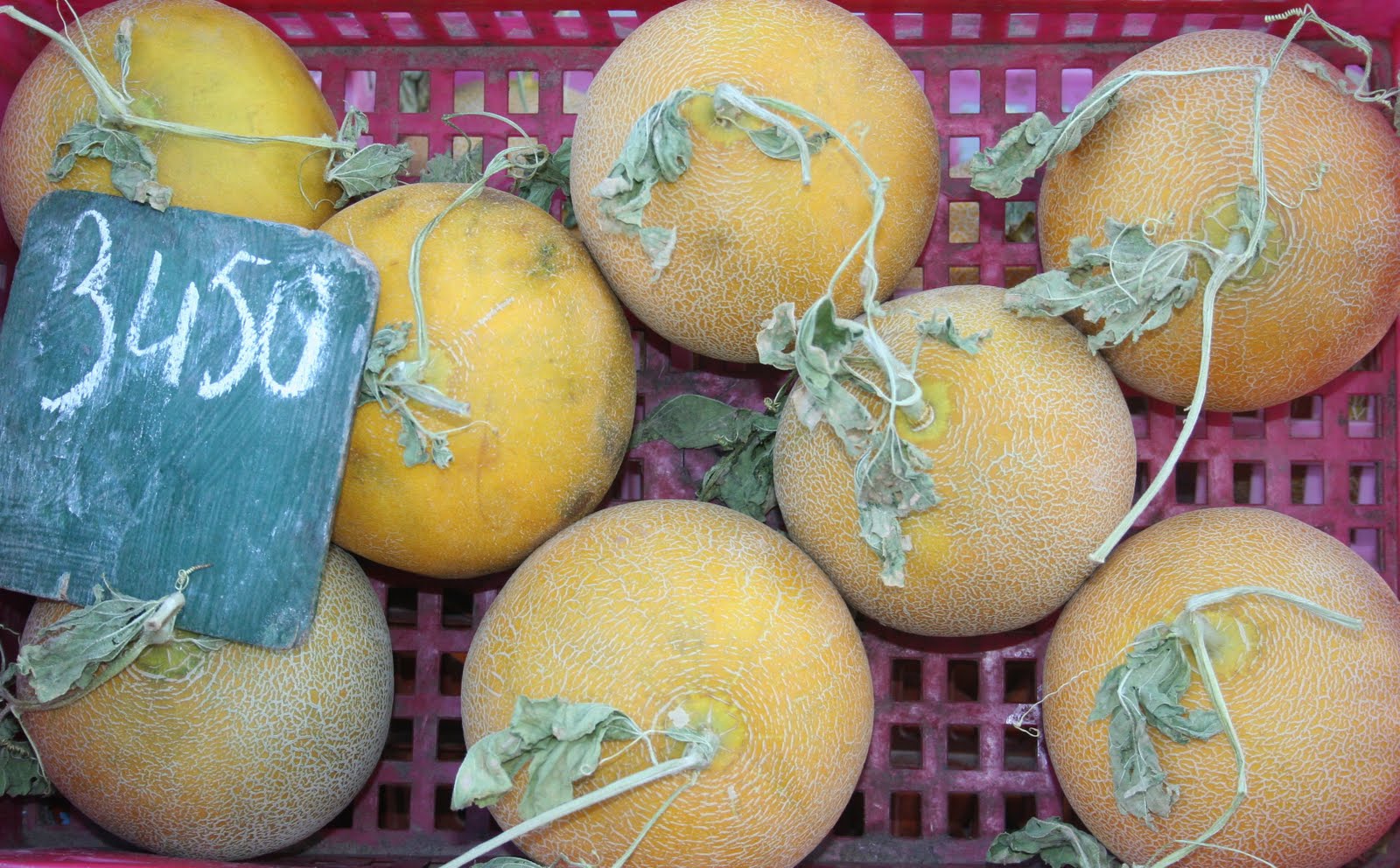
And as if to welcome me back to the simple life, look what greeted me at our corner produce stand:  baskets of charentais melons.   Now these are really a Martha Stewart thing for me.  Years ago, when she published her Gardening book, I was awe-struck by the numerous types of each vegetable variety she planted.  Those were my super keen gardening years and based on her modeling, I tried to source at least a few more seed varieties than the regular Burpees green beans.  I did get my hands on a packet of charentais melon seeds that I only knew about from her book.  I didn’t really know the first thing about growing melons.  I’m still not even sure they grow in our corner of northwest Washington, which can foreshadow for you right there that no charentais melons were ever produced.  I started the seeds, but, like happens to me sometimes, I probably got busy and distracted and stopped watering them.  They didn’t work out, but they remained in my mind as a symbol of elegant and interesting food. 
Now I learn that there are farmers in Tunisia who are tending small plots of this specialized cantaloupe for our enjoyment and I will be able to buy one, for a little more than 3 dinars, for the next few weeks.  This is what I love about living here.  What might be next?   When a melon can make your whole week you know you’ve got a good balance in your life.

Last Bites of Umbria

@font-face { font-family: “Cambria”;}p.MsoNormal, li.MsoNormal, div.MsoNormal { margin: 0in 0in 0.0001pt; font-size: 12pt; font-family: “Times New Roman”; }div.Section1 { page: Section1; }

            Before my Umbria glow leaves me entirely, I want to post a keeper of a recipe.  This was sent to me a couple of years ago by my wonderful friend, Shelly, aka KayeSyrah.  The recipe looks simple, but it creates a fabulous combination of flavors in the mouth.  I do have to say, though, that I can never have it again without using Umbrian lentils, one of their agricultural specialties.  These teeny seeds are a world apart from the larger varieties that turn into a mushy gravy for dhal bhat, which we also love, but it’s different.  Umbrian lentils keep their shape and some firmness to the bite so they remain a nutty entity in the soup rather than becoming the background.
            Stone ground polenta is also characteristically Umbrian and I have developed a little meal around this soup and cheese stuffed roasted peppers on polenta.  It’s a vegetarian meal that no one will mind is missing meat.  If you need it, however, roast a rosemary chicken on the side.
Umbrian Lentil Soup with Lemon
Serves 4
3 tablespoons olive oil, more for drizzling
1 large onion, chopped
2 garlic cloves, minced
1-tablespoon tomato paste
1-teaspoon ground cumin
¼ teaspoon sea salt, more to taste
¼ teaspoon ground black pepper
Pinch of ground chili powder or cayenne, more to taste
1-quart chicken or vegetable broth
1-cup Umbrian lentils
1 large carrot, peeled and diced
Juice of ½ lemon, more to taste
3 tablespoons chopped, fresh cilantro
In a large pot, heat 3 tablespoons oil over high heat until hot and shimmering.  Add onion and garlic, and sauté until golden, about 4 minutes.  Stir in tomato paste, cumin, salt, black pepper and chili powder or cayenne, and sauté for 2 more minutes.
Add broth, 2 cups water, lentils and carrot.  Bring to a simmer, then partially cover pot and turn heat to medium-low.  Simmer until lentils are soft, about 30 minutes.  Taste and add salt if necessary.
Using an immersion or regular blender or a food processor, puree half the soup; it should be somewhat chunky.  Reheat soup if necessary and then stir in lemon juice and cilantro.  Serve with good olive oil and dusted lightly with chili powder if desired.

Overnight in Umbria

@font-face { font-family: “Cambria”;}p.MsoNormal, li.MsoNormal, div.MsoNormal { margin: 0in 0in 0.0001pt; font-size: 12pt; font-family: “Times New Roman”; }div.Section1 { page: Section1; }

            Last weekend we were in Rome.  Allan was actually working and I took my unused personal days to hang out with him.  On Sunday, we had an amazing surprise when some new friends, the Johnsons, asked if we wanted to join them overnight at their villa in the Umbrian countryside, not far from Todi.  We were all booked to fly out of Rome the next day, Monday, so we had a little time. 
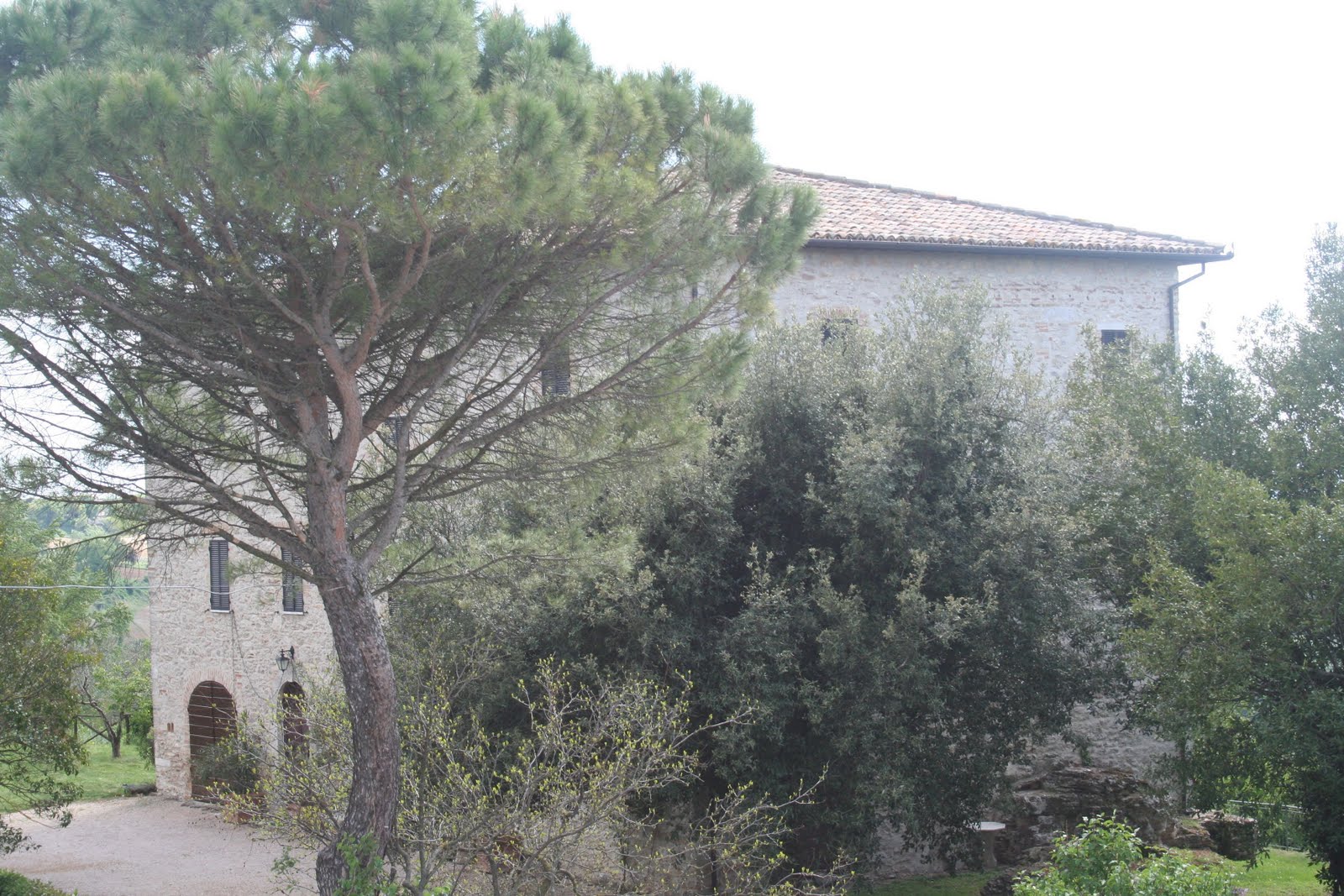
            They have owned this place now for about 10 years.  It was the olive pressing mill for a farm, thus the name, Il Mulino.  This is the original home.
     Patty and Paul have turned this 400 year old structure into a beautiful home that comfortably, very comfortably, sleeps about 17 people.  
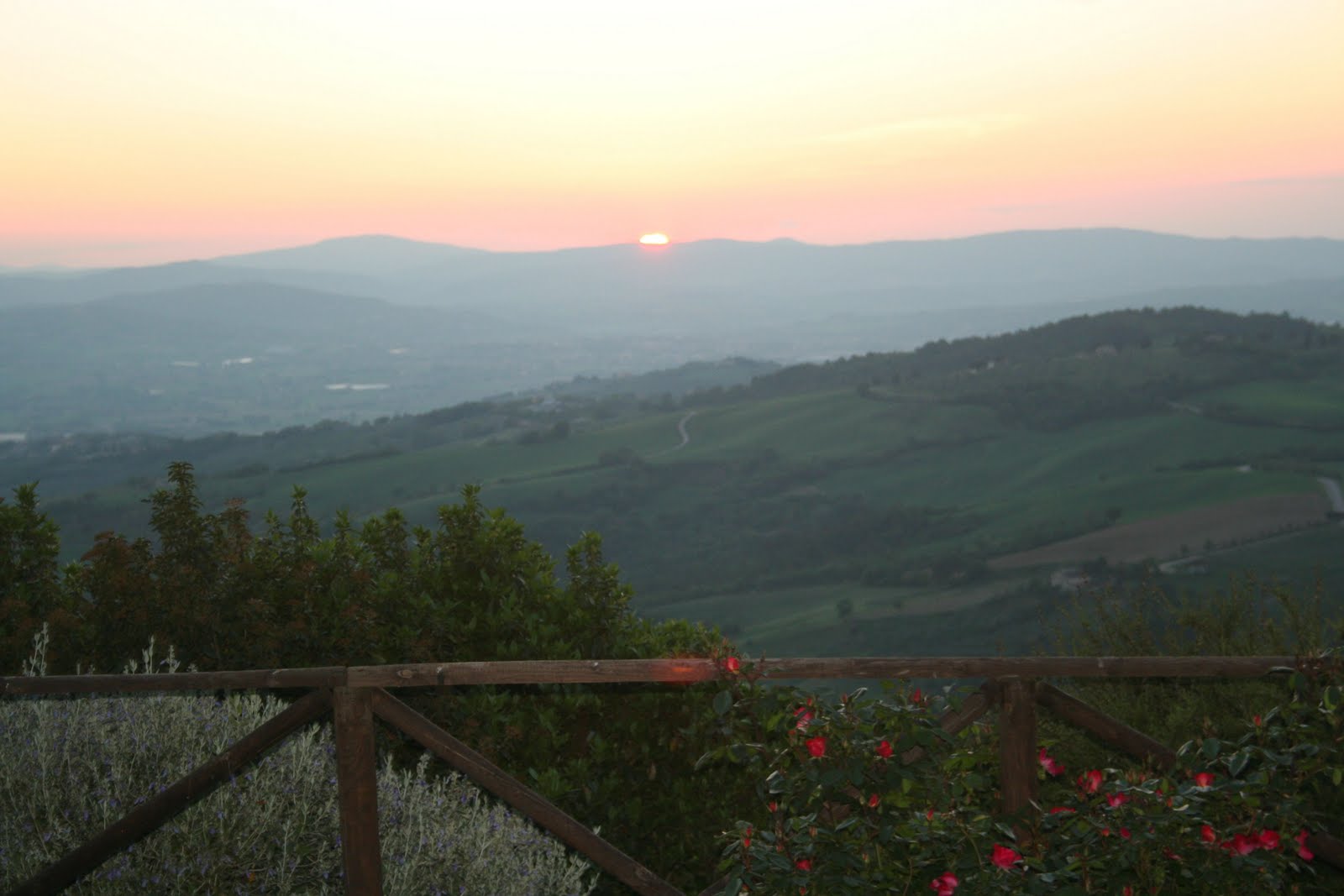
     This view over the hillsides is a constant draw.  I kept taking pictures thinking the new light I was seeing must be the best shot yet.  In the end, you never can really capture it.  It was not unlike the ocean in the way it changes constantly.  
 Here are a few of my favorite images.
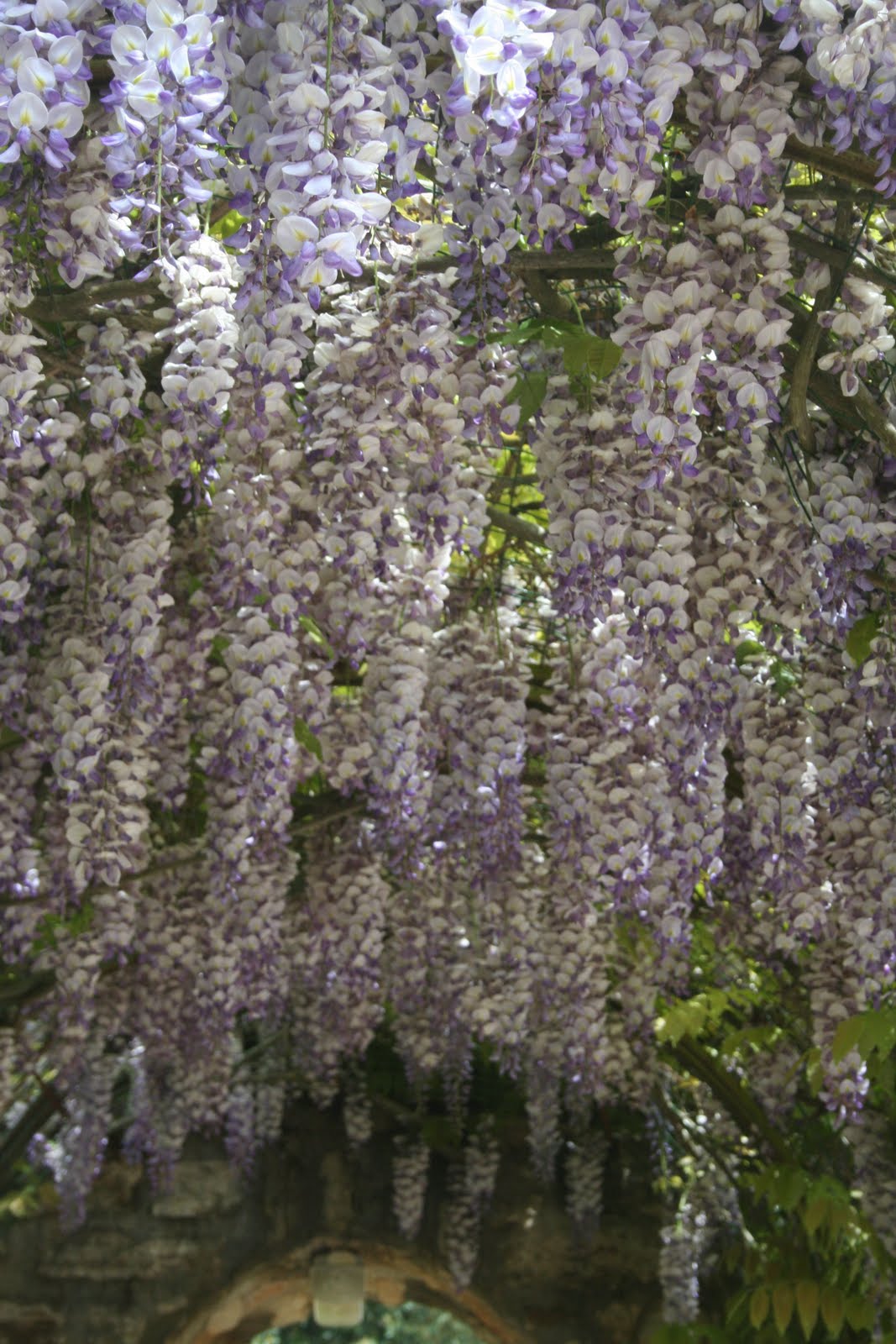
1.  Wisteria arbor
2.  Villagers who sit outside their front doors chatting with each other and with passers by.
3.  Succulent baskets

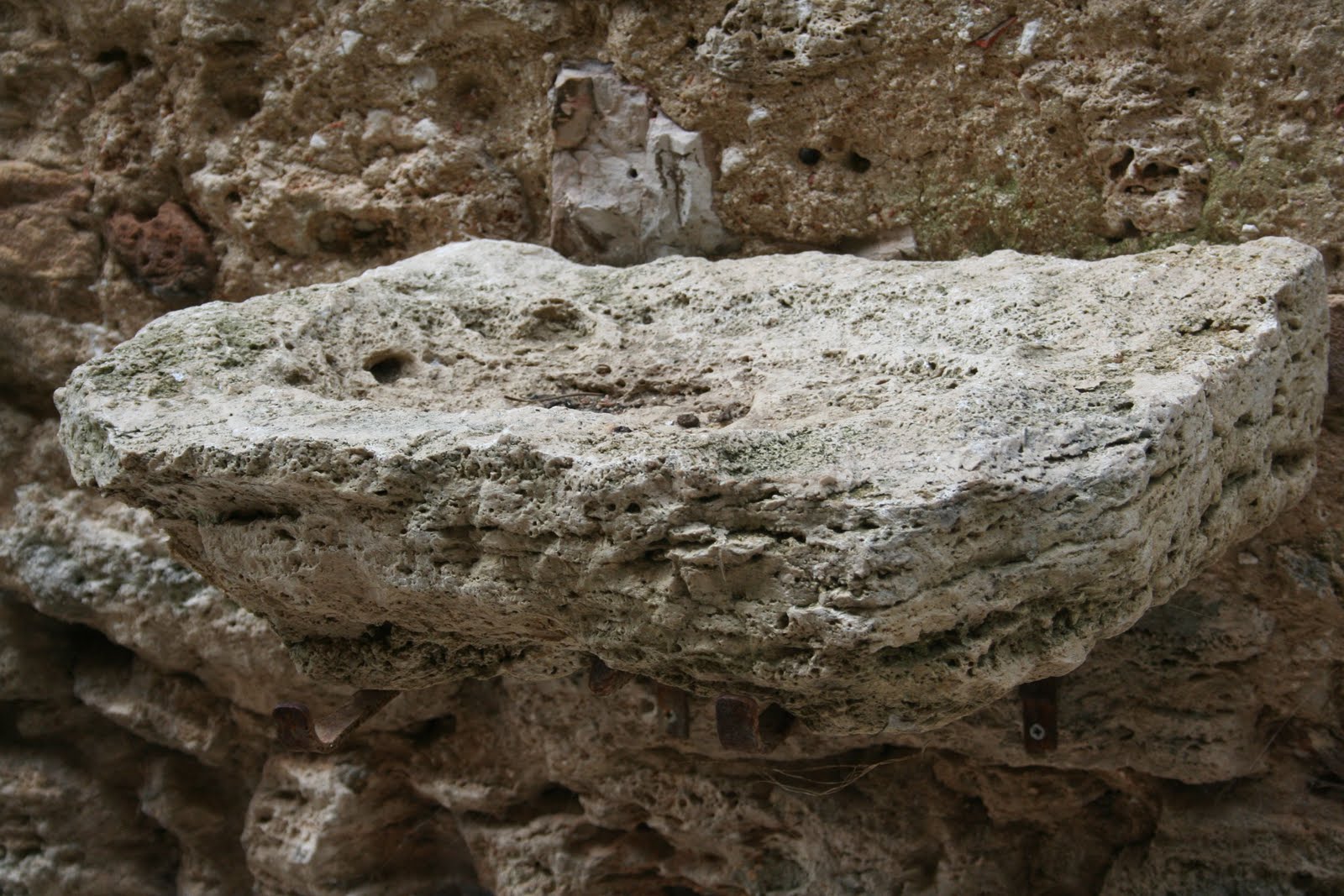
4.  Same stone ledges

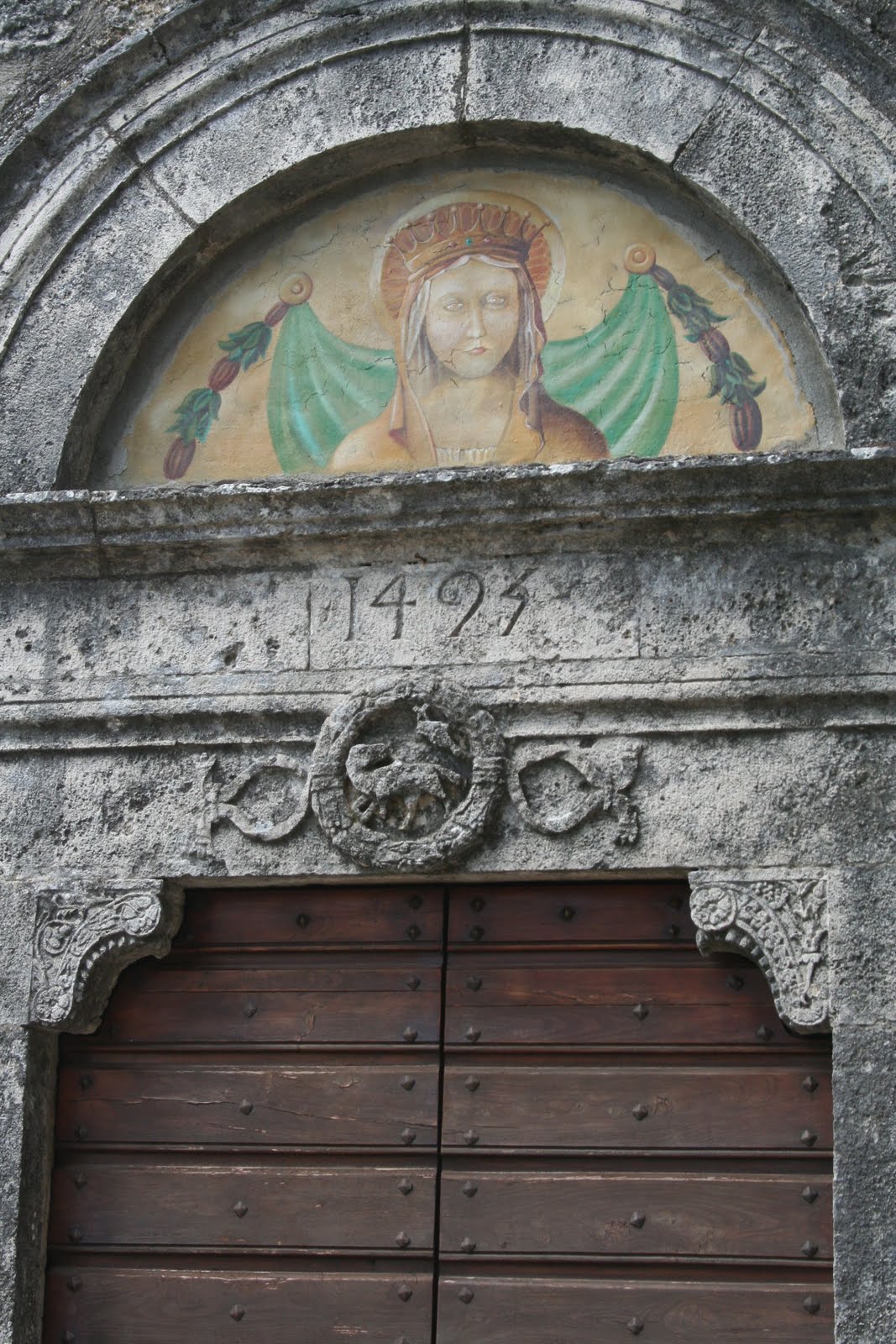
5.  Ancient stone chapels

6.  And finally, prosecco (Italian champagne) on tap at the pizza restaurant.  I’m not sure they even charged us for the glass we drank as we waited for our take away.

Good news for us all.  They rent 1/2 of the house, sleeps 6+, for vacation rentals.  If you’re interested, I’ll put you in touch.

Robert Mugabe Slept Here

@font-face { font-family: “Cambria”;}p.MsoNormal, li.MsoNormal, div.MsoNormal { margin: 0in 0in 0.0001pt; font-size: 12pt; font-family: “Times New Roman”; }div.Section1 { page: Section1; }

            The hotels are packed, helicopters are circling overhead, groups of jubilant Poles are gathering to sing at fountains.  There is a celebratory air in Rome today as it is the day that Pope John Paul II is declared a saint.  Whether you believe that his sainthood took the fast track or not, there are many, many Catholics who are thrilled to see this day.


            Yesterday morning, I noticed several Mercedes town cars at our hotel and some serious looking security agents “checking things out”.  The town cars had signs in the window that said, Zimbabwe.  Then last night, we hear that Robert Mugabe is in Rome for the beatification ceremony.  Coincidence?  I do believe I slept in the same hotel with Robert Mugabe last night.
 https://i0.wp.com/www.topnews.in/files/mugabe_6.jpg

I’ll let you play with that irony on your own.

Villa Borghese

@font-face { font-family: “Cambria”;}p.MsoNormal, li.MsoNormal, div.MsoNormal { margin: 0in 0in 0.0001pt; font-size: 12pt; font-family: “Times New Roman”; }div.Section1 { page: Section1; 

            The Borghese name is one that rings of papal legitimacy in Rome.  Centuries ago, this was the most powerful and wealthy family, obviously having great holdings of land and art.  In the 17th century, a villa was designed and built, purposefully to contain the family’s art collection and to entertain away from the Vatican.  It was a palazzina, then outside of Rome’s city limits, on a significant amount of land. 
            In 1902, the government purchased this estate and it now provides Rome’s answer to Central Park, with gravel paths, leading through treed and sculpture filled natural areas and the villa as a central feature.  The villa has just been given something like an 18-year restoration and it is in perfect form to host the bursting crowds who have to preorder tickets and queue for a one-hour time slot in the gallery.
Trained orange hedge
The tulips are spent, but the structure is in place.
            But once the hour is up, there are still gardens where you can take as much time as you wish.  They have formal structures, like trained and sculptural hedges, but are filled with common herbs (rosemary, salvia…) and loved flowers (irises, tulips, violas).  
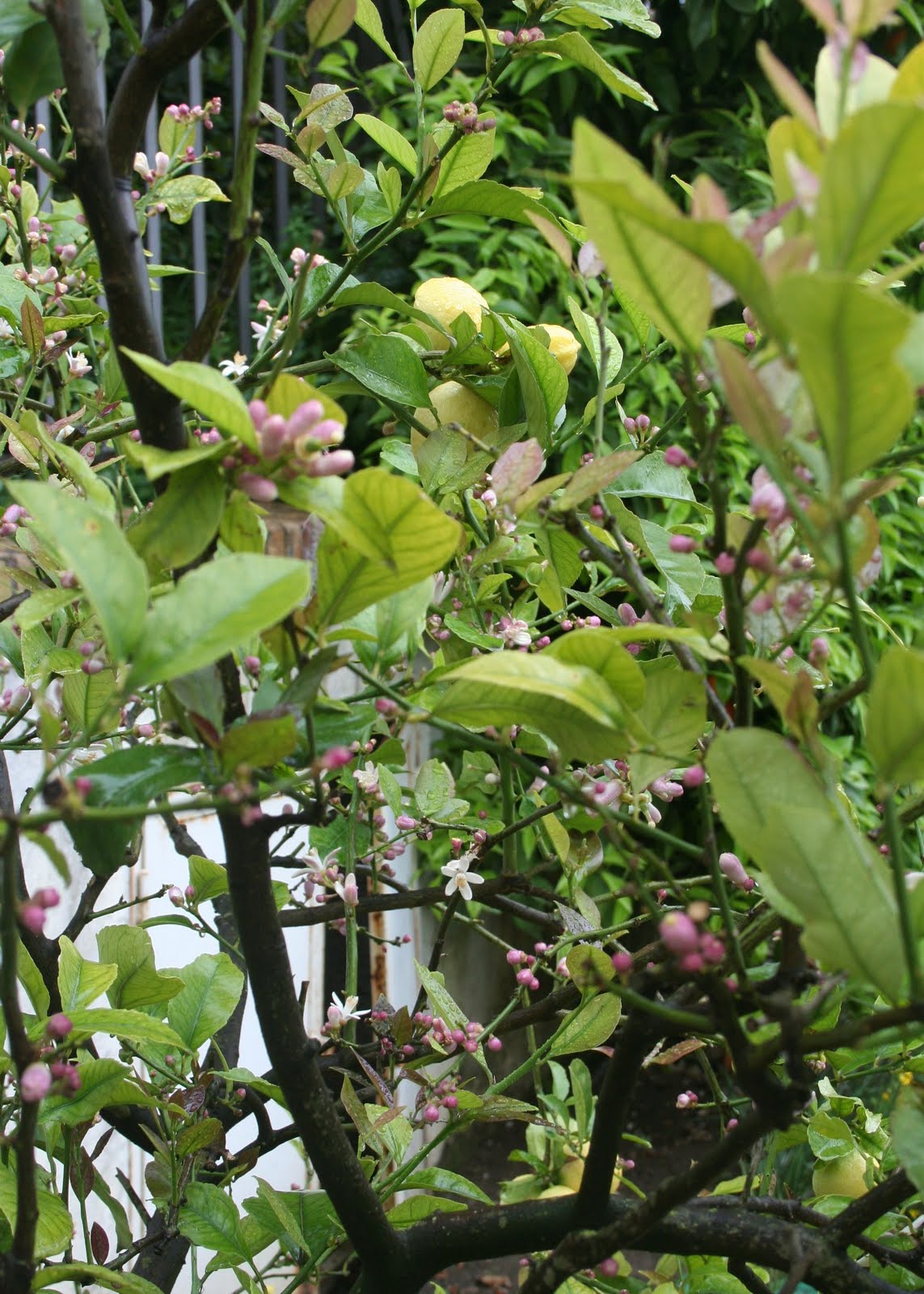
Oranges and lemons in pots

From Meal One

@font-face { font-family: “Times”;}@font-face { font-family: “Cambria”;}p.MsoNormal, li.MsoNormal, div.MsoNormal { margin: 0in 0in 0.0001pt; font-size: 12pt; font-family: “Times New Roman”; }div.Section1 { page: Section1; }

            From the first bites we put in our mouths, we want to be open to altering our perceptions of “real Italian food”.  I often get “heavied” out with Italian:  too much sauce, too hearty of pasta, too much cheese or cured meat.  I have to admit that I don’t cook that much classic (or is it just American)  Italian, because I just don’t usually have the appetite for it.  But when I’m actually in Italy, I don’t find the food like that.  Pizzas are cracker thin with a few shavings of parma ham, a pile of rocket, and a dusting of Parmigiano Reggiano.  I could eat a whole one myself, each day I’m here. 
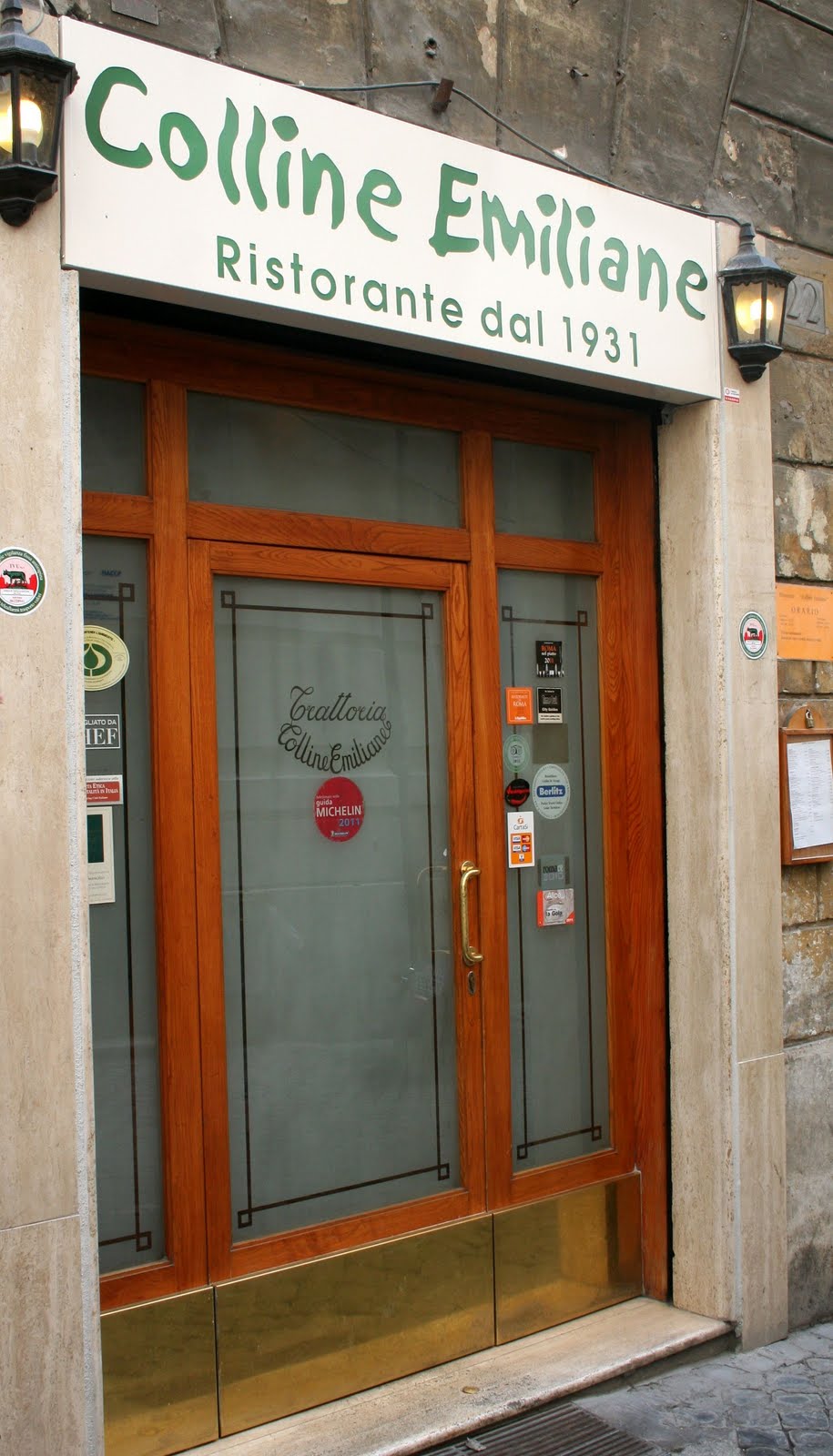
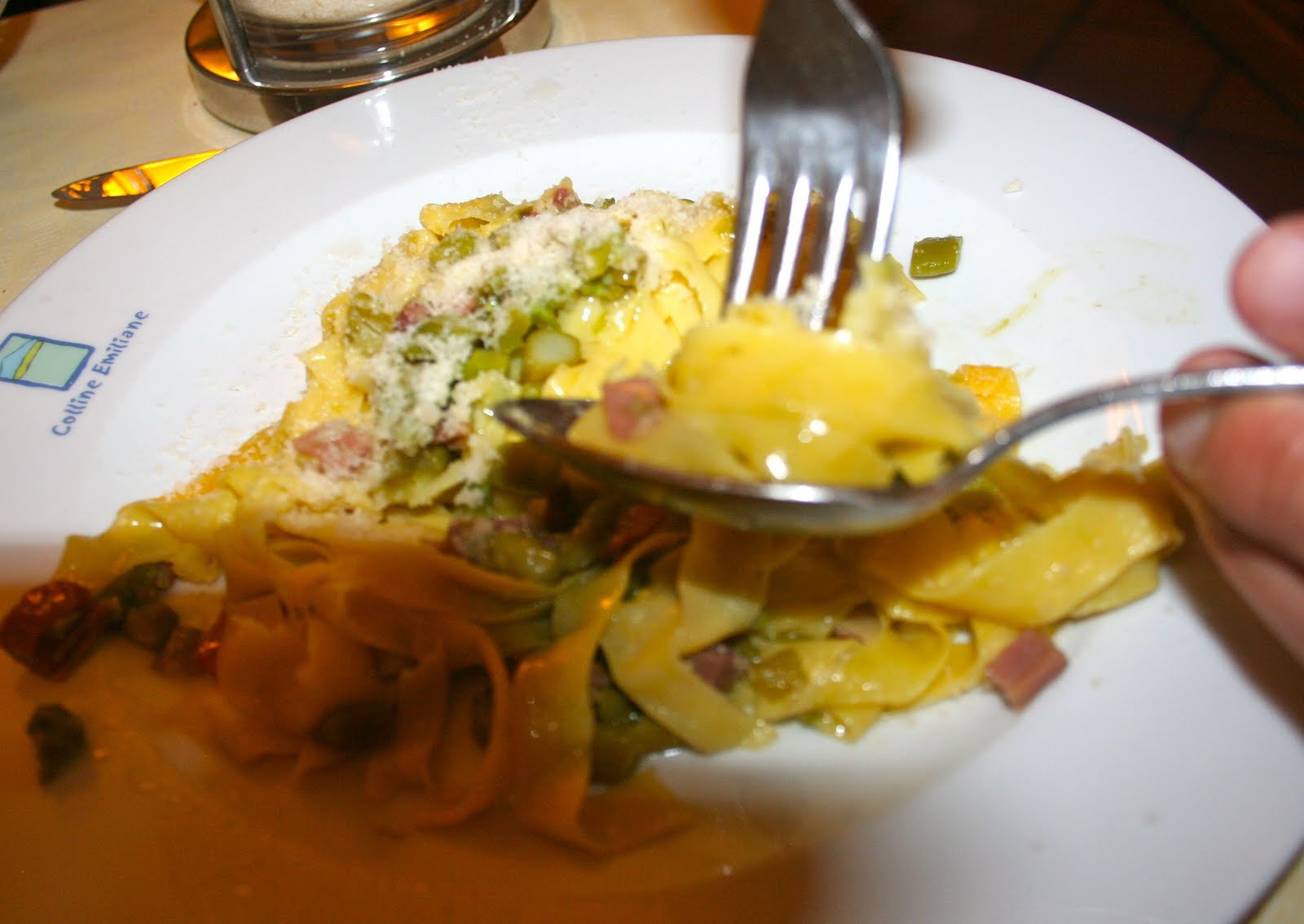
Our first meal on this trip began at the trattoria Colline Emiliane, near Bernini Square.  This compact restaurant represents the regional cuisine of Emilia-Romagna, capital city-Bologna. The area has several culinary claims to fame, among them, Parmesan, balsamic vinegar, Bolognese sauce, and Parma ham. I can hardly imagine Italian food without all four of these staples.  
Being a rain showery, spring Friday, we began with a soup:  “dumplings stuffed with meat in broth” was all we knew.  When it arrived, we were a little surprised to see about 40 tortellini floating in beef broth.  That was a heartier dish than we had intended to start with, but scooping in, the tortellini were not heavy, cheesy lumps, but light little pillows that melted in your mouth leaving a lingering taste of mild beef broth scented with nutmeg.  We ate them all; it wasn’t a problem.  
Next, came the real pasta we had ordered, tagliatelli with ham and asparagus.  Again, it wasn’t thick ropes of noodles, but almost transparent strips that at moments made me think of eating Asian rice noodles.  
Dessert isn’t always my favorite part of the meal and I don’t often even have dessert, but their freshly made sweets were on display as you entered the restaurant and in fact, to order one, you had to get out of your chair and go point to the one you wanted.  You knew that when an item was all served up, that was it for that day.  I got the first serving of the pear tarte tatin with pine nuts and currants.   
This is a dessert I would like to add to my repertoire as a standby.  The almond crust was barely sweet and with the chunky bites of nuts and pears, you almost felt like you were eating a side dish and not a dessert.  The pears, however, were buttery and caramelly, making it a definite dessert.  It was such an elemental dish that I do believe I will be able to replicate it at home, layer by caramelized layer.
           

Returning to Rome

@font-face { font-family: “Cambria”;}p.MsoNormal, li.MsoNormal, div.MsoNormal { margin: 0in 0in 0.0001pt; font-size: 12pt; font-family: “Times New Roman”; }div.Section1 { page: Section1; }

            Oftentimes, when you visit a new place, you know you can’t take it all in on that first visit and so you start to log things into your mind that you will pursue when you come back. Sometimes you do come back and sometimes you never do.  Isn’t Rome full of that kind of lore?  In fact, isn’t that the deal with tossing a coin into Trevi Fountain?  That you will be assured of one day returning to Rome? 
            We were here just about a year ago with our sons, Gabe and Anton.  We had them jump on an airplane as soon as they were finished with finals at their university so they arrived, tired from their quarter of school and jet lagged, but they were glad to be with us and to be in Rome.  Because it’s expensive to accommodate 4 adults in Rome for a week, we rented an apartment in the neighborhood of Trastevere.  It is a beautiful residential area with plenty of great, small restaurants and artisan shops.  There are many, many piazzas in Trastevere, one of which was right outside our ground floor apartment.  The apartment was a little small and a little damp, but we all wanted to make it work.  Our first night, jet-lagged and desperate for sleep, we settled into our tolerable beds and slept well for a couple of hours. At midnight on the dot, we were all four awakened by what sounded like 300 partygoers in our living room.  They were actually not in our living room, but outside in the piazza, but it didn’t make much difference.  They remained there, getting drunker and louder until 3:00 AM when they dribbled away and we were allowed to fall back asleep. 
            We woke up the next morning almost wondering if it had actually happened or if we had dreamed it.  The piazza was deserted and showed no signs of carousing, but our bleary eyes confirmed that it had been a reality. 
            This exact pattern continued every night we were there.  Finally, midweek, we took the train to Perugia, Umbria just to get a good night’s sleep.  When the boys left at the end of the week, they felt like they had been in some kind of sleep deprivation torture.  They had colds and were just as happy to be going back to college where they could get some rest.  It was a bad way to start with Rome. 
            When I told Anton, last weekend, that we were going to Rome and staying at a hotel, he laughed, “Last time, we saw all the sites and got no sleep.  This time, you can just sleep.”  I’m not planning to just sleep, but it is a nice option to not feel pressured to keep up the tourist pace.  I am certainly not opposed to spending more time at the Vatican or the Coliseum at some point, but I am looking forward to enjoying a smaller bit of Roman life this weekend.  Our hotel, in fact, is near Trevi Fountain and there are many historical sites within walking distance.  Rather than hopping in a taxi and going all over the city, I’m going to treat Rome like it is the village of Trevi.  I want to see all of the different churches, the hidden gardens, the neighborhood artisan shops, and as always, eat at the restaurants, within walking distance.  And if I’m really lucky, there will be a big Saturday or Sunday market set up where I can browse to my heart’s content.  
            I can see from our balcony that some guys are setting up sound equipment in the piazza below. It all looks peaceful by day, but what might we be in for tonight?

The Annual Artisan Fair

@font-face { font-family: “Cambria”;}p.MsoNormal, li.MsoNormal, div.MsoNormal { margin: 0in 0in 0.0001pt; font-size: 12pt; font-family: “Times New Roman”; }div.Section1 { page: Section1; }

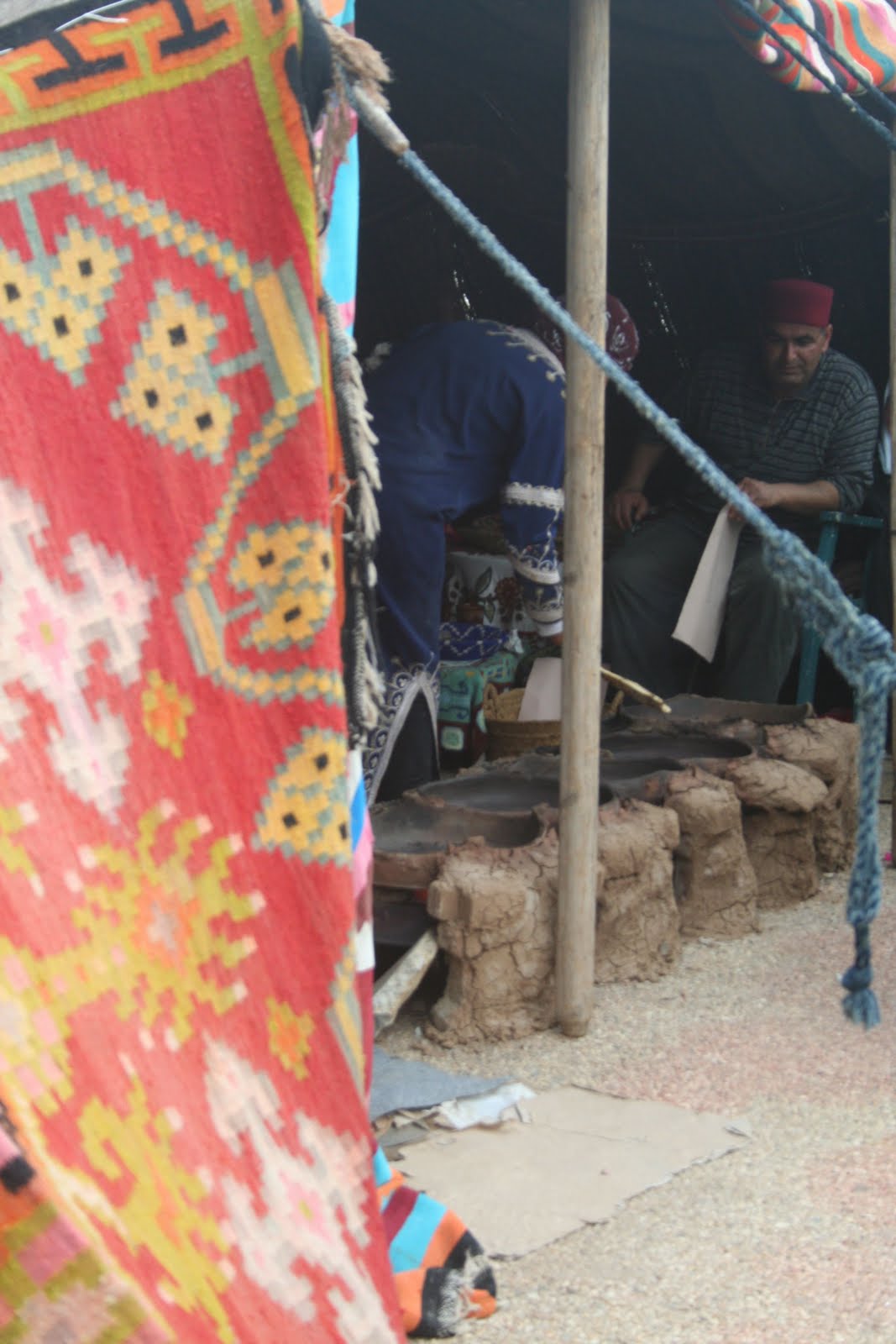
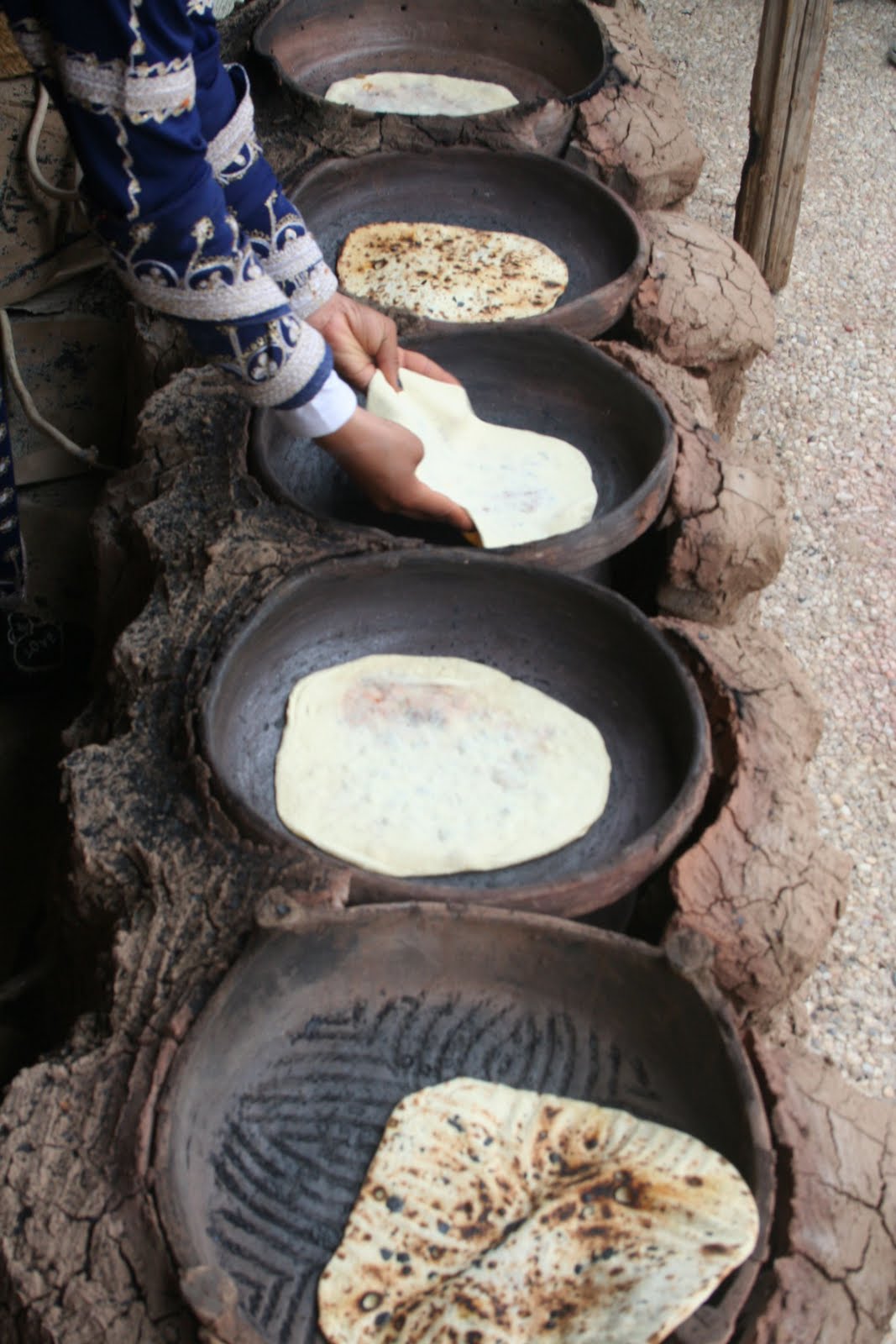
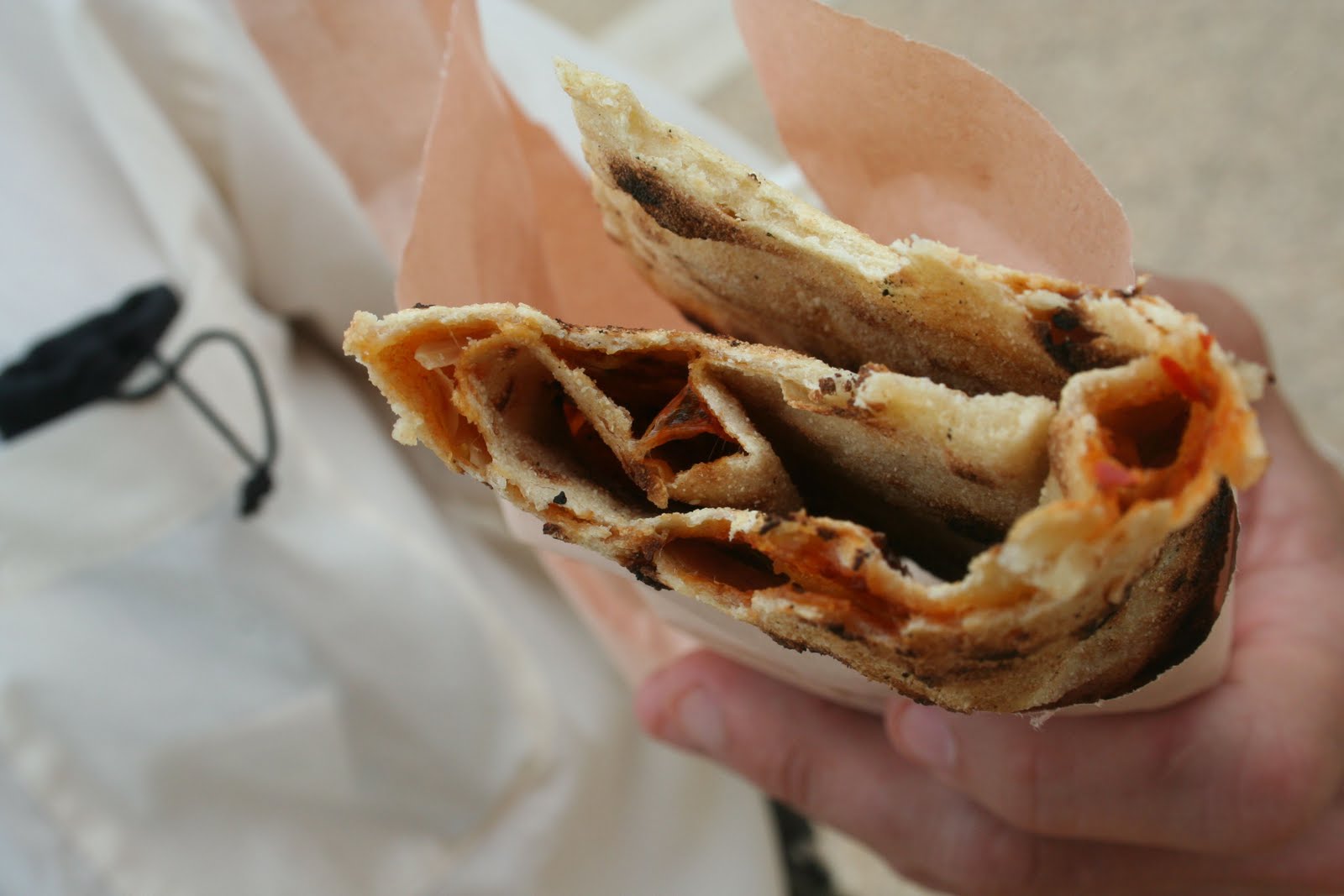
At long last, the Tunis artisan fair has arrived.  It seems, this year, like every time I complemented someone on a beautiful item in their home, they told me they got it at the artisan fair.  But this renowned market happens just once a year so you have to wait for it.  It is worth the wait, though.  Isles and isles and rooms of vendors, all with high quality artisan work:  metal, wood, ceramics, textiles, scents.  They even had really good snacks, like the Bedouin flat bread in the pictures, filled with a chili paste called harissa.  
On my plane ride home last weekend, I read a newspaper article about Ellen Barkin, New York’s famous actress and socialite.  The author of the article described her apartment as having Le Corbusier chairs with goat skin rugs scattered on the floor.  That was it.  I don’t have the Le Corbusier, but I knew the artisan fair was coming up this week and I thought I might find the rugs.  I did! 

  I also found some olive wood accessories, which I have been waiting to purchase until this fair rolled around.
I came home with a big basket full of luxury.  

Beans and Squid

@font-face { font-family: “Courier New”;}@font-face { font-family: “Wingdings”;}@font-face { font-family: “Cambria”;}p.MsoNormal, li.MsoNormal, div.MsoNormal { margin: 0in 0in 0.0001pt; font-size: 12pt; font-family: “Times New Roman”; }div.Section1 { page: Section1; }ol { margin-bottom: 0in; }ul { margin-bottom: 0in; }

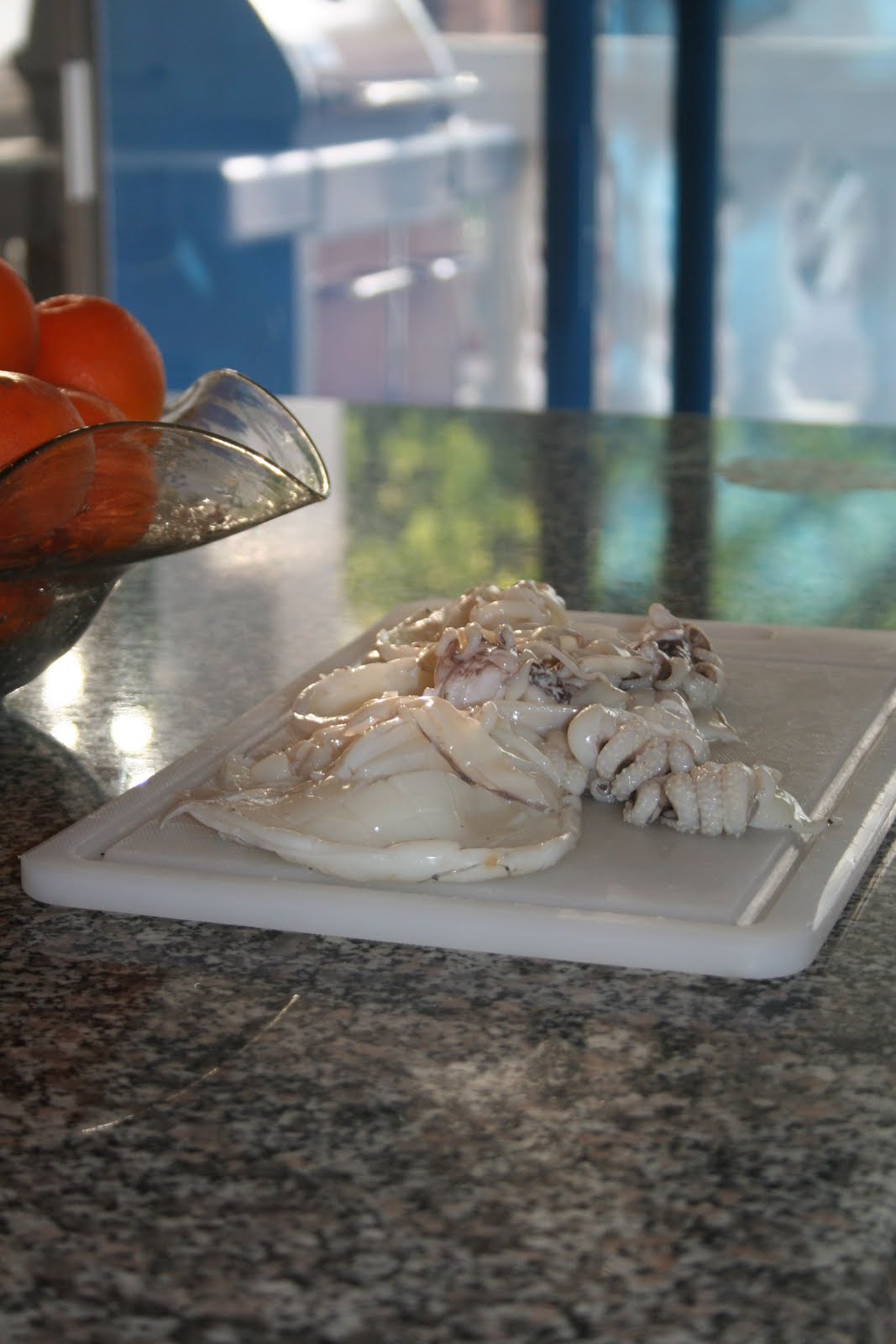
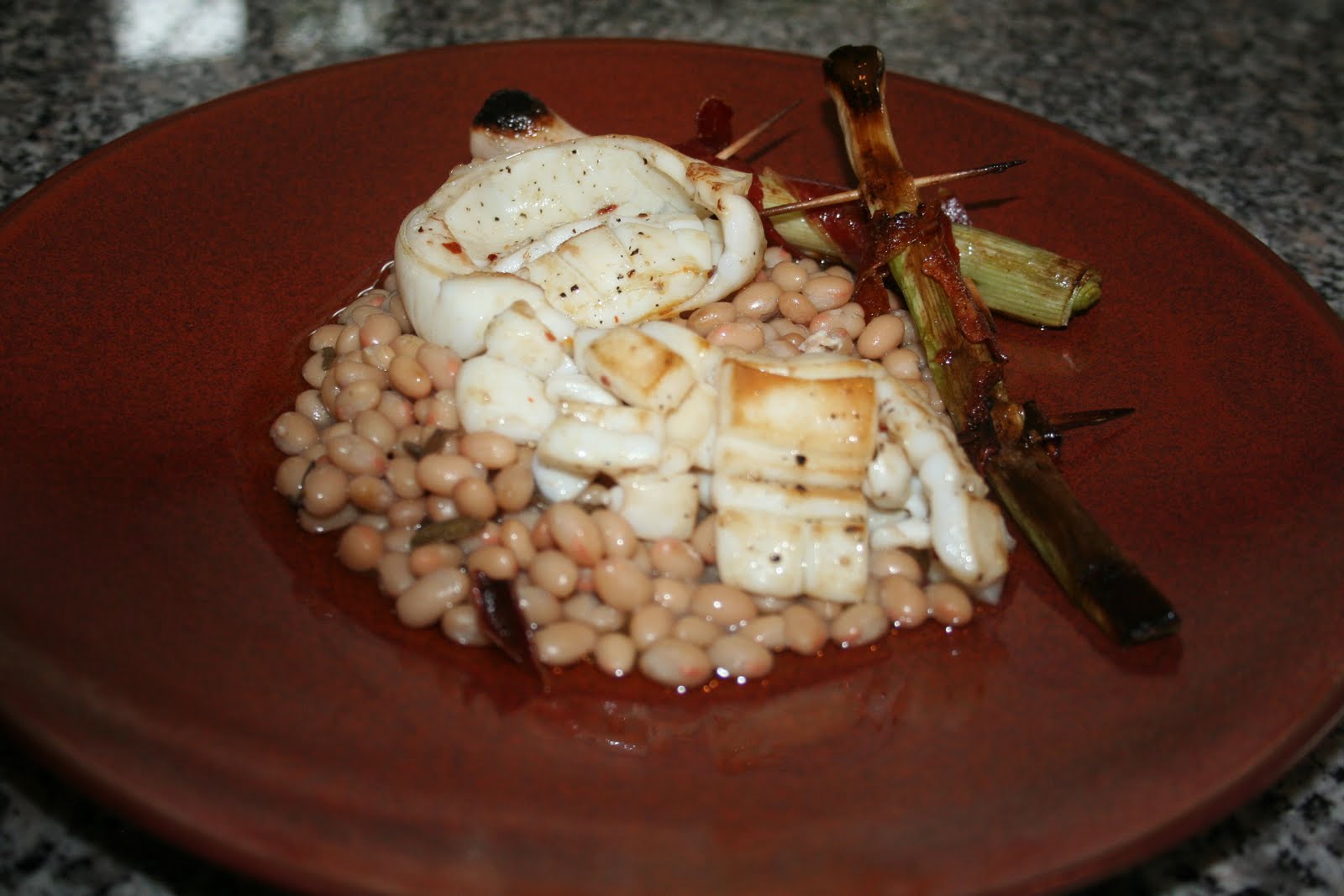
We set out on a mission this morning to try and replicate the cannellini beans and squid dish we loved so much in Spain.  First stop was La Goulette fish market to buy squid.  They came partially cleaned and eviscerated, but we had to pull up a video on the internet to learn how to finish them off.  I think the fish sellers leave the ink sac in the squid for the women who want it for pasta. 
More than one site recommended marinating the squid in milk to soften it.  All I can think of is lactic acid in milk that could work on the fibers of the squid.  The advice was to marinate it for 24 hours, but we had about 6 hours so we tried it.  We left it in big chunks and tentacles, covered it with milk, stirred in a couple of cloves of sliced garlic, salt, and pepper, and put it in the refrigerator.
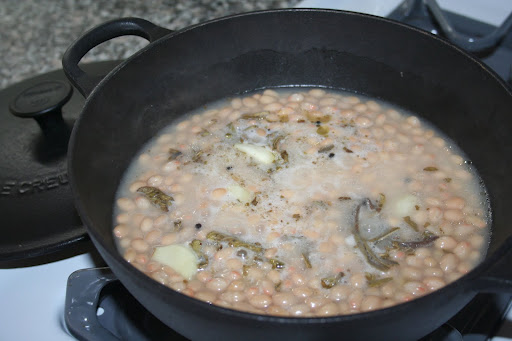
Here is a recipe from Epicurious that I thought would be a nice preparation for the beans.  They needed some flavor of their own and the garlic, sage, and sea salt created a great background.
Cannellini Beans with Garlic and Sage
Bon Appétit  | October 2009
by Lori de Mori
Yield: Makes about 6 cups
If you’re making the beans to use for the soup or the sausages, be sure to save the cooking liquid.
Ingredients
  • 1 pound dried cannellini (white kidney beans)
  • 8 cups room-temperature water
  • 2 tablespoons olive oil
  • 1 large head of garlic, unpeeled, top 1/2 inch cut off to expose cloves
  • 1 large fresh sage sprig
  • 1/4 teaspoon whole black peppercorns
  • 1 teaspoon coarse kosher salt
  • Extra-virgin olive oil (for drizzling)
Preparation
Place beans in large bowl. Cover with cold water (at least 6 cups) and let soak overnight.
Drain beans. Place in heavy large pot. Add 8 cups room-temperature water, 2 tablespoons olive oil, garlic, sage, and black peppercorns. Bring to simmer over medium-high heat. Reduce heat to medium-low; simmer uncovered 1 1/2 hours, stirring occasionally. Mix in 1 teaspoon coarse salt. Continue to simmer until beans are tender, adding more water if needed to keep beans covered, about 30 minutes longer. Cool beans in liquid 1 hour.
Using slotted spoon, transfer beans to serving bowl, reserving bean cooking liquid, if desired, but discarding garlic, sage, and peppercorns. Season beans to taste with pepper and more coarse salt. Drizzle with extra-virgin olive oil and serve.
 
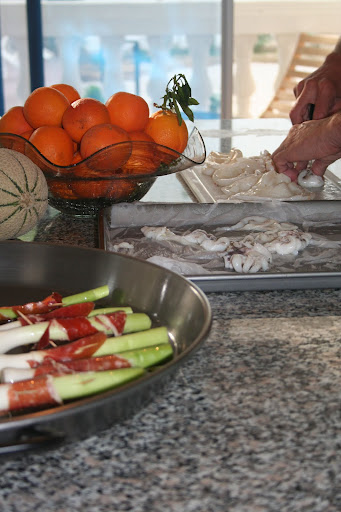
We rinsed the squid, patted it dry and scored the big pieces to keep them from
curling on the grill.   
            The leeks are wrapped in strips of Iberico ham.  Tres cher.  
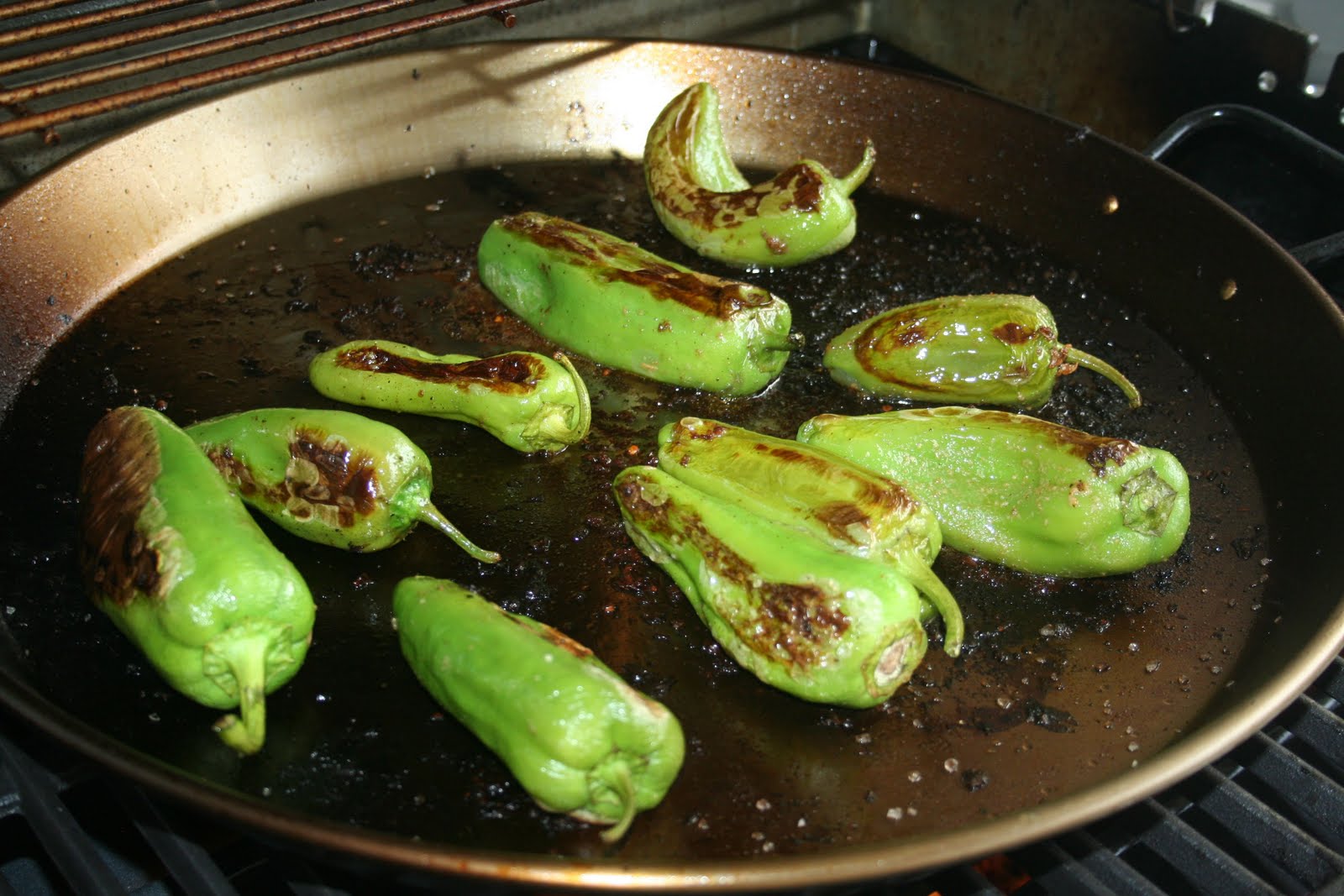
            This is the shiniest our new paella/grill pan will ever be.
The dish was so good, not exactly like the one we had, but it had the same convincing characteristics.  Allan said it was better than anything we had had in Spain, but we have short memories.  The squid was fork tender.  I can’t wait to try a 24-hour marinade.
While we ate, and the grill was hot, we tossed some peppers into the salty, hammy oil.  We can eat them throughout the week in scrambled eggs and polenta.

I Am a Magazine Gal

@font-face { font-family: “Cambria”;}p.MsoNormal, li.MsoNormal, div.MsoNormal { margin: 0in 0in 0.0001pt; font-size: 12pt; font-family: “Times New Roman”; }div.Section1 { page: Section1; }

            I am adapting to the writing style of blogging.  Since starting my blog, I have studied it as a writing genre.  I like some of it, but I find a lot of it falls short as completed pieces of writing.  Not that mine always is either.  Obviously, the problem isn’t actually the writing of the bloggers, it is that I have the incorrect expectation.  I am a student of the magazine.  In my adult life, magazines have had a profoundly formative affect on my life and lifestyle.  I should have some type of degree or at least a certificate of participation from a publishing company so systematic and thorough has been my study. 
            I am at Charles de Gaulle airport on my way home to Tunis and I saw a woman just flipping through a magazine, hardly taking time to even register a photo and certainly not reading any text.  I was a little shocked; I truly couldn’t imagine doing such a thing.  I READ magazines.  I read them cover-to-cover, including the advertisements, which feed into the concept of the publication.  I read them and then I save them and I have renovated and decorated many homes and designed carpets and furniture from the pages I have dog-eared along the way.  When I am moved by the photos or descriptions of a room or even a recipe, I want to make my life not just look, but feel the same way.  I don’t want to only make the recipe; I want to make it in a kitchen that has a similar feel to the one in the photo shoot, so I work to transform my living space similarly. 
When three of my dearest magazines went out of publication last year:  Gourmet, Metropolitan Home, and Western Interiors, it really did leave a hole in my life.  Just months later, I moved to Tunis where I can’t buy English literature and don’t have a means of importing foreign goods so I have really weaned myself from my small addiction to print stimuli.  I am doing more visual exploration, from my own perspective, with my camera and attempting to write about the small ideas I am moved by.  I am also reading magazine websites, but they aren’t the same.  I can get an “idea” from a website, but I can’t get the mood. 
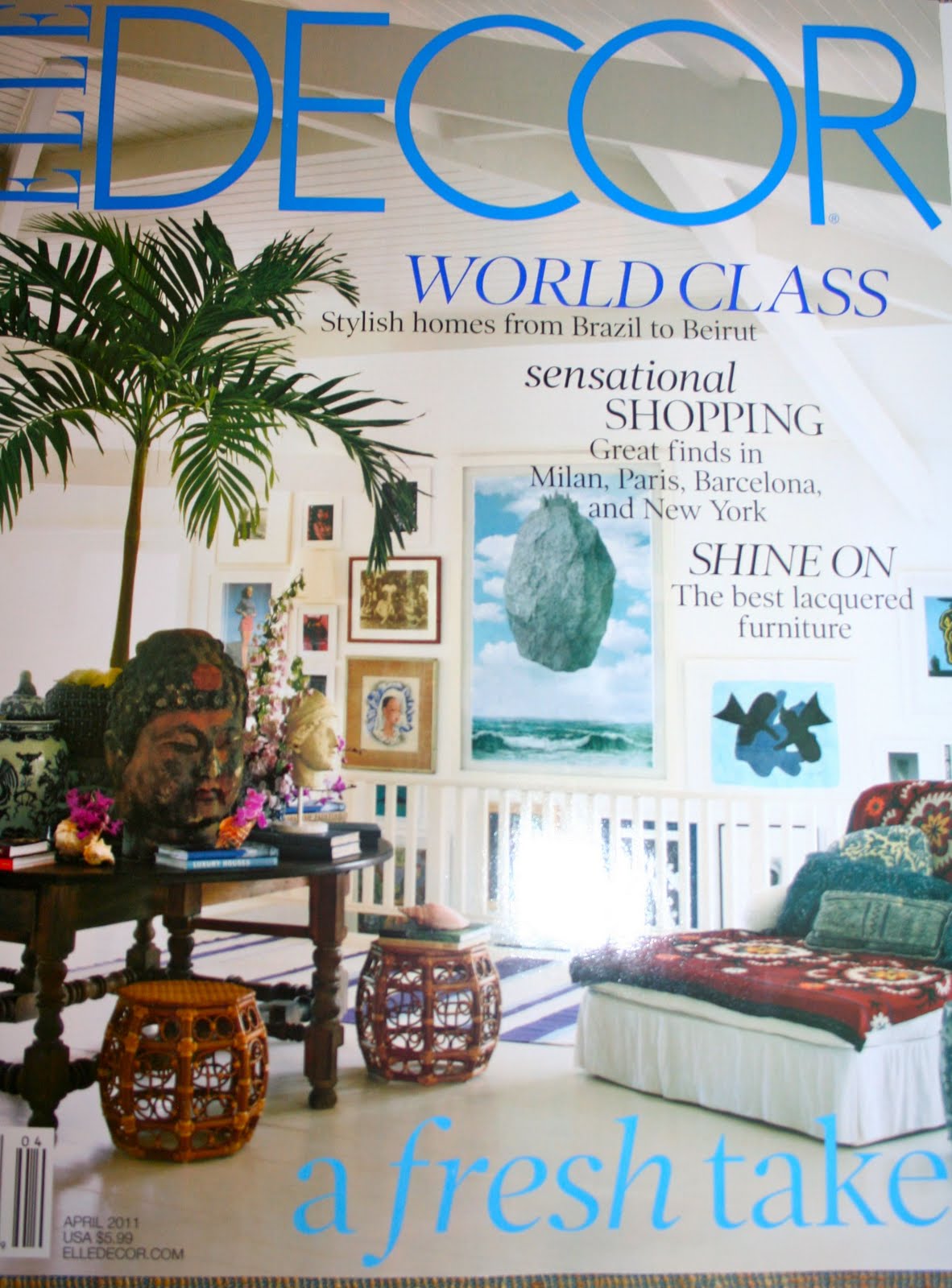
When you make a big move, like from Nepal to Tunisia, you go through all of your belongings and make excruciating decisions about what is important enough to you to pay to ship to your new home and what you can be finished with and leave behind.  I went through my entire magazine collection, every page of every magazine, about 15 years worth.  I didn’t take this decision frivolously.    I could remember exactly where I had been living, and how old I was, and how old my children were when I had first studied the various spreads of rooms or pieces of furniture that I tried to imitate or incorporate in our home.  I have Martha Stewart’s inaugural edition and the final copies of both Gourmet and Metropolitan Home.  I decided I couldn’t be without this collection because I continue to need those references and so they came with me and I am glad to have them. 
            The editors of my favorite magazines have become like older sisters or aunts to me: Ruth Reichl, Donna Warner, and I would be dishonest if I didn’t give tons of credit to Martha Stewart.  I have evolved my own life beyond Martha, but she introduced me to a new world. As these editors focused on a theme for the monthly publication, they also integrated personal stories and anecdotes so I learned content from the magazine and gained insights into their lives, simultaneously. 
                 I know that this is the model I am following with my blog.  I am actually writing a five paragraph Editor’s Page with each entry and I like changing the title photo as if creating a fresh magazine cover.  I am aware that I am doing this, but for now, I like it; it feels good and familiar to me and maybe I’ve always wanted to give it a try.  Eventually, I might become an actual blogger, but for now, I am Editor in Chief. 
            I’ve got a couple of hours till my flight and the bookstore had a treasured American publication and so for awhile, nothing else exists.